Published: 2 March 2026 . The English Chronicle Desk.
The English Chronicle Online
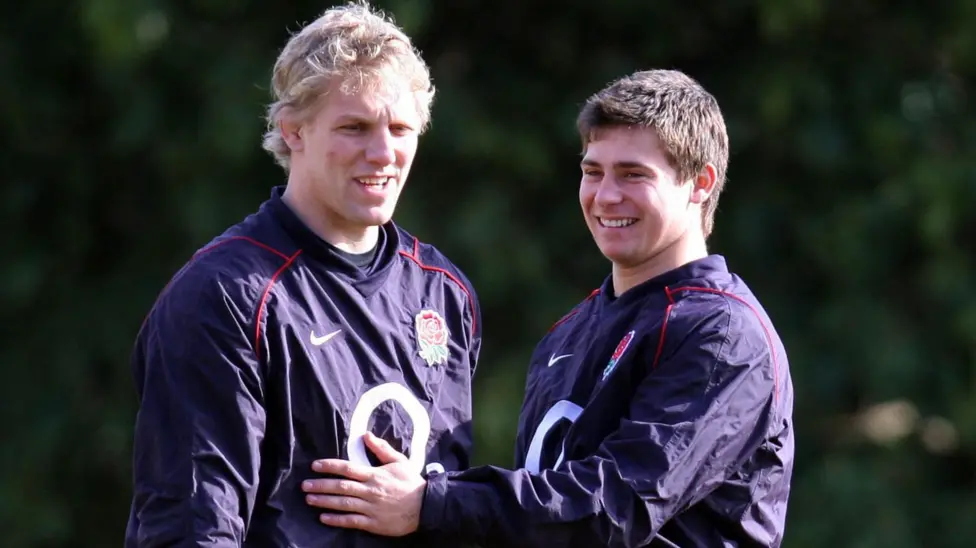
Nine seconds of silence linger in a new BBC documentary before former England captain Lewis Moody begins to answer a question that cuts to the core of his career. Asked by his former international team-mate Ben Youngs whether he ever considered the risks of playing rugby, Moody pauses, reflective rather than evasive. What follows is neither regret nor defiance, but a measured acknowledgement of danger balanced against devotion to the sport that defined his life.

The documentary, titled Ben Youngs Investigates: How Safe Is Rugby?, explores the evolving conversation around player welfare in elite rugby. Moody’s contribution carries particular weight. A veteran of 71 England caps, a British and Irish Lions tourist, and a central figure in Leicester Tigers’ combative era of domestic and European dominance, he was known for an uncompromising style that earned him the nickname “Mad Dog.” His approach was defined by relentless physicality, an appetite for collisions, and a refusal to conserve effort.
Yet in conversation, Moody presents a more nuanced self-assessment. He explains that he was not oblivious to the risks inherent in repeated high-impact sport. On the contrary, he says he was acutely aware of the possibility of injury and concussion. The calculus, in his mind, was clear at the time. The joy and fulfilment derived from competition outweighed the potential cost. He states plainly that, knowing what he knows now, he would still choose to play.
The remarks acquire deeper resonance given Moody’s diagnosis last year with motor neurone disease, a degenerative neurological condition that progressively damages motor neurones, leading to muscle weakness and eventual paralysis. His diagnosis places him among a growing number of former rugby players who have faced the same illness. The deaths of Rob Burrow in 2024, Doddie Weir in 2022, and Joost van der Westhuizen in 2017 intensified public scrutiny. Former Leicester player Ed Slater also retired after receiving an MND diagnosis, while World Cup winner Steve Thompson has been diagnosed with early-onset dementia.
Despite these cases, Moody emphasises that there is no proven causal link between rugby and motor neurone disease. Current scientific research suggests that while elite athletes may be disproportionately represented among MND diagnoses, the mechanisms are complex and multifactorial. Some studies propose that extreme physical exertion, leading to transient low oxygen levels in tissues, could contribute to cellular stress in individuals who are genetically or environmentally susceptible. Moody stresses that clinicians describe MND as arising from multiple interacting factors rather than a single trigger.
He acknowledges, however, that public perception has increasingly connected rugby with neurological illness. High-profile cases inevitably shape narrative. Moody does not express frustration with this assumption but instead calls for greater scientific literacy. The link between repeated head trauma and certain forms of brain injury is well established. The connection between rugby and MND remains unproven. Distinguishing between those two discussions, he suggests, is essential for informed debate.
The documentary revisits a 2007 Rugby World Cup pool match against Tonga in Paris, a moment emblematic of rugby’s former approach to concussion. Early in the game, Moody suffered a heavy blow when charging down a kick. Television replays showed his head snapping back. He was briefly attended to on the field and continued playing. Later in the same match, another high collision left him prone once more, yet again he returned to the action.
The following day, against medical advice, he joined team-mates at EuroDisney. A rollercoaster ride triggered ringing in his head and a belated recognition that he had underestimated the seriousness of concussion. That episode, he now reflects, marked a turning point in his understanding of brain injury.
The sport itself has undergone structural reform since that era. Rugby authorities have implemented stringent head injury assessment protocols, mandatory stand-down periods, independent match-day doctors and technological monitoring systems, including instrumented mouthguards that measure collision force. Tackle height has been lowered and sanctions for dangerous contact have become significantly harsher. Moody argues that contemporary elite rugby is safer than at any previous point in its professional history.
His assessment is informed not only by retrospective analysis but also by personal experience. He participated in neurological studies at the University of Edinburgh and was cleared of early-onset dementia. Nevertheless, he has witnessed the cognitive decline of former team-mates. He describes Thompson’s condition as a genuine struggle and expresses relief that long-term studies now exist to support players facing neurological challenges.
Moody frames the broader concussion campaign as an uncomfortable but necessary reckoning. He suggests that rugby, historically resistant to change, has been compelled to confront evidence and adapt. In his view, the willingness to embrace difficult conversations represents progress. The alternative, he implies, would be denial.
Since publicly discussing his MND diagnosis in an interview on BBC Breakfast last October, Moody has focused on managing uncertainty. He references a Buddhist aphorism emphasising the primacy of the present moment. For him, this philosophy provides practical guidance rather than abstract comfort. The trajectory of MND varies widely. Some patients live more than a decade with slow progression; others experience rapid deterioration. Moody reports that his case is currently slow-progressing. His strategy is to maintain normality until circumstances require adjustment, then recalibrate.
The perspective is pragmatic rather than sentimental. He does not deny the seriousness of the condition, nor does he dramatise it. Instead, he speaks of adaptation. The emphasis remains on present functionality rather than speculative fear.
Moody is also considering how to deploy his public platform to advance awareness and research funding for motor neurone disease. He acknowledges that earlier campaigners such as Burrow and Weir confronted the disease at a time when public understanding was limited and therapeutic options sparse. He sees himself as inheriting their momentum. Conversations with Slater have reinforced his sense of responsibility. The form his advocacy will take has not yet been formally announced, but his intention to contribute is explicit.
The documentary situates Moody’s reflections within a broader ethical inquiry about rugby’s future. It asks whether cultural attachment to physical intensity can coexist with evolving medical evidence. Moody’s answer does not advocate retreat from contact sport. Rather, it argues for informed participation and institutional accountability. He does not renounce rugby. He affirms it.
For a player once defined by collision and confrontation, the nine-second pause before answering Youngs’ question carries symbolic weight. It signals contemplation rather than doubt. Moody recognises the risks retrospectively, understands the scientific uncertainty surrounding his illness, and remains steadfast in his affection for the game. His stance may not resolve the debate around rugby’s long-term safety, but it adds texture to it.

In the end, Moody’s message is neither cautionary tale nor heroic myth. It is an articulation of informed choice within imperfect knowledge. He loved the sport. He accepts the consequences of participation. And, as he states without hesitation, he would do it again.
Related News:
 One Lap, 400 Miles, One Week: GP Sets Sights on Cornwall Perimeter Record Run
 Tragic Death Strikes Half-Marathon in Stoke-on-Trent: Runner Dies Shortly After Crossing Finish Line
 Questions Remain as Rugby Legend Lewis Moody Faces Motor Neurone Disease Diagnosis
 Concerns Mount Over Accuracy of At-Home Health Tests as Study Calls for Stricter Regulation
 Predicted Leicester Line-ups Reflect Cifuentes’ Tactical Plans Ahead of New Season
 The Ketamine Crisis in the UK is a Silent Epidemic Leaving Users with Lifelong Pain
 Central London Gears Up for Lionesses’ Victory Parade as Thousands Prepare to Celebrate Historic Women’s Euros Win
 London Set to Honour Euro 2025 Champions as Lionesses Take Victory Parade Through the Capital
 Rangers Boss Russell Martin Launches Blistering Critique After Disappointing Draw with Motherwell
 It’s Thanks to Gabby That I Caught My Prostate Cancer in Time’ – Kenny Logan Opens Up on His Battle and His Mission to Save Lives
 Minute’s Silence for Diogo Jota Abruptly Ended After Wembley Tribute Disrupted
 Rugby Confronts Safety Concerns with Smart Mouthguards at Women’s World Cup
 Cats Develop Dementia Similarly to Humans, Study Finds
 Alarming rise in abusive teen relationships in the UK sparks urgent warnings
 Premier League Supercomputer Predicts Tough Season for Man Utd Amid Three-Team Title Battle
 Aston Villa Under Pressure as Newcastle Take on Hosts in Premier League Opener
 FIFA Eyes Biennial Club World Cup from 2029, Plans Possible Expansion
 Shocking Rise in Children’s Exposure to Violent Online Pornography Raises Alarm
 Baby Food Manufacturers Given 18 Months to Improve Nutrition and Labelling
 Grimsby Stun Manchester United in Dramatic Penalty Shootout
 Guardiola Admits City ‘Forgot to Play’ After Shock Defeat to Brighton
 Why E-Bikes and E-Scooters Are Making Streets a ‘Nightmare’ for Blind People
 Millions in the UK at Higher Risk of Heart Failure and Stroke Due to Air Pollution, Study Warns
 UK Graduates in Healthcare Report Highest Satisfaction with Degree Choices
 Systemic Racism in Maternity Care Continues to Endanger Black Women in England, MPs Warn
 One in Three GPs in England Do Not Work in NHS, Raising Concerns Over Access to Care
 UK Doctors Guilty of Sexual Misconduct Continue Practising Amid Weak Sanctions, Research Finds
 Liverpool Vs outhampton Set for Carabao Cup Clash at Anfield
 Arsenal VS Newcastle Hearts with Dramatic Late Turnaround at St James’ Park
 Aston Villa Fight Back to End Winless Run with Convincing Victory over Fulham
 Everton Held by West Ham as Bowen Cancels Out Keane’s Header in Nuno’s First Game
 Starmer Unveils Plan for NHS “Online Hospital” to Tackle Waiting Lists
 Monaco Hold Man City to Dramatic 2-2 Draw as Eric Dier Converts Late Penalty
 Arsenal Edge Past West Ham Amid Injury Concerns
 Women Challenge Meta Over Targeted Ads After Miscarriage
 £18 Prostate Cancer Test Could Save Thousands of Lives
 Son of ex-England footballer dies in tractor crash
 One in 12 Secondary Pupils Sent to Isolation Weekly
 M&S and Morrisons Lead Christmas Supermarket Taste Test
 Gibbs-White Inspires Forest to Thrilling Win Over Porto
New Prostate Cancer Drug Set to Halve Death Risk in England
Gibbs-White Inspires Forest to Thrilling Win Over Porto
New Prostate Cancer Drug Set to Halve Death Risk in England
 Brentford 3-2 Liverpool: Reds suffer fourth straight PL defeat
 Manchester United triumph as Mbeumo brace seals thrilling win
 UK Health Leaders Push for Urgent Tobacco & Vape Bill
 Hospice Cuts Raise Alarm Across England Amid Funding Crisis
 Celebrities and Charities Demand UK Government Act on Child Poverty
 Granit Xhaka Rescue Earns Everton Draw at Sunderland
 Patients to Test Health at Home to Ease NHS Winter Pressure
 Bellingham has ‘the edge’ among England No 10s
Man City Masterclass on Guardiola’s Milestone Day Exposes Liverpool Woes
Bellingham has ‘the edge’ among England No 10s
Man City Masterclass on Guardiola’s Milestone Day Exposes Liverpool Woes
 VAR Must Rein Its Neck In to Save Football’s Spirit
 Shouting Works Best to Deter Gulls, UK Study Finds
 Mary Earps’s Manchester United Return Faces Mixed Reception
 Reeves rejects £1bn plea for NHS redundancy payouts
 Former Lion Heskey Warns of Shortage of England Strikers
 Stroke Patient Mistaken for Drunk, Care Delayed
 ‘Traumatic Wait’: Northern Ireland Women Face Breast Cancer Delays
 Coffins Now Too Large to Cremate Amid Rising Obesity Crisis
 Five-Year-Old Dies After Rare Tonsil Surgery Complication
 Fibromyalgia Patients Struggle as NHS Fails to Provide Care
 More Patients Now Contacting GPs Online, Data Shows
 Stokes urges empathy for England players amid Ashes struggles
 Damien Martyn in Induced Coma After Meningitis Diagnosis
 Children to Receive Home Vaccines as England Acts
 Local Fish Could Boost UK Health and Economy Significantly
 NHS Violence Crisis: Staff Face Daily Assaults
 Celebrity Campaign Highlights SMA Screening Failures
 UK Glaucoma Rise Signals Looming Eye Health Crisis by 2060
 Reform UK Health Plan ‘Would Cost £1.7bn’, Streeting Says
 NHS boosts bowel screening accuracy with FIT reform
 Nottingham survivor warns of repeat attacks without mental health reform
 Pneumonia Surge Pushes England Emergency Cases Higher
 Hugo Ekitike Becomes Liverpool’s New Cult Hero
 UK MPs Demand Ban on Brazilian Butt Lifts
 NHS Urges Nine Million People to Get Therapy
 Bumper Ski Season but Avalanches Threaten Scotland’s Snowy Hills
 Half of Britons Avoid GP When Ill, Survey Reveals Growing Concern
 Drop in Overseas Workers Sparks ‘Car Crash’ for UK Hospitals
 ‘I Almost Died After a Touch‑and‑Go C‑Section’
 50,000 People Waited Over 24 Hours in A&E Corridor Care