Published: 2 March 2026 . The English Chronicle Desk.
The English Chronicle Online
The conflict in the Middle East has expanded dramatically over the past several days, with military strikes recorded across Iran and multiple regional states following coordinated attacks by the United States and Israel. Geospatial data and verified reports from international news sources provide insight into the geographic footprint of current hostilities, showing how strategic strikes and retaliatory actions have shaped the conflict’s evolution.
Strike Locations in Iran
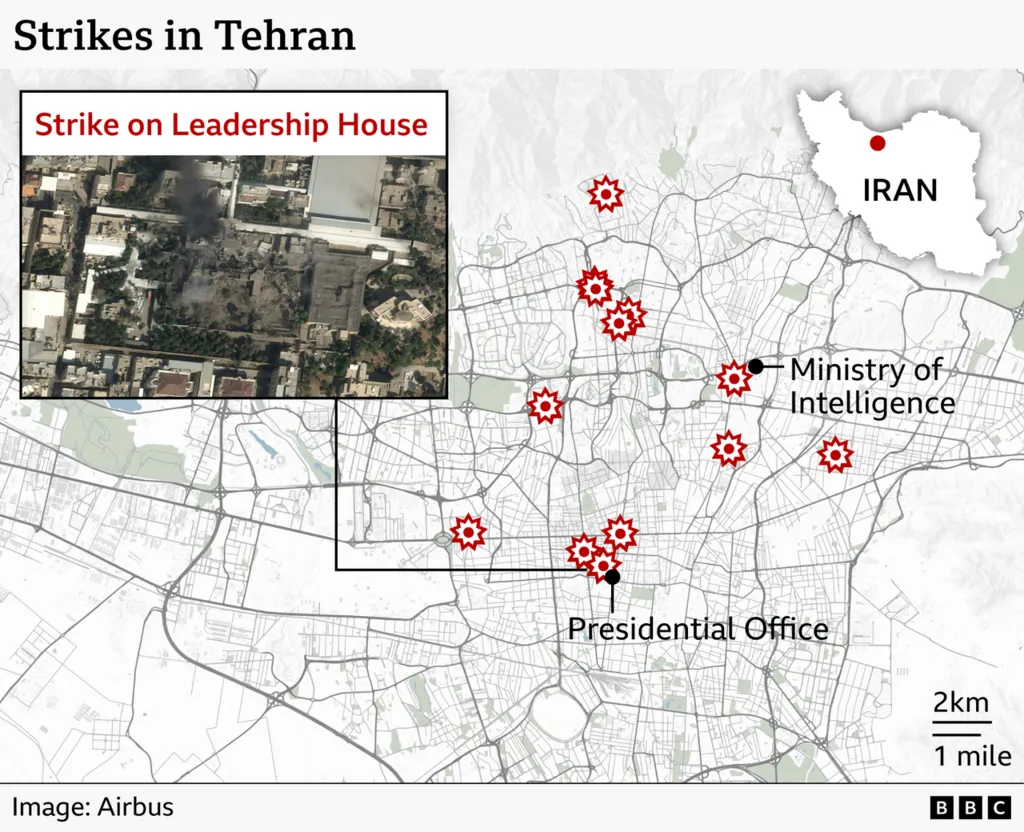
Multiple airstrike and missile impact zones have been identified across central and western Iran. Major urban centres — including Tehran, Isfahan, Tabriz, Kermanshah and Qom — have been hit by U.S.–Israeli strikes targeting military infrastructure, intelligence facilities and sites linked to ballistic missile capability. Joint operations reportedly included assaults on defensive complexes and institutional buildings in Iran’s capital region.

Iranian Retaliatory Strikes Across the Middle East
In response to the joint U.S.–Israeli offensive, Iranian forces have launched ballistic missiles and drones toward a broad array of targets across the Gulf region. At least nine countries have reported impacts, interceptions or air defence responses as missiles and drones passed through or struck national airspace. Affected nations include the United Arab Emirates (United Arab Emirates), Qatar, Kuwait, Bahrain, Jordan and Saudi Arabia. Iran’s intent appears to be to disrupt military assets, strategic infrastructure and, in some cases, commercial hubs.
Urban and Civilian Areas Affected
Secondary strike effects have manifested in major urban areas. Drone and missile debris have damaged facilities in Dubai and Abu Dhabi, leading to fires and injuries. Intercepted projectiles have also caused disruptions and casualties in Manama and other Gulf cities. Civilian airport infrastructure — including key terminals and runways — has sustained damage, closing major hubs and triggering widespread flight cancellations across the region.
Airspace Closures and Global Disruption
The scale of hostilities has led several states to close or suspend their airspace entirely, affecting international travel routes. Nations including Iran, Iraq, Kuwait, the UAE, Bahrain and Jordan have restricted flights, leaving thousands of passengers stranded and forcing global airlines to reroute flights far from the conflict zone.
Regional Military Targets and Bases
In addition to urban centres, Iranian retaliation has targeted American military bases and allied facilities across the Gulf, including installations in Kuwait and Qatar. Proxies aligned with Tehran have also reportedly engaged U.S. and coalition assets in Iraq and Lebanon, broadening the theatres of conflict beyond conventional borders.
Patterns on the Map
Visual overlays from independent mapping sources indicate a “halo” of strike activity radiating outwards from central Iran into adjacent states. Missile and drone vectors have tracked across airspace linking southwestern Iran through Iraq and the Arabian Peninsula, while U.S.–Israeli airstrikes in Iran appear concentrated on strategic nodes such as the capital region and military complexes.
Human and Economic Impact
Casualty reports vary by location, but cumulative figures include dozens killed in Iran, multiple injuries and deaths in Israeli territory, and civilian casualties in Gulf cities affected by falling debris or direct strike effects. Damage to major airports and economic infrastructure has triggered global market volatility and concerns over energy supply routes, particularly near the strategic Strait of Hormuz.

Outlook
Analysts suggest the pattern of strikes mapped across the region reflects both strategic and symbolic objectives. For Israel and the U.S., concentrated strikes within Iran aim to degrade perceived military capabilities. Iran’s widespread ballistic response seeks to demonstrate reach and complicate the regional military balance. As airspace remains closed and governments brace for further impacts, the mapped contours of the conflict underscore a multi‑axis confrontation that spans much of the Middle East.
Related News:
 Israel and Hezbollah Exchange Fire as Conflict Worsens
 Iran’s Regime Still Intact — Coming Days Will Test Its Survival
 Allies of US in the Gulf Bear Brunt of Iran Attacks
 Hopes and Fears as US Iranians Take to Streets After Toppling of Supreme Leader
 Retaliations Continue on Day Two of US-Israel Attacks on Iran
 At Least 153 Dead After Reported Strike on School, Iran Says
 At Least 153 Dead After Reported Strike on School, Iran Says
 ‘It’s Eerie’ – Dubai on Edge as City Comes Under Attack
 BBC Reports from Beit Shemesh After Deadly Iranian Missile Strike
 Iran, the US, and a World Cup That Starts in Three Months
 Allies of US in the Gulf Bear Brunt of Iran Attacks
 Israeli Attacks Kill 31 in Lebanon, Iran Strikes Across Region, US Warplanes Crash in Kuwait
 Eleven Killed in Israeli Strikes on Gaza, Rescuers Say
 ‘I Would Scream in My Sleep’: Alawite Women from Syria Tell of Kidnap and Rape
 Iran Says ‘Guiding Principles’ Agreed With US at Nuclear Talks
 US Pushes to Recruit Organised Crime Gangs into Gaza Police Force
 US Urges Iran to Make Deal as Military Presence Rises
 US Build-Up of Warships and Fighter Jets Tracked Near Iran
 Trump’s Foreign Policy Dilemma Laid Bare by Iran Tensions
 Hamas Holds Vote to Choose New Interim Leader, Source Tells BBC
 Ukraine Negotiator Reveals What It Feels Like Facing Russia
 Mandelson Arrested Amid Political Turmoil as Ukraine Marks Four Years of Conflict
 Russian Troops Executed by Commanders, Soldiers Tell BBC
 US Partially Evacuates Beirut Embassy Amid Rising Iran Tensions
 Ukraine war briefing: Why Ukraine remains defiant and does not feel close to defeat
 ‘Anyone who runs is shot’: Russian soldiers describe killings of troops who refuse orders
 Ukraine remembers its dead as war enters a fifth year
 Seven Killed in Ukrainian Drone Attack on Russian Factory
 ‘Fear Is Everywhere’: Reports From Mexican City Turned Into War Zone by Drug Cartel Feud
 US and Iran to Hold Talks as Pressure for Nuclear Deal Builds
 Orbán Accuses Ukraine of Disrupting Oil Supplies to Hungary
 Pakistan Strikes Afghanistan as PM Says Forces Ready to ‘Crush’ Taliban
 Middle East Flights Halted After Iran Strikes
 UK Must Act with Courage and Clarity on Israel-Palestine Conflict, Says Foreign Affairs Committee Report
 Tottenham Takes On Newcastle
 Radioactive Leak at UK’s Nuclear Warhead Base Sparks Outcry Over Safety and Secrecy
 Terence Stamp, ’60s British Film Legend and Star of Superman, Dies at 87
 Hong Kong Summons UK and Australian Envoys Following Asylum Grants to Democracy Activists
 Is the UK Ready to Put Boots on the Ground in Ukraine? Assessing Military Capacity and Challenges
 Channel Crossings Surge: Over 1,000 People Arrive in the UK in Small Boats in a Single Day
 Macron Phones Trump Over Traffic Jam in New York
 Comey Indictment Deepens Fears of Political Retribution Under Trump
 Yvette Cooper Signals Global Momentum Towards Gaza Peace Deal Amid Humanitarian Crisis
 “It Was Very Tough, But I Love Life”: Former Israeli Hostage Rebuilds Life After Family Killed by Hamas
 Chaos at Ibrox as Martin’s Rangers Era Comes to an End
 Trump Claims Modi Has Agreed to Halt Russian Oil Imports Amid Heightened US Pressure
 Russia’s Latest Push to Win US Favors Shows Deep Desperation
 BBC to Apologise Over Edited Trump Speech Amid Backlash
 Britain deploys RAF specialists to assist Belgium with drone threats
 Trump Urges Herzog to Grant Netanyahu Full Pardon
 Indian authorities demolish Kashmir home linked to Red Fort blast
 Greene Pushes Epstein Files Amid Trump Fallout
 December Run-Off in Chile as Election Produces No Winner
 Zelenskyy Signs Fighter Jet Deal Amid Russian Drone Attacks
 Shadow Fleet at Sea: Europe’s Battle Against Illicit Oil Shipping
 Tiny Curacao Makes History as Smallest Nation to Reach World Cup
 India’s COP30 Delay Raises Global Climate Concerns
 US Suspends Afghan Immigration After White House Shooting
 Georgians Defy Government Crackdown After Year of Protests
 ‘Extinct’ Antelope Returns to Sahara, Bringing Hope
 Facebook Slow to Remove Bondi Attack Praise, Anti-Hate Group Claims
 Trump Weighs Response to Iran Crackdown as Tehran Says Communication Open With US
 US Clears Nvidia AI Chip Sales to China in Policy Shift
 Gulf states warn Trump Iran strikes risk wider Middle East war
 Sydney Shark Attack Surge Shocks Australia Beaches
 EU Says US Ties Have Suffered ‘Big Blow’ After Greenland Crisis
 UK New Car Discounts Near £6,000 as Prices Are Slashed
 Portugal Election Delivers Socialist Win as Far Right Surges
 Australian Families Leave Syrian Camp for Home
 Starmer Weighs Fast-Tracking Defence Boost
 Epstein Eyed Record Label Investment to Access Women, Files Suggest
 How Do You Modernise Mango Farming? India’s Growers Urged to Innovate as Climate Change Hits
 Australian PM Says Former Prince Andrew Has Suffered ‘Extraordinary Fall’ but That Won’t Prompt Republic Referendum
 Farage Chagos Islands Row Sparks Fury
 Storm Hernando: Edinburgh Airport Flights Cancelled in US Travel Chaos
 Chad Shuts Border With Sudan in Bid to Stop Conflict Spreading
 Drugs, Denial, Stigma: Fiji’s HIV Crisis Hits Children
 ‘We’ve been paying for happy endings for Andrew for years’: inside the royal disgrace, biographer says
 Hilary Knight speaks out on Trump’s recent hockey remarks
 American Citizen Killed in Cuba Boat Shooting, U.S. Officials Say