Published: March 6, 2026 | The English Chronicle Desk | The English Chronicle Online
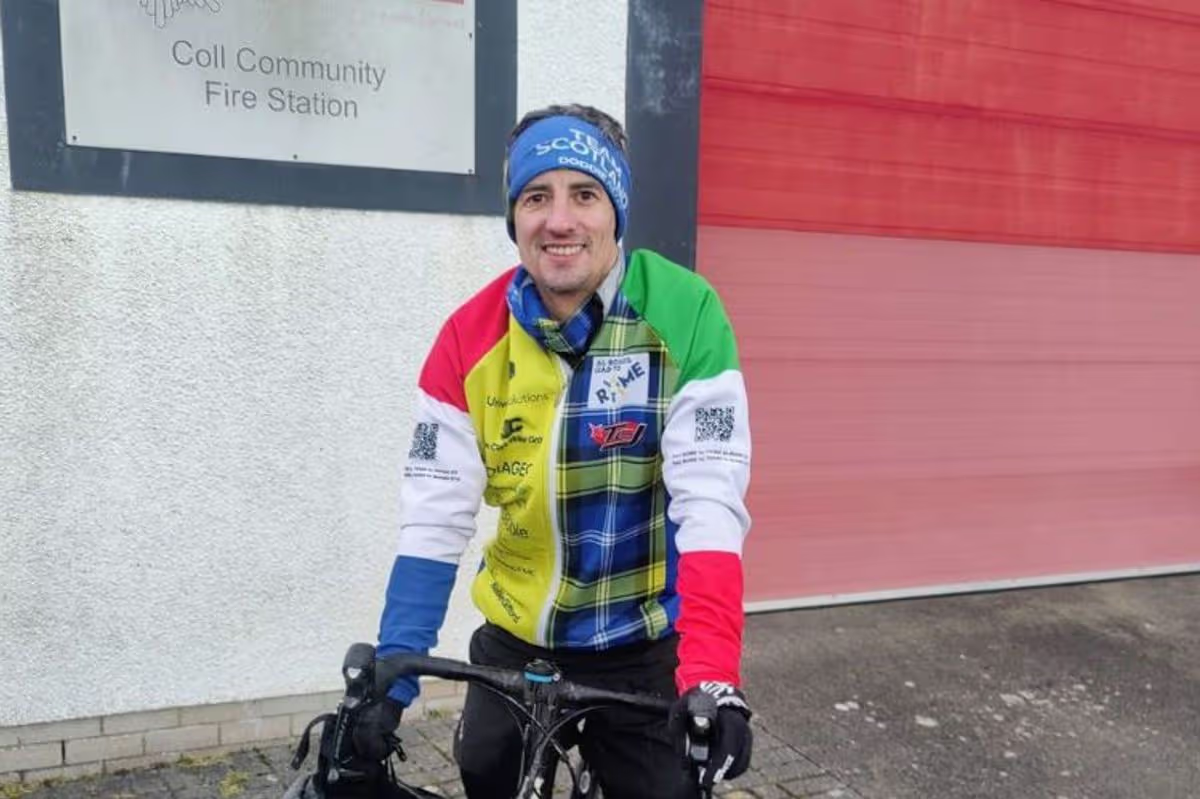
A Scottish firefighter is preparing to cycle more than 800 miles to Dublin in a powerful tribute to his uncle, who died after battling motor neurone disease (MND). The demanding journey, which will take him across large parts of the United Kingdom and Ireland, aims to raise awareness and funds for research into the devastating neurological condition.

The firefighter, who serves with a Scottish fire and rescue service, decided to undertake the challenge after witnessing the effects of the disease on his uncle and their family. Motor neurone disease is a progressive condition that damages nerve cells in the brain and spinal cord, gradually causing muscle weakness, loss of mobility and difficulties with speech and breathing.
For the cyclist, the challenge is both a personal and emotional mission. He has described his uncle as a strong and inspiring figure whose determination during his illness left a lasting impression on the family. The long-distance ride is intended to honour that resilience while helping others affected by the same disease.
The planned journey will cover roughly 800 miles, making it a physically demanding endurance event. The firefighter will travel across multiple regions, navigating varied terrain and unpredictable weather conditions before reaching Dublin. The route will include long stretches of rural roads, coastal routes and busy urban areas.
Training for the challenge has already required months of preparation. Long cycling sessions, strength training and endurance exercises have become part of the firefighter’s routine as he builds the stamina needed to complete the ride safely.
Balancing the training with the responsibilities of emergency service work has presented additional challenges. Firefighters often work irregular shifts, including overnight duties and extended hours responding to emergencies. Preparing for a long-distance charity ride while maintaining operational readiness requires careful planning and dedication.
Despite these challenges, the firefighter says the motivation behind the journey keeps him focused. Watching his uncle face the progression of motor neurone disease was a deeply emotional experience, and the family witnessed firsthand how the illness gradually affects every aspect of daily life.
Motor neurone disease affects the nerves that control voluntary muscle movement. Over time, patients may lose the ability to walk, speak, swallow and eventually breathe independently. Although treatments can help manage symptoms, there is currently no cure for the condition.
Charities and research organisations continue to search for breakthroughs that could slow or stop the progression of the disease. Fundraising initiatives such as long-distance cycling challenges play an important role in supporting research efforts and providing assistance to patients and their families.
The firefighter hopes his journey will encourage more people to learn about the disease and support organisations working to combat it. He has set up fundraising campaigns connected to the ride, inviting donations from supporters who wish to contribute to MND research and patient care programmes.
Community support has already begun to build around the challenge. Friends, colleagues and local residents have expressed admiration for the effort involved in undertaking such a demanding ride for charity. Many people within the emergency services community have also offered encouragement.
Long-distance charity cycling events have become increasingly popular as a way to raise awareness for medical causes. Participants often combine personal stories with endurance challenges that capture public attention and generate fundraising momentum.
In this case, the emotional connection to the cause has resonated strongly with supporters. Stories about individuals confronting serious illnesses often highlight the broader human impact of diseases that may otherwise remain less widely understood.
Motor neurone disease gained global attention in recent years through public awareness campaigns and high-profile fundraising efforts. Yet families affected by the condition say continued support for research remains essential.
Scientists are investigating multiple avenues in the search for effective treatments. Research efforts include studies of genetic factors, new drug therapies and technologies designed to improve the quality of life for patients living with the disease.
The firefighter’s 800-mile journey therefore represents more than a physical challenge. It symbolises the determination of families and communities to support those facing one of the most difficult neurological conditions.
As the cyclist prepares to set off on the long journey toward Dublin, he says the memory of his uncle will be the driving force behind every mile. The ride will test endurance, resilience and determination—but it also carries a powerful message of remembrance and hope.

By turning personal grief into a mission for awareness and support, the Scottish firefighter hopes the journey will contribute in some way to the ongoing fight against motor neurone disease.
Related News:
 Illegal Skin Lightening Cream Being Sold in UK Butchers, Watchdog Warns
 Adoption Breakdown Ended My Career and Relationship – ‘We’re Told to Get On With It’
 Mind Launches Inquiry into AI and Mental Health After Guardian Investigation
 Mystery GP on Train Saves Passenger’s Life
 Parents of Gravely Ill Child Refused Respite Care
 ‘I Almost Died After a Touch‑and‑Go C‑Section’
 Water Cremation Introduced in UK First
 GPs Losing a Day of Appointments to No‑Shows Each Month
 Allergy Training to Become Compulsory in Schools in England
 Concerns Mount Over Accuracy of At-Home Health Tests as Study Calls for Stricter Regulation
 The Ketamine Crisis in the UK is a Silent Epidemic Leaving Users with Lifelong Pain
 Woman Warned She Might Need Leg Amputation to Survive After Liquid Brazilian Butt Lift
 Cats Develop Dementia Similarly to Humans, Study Finds
 Alarming rise in abusive teen relationships in the UK sparks urgent warnings
 Inquest Finds Agency Worker Failings Led to Unlawful Death of Vulnerable 14-Year-Old
 Shocking Rise in Children’s Exposure to Violent Online Pornography Raises Alarm
 Baby Food Manufacturers Given 18 Months to Improve Nutrition and Labelling
 Why E-Bikes and E-Scooters Are Making Streets a ‘Nightmare’ for Blind People
 Millions in the UK at Higher Risk of Heart Failure and Stroke Due to Air Pollution, Study Warns
 UK Graduates in Healthcare Report Highest Satisfaction with Degree Choices
 Systemic Racism in Maternity Care Continues to Endanger Black Women in England, MPs Warn
 One in Three GPs in England Do Not Work in NHS, Raising Concerns Over Access to Care
 UK Doctors Guilty of Sexual Misconduct Continue Practising Amid Weak Sanctions, Research Finds
 Starmer Unveils Plan for NHS “Online Hospital” to Tackle Waiting Lists
 Questions Remain as Rugby Legend Lewis Moody Faces Motor Neurone Disease Diagnosis
 Women Challenge Meta Over Targeted Ads After Miscarriage
 £18 Prostate Cancer Test Could Save Thousands of Lives
 One in 12 Secondary Pupils Sent to Isolation Weekly
 M&S and Morrisons Lead Christmas Supermarket Taste Test
New Prostate Cancer Drug Set to Halve Death Risk in England
M&S and Morrisons Lead Christmas Supermarket Taste Test
New Prostate Cancer Drug Set to Halve Death Risk in England
 UK Health Leaders Push for Urgent Tobacco & Vape Bill
 Hospice Cuts Raise Alarm Across England Amid Funding Crisis
 Celebrities and Charities Demand UK Government Act on Child Poverty
 Patients to Test Health at Home to Ease NHS Winter Pressure
 Shouting Works Best to Deter Gulls, UK Study Finds
 Reeves rejects £1bn plea for NHS redundancy payouts
 Stroke Patient Mistaken for Drunk, Care Delayed
 ‘Traumatic Wait’: Northern Ireland Women Face Breast Cancer Delays
 Coffins Now Too Large to Cremate Amid Rising Obesity Crisis
 Five-Year-Old Dies After Rare Tonsil Surgery Complication
 Fibromyalgia Patients Struggle as NHS Fails to Provide Care
 More Patients Now Contacting GPs Online, Data Shows
 Children to Receive Home Vaccines as England Acts
 Local Fish Could Boost UK Health and Economy Significantly
 NHS Violence Crisis: Staff Face Daily Assaults
 Celebrity Campaign Highlights SMA Screening Failures
 Robo-Vaccination Could Transform Fight Against Bovine TB
 UK Glaucoma Rise Signals Looming Eye Health Crisis by 2060
 Reform UK Health Plan ‘Would Cost £1.7bn’, Streeting Says
 NHS boosts bowel screening accuracy with FIT reform
 Nottingham survivor warns of repeat attacks without mental health reform
 Study Finds One in Seven England Takeaways Are Dark Kitchens
 Pneumonia Surge Pushes England Emergency Cases Higher
 Labour Utterly Humiliated by Straight-Talking Mum Who Cut Through Keir Starmer’s Insanity
 Royal Family LIVE: ‘Pariah’ Andrew Mountbatten-Windsor Sparks Fresh Revolt Among Staff
 Renters Furious as Decent Homes Standard Delayed Until 2035
 The Victorian aristocrat who became Britain’s first Muslim lord
 Motorists Could Face ‘Mandatory’ Driving Ban for Road Offences Under Tougher Laws
 Royal Mail Blames Poor Weather and Sickness for Delayed Deliveries
 Disability and LGBT Hate Crimes Set to Become Aggravated Offences
 Snow and Rain Warnings as Cold Snap Continues in the UK
 Flooding May Worsen Before It Improves as More Rain Forecast for the UK
 Teacher Who Lied About Cambridge Degree Banned From Profession
 UK MPs Demand Ban on Brazilian Butt Lifts
 Last‑ditch Call to Save Police Front Counters in London
 NHS Urges Nine Million People to Get Therapy
 Dad Found in Bed with Daughter 16 Years After Abandoning Her as a Child
 Store at Famous Shopping Village to Close After 18 Years Due to Rising Costs
 ‘Don’t Make Us Security Guards,’ Says Teacher Stabbed by Pupil
 ‘A Disgrace’ — Patient Blasts Neurology Report
 Will the New SEND Reforms in England Work? You Have Your Say
 Half of Britons Avoid GP When Ill, Survey Reveals Growing Concern
 BBC Edited a Second Racial Slur Out of BAFTA Ceremony
 ‘Postcode Lottery’ Limits Weight Loss Drug Access Across NHS
 Drop in Overseas Workers Sparks ‘Car Crash’ for UK Hospitals
 Grave of Murdered Toddler James Bulger Vandalised
 50,000 People Waited Over 24 Hours in A&E Corridor Care
 ‘It’s Joy in a Pot’: Why Houseplants Could Make You Happier
 New Infection Risk Alert at Glasgow’s Flagship Hospital
 Calls Grow to Remove Billboard Following Lyra McKee Graffiti