Published: 12 March 2026. The English Chronicle Desk. The English Chronicle Online.
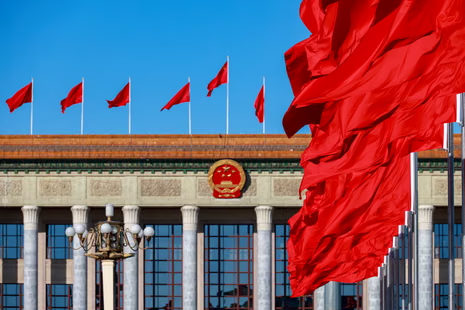
China’s political leadership is preparing to approve a controversial ethnic unity law that could reshape education across minority regions. The proposed ethnic unity law is expected to pass during the closing session of China’s annual parliamentary meetings in Beijing. Lawmakers from the National People’s Congress are widely expected to support the measure without opposition.
The legislation forms part of a wider policy agenda debated during the country’s annual “two sessions” gathering. This yearly event brings together thousands of delegates from the National People’s Congress and political advisory bodies. During the meetings, senior leaders outline economic targets, legislative priorities, and long-term governance plans.
Observers believe the ethnic unity law represents another significant step in China’s effort to strengthen national cohesion. Authorities say the proposal will encourage stronger communication and shared identity among the country’s diverse ethnic communities. Officials argue that a common language and unified cultural framework will promote stability and national development.
The law would require schools across China to prioritise Mandarin Chinese as the default teaching language. Minority languages, including Tibetan, Uyghur, and Mongolian, would remain present but receive lower priority in classrooms. In practice, Mandarin would become the principal language used in textbooks, instruction, and official school activities.
Supporters of the legislation claim a stronger Mandarin focus will help minority students access wider educational opportunities. They say proficiency in the national language improves employment prospects and economic mobility across China’s vast labour market. Government officials also argue that consistent language policies simplify administration and ensure equal access to public services.
However, critics warn that the ethnic unity law could weaken the cultural heritage of minority communities. They believe limiting native languages in schools risks gradually eroding long-standing traditions and identities. Cultural preservation groups have expressed concern that education systems shape how younger generations connect with their heritage.
Debate around language policy has appeared before in several minority regions during the past decade. In 2020, protests occurred in Inner Mongolia after authorities expanded Mandarin-language teaching requirements in schools. Demonstrators feared the changes would gradually replace the Mongolian language in everyday education.
Similar concerns have emerged in other areas with significant ethnic minority populations. These include the Xinjiang Uyghur Autonomous Region and the Tibet Autonomous Region. Both regions already operate under policies that emphasise Mandarin language instruction in schools and government services.
Human rights advocates argue the ethnic unity law formalises practices that already exist in some areas. Researchers studying minority policy say several regions have gradually increased Mandarin requirements over recent years. They believe the new legislation would standardise these approaches nationwide.
Analysts also note that the proposal fits within a broader political philosophy emphasised by China’s leadership. The country’s president has frequently highlighted the importance of unity among China’s many ethnic groups. He has described these communities as closely connected, often using imagery suggesting shared strength and cohesion.
Within that framework, officials argue stronger cultural integration supports long-term national stability. They believe encouraging common values and language helps prevent social fragmentation in a large and diverse nation. China officially recognises fifty-six ethnic groups within its population of more than one billion people.
Despite official assurances, international observers continue to monitor developments surrounding minority policies closely. Advocacy groups worry that stronger assimilation policies could further reduce space for minority languages and cultural expression. They say education systems play a crucial role in protecting linguistic diversity and historical identity.
Beyond language policy, lawmakers will also vote on several other major initiatives during the closing parliamentary session. These include an ambitious new environmental code designed to consolidate various pollution and climate regulations. Officials say the updated framework will strengthen environmental governance across the country.
The draft environmental code combines previously separate laws into a unified legal structure for ecological protection. It includes detailed chapters covering pollution control, waste management, and climate adaptation strategies. Policymakers hope this approach will improve coordination between environmental authorities and regional governments.
China has pledged to peak carbon emissions by 2030 and achieve carbon neutrality by 2060. The environmental code is intended to support those goals through clearer regulatory standards and stronger enforcement mechanisms. Experts say consolidating environmental laws may reduce inconsistencies that previously complicated policy implementation.
Economists and policymakers are also discussing China’s new five-year economic development plan covering the period between 2026 and 2030. The plan outlines priorities for technological innovation, infrastructure expansion, and sustainable growth across key sectors. It also addresses economic challenges linked to slower growth and shifting global trade patterns.
During the opening session of the parliamentary meetings, China’s premier announced a national economic growth target of 4.5 percent for 2026. The figure represents the lowest annual target set in decades. Analysts interpret the cautious target as recognition of domestic economic pressures and global uncertainty.
The government’s annual budget and policy reports will also receive formal approval during the closing session. Traditionally, votes within the National People’s Congress pass with overwhelming support from delegates. The legislature has rarely rejected proposals placed on its official agenda.
As a result, observers widely expect the ethnic unity law to be adopted once voting begins. Once approved, authorities could begin implementing its provisions across schools and public institutions. Education ministries and local governments would then adapt curricula and administrative rules accordingly.
For supporters within government, the legislation represents a logical extension of existing national integration policies. They believe strengthening Mandarin education encourages equal participation in modern Chinese society. From their perspective, a common language supports economic mobility and national cohesion.
For critics, however, the policy raises deeper questions about cultural preservation and minority rights. Linguists and historians often emphasise that language carries centuries of traditions, stories, and identity. When languages decline, communities may gradually lose unique cultural expressions tied to those words.
Many educators argue balanced bilingual education can protect minority heritage while maintaining national communication standards. They say students benefit from learning both their native language and the national language fluently. This approach, they suggest, allows cultural traditions to remain strong while opening broader opportunities.
As debate continues internationally, China’s leadership appears determined to press ahead with its legislative agenda. The ethnic unity law therefore stands at the centre of wider conversations about identity, governance, and cultural policy. Its implementation will likely influence educational and cultural discussions across China for years ahead.
The coming parliamentary vote may appear procedural, yet its consequences could be far-reaching. Language policy shapes how societies understand history, identity, and belonging. The outcome of the ethnic unity law will therefore carry significance well beyond the walls of China’s legislature.
Related News:
 British Woman in Iran ‘Losing Hope’ Amid Ongoing Detention
 BBC Journalist Held and Interrogated in Vietnam
 UK University Suspends Human Rights Research Following Pressure from China
 UK University Faces Counter-Terror Probe Over China Pressure
 BBC to Apologise Over Edited Trump Speech Amid Backlash
 Britain deploys RAF specialists to assist Belgium with drone threats
 Ukraine-Russia war latest: Putin’s troops exploit bad weather to force Kyiv withdrawal from multiple towns
 US Justice Department Files Lawsuit Against California Over Partisan Voting Maps
 Greene Pushes Epstein Files Amid Trump Fallout
 Trump Deploys DHS to Charlotte in Major Arrest Operation
 December Run-Off in Chile as Election Produces No Winner
 Canada Passes Carney’s First Budget in Tight Parliamentary Vote
 Shadow Fleet at Sea: Europe’s Battle Against Illicit Oil Shipping
 Rama Rebukes Mahmood for Targeting Albanian Families
 Russian Vessel Used Lasers on RAF Pilots, UK Claims
 Pentagon Officials in Ukraine to Discuss War End
 Venezuela Threatens Nobel Winner Machado with Fugitive Status
 Trump Envoy to Discuss Ukraine Peace at Kremlin
 Georgians Defy Government Crackdown After Year of Protests
 India’s Labour Law Overhaul Sparks Fierce Debate
 Video shows Israeli troops kill Palestinians after surrender
 Chinese & Japanese Boats Clash Near Disputed Islands
 EU plans $105bn Ukraine aid using frozen Russian assets
 Global campaign launched to free Palestinian leader Barghouti
 Russia losses Ukraine war peace talks intensify amid rising deaths
 Zelenskyy Accuses Russia of Sabotaging Peace Talks
 Trump ‘Not Worried’ as China Conducts Massive Taiwan Wargame
 Khaleda Zia Laid to Rest with State Honour in Dhaka
 Maduro Faces Court in New York Over Drugs and Weapons Case
 Albanese Opens Door to Bondi Royal Commission Amid Rising Pressure
 Trump Escalates Minnesota Immigration Surge Amid Rising Tensions
 Iran Protesters Defy Crackdown as Violent Clashes Intensify
 Trump Eyes Strong Military Options Amid Iran Protest Crackdown
 Trump Threatens Strong Action If Iran Executes Protesters
 Machado Trump medal gesture reshapes Venezuela power struggle
 Trump Receives Machado’s Nobel Medal in White House Meeting
 EU weighs response amid Greenland tariff crisis with Trump
 US Considers Asylum for British Jews Amid Rising Antisemitism
 ICE street raids expose a chilling future for public freedoms
 US Africa aid remarks spark anger after leaked State email
 Trump Launches “Board of Peace” Amid Global Diplomacy Push
 EU Says US Ties Have Suffered ‘Big Blow’ After Greenland Crisis
 Andrew Hastie Emerges as Leadership Rival to Ley
 Russia Strikes Kyiv and Kharkiv as Peace Talks Enter Day Two
 Starmer China visit underscores clear-eyed national security stance
 Starmer China visit raises human rights pressure on Beijing
 Israel Moves to Bar MSF From Gaza Operations
 Trump Praises ‘Terrific’ Petro After White House Talks
 Sydney Protest Escalates and Elderly Woman Suffers Severe Injury
 Tarique Rahman’s Rise Toward Bangladesh’s Top Job
 Glass Cliff Debate After Ley’s Ouster
 Japan Seizes Chinese Boat Amid Rising Tensions
 Australian Families Leave Syrian Camp for Home
 Trump Attacks UK-California Energy Pact
 Kim Jong-un Unveils Housing for War Families
 Trump and Chagos Deal Rift Over Iran Strikes
 Andrew Mountbatten-Windsor Arrest After FBI Radar
 Andrew Arrest Sparks Republic Debate in Australia
 Global corruption crisis: Who Washington shields
 Duterte ICC Hearing Begins Amid Defiance
 Farage Chagos Islands Row Sparks Fury
 Trump Tariffs Threat Spark UK and EU Alarm
 The Dangerous Rise of Remigration Across Modern Europe
 Trump’s Marathon Speech Fails to Mask a Growing National Disconnect
 Trump Speech Sparks Intense Debate Across Divided America
 Jacinda Ardern Moves To Australia Following Her US Fellowships
 US to offer passport services in West Bank settlements
 Has Europe truly learned from the failures of 2022?
 Health Funding Row Rocks US‑Africa Relations
 Middle East Flights Halted After Iran Strikes
 Trump Faces Questions Over Iran Conflict Plan
 Nick Greiner Warns Over Election Review Fallout
 Herzog Asio meeting sparks security storm
 Trump Rebukes Starmer Over Iran Strikes Row
 Trump Iran Strikes Row Sparks Washington Storm
 UK Prepares Aircraft Carrier for Middle East Crisis
 Pete Hegseth Iran War Remarks Spark Alarm
 Kasasa Island Dispute Fuels Japan-China Tensions
 Trump Pressures Congress Over Save America Act
 Iranian Football Squad Asylum Drama Shocks Australia