Published: 12 March 2026. The English Chronicle Desk. The English Chronicle Online.
Australian authorities have launched a criminal inquiry after activists alleged an Iranian handler threatened them during an international football match. The incident occurred during a Women’s Asian Cup fixture held at the Gold Coast’s Cbus Super Stadium last week.
Police in Queensland confirmed they are examining a complaint involving a man reportedly linked to Iran’s national women’s football team. Activists from Australia’s Iranian diaspora claim the individual made a threatening gesture during the match against the Australia women’s national soccer team. The allegation has intensified scrutiny over the presence of a suspected Iranian handler within Australia’s borders.
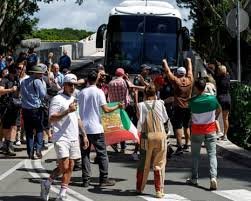
The incident unfolded on 5 March during a lively Women’s Asian Cup encounter that attracted considerable international attention. Several Iranian Australians attended the match hoping to support the players while protesting against Tehran’s government. According to one protester, tensions rose when activists began chanting criticism directed at the team’s management staff. She said the man believed to be an Iranian handler turned toward them and reacted angrily.
The protester, who requested anonymity due to safety fears, described a gesture she interpreted as a death threat. She said the man looked directly at the group before drawing a finger across his throat. The gesture, she claimed, was clearly directed at the activists who were voicing opposition to Iran’s authorities. The woman later filed a formal complaint with police.
Investigators from Queensland Police have since confirmed the matter remains under active review. A spokesperson stated that officers received a complaint connected to the match and opened inquiries shortly afterwards. Authorities have not publicly named suspects but confirmed investigations are continuing as officers gather evidence. Officials have not commented further on whether the alleged Iranian handler remains in Australia.

The allegation has resonated strongly within Australia’s Iranian community, which has long voiced concerns about intimidation. Community members claim critics of Tehran sometimes face harassment even after resettling abroad. Several diaspora activists argue that the latest incident highlights wider issues related to security screening. They believe individuals linked to powerful Iranian organisations should face stricter immigration checks.
Particular concern surrounds the role of the Islamic Revolutionary Guard Corps. The paramilitary force holds immense influence within Iran’s political and security structures. Western governments have repeatedly accused the IRGC of supporting militant groups and conducting covert operations overseas. Critics argue that any suspected connection between visitors and the IRGC demands thorough scrutiny.
Dr Rana Dadpour, founder of the advocacy organisation AusIran, said many diaspora members felt alarmed by the reported incident. She explained that activists regularly speak against Iran’s ruling establishment and therefore require a safe environment. According to Dadpour, authorities must reassure the community that intimidation will not be tolerated. She argued that the presence of a suspected Iranian handler raised troubling questions.
Her concerns echoed across social media platforms, where diaspora members shared accounts of harassment linked to Iranian officials abroad. Some activists insisted that immigration processes must consider alleged ties to security organisations in Tehran. Others said Australia should adopt stricter screening similar to measures used by allied nations. These voices have grown louder following the stadium confrontation.
Community leaders also questioned why someone allegedly linked to the IRGC received entry permission. Hadi Karimi, vice-president of the Iranian Society of Queensland, called for greater transparency. He said community members deserved explanations about how such individuals obtained visas. Karimi further asked whether authorities conducted adequate background checks before granting entry.
Australian officials have so far declined to discuss specific visa decisions linked to the case. A spokesperson for the Department of Home Affairs said privacy rules prevent comment on individual applicants. However, the department emphasised that every visa application undergoes assessment under strict legal requirements. Officials added that applicants must satisfy both character and security criteria before approval.
Australia’s Home Affairs Minister Tony Burke also addressed broader concerns about national security assessments. He said intelligence agencies analyse available information before advising on visa decisions. Burke explained that authorities rely on international intelligence partners when evaluating potential risks. His remarks aimed to reassure critics that national security remains a central priority.
The controversy unfolded alongside dramatic developments involving members of Iran’s women’s national football squad. Six players reportedly sought asylum in Australia earlier this week, drawing significant international attention. Their decision created diplomatic tension between Canberra and Tehran within hours. Iranian officials accused Australia of detaining the athletes against their will.
Iran’s foreign affairs ministry strongly criticised the situation in public statements released earlier this week. Officials insisted that the players were effectively being held “hostage” by Australian authorities. Canberra rejected that claim and emphasised that asylum requests follow independent legal procedures. Immigration experts say such cases require careful evaluation under international protection obligations.
Complications emerged when one of the footballers reportedly reconsidered her asylum request after initial discussions. Authorities said the player contacted Iranian diplomatic representatives to arrange a return home. That contact reportedly revealed the location of teammates who were seeking protection. Security concerns then forced officials to urgently relocate the remaining players to a new secure site.
The unfolding drama has amplified attention on political tensions surrounding Iranian representation in international sport. Critics argue that athletes sometimes travel abroad under close supervision from officials loyal to Tehran. Activists claim those officials may attempt to monitor or intimidate diaspora critics attending matches. The alleged conduct of the suspected Iranian handler therefore became a symbol of wider anxieties.
Meanwhile, political debate intensified within Australia’s federal parliament regarding Iran’s influence abroad. A parliamentary inquiry recently examined intelligence warnings about Tehran’s activities inside the country. The review is being conducted by the Parliamentary Joint Committee on Intelligence and Security. Its work focuses on assessing threats posed by foreign state actors.
During hearings, security agencies reportedly warned that Iran had ordered at least two antisemitic incidents within Australia. Those allegations alarmed lawmakers and strengthened calls for stronger countermeasures. The committee subsequently supported the government’s decision to classify the IRGC as a state sponsor of terrorism. That designation reflects growing international concern about Iran’s external operations.
The Australian government under Anthony Albanese has promised to monitor potential foreign interference closely. Ministers say authorities remain alert to attempts by overseas governments to pressure diaspora communities. Officials emphasise that individuals living in Australia must enjoy freedom of expression without intimidation. Police investigations, they say, are part of that broader commitment.
For many Iranian Australians, the stadium confrontation revived memories of earlier incidents involving harassment or threats. Community organisations have repeatedly urged authorities to take these fears seriously. They say the diaspora includes many people who fled repression and therefore require protection. The alleged behaviour of the suspected Iranian handler reinforced those anxieties.
Human rights advocates argue that diaspora communities often remain vulnerable to transnational repression. Governments accused of authoritarian practices sometimes target critics living overseas. Researchers note that intimidation tactics may include surveillance, threats, or pressure against relatives still living in the home country. Such patterns have been documented among several global authoritarian regimes.

Australian officials insist that national laws provide mechanisms to address intimidation or foreign interference. Police and intelligence agencies maintain specialised teams dedicated to investigating such cases. If evidence confirms criminal conduct, prosecutors can pursue charges under existing legislation. Authorities emphasise that the legal system treats threats and intimidation with utmost seriousness.
As the investigation continues, many questions remain unanswered regarding the alleged confrontation at the stadium. Police have not indicated when their inquiry might conclude or whether charges will follow. Nevertheless, the case has already influenced public debate about immigration screening and national security. It has also highlighted the complex intersection of sport, diplomacy, and political activism.
The Women’s Asian Cup match itself was intended to celebrate sporting excellence and international cooperation. Instead, the encounter became overshadowed by geopolitical tension and allegations of intimidation. For activists in Australia’s Iranian diaspora, the episode represents more than a single confrontation. It symbolises a broader struggle for safety, free speech, and accountability.
Authorities now face the challenge of balancing open international engagement with strong national security safeguards. Immigration systems must allow legitimate visitors while preventing potential threats. Community leaders say transparency and vigilance are essential to maintain public trust. The ongoing probe into the alleged Iranian handler will likely remain under intense public scrutiny.
Related News:
 British Woman in Iran ‘Losing Hope’ Amid Ongoing Detention
 BBC Journalist Held and Interrogated in Vietnam
 UK University Suspends Human Rights Research Following Pressure from China
 UK University Faces Counter-Terror Probe Over China Pressure
 BBC to Apologise Over Edited Trump Speech Amid Backlash
 Britain deploys RAF specialists to assist Belgium with drone threats
 Ukraine-Russia war latest: Putin’s troops exploit bad weather to force Kyiv withdrawal from multiple towns
 US Justice Department Files Lawsuit Against California Over Partisan Voting Maps
 Greene Pushes Epstein Files Amid Trump Fallout
 Trump Deploys DHS to Charlotte in Major Arrest Operation
 December Run-Off in Chile as Election Produces No Winner
 Canada Passes Carney’s First Budget in Tight Parliamentary Vote
 Shadow Fleet at Sea: Europe’s Battle Against Illicit Oil Shipping
 Rama Rebukes Mahmood for Targeting Albanian Families
 Russian Vessel Used Lasers on RAF Pilots, UK Claims
 Pentagon Officials in Ukraine to Discuss War End
 Venezuela Threatens Nobel Winner Machado with Fugitive Status
 Trump Envoy to Discuss Ukraine Peace at Kremlin
 Georgians Defy Government Crackdown After Year of Protests
 India’s Labour Law Overhaul Sparks Fierce Debate
 Video shows Israeli troops kill Palestinians after surrender
 Chinese & Japanese Boats Clash Near Disputed Islands
 EU plans $105bn Ukraine aid using frozen Russian assets
 Global campaign launched to free Palestinian leader Barghouti
 Russia losses Ukraine war peace talks intensify amid rising deaths
 Zelenskyy Accuses Russia of Sabotaging Peace Talks
 Trump ‘Not Worried’ as China Conducts Massive Taiwan Wargame
 Khaleda Zia Laid to Rest with State Honour in Dhaka
 Maduro Faces Court in New York Over Drugs and Weapons Case
 Albanese Opens Door to Bondi Royal Commission Amid Rising Pressure
 Trump Escalates Minnesota Immigration Surge Amid Rising Tensions
 Iran Protesters Defy Crackdown as Violent Clashes Intensify
 Trump Eyes Strong Military Options Amid Iran Protest Crackdown
 Trump Threatens Strong Action If Iran Executes Protesters
 Machado Trump medal gesture reshapes Venezuela power struggle
 Trump Receives Machado’s Nobel Medal in White House Meeting
 EU weighs response amid Greenland tariff crisis with Trump
 US Considers Asylum for British Jews Amid Rising Antisemitism
 ICE street raids expose a chilling future for public freedoms
 US Africa aid remarks spark anger after leaked State email
 Trump Launches “Board of Peace” Amid Global Diplomacy Push
 EU Says US Ties Have Suffered ‘Big Blow’ After Greenland Crisis
 Andrew Hastie Emerges as Leadership Rival to Ley
 Russia Strikes Kyiv and Kharkiv as Peace Talks Enter Day Two
 Starmer China visit underscores clear-eyed national security stance
 Starmer China visit raises human rights pressure on Beijing
 Israel Moves to Bar MSF From Gaza Operations
 Trump Praises ‘Terrific’ Petro After White House Talks
 Sydney Protest Escalates and Elderly Woman Suffers Severe Injury
 Tarique Rahman’s Rise Toward Bangladesh’s Top Job
 Glass Cliff Debate After Ley’s Ouster
 Japan Seizes Chinese Boat Amid Rising Tensions
 Australian Families Leave Syrian Camp for Home
 Trump Attacks UK-California Energy Pact
 Kim Jong-un Unveils Housing for War Families
 Trump and Chagos Deal Rift Over Iran Strikes
 Andrew Mountbatten-Windsor Arrest After FBI Radar
 Andrew Arrest Sparks Republic Debate in Australia
 Global corruption crisis: Who Washington shields
 Duterte ICC Hearing Begins Amid Defiance
 Farage Chagos Islands Row Sparks Fury
 Trump Tariffs Threat Spark UK and EU Alarm
 The Dangerous Rise of Remigration Across Modern Europe
 Trump’s Marathon Speech Fails to Mask a Growing National Disconnect
 Trump Speech Sparks Intense Debate Across Divided America
 Jacinda Ardern Moves To Australia Following Her US Fellowships
 US to offer passport services in West Bank settlements
 Has Europe truly learned from the failures of 2022?
 Health Funding Row Rocks US‑Africa Relations
 Middle East Flights Halted After Iran Strikes
 Trump Faces Questions Over Iran Conflict Plan
 Nick Greiner Warns Over Election Review Fallout
 Herzog Asio meeting sparks security storm
 Trump Rebukes Starmer Over Iran Strikes Row
 Trump Iran Strikes Row Sparks Washington Storm
 UK Prepares Aircraft Carrier for Middle East Crisis
 Pete Hegseth Iran War Remarks Spark Alarm
 Kasasa Island Dispute Fuels Japan-China Tensions
 Trump Pressures Congress Over Save America Act
 Iranian Football Squad Asylum Drama Shocks Australia