Published: 12 March 2026. The English Chronicle Desk. The English Chronicle Online.
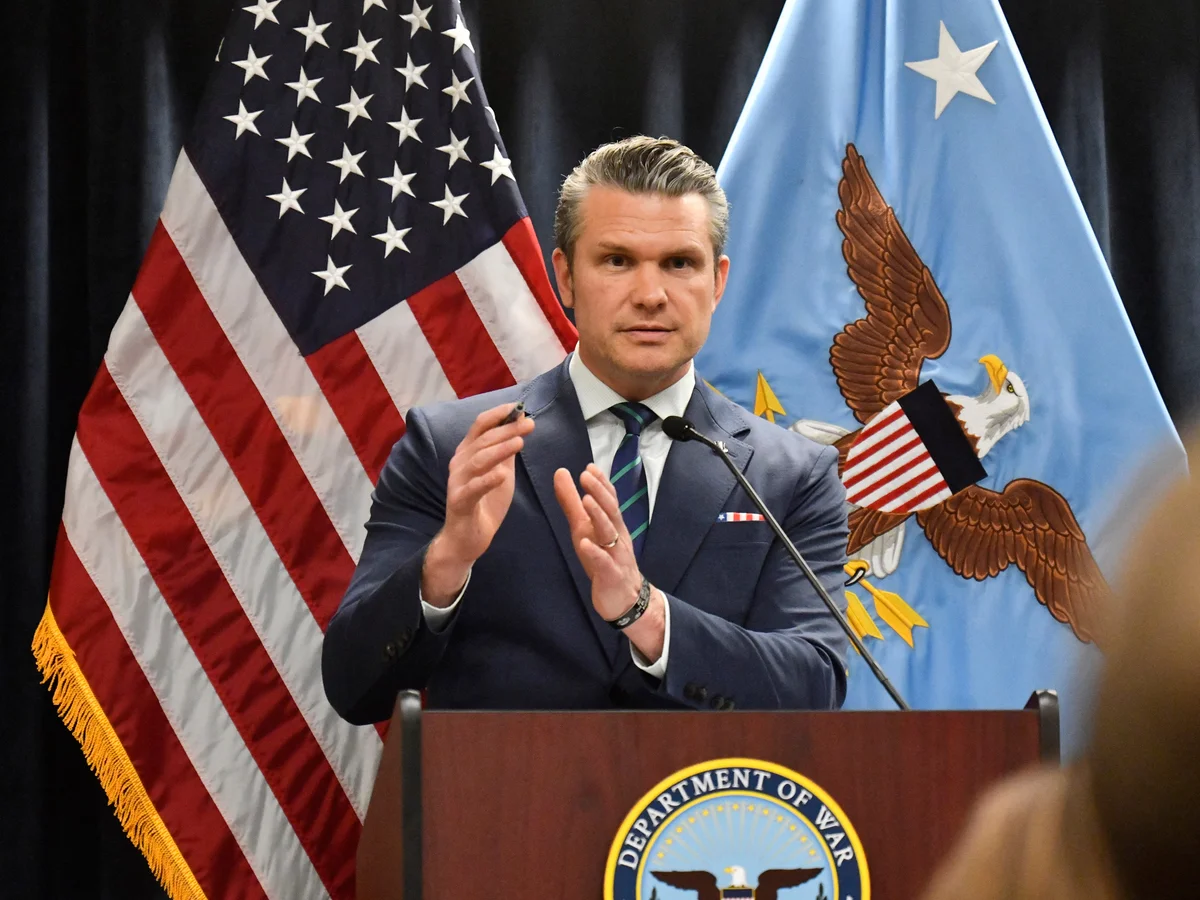
The current geopolitical climate has reached a boiling point as the United States and Israel continue their intense joint military operations. At the center of this storm stands the United States Defense Secretary, Pete Hegseth, whose past rhetoric provides a window into the current strategy. For over a decade, Pete Hegseth has consistently utilized public platforms to label Iran as the primary threat to Western civilization and global stability. These documented views, spanning books and broadcasts, have shaped the aggressive stance the Pentagon now maintains during this regional crisis.
Early in his media career, Pete Hegseth established a reputation for uncompromising views regarding Middle Eastern policy and American security. During a 2017 educational video, he explicitly described the Islamic Republic as a mortal enemy to the American people. This perspective was not a temporary reaction to events but a foundational belief that he has repeated often. In his 2020 book, he argued that the leadership in Tehran was actively seeking nuclear weapons to destroy the West. These words have now transitioned from theoretical warnings in a book to the actual driving force of active warfare.
The rhetorical attacks from Pete Hegseth often link American national security directly to the spiritual and military protection of Israel. Speaking to an Israeli audience in 2018, he referred to the Iranian regime as a dangerous and reaching octopus. He suggested that its many tentacles were working nefariously to undermine both the United States and the State of Israel. This metaphor illustrated his view of a sprawling conflict that required a massive and decisive military response. He warned that the nuclear capacity of the regime threatened the very existential existence of the entire American nation.
The Defense Secretary has frequently framed the ongoing struggle in the Middle East as a necessary and righteous crusade. In his writings, Pete Hegseth has suggested that loving America is fundamentally tied to a deep and unwavering love for Israel. He maintains that the two nations share a common history, a common faith, and a commitment to freedom. By folding these foreign policy goals into domestic culture wars, he has positioned the conflict as a moral necessity. This framing has helped mobilize specific political bases in the United States while alienating critics of the current war.
Strategic experts have begun to question the long-term goals of the intense bombing campaign currently devastating the region. Trita Parsi, a leading foreign policy analyst, recently noted that the current administration may have lost control of the war. He suggested that the initial plan relied on the Iranian government imploding after the loss of its top leadership. When the regime did not collapse as expected, the lack of a secondary strategy became apparent to global observers. Pete Hegseth, however, continues to advocate for maximalist confrontation despite the rising costs in human lives and energy.
During his time as a host and contributor on Fox News, Pete Hegseth frequently pushed for preemptive military action. He once used a televised appearance to suggest that the United States should cripple the nuclear capabilities of the enemy. His commentary often dismissed the possibility of diplomatic solutions or deals with leaders he viewed as fundamentally deceptive. He argued that there was no distinction between the different factions of the Iranian government, labeling them all as extremists. This binary view of the world has left little room for the nuances of traditional international diplomacy.
The religious nature of the rhetoric used by Pete Hegseth is perhaps the most striking element of his public record. He has previously advocated for the rebuilding of the Jewish Temple on the Temple Mount in the city of Jerusalem. This site is considered the third holiest location in Islam, making such suggestions incredibly volatile in a global context. He described the potential reconstruction as a modern miracle that patriotic Americans and evangelical Christians should eagerly support. Such statements have fueled perceptions that the current war is being fought on theological rather than purely political grounds.
In his book titled American Crusade, Pete Hegseth groups various organizations together as part of a singular existential threat. He places the sovereign state of Iran alongside terrorist groups like al-Qaeda and the Islamic State in his analysis. He claims these entities have no plans to coexist with the West and seek only demographic and political power. By lumping these different groups together, he simplifies a complex region into a straightforward battle between good and evil. This narrative has been effective in maintaining public support among his followers even as the war drags on.
The Defense Secretary has also been vocal about his disdain for the diplomatic efforts of previous American presidential administrations. Pete Hegseth characterized past nuclear deals as acts of treachery that provided a path for the enemy to gain power. He believed that billions of dollars were funneled to a hateful regime that sought the death of America. These views explain his current preference for a military solution over the return to any form of signed agreement. For him, the only way to ensure safety is through the total neutralization of the opposing military force.
The impact of this ideology is now being felt across the globe as energy markets face unprecedented and chaotic fluctuations. The bombing campaign has disrupted trade routes and caused significant concern among international allies who prefer a more stable approach. Despite these pressures, the Pentagon has remained largely silent regarding specific timelines for the conclusion of the current hostilities. Pete Hegseth appears committed to a path of total victory, regardless of the warnings from many international security experts. His past comments suggest he views this as a defining moment for the future of Western civilization.
Critics of the administration argue that this approach ignores the changing political landscape among the younger generation of American voters. While Pete Hegseth relies on traditional alliances, many younger people have expressed a desire for more balanced and peaceful foreign policies. However, the influence of the Defense Secretary remains strong within the inner circles of the current executive branch of government. His ability to frame military action as a spiritual duty continues to resonate with a core segment of the electorate. This internal support provides the political capital needed to sustain such an expansive and costly military operation.
As the conflict continues, the words spoken by Pete Hegseth over the last decade take on a new and heavy significance. What were once viewed by some as provocative media soundbites are now the blueprints for a major international war. The blurring of the lines between religious conviction and military strategy has created a unique and dangerous global situation. The world now watches to see if this crusade will achieve its stated goals or lead to a wider disaster. One thing remains certain: the firm convictions of Pete Hegseth will continue to dictate the course of American power.
Related News:
 British Woman in Iran ‘Losing Hope’ Amid Ongoing Detention
 BBC Journalist Held and Interrogated in Vietnam
 UK University Suspends Human Rights Research Following Pressure from China
 UK University Faces Counter-Terror Probe Over China Pressure
 BBC to Apologise Over Edited Trump Speech Amid Backlash
 Britain deploys RAF specialists to assist Belgium with drone threats
 Ukraine-Russia war latest: Putin’s troops exploit bad weather to force Kyiv withdrawal from multiple towns
 US Justice Department Files Lawsuit Against California Over Partisan Voting Maps
 Greene Pushes Epstein Files Amid Trump Fallout
 Trump Deploys DHS to Charlotte in Major Arrest Operation
 December Run-Off in Chile as Election Produces No Winner
 Canada Passes Carney’s First Budget in Tight Parliamentary Vote
 Shadow Fleet at Sea: Europe’s Battle Against Illicit Oil Shipping
 Rama Rebukes Mahmood for Targeting Albanian Families
 Pentagon Officials in Ukraine to Discuss War End
 Venezuela Threatens Nobel Winner Machado with Fugitive Status
 Trump Envoy to Discuss Ukraine Peace at Kremlin
 Georgians Defy Government Crackdown After Year of Protests
 India’s Labour Law Overhaul Sparks Fierce Debate
 Video shows Israeli troops kill Palestinians after surrender
 Chinese & Japanese Boats Clash Near Disputed Islands
 EU plans $105bn Ukraine aid using frozen Russian assets
 Global campaign launched to free Palestinian leader Barghouti
 Russia losses Ukraine war peace talks intensify amid rising deaths
 Zelenskyy Accuses Russia of Sabotaging Peace Talks
 Trump ‘Not Worried’ as China Conducts Massive Taiwan Wargame
 Khaleda Zia Laid to Rest with State Honour in Dhaka
 Maduro Faces Court in New York Over Drugs and Weapons Case
 Albanese Opens Door to Bondi Royal Commission Amid Rising Pressure
 Trump Escalates Minnesota Immigration Surge Amid Rising Tensions
 Iran Protesters Defy Crackdown as Violent Clashes Intensify
 Trump Eyes Strong Military Options Amid Iran Protest Crackdown
 Trump Threatens Strong Action If Iran Executes Protesters
 Machado Trump medal gesture reshapes Venezuela power struggle
 Trump Receives Machado’s Nobel Medal in White House Meeting
 EU weighs response amid Greenland tariff crisis with Trump
 US Considers Asylum for British Jews Amid Rising Antisemitism
 ICE street raids expose a chilling future for public freedoms
 US Africa aid remarks spark anger after leaked State email
 Trump Launches “Board of Peace” Amid Global Diplomacy Push
 EU Says US Ties Have Suffered ‘Big Blow’ After Greenland Crisis
 Andrew Hastie Emerges as Leadership Rival to Ley
 Russia Strikes Kyiv and Kharkiv as Peace Talks Enter Day Two
 Starmer China visit underscores clear-eyed national security stance
 Starmer China visit raises human rights pressure on Beijing
 Israel Moves to Bar MSF From Gaza Operations
 Trump Praises ‘Terrific’ Petro After White House Talks
 Sydney Protest Escalates and Elderly Woman Suffers Severe Injury
 Tarique Rahman’s Rise Toward Bangladesh’s Top Job
 Glass Cliff Debate After Ley’s Ouster
 Japan Seizes Chinese Boat Amid Rising Tensions
 Australian Families Leave Syrian Camp for Home
 Trump Attacks UK-California Energy Pact
 Kim Jong-un Unveils Housing for War Families
 Trump and Chagos Deal Rift Over Iran Strikes
 Andrew Mountbatten-Windsor Arrest After FBI Radar
 Andrew Arrest Sparks Republic Debate in Australia
 Global corruption crisis: Who Washington shields
 Duterte ICC Hearing Begins Amid Defiance
 Farage Chagos Islands Row Sparks Fury
 Trump Tariffs Threat Spark UK and EU Alarm
 The Dangerous Rise of Remigration Across Modern Europe
 Trump’s Marathon Speech Fails to Mask a Growing National Disconnect
 Trump Speech Sparks Intense Debate Across Divided America
 Jacinda Ardern Moves To Australia Following Her US Fellowships
 US to offer passport services in West Bank settlements
 Has Europe truly learned from the failures of 2022?
 Health Funding Row Rocks US‑Africa Relations
 Middle East Flights Halted After Iran Strikes
 Trump Faces Questions Over Iran Conflict Plan
 Nick Greiner Warns Over Election Review Fallout
 Herzog Asio meeting sparks security storm
 Trump Rebukes Starmer Over Iran Strikes Row
 Trump Iran Strikes Row Sparks Washington Storm
 UK Prepares Aircraft Carrier for Middle East Crisis
 Pete Hegseth Iran War Remarks Spark Alarm
 Kasasa Island Dispute Fuels Japan-China Tensions
 Trump Pressures Congress Over Save America Act
 Iranian Football Squad Asylum Drama Shocks Australia
 Queensland Protest Laws Spark Free Speech Backlash