Published: 2 April 2026 . The English Chronicle Desk. The English Chronicle Online—Providing definitive coverage of the Artemis generation and the future of deep space exploration.
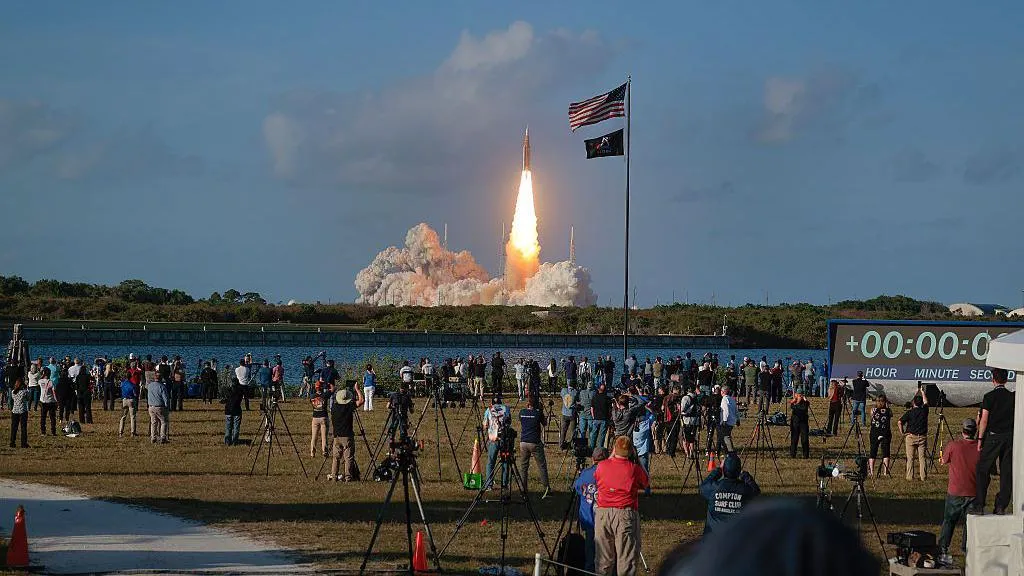
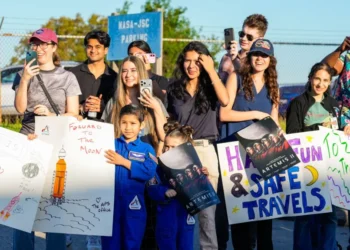
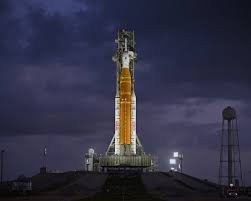
In a moment that will be etched into the annals of human history, NASA’s Space Launch System (SLS) rocket roared to life Wednesday evening, carrying four astronauts toward the Moon for the first time in over 50 years. The Artemis II mission successfully lifted off from Launch Complex 39B at Kennedy Space Center at 6:35 PM EDT (22:35 UTC), ending a tense countdown and signaling the true beginning of a new era in lunar exploration. As the rocket cleared the tower, the mission’s collective sentiment was captured in a simple, emotional declaration: “We go for all humanity.“

The four-person crew—Commander Reid Wiseman, Pilot Victor Glover, Mission Specialist Christina Koch, and Canadian Space Agency Mission Specialist Jeremy Hansen—is now safely in Earth orbit, beginning the first leg of their 10-day journey. This mission represents a series of historic milestones: Victor Glover is the first person of color to travel beyond low-Earth orbit, Christina Koch is the first woman, and Jeremy Hansen is the first non-U.S. citizen to venture into deep space. Their objective is to fly on a “free-return” trajectory that will take them approximately 4,700 miles beyond the far side of the Moon, further from Earth than any human being has ever traveled.
The launch followed several delays earlier this year due to technical hurdles and extreme weather, making Wednesday’s successful ignition even more poignant for the thousands gathered along Florida’s Space Coast. Inside the Orion capsule, the crew’s immediate tasks involve testing the spacecraft’s life-support systems—the “invisible” tech that will be vital for the Artemis III landing scheduled for 2028. NASA Administrator Bill Nelson, speaking shortly after liftoff, noted that the mission “takes the daring spirit of the American people and the hopes of a new generation” back to the stars.

The mission trajectory will see the crew loop around the Moon on April 6 before beginning their return journey. If all goes according to plan, Orion will splash down in the Pacific Ocean on April 11. While the crew will not land on the lunar surface during this flight, the data collected will validate the heat shield and deep-space communications needed for permanent human presence. For a world currently gripped by terrestrial conflicts and economic shifts, the sight of Artemis II piercing the Florida sky offered a rare, unifying moment of awe and an optimistic reminder of what can be achieved through international cooperation.
Related News:
 India and US Collaborate to Launch Groundbreaking Satellite for Earth Observation
 British AI Startup Outshines Human Forecasters in Global Prediction Contest
 History Will Remember Who Showed Up: Pressure Mounts on Keir Starmer to Attend Cop30 Summit
 UK Fighter Jet Purchase Could Breach Nuclear Treaty, Warns CND
 Google at 27: The Untold Story of Ruth Kedar, the Woman Behind the Iconic Logo
 Russia repeatedly targets UK military satellites, warns Space Command chief
 Cooper Unveils £4m Cyber Plan Against Russian Hackers
 Experts Warn Russia’s Burevestnik Missile Could Destabilise Arms Control
 Britain deploys RAF specialists to assist Belgium with drone threats
 Night after night, Belgium is on high alert.
 Hitler’s DNA Confirms He Truly Had Only One Testicle
 Pokémon to open world’s first theme park in Japan next year
 Ukraine to Get 100 French Rafale Jets in Historic Deal
 Poll Reveals China Leads World in Trusting AI Technology
 US Clears Nvidia AI Chip Sales to China in Policy Shift
 Iran Signals Permanent Break From Global Internet, Activists Warn
 UK New Car Discounts Near £6,000 as Prices Are Slashed
 Musk Wants City on the Moon Within 10 Years
 Indian University Kicked Out of AI Summit for Claiming Chinese Robot Dog as Its Own Invention
 China Shows Off Nunchuck‑Wielding Humanoid Robots for Lunar New Year
 The Chinese AI App Sending Hollywood Into a Panic
 How Do You Modernise Mango Farming? India’s Growers Urged to Innovate as Climate Change Hits
 Bill Gates Pulls Out of India’s AI Summit Over Epstein Files Controversy
 Zuckerberg Defends Meta in Landmark Social Media Addiction Trial
 Etsy Sells Second‑Hand Fashion App Depop to eBay for $1.2bn
 Musk Cuts Starlink Access for Russian Forces – Giving Ukraine an Edge at the Front
 Anthropic AI Refuses Pentagon’s Safety Demand
 Social Media Trial: Woman Says Addiction Began at Six
Instagram Investigating AI Profiles ‘Fetishising’ Disabled People
Social Media Trial: Woman Says Addiction Began at Six
Instagram Investigating AI Profiles ‘Fetishising’ Disabled People
 Anthropic Boss Rejects Pentagon Demand to Drop AI Safeguards
 Brady Tkachuk Denies AI Video Claims After Olympic Gold
 Orbital Space Race Heats Up in Arctic North
 The Sad, Strange Story of the World’s Most Radioactive Paradise
 Why Russia Controls Its People With a Flick of a Switch
 Wellness Peptide Craze: Why People Are Injecting Drugs ‘Not for Human Consumption’
 The US Now Has the Medicine for Cheap Swarming Drone Attacks
 Boy George Says He’s Using ChatGPT to Help Write New Songs
 Satellite Images Show Iranian Navy and Nuclear Sites Hit by US‑Israeli Strikes
 Protesters Rally in San Francisco Against OpenAI Deal With Pentagon
 We Have More Privacy Controls Yet Less Privacy Than Ever — The Paradox of Digital Life
 Regulator Contacts Meta Over Workers Watching Intimate AI Glasses Videos
 Study Says Only Two Nations May Survive Nuclear War
 Baba Vanga’s Chilling World War 3 Prediction and Russia’s New Leader
 Tiny Possum and Glider Thought Extinct for 6,000 Years Found in Remote West Papua
 Musk’s xAI Permit Sparks Fury Over Power Plant Expansion
 GPS Jamming: The Invisible Battle in the Middle East
 The Kill Line: A Shifting Vision of the American Dream
 Iran Social Media Strategy Shifts to Information War
 ABC Staff Strike Over Pay and AI Concerns
 Cluster Strikes Test Israel’s Missile Defences
 Zelensky Visits Saudi Arabia After Offering Drone Expertise
 One Ant for $220: The New Frontier of Wildlife Trafficking
 How and When to See April’s Full Pink Moon
 How Iran Destroyed US Base’s $500m Battlefield Nerve Centre
 Trump Considers Military Operation to Seize Iran’s Uranium
 Jim Ratcliffe’s £3.5bn Chemical Plant Delayed with Parts Stranded in the Gulf
 Trump Building ‘Massive’ Military Bunker Under White House Ballroom
 The Death-Defying Nuclear Commando Mission That Could End the War
 Baltic Blackout: Satellite Images Reveal Scorched Russian Oil Hubs After Ukraine Strikes
 ‘Excitement’ at Salisbury Plain as UK Conducts Largest Military Parachute Drop in a Decade
 The ‘Simpler Recycling’ Era: England’s New Bin Rules Face a Patchy Rollout
 ‘A Million Things’: The Unprecedented Peril of Seizing Iran’s Uranium Stockpile
 ‘The Counting of a Nation’: India Launches World’s Largest Census Amid Tech Revolution
 ‘At the Doorstep of the Future’: Florida’s Space Coast Braces for Historic Artemis II Launch
 Artemis II: Humanity Returns to the Moon After Decades
 Yvette Cooper Signals Global Momentum Towards Gaza Peace Deal Amid Humanitarian Crisis
 Chaos at Ibrox as Martin’s Rangers Era Comes to an End
 Russia’s Latest Push to Win US Favors Shows Deep Desperation
 UK Bans Fake Numbers: Scammers Lose Their Trick
 AI Coding Firm’s ‘Pride’ at Business Award Win
 Ukraine Negotiator Reveals What It Feels Like Facing Russia
 Drugs, Denial, Stigma: Fiji’s HIV Crisis Hits Children
 Stewart Brand on Musk, Bezos and a Life of Long Thinking
 Hilary Knight speaks out on Trump’s recent hockey remarks
 American Citizen Killed in Cuba Boat Shooting, U.S. Officials Say
 Iran’s Regime Still Intact — Coming Days Will Test Its Survival
 In Maps: Strikes Across Iran and the Middle East
 Brit ‘in Good Spirits’ Amid Dubai Missile Attacks, Stranded but Safe
 Civilian Deaths in Iran Pass 700 Amid Fear of Bombs and Regime Clampdown
 ‘Every Day Feels Like a Month’: Iranians Describe Life Under ‘Constant’ US‑Israeli Strikes