Published: 1 May 2026. The English Chronicle Desk. The English Chronicle Online
A 34-year-old Kuwaiti national who twice entered the UK via small boat crossings has been found guilty of preparing acts of terrorism following a brazen attempt to storm the Israeli Embassy in London. Abdullah Sabah Albadri, described by prosecutors as a man “intent on martyrdom,” was convicted at the Old Bailey after jurors rejected his claim that the two knives found in his possession were merely for “personal use” while living homeless in the capital.

The verdict follows a high-profile trial that has refocused the national debate on the “accountability rot” in the UK’s asylum system and the escalating “national security emergency” linked to the Iran-Israel war.
The conviction centers on an incident on April 28, 2025, when Albadri was spotted scaling the high-security perimeter of the embassy grounds in Palace Green, Kensington.
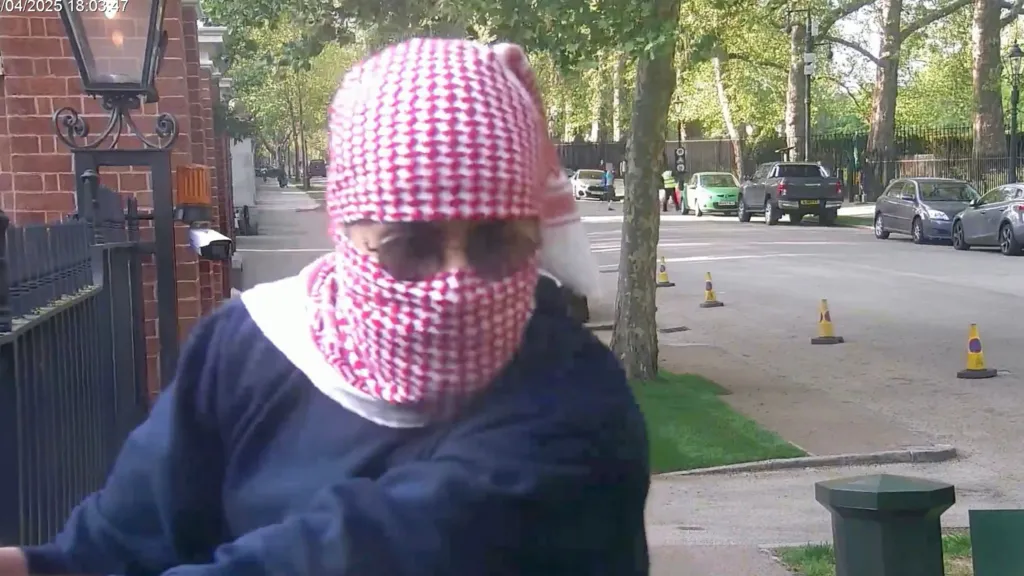
The Arrest: Armed diplomatic protection officers intercepted Albadri as he reached the top of an 8ft fence. He was found wearing a red-and-white keffiyeh wrapped around his face and carrying two large blades.
The Evidence: Police recovered a handwritten “martyrdom note” that Albadri had messaged to his mother hours before the attack. In it, he vowed to “stand up to the enemies” and proclaimed his intention to die “for the glory of God”—a document prosecutors described as a “clinical blueprint for a suicide mission.”
The Defense: Albadri’s legal team argued that the defendant was suffering from a “dopamine desert” of isolation and mental health struggles following the rejection of his asylum claim, contending that his actions were a “cry for help” rather than a coordinated terror plot.
Albadri’s history has become a flashpoint for critics of the Home Office’s border security.
Repeat Entry: Albadri first arrived in Dover via a small boat in August 2021. After failing to attend asylum interviews, he left the country, only to return via another small boat crossing from France in April 2025—just weeks before the embassy plot.
The Trigger: The court heard that Albadri’s “sinister” turn occurred shortly after his latest application for permission to stay in the UK was refused. Prosecutors argued he sought to “exact revenge” for the conflict in Gaza, telling officers after his arrest: “I want to do something to stop the war.”
Security by Design: The conviction has prompted calls for a “milestone” review of how migrants with rejected claims are monitored, particularly amidst the Golders Green crisis and a 40% surge in antisemitic incidents across London.
The trial took place against the backdrop of the $126 oil spike and the ongoing Iran war, which has seen London become a secondary theater for Middle Eastern tensions.
The “Hormuz” Connection: As the King concludes his Washington visit, where he addressed the “Special Relationship” in the context of global security, the Albadri case serves as a stark reminder of the “transnational” nature of modern radicalization.
The “Golden Tone” of Vigilance: Met Commissioner Sir Mark Rowley praised the “split-second” intervention of the diplomatic protection officers, noting that their actions prevented what could have been a “milestone tragedy” on one of London’s most secure streets.
The “Weekend Gap” Fear: Residents in Kensington expressed relief at the verdict, but many remain on edge following a separate investigation into drones carrying dangerous substances spotted near the embassy last month.

Abdullah Albadri will be sentenced next month, with the judge warning him to expect a “very significant” term of imprisonment. For a nation already grappling with the “accountability rot” of its judicial backlogs, the swift conviction was a rare moment of procedural clarity.
As the RHS Wisley wisteria blooms and the Southbank Centre celebrates 75 years of British resilience, the “Palace Green Plot” remains a sobering exhibit in the 2026 security landscape. It proves that while the “Small Boat” crisis is often debated in terms of numbers, its most dangerous consequence remains the “unknown individuals” who view the UK’s shores not as a sanctuary, but as a stage for violence.
Related News:
 Tasers Introduced in UK Prisons to Combat Rising Violence and Protect Staff
 Targeted Attack in Bury Sparks Murder Investigation as Community Awaits Justice
 Man Remanded After Children Fall Ill at Leicestershire Summer Camp in Shocking Child Cruelty Case
 AI Revolutionises Grooming Gang Investigations as Police Target Cold Cases Across England and Wales
 Police Advised to Disclose Ethnicity of Suspects in High-Profile Cases
 Merseyside Police Helicopter Crew Cleared After Low-Altitude Pursuit of Suspect
 UK Launches Major Crackdown on Networks Profiting from Online Child Sexual Abuse
 Jailed Georgian Opposition Leaders Warn UK of Iranian Links to Ruling Party
 No Evidence Found to Substantiate Alleged Rape in Oxfordshire Churchyard, Police Confirm
 Afghan man charged with murder after west London knife attack
 French Taxi Driver Cleared in David Lammy Theft Case After Fare Dispute
 Just Stop Oil Protesters Convicted Amid Climate Defence Row
 Serial Rapist and Former Cop Found Guilty Again
 Woman Jailed for Life After Killing E-Bike Rider in Tragic Mistaken Identity Case
 Betfair Faces Pressure Over Funds Lost to Gambling Fraud
 Emails Show Epstein Funded Mandelson’s Husband After Jail
 Police Probe Mandelson Over Alleged Epstein Leak
 Appeal to B&B Owners Over Cash Point Ram-Raid
 Man in Court Charged with Belfast Murder
 Rapist Caught by DNA 20 Years After Teen Attack
 Wayne Couzens Still Eligible for £7k Pension
 Teenagers Guilty of Killing Man They Lured to Beach
 Disability and LGBT Hate Crimes Set to Become Aggravated Offences
 Last‑ditch Call to Save Police Front Counters in London
 Prisoner Escapes London Hospitals Twice in a Week
 How Much Could Andrew’s Arrest Hurt the Royal Family?
 Fly-Tippers to Be Hunted by ‘Drone Squad’ in Crackdown from the Sky
 Court Error Frees Rape Suspect Who Flees UK
 Sadistic Pair Jailed for Blowing Up Sheep
 Trial Date Set for Student Accused of Racial Hatred
 Rape Accused Had Fight With Man in Alley, Court Told
 Flatmates Cleared of Raping Man After Night Out
 Grave of Murdered Toddler James Bulger Vandalised
 Man Charged Over Derry Kidnapping Incident
 Suspects in Lisa Dorrian Case Released on Bail
 Murder Charge After Security Guard Stabbed in Violent Attack
 Driver Jailed Over Fatal Water Treatment Tank Crash
 Man on Trial for Rape That Led to Andrew Malkinson’s Wrongful Jailing
 Labour MP’s Partner Arrested on Suspicion of Spying for China
 Police Scotland Pays £8m Compensation to Staff
 Woman Smuggled Military-Grade Guns and Heroin
 Police Sell Crime-Fighting Tuk-Tuks at £28,000 Loss
 ‘He Didn’t Stand a Chance’: Man Killed by Tube Was Blocked from Safe Spot, Inquest Hears
 Armed police incident closes major road
 Pedestrian critically hurt after being hit by car
 House wall collapses on to car in city centre
 Gran Vows to Shield Huntley’s Daughter From Soham Killer’s Funeral
 Scots Man Convicted in Dirty Money Case After DNA Found on Cash
 Man Arrested Over Gunshot Death in Motherwell
 Liverpool Shooting Horror as Girl, 17, Shot in Legs in ‘Targeted Attack’
 Rapist Caught After Victim Calls Police Mid-Attack

 Ram-Raid Gang Hit Livingston Store in Arson Escape
 Families Tortured by Authorities During Investigations Inquiry Told
 Two Men Bailed Following Arson Attack on Jewish Charity Ambulances
 Watchdog Probes Police Handling of Andrew Tate Abuse Claims
 Dawn Raids in Scotland and Spain: Eight Arrested in Major Organised Crime Sting
 Police Hunt Bike-Riding Gunman After Man Shot Dead Near Euston
 “A Shadow in the Night”: Survivor Speaks Out After Abduction by Fake Taxi Driver
 Heartbreak in Bournemouth: The Tragic Death of James Blanch
 Rebranded or Reclaimed? Seized Tate Assets to Fund Domestic Abuse Support
 The Victim-Blame Loop: When Protection Orders Backfire
 The Courtroom Clash: Couple Denies Charges in Alleged Racially Motivated Assaults
 Mass Arrests at London Palestine Protest Spark Debate
 Misconduct Inquiry Launched Over Fatal Schoolgirl Crash Response
 Counter-Terror Probe Launched After Break-In at Hampshire Firm
 Al Fayed Enablers ‘Must Face Accountability’, Survivors Say
 MoD Has Lost Track of Veteran Recall List, Says Adviser
 Arraignment and Allegations: Singer D4vd Pleads Not Guilty to First-Degree Murder of 14-Year-Old
 A Crime of Pure Hatred’: Court Hears Harrowing Details of Racially Aggravated Rape in Bristol
 ‘A Deliberate Act’: Man Charged with Attempted Murder After Vehicle Strikes Pedestrians in Nottingham
 ‘A Sacred Space Shattered’: Two Found Guilty in London Church Drive-By Murder Trial
 The ‘Axiom of Fraud’: £39.5m Hole Discovered in Second Major Law Firm Collapse
 “Significant” Fire at Pink Punters: 51-Year-Old Man Arrested Following LGBT+ Club Blaze
 “Terrorism Suspect” Arrested in Devon as Investigation into London Jewish Site Attacks Widens
 The “Invisible” Tape: Leaked Video Contradicts Police Denial in Brutal Arrest Case
 500 Officers, 10 Arrests: Crewe Religious Group at Centre of Modern Slavery and Sex Crimes Probe
 “Justice Has No Expiry Date”: Six Arrested in Major Probe into Historical Child Sexual Abuse
 “A Trail of Blood and Debt”: County Lines Kingpin Handed Life Sentence for “Senseless” Gangland Murder
 “Unfair and Uninformed”: Met Commissioner Backs Officers Following Polanski’s Knife Attack Critique