Published: 26 May 2026. The English Chronicle Desk. The English Chronicle Online.
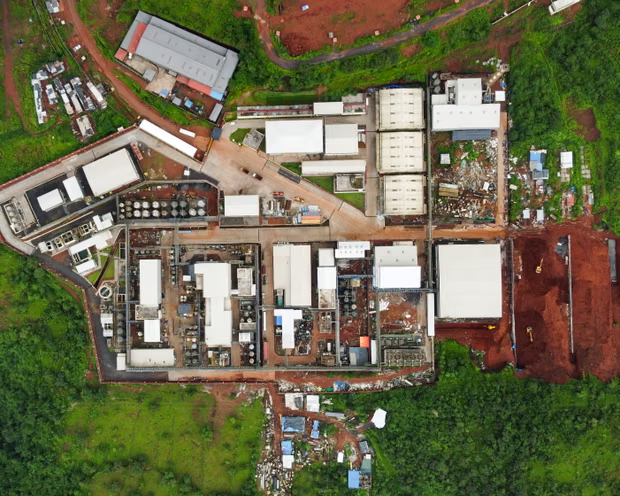
A major environmental controversy is unfolding across India as public fury intensifies over a controversial industrial relocation project. Citizens are taking to the streets to voice deep fears regarding dangerous chemical manufacturing operations. The heart of this growing national anger lies within a manufacturing site south of Mumbai. This specific facility has resurrected production techniques that previously triggered a massive health crisis in Europe. The controversial plant belongs to Laxmi Organic Industries, a prominent Indian chemical manufacturing firm. Their newly operational site is located inside the busy industrial zone of Lote Parshuram. This development has triggered fierce local resistance and a heated national political debate.
The unfolding situation follows a detailed media investigation into the origin of the factory equipment. Journalists revealed that Laxmi Organic Industries purchased the assets of a bankrupt Italian firm. This defunct European company, known as Miteni, formerly operated in the region of Vicenza. The Italian facility shut down in late 2018 amid severe environmental contamination allegations. European authorities discovered that the factory poisoned vital natural resources over several decades of operation. Now, that identical industrial machinery has found a new home on the Indian subcontinent. Local communities are deeply worried about facing the same toxic fate as Europe.
The toxic materials produced at this facility belong to a dangerous class of synthetic substances. Experts classify these specific formulations as polyfluoroalkyl substances, commonly known by the acronym Pfas. These substances are widely engineered for their incredible resistance to heat, water, and oil. However, this extreme durability means they do not break down in natural environments. Because of this permanent characteristic, scientists frequently refer to them as forever chemicals. They easily accumulate inside human bodies and ecosystems, creating long-term health hazards for generations. The relocation of such production has sparked intense moral debates regarding international industrial standards.
The historical context of the machinery involved adds significant weight to the current public anxiety. The original Miteni plant caused one of the worst environmental disasters in modern European history. Toxic waste from that facility contaminated a massive underground aquifer in northern Italy. This poisoned water supply directly impacted more than three hundred and fifty thousand innocent citizens. Residents across the provinces of Vicenza, Verona, and Padua consumed this water for years. Medical tracking later revealed alarming concentrations of toxic compounds inside the blood of local workers. One former employee registered some of the highest chemical levels ever recorded globally.
Scientific research consistently links high exposure to these compounds with devastating human health consequences. Absorbing these chemicals increases the risk of developing aggressive forms of malignant cancers. Medical data also connects these substances to severe cardiovascular illnesses and metabolic disorders. Furthermore, individuals frequently suffer from significant liver damage and chronic kidney function failure. Young populations face additional risks involving developmental delays and serious reproductive health system disruptions. Given these severe medical realities, Indian citizens feel justified in opposing the factory operations. They refuse to accept hazardous industrial processes that Western nations actively reject.
The physical relocation of the industrial equipment was executed through complex global logistics networks. Workers dismantled the Italian machinery piece by piece before shipping it across the ocean. Engineers then reassembled the production lines within the state of Maharashtra to resume manufacturing. The core purpose of these machines remains identical to their previous toxic European incarnation. They continue to synthesize the exact same hazardous chemicals for various commercial applications. These compounds eventually enter consumer supply chains through many common everyday household items. They are utilized heavily in modern pesticides, pharmaceutical products, and industrial textile dyes.
The investigative report confirmed that the Indian company adopted a very familiar product portfolio. They currently market several specific chemical formulations that the Italian plant previously manufactured. Furthermore, the firm maintained valuable commercial relationships with the original European customer base. These existing buyers continue to source their chemical ingredients from the relocated Indian operation. Laxmi Organic Industries has repeatedly denied all allegations concerning environmental pollution at their site. They maintain that their newly established facility utilizes modern safety protocols to protect workers. However, these corporate assurances have done very little to calm growing public fears.
The Lote Parshuram facility became fully operational during the early months of last year. As production scaled up, information regarding the origin of the machinery began spreading widely. The publication of the detailed environmental investigation acted as a catalyst for public outrage. The first major public demonstration occurred outside the factory gates on eighth January. Angry residents and environmental groups gathered to demand the immediate closure of the site. Multiple national television networks broadcast the demonstration live to millions of viewers across India. This media coverage quickly transformed a local issue into a major national scandal.
The intense public pressure soon reached the highest levels of the Indian government. On second February, politicians formally raised the controversial issue within the national parliament building. Pramod Tiwari, a prominent member of the upper house, demanded a federal investigation. He specifically questioned the official authorization process that permitted the relocation of the plant. The lawmaker emphasized that India currently lacks specific regulatory frameworks to control these chemicals. His speech highlighted a dangerous legal loophole that foreign companies can easily exploit. This legislative gap leaves millions of citizens vulnerable to industrial pollution without legal protection.
The official government response confirmed the absence of necessary environmental safeguards for citizens. Kirti Vardhan Singh, the environment minister, addressed the parliament through a written statement. He acknowledged that no specific Indian laws currently ban the manufacturing of these compounds. This admission further energized environmental activists and legal experts across the entire country. They argue that the government is failing to protect public health from corporate exploitation. Meanwhile, critical questions regarding the timeline of the factory relocation remain completely unanswered. Internal documents indicate that corporate planning began long before the Italian site officially closed.
Official corporate records show that relocation plans were finalized by early March of 2018. This timeline means preparations began months before European regulators shut down the Italian facility. The company had already initiated detailed environmental impact assessments for the new Indian site. They were also actively applying for local construction permits from regional development authorities. These discovered documents suggest that executives anticipated the closure of their European operations early. They seemingly planned to shift their hazardous manufacturing to a more permissive regulatory environment. This strategic corporate maneuvering has drawn sharp criticism from international legal observers.
The controversial issue has now generated significant international solidarity among various global organizations. In early March, a historic video conference connected activists from two different continents. Indian community leaders spoke directly with European citizens living in contaminated industrial zones. Prominent environmental scientists and members of the European Parliament also joined the virtual meeting. The European Environmental Bureau helped organize this event to foster cross-border cooperation on regulations. The participants discussed the ongoing efforts to implement a total ban on these chemicals. This meeting highlighted the global nature of the fight against industrial chemical pollution.
The momentum shifted back to Europe when activists staged demonstrations in Brussels on fifth March. Protesters gathered outside the European Commission headquarters to demand accountability for exported pollution. This international demonstration quickly captured the attention of mainstream media outlets back in India. The growing global scrutiny forced Laxmi Organic Industries to address the public directly. On third April, company executives held a formal press conference to defend their operations. They stated that the facility operates in complete compliance with current Indian environmental laws. However, corporate representatives refused to answer specific follow-up questions from independent journalists.
By late April, public protests escalated dramatically within the region surrounding the factory. Thousands of citizens marched through the streets of Lote to voice their opposition. This massive demonstration brought together local farmers, urban residents, and distinct political factions. The growing coalition demands immediate legislative action to ban forever chemicals nationwide. Observers expect this intense national debate to expand significantly in the coming months. The struggle has become a symbol of the broader fight for environmental equity. Communities are demanding that human health take priority over corporate profits and industrial expansion.
The sentiment of the movement was captured perfectly by a prominent local activist. Varrun Sukhraj, founder of The Next Indians, spoke passionately during a recent rally. He challenged the traditional narrative that communities must accept pollution for economic growth. He argued that no society should have to choose between employment and survival. Sukhraj stated that rejected Western hazards should not be repackaged as local economic progress. His powerful message resonates deeply with thousands of families living near the industrial zone. The nation now faces a critical turning point regarding its future industrial regulations.
Related News:
 UK Banks Granted Reprieve as BoE Delays Basel III Capital Rules Until 2028
 Singapore Corruption Scandal: Details Emerge on Iswaran’s Luxury Flight and Ties to Tycoon Ong Beng Seng
 Corfu Beyond the Crowds: Discovering Serenity in Southern Villages and Hidden Taverns
 Peter Andre Praises Son Junior’s ‘Quiet Season’ Amid Ongoing Family Dispute
 Massive 641-Mile Storm Set to Batter UK with 15 Hours of Rain and Strong Winds
 Jeremy Clarkson’s Pub: A Sunday Lunch Like No Other
 Scottish Government Mandates Single-Sex Toilets and Changing Facilities in Schools
 Reeves Faces Setback as Labour May Miss Homes Target
 Kate Winslet to Narrate Film Highlighting King’s Environmental Mission
 Trump’s UK Ambassador Urges North Sea Drilling to Strengthen US Ties
 Federal Immigration Shift: Officers Leave Louisiana for Minneapolis
 Fatal Bolton Taxi Crash Claims Three Teens and Driver
 Australia grants Asio powers to designate hate groups under new laws
 Friedman Uninvited From 2024 Adelaide Writers’ Week
 ScottishPower Tops List of Worst UK Energy Suppliers
 Judi Dench Champions Fight to Save London’s Green Spaces
 Crowborough Camp Welcomes First Asylum Seekers
 BBC Funding Crisis: Tim Davie Warns of Jeopardy Ahead
 ABC Facebook Page Briefly Hacked, Adult Photos Posted
 Artificial intelligence will cost jobs, admits Liz Kendall
 Older Women Vanish from BBC Screens, Review Confirms Bias
 Meta trial over child exploitation claims begins
 Streeting moves on doctor pay to end strike dispute
 Ben Stokes injury joke after brutal ball strike
 UK and US Drop in Global Corruption Index Rankings
 Send spending gap leaves deprived areas behind
 Hidden Crisis: Domestic Abuse Suicide Toll in UK
 UK Unemployment Rate Climbs to 5.2% Peak
 Canberra Poster Seizure Sparks Free Speech Row
 BBC World Cup Presenting Duties Shared Among Trio
 Wales Approves Assisted Dying Bill Consent
 CPS Updates Guidance on Honour-Based and Dowry Abuse
 Stewart Brand on Musk, Bezos and a Life of Long Thinking
 English Cricket Faces Moral Crisis Over Indian Investment
 Jacinda Ardern Move Sparks Kiwi Reflection
 Middle East Airspace Crisis Strands Thousands
 Kelly Wilkinson Inquest Reveals Bail Failure
 Asylum Seekers to Work After Year-Long Wait
 Princess Eugenie steps down as patron of anti-slavery charity
 New Zealand Covid Response Praised Despite Lingering Scars
 Injured Mojtaba Khamenei Elevated as Iran Leader
 The Kill Line: A Shifting Vision of the American Dream
 Inquiry into HMRC child benefit errors launched by NAO
 Family of Alleged Bondi Gunman Seeks Name Suppression
 Rising Costs Force Families to Rethink Days Out
 Air Canada CEO Faces Outcry Over Recent Language Misstep
 Extreme Weather: Europe Shivers as Cyclone Narelle Hits
 Scott Mills Sacked by BBC Over Personal Conduct Claims
 Palantir Boss Defends NHS Deal Amid Government Break Clause
 Asia Turns Back to Coal Amid Middle East Energy Crisis
 Relationship with Trump may be beyond repair, Starmer warned
 Trump’s Six-Week Iranian War: The High Cost of Ignorance
 US and Iran Agree to Two-Week Provisional Ceasefire
 Battle of Britain Tower to House Tourists and Bats
 The Challenger: Will Péter Magyar End the Orbán Era?
 UK Government Poised to Revive Stalled Hillsborough Law
 Democrats Move to Impeach Defense Secretary Pete Hegseth
 Security Alert Near Israeli Embassy as Police Investigate
 Ben Roberts-Smith Denies War Crime Allegations in First Statement
 Home Office Faces Legal Risks Over Asylum Hotel Living
 US-Iran Standoff: Will Trump Deploy Ground Troops?
 Crisis in NHS Surgery Scheduling Hits Patients Hard
 Investigation Into Anti-Trump Motives After Gala Shooting
 Dubai Assets Linked to Sudan’s RSF Militia Exposed
 Blue Badge Abuse: The Rising Tide of Public Hostility
 The Fear Gap: Why Europe Feels Less Safe Than It Is
 US Military Pacific Boat Strike Kills Three People
 Dettol Apologises for ‘Toxic Men’ Advert Backlash in China
 UK Care Crisis: Row Explodes Over New Visa Settlement Rules
 Sainsbury’s Boss Optimistic As Grocery Inflation Eases
 US Advance Past Bosnia in World Cup Thriller
 Trump’s Mount Rushmore Speech: A Divisive Anniversary
 Trump’s Red-Card Intervention Hurts the US World Cup
 US Airman Avoids British Court in Indecent Exposure Case
 Britain’s Mini Fan Craze Sparks Major Waste Crisis
 Trump Swaps Planes Amid Iran Tensions
 Ann Widdecombe, Formidable Political Figure, Dies at 78
 UK Schools Struggle as Classrooms Top 40C
 Yemen Accuses Iran of Violating National Sovereignty
 Houthis Strike Saudi Arabia as Middle East Tensions Rise