Published: 10 June 2026. The English Chronicle Desk. The English Chronicle Online.
The delicate peace in the Middle East shattered last night following a dramatic military escalation. Donald Trump ordered targeted airstrikes against several Iranian military installations along the strategic Strait of Hormuz. This sudden action comes after a United States army helicopter crashed in international waters yesterday. The American president immediately blamed Tehran for the destruction of the advanced military aircraft. This fresh violence has severely damaged the shaky ceasefire agreement established just two months ago. Both nations had previously pledged to reduce hostilities following intensive international diplomatic mediation efforts.
The military strikes began precisely at ten o’clock in the evening Greenwich Mean Time. United States Central Command confirmed that warplanes targeted advanced radar sites and air defence networks. These installations allegedly possessed the capability to threaten international shipping lanes in the gulf region. White House officials stated that the military action represents a necessary and proportionate response. They emphasized that the United States will always protect its servicemen operating abroad. However, the unexpected bombardment immediately triggered a massive wave of retaliatory actions from Iran. Tehran launched numerous long-range missiles and explosive drones at American regional allies on Wednesday.
Iranian state media reported successful missile strikes against a prominent military base in Jordan. The Revolutionary Guards claimed they successfully targeted specialized hangars housing advanced American fighter jets. Furthermore, the government in Kuwait reported that its national air defences engaged multiple targets. Explosive drones allegedly approached a major military facility located near the volatile Iraqi border. Jordan also confirmed its armed forces successfully intercepted and destroyed five incoming cruise missiles. United States officials later stated that nearly all incoming threats were successfully shot down. They insisted that regional defensive shields functioned perfectly against the sophisticated Iranian missile barrage.
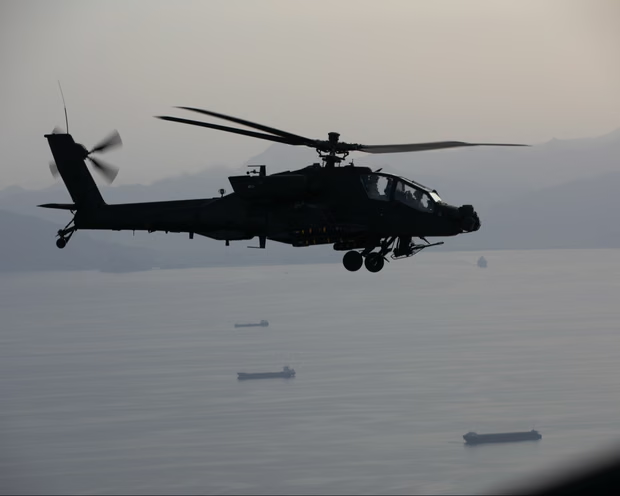
The entire crisis began early Tuesday morning off the coast of the Sultanate. A United States Apache helicopter gunship went down during a routine maritime patrol mission. Initial reports suggested the aircraft suffered a fatal collision with an unflagging Iranian drone. It remains completely unclear whether this high-altitude impact was intentional or an accident. Military investigators are currently analyzing recovered flight data to determine the precise sequence events. President Trump ignored the official investigation and quickly declared the helicopter was shot down. He utilized his social media platform to demand immediate retribution for the lost aircraft.
Despite the heavy bombardment, American diplomats signaled they wish to avoid full-scale regional warfare. Central Command reiterated that the mission was explicitly designed to counter unjustified Iranian aggression. The Pentagon hopes this limited action will deter future attacks without triggering prolonged conflict. Meanwhile, the two crew members from the downed helicopter were successfully rescued yesterday. The complex operation utilized a highly advanced unmanned surface vessel in treacherous coastal waters. This successful recovery represents the first drone-assisted maritime rescue in American military history. The aviators spent approximately two hours in the water before being retrieved safely.
The rescue boat used in the operation is a seven-meter vessel called Corsair. This autonomous craft located the floating pilots using infrared cameras and satellite tracking data. President Trump later downplayed the entire helicopter incident during a major newspaper interview. He told reporters that the temporary loss of the aircraft was not important. The president expressed relief that the American pilots were unharmed and resting comfortably. However, the geographical area where the crash occurred remains an incredibly tense military zone. Apache helicopters routinely enforce a strict international blockade on all Iranian crude oil shipments.
This naval blockade aims to force the Islamic Republic into a comprehensive economic agreement. The strategic helicopters also assist regional allies in intercepting hostile drones across the gulf. This latest military clash occurs while the region is reeling from other violence. On Monday, Israel and Iran exchanged heavy missile fire in a separate escalation. That violent confrontation represented the biggest blow to the April ceasefire agreement so far. Iranian state television reported that the Israeli strikes killed two air defence operators. These continuous micro-conflicts have steadily undermined the international community’s recent peace initiatives.
The ongoing military conflict has caused severe damage to the fragile global economy. Energy prices have risen significantly since the combined forces began striking Iranian targets. This prolonged instability has made essential items like food much more expensive worldwide. Average households in the United Kingdom are directly feeling the economic impact of this war. International officials have tried repeatedly to turn the temporary ceasefire into permanent peace. However, these complex negotiations have stalled due to expanding military operations in southern Lebanon. Israel has intensified its campaign against Hezbollah, which receives significant financial backing from Tehran.
Before launching these recent strikes, President Trump had expressed unusual optimism regarding diplomacy. He told reporters there was an excellent chance of signing a deal quickly. The American leader predicted a historic breakthrough could occur within two or three days. He failed to provide specific details regarding the sudden cause of his optimism. Trump has regularly predicted an imminent diplomatic triumph throughout the spring season months. He previously stated that Washington was very close to finalizing a powerful peace agreement. The president argued that a massive bombing campaign would permanently close the shipping strait.
Trump also expressed a strong desire to avoid further casualties through continued bombardment. He questioned who would want to see widespread destruction when diplomacy remains possible. Vice-president JD Vance offered a slightly different perspective during a separate media interview. He suggested the current war could easily conclude within a few short weeks. Alternatively, the vice-president acknowledged the difficult conflict might drag on for several months. These conflicting statements from Washington highlight the deep uncertainty surrounding current American foreign policy. Meanwhile, senior Iranian leaders have responded to the latest threats with defiance.
The chief Iranian negotiator, Mohammad Bagher Ghalibaf, delivered a stark warning to Washington. He stated that while Tehran prefers diplomacy, it speaks other languages fluently. He warned that if the West breaks commitments, Iran will switch tactics immediately. The foreign minister, Abbas Araghchi, also promised that no attack would go unanswered. He explicitly warned western forces to leave the region to ensure their safety. This aggressive rhetoric suggests that a diplomatic resolution remains exceptionally difficult to achieve. The coming days will determine whether the regional ceasefire can be salvaged.
International diplomats are currently working frantically behind the scenes to prevent total war. They are urging both Washington and Tehran to exercise maximum restraint going forward. The United Kingdom government has expressed deep concern over the rapidly deteriorating security situation. British officials emphasize that maintaining open shipping lanes remains vital for global commerce. Any prolonged disruption to regional trade could trigger another wave of domestic inflation. For now, the world watches anxiously as two powerful nations edge closer to war. The fragile peace of the Middle East hangs precariously in the balance tonight.
Related News:
 BBC to Apologise Over Edited Trump Speech Amid Backlash
 Britain deploys RAF specialists to assist Belgium with drone threats
 Palace May Restore Hyphen to Andrew Mountbatten-Windsor’s Name
 Greene Pushes Epstein Files Amid Trump Fallout
 December Run-Off in Chile as Election Produces No Winner
 Zelenskyy Signs Fighter Jet Deal Amid Russian Drone Attacks
 Canada Passes Carney’s First Budget in Tight Parliamentary Vote
 Shadow Fleet at Sea: Europe’s Battle Against Illicit Oil Shipping
 Tiny Curacao Makes History as Smallest Nation to Reach World Cup
 Deadly Russian Strikes Hit Western Ukraine, 20 Killed in Ternopil
 Ukraine Peace Plan: Zelensky Ready for Dialogue
 Royal Navy Shadows Russian Warships Entering the Channel
 US Suspends Afghan Immigration After White House Shooting
 Georgians Defy Government Crackdown After Year of Protests
 Tokyo court rules Japan’s same-sex marriage ban constitutional
 ‘Extinct’ Antelope Returns to Sahara, Bringing Hope
 American Mother Extradited From UK to U.S. on Murder Charges
 Facebook Slow to Remove Bondi Attack Praise, Anti-Hate Group Claims
 Albanese Opens Door to Bondi Royal Commission Amid Rising Pressure
 US Clears Nvidia AI Chip Sales to China in Policy Shift
 Gulf states warn Trump Iran strikes risk wider Middle East war
 EU weighs response amid Greenland tariff crisis with Trump
 Sydney Shark Attack Surge Shocks Australia Beaches
 EU Says US Ties Have Suffered ‘Big Blow’ After Greenland Crisis
 Videos reveal earlier clash before Alex Pretti shooting
 UK New Car Discounts Near £6,000 as Prices Are Slashed
 Israel Moves to Bar MSF From Gaza Operations
 Portugal Election Delivers Socialist Win as Far Right Surges
 Australian Families Leave Syrian Camp for Home
 Andrew Arrest Sparks Republic Debate in Australia
 Farage Chagos Islands Row Sparks Fury
 Hilary Knight speaks out on Trump’s recent hockey remarks
 Has Europe truly learned from the failures of 2022?
 Trump Faces Questions Over Iran Conflict Plan
 Iran Civilian Deaths Surge Past 200 Amid Fear
 Herzog Asio meeting sparks security storm
 Trump rebukes Starmer over Iran strikes
 Iran-Iraq border airstrikes spark new tensions
 Petrol Prices Soar as Retailers Accused of Gouging Amid Global Tension
 Penny Wong silent on Australian crew in sub strike
 Australians on US Submarine in Iranian Warship Strike
 Oil Prices Surge Above $100 Amid Iran War
 India T20 World Cup Triumph Seals Historic Title Defence
 Trump Pressures Congress Over Save America Act
 Iranian Football Squad Asylum Drama Shocks Australia
 Goma Drone Attack Kills Three as Conflict Escalates
 Queensland Protest Laws Spark Free Speech Backlash
 Yvette Cooper: UK Must Follow Principles, Not US Pressure
 Iranian Captain Departs Australia Amid Asylum Tension
 Trump Nato threats expose Iran strategy vacuum
 Philippines energy emergency sparks coal power surge
 Australia Imposes Sudden Travel Ban on Iranian Visitors
 Trump Facing Backlash from Epstein Survivors Over Files
 Russia: The Unforeseen Winner of the Iran Conflict
 Report Says Pezzullo Acted ‘Recklessly’ in Dealings
 Trump’s Middle East Misstep: The Bitter Cost of Hubris
 US and Iran Pursue Extension of Ceasefire via Pakistan
 Tragedy Strikes Outside Melbourne Comic Con
 “I was fighting two wars”: Ukraine soldiers’ addiction crisis
 Ukraine Urges UK to Seize Russian Oil Tankers
 Capitalism ‘Suicidal’, Warns Petro at Climate Summit
 Ukraine strikes Tuapse as oil disaster worsens
 US to Escort Trapped Ships Through the Strait of Hormuz
 Premier League drama defines crucial weekend
 Trump Threatens UN Budget Cuts as US Pushes ‘Trade Over Aid’ Agenda
 US Court Restores Abortion Pill Access Temporarily
 Miami Upgrades Shake Up F1 Title Fight
 Three Australian Women Detained Over Islamic State Links
 US Awaits Iran Reply on New Ceasefire Proposal
 Crisis in the Canary Islands as Cruise Ship Evacuated
 US and Mexico Face Heatwave as Floods Batter South Africa
 Putin Signals War End as Russian Momentum Stalls
 Australia Welcomes the Iconic Michelin Guide
 Philippine Senator Flees After Days Under Senate Siege
 High Street Crisis: Fears Grow Over Post Office Closures
 Oil Markets Face ‘Red Zone’ Threat Amid Iran Crisis
 Pope Meets Families in Italy Toxic Waste Zone
 Discontent grows around Putin amid war strain
 US Strikes Iranian Sites Amid Shaky Ceasefire Talks
 UN Issues Urgent Warning: Imminent Return of El Niño