Published: 07 August 2026. The English Chronicle Desk. The English Chronicle Online
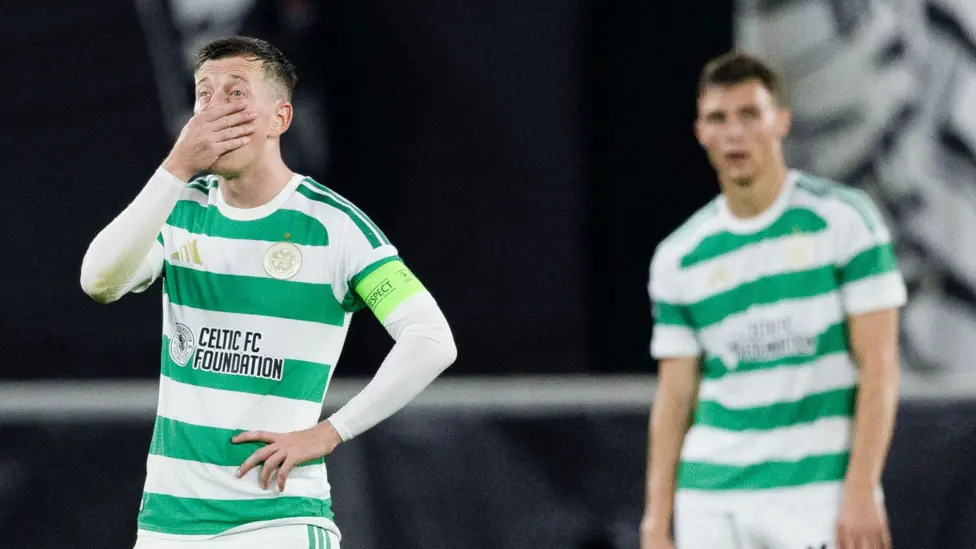
Celtic’s latest European disappointment has done more than end another Champions League campaign. The extraordinary collapse against LASK has exposed weaknesses in the Scottish champions’ squad, mentality and recruitment strategy, leaving captain Callum McGregor openly questioning the character of his team-mates and manager Martin O’Neill facing one of the most painful nights of his long career.
Celtic travelled to Austria with what appeared to be an almost unassailable advantage. A 3-0 victory over LASK in Glasgow had put O’Neill’s side firmly in control of their Champions League play-off tie. When McGregor’s deflected effort put Celtic 1-0 ahead on the night, their aggregate advantage stretched to four goals.
Instead of completing the job, Celtic suffered a remarkable collapse. LASK scored repeatedly, forcing the tie into extra time before completing a 5-1 victory on the night and a 5-4 aggregate triumph. The defeat sent Celtic out of the Champions League and revived memories of several previous European failures.
For McGregor, the latest setback appeared to cross a line.
The Celtic captain described his team-mates as “passive” and “scared” during a performance in which the Scottish side appeared increasingly unable to cope with LASK’s pressure. His criticism was striking precisely because McGregor is rarely theatrical in his public comments.

After years of European disappointment, the midfielder has become one of the most experienced figures in Celtic’s dressing room. He has also been present for many of the club’s most painful continental defeats, making his anger particularly significant.
The collapse against LASK was not simply a case of a few unfortunate moments. Celtic appeared to lose control of the match as soon as LASK began applying sustained physical and psychological pressure.
LASK had already created opportunities in Glasgow despite losing 3-0. In Austria, those warning signs returned immediately. Celtic’s early goal appeared to settle the tie, but the hosts refused to surrender.
Once LASK pulled a goal back, Celtic’s confidence began to erode. Defensive mistakes followed, passes became increasingly inaccurate and the visitors struggled to establish possession or create a meaningful attacking response.
By the second half, the pressure had become overwhelming.
The final statistics illustrated the extent of Celtic’s problems. LASK finished with 40 attempts at goal, including 33 before the later stages of the match, while Celtic failed to register a shot on target during the second half of normal time and extra time. The Austrian side eventually completed one of the most remarkable comebacks in Celtic’s European history.
The defensive problems were especially damaging.
Auston Trusty was among those criticised during the collapse, while injuries to Cameron Carter-Vickers and Kasper Høgh left O’Neill with increasingly limited options. By the later stages, Celtic were relying on a makeshift defensive unit as LASK repeatedly attacked.
O’Neill attempted to change the course of the match by making five substitutions within a short period, but none of the changes could halt the momentum. Celtic had become a team attempting merely to survive rather than one capable of controlling a tie they had dominated only days earlier.
That distinction is important because the first leg had suggested Celtic were moving in the opposite direction.
At Celtic Park, Benjamin Nygren opened the scoring before Camilo Durán struck twice to give O’Neill’s team a commanding 3-0 victory. Durán had impressed throughout the match with his movement, finishing and willingness to work defensively.
That performance created optimism that Celtic might finally have addressed some of the attacking shortcomings that had contributed to previous European failures.
Instead, the second leg revealed that major problems remained elsewhere.
Celtic’s midfield lacked the physical authority to withstand LASK once the Austrian side gained confidence. Their defensive structure deteriorated under pressure, while the team appeared unable to slow the match down or regain control.
That has inevitably placed the spotlight on recruitment.
Celtic have made several additions during the summer, including goalkeeper Lukas Hornicek, goalkeeper Ewen Jaouen, defender Amar Dedić, midfielders Aladji Bamba and Sean Steur, and forward Bazoumana Touré. Yet the defeat has strengthened the argument that the squad still lacks key qualities required for Champions League football.
The most obvious need is physicality in midfield.
McGregor remains technically excellent and enormously influential, but Celtic need players around him capable of resisting pressure, winning duels and maintaining composure when opponents turn a match into a physical contest.
The club also appears short of depth at left-back behind Kieran Tierney. Those deficiencies became particularly obvious once injuries and substitutions forced O’Neill to field an improvised back four during the collapse.
The issue therefore extends beyond one disastrous evening.
Celtic have repeatedly experienced European exits in which a promising position has disappeared under pressure. Their history includes defeats and eliminations involving Kairat Almaty, Midtjylland, Ferencváros, Cluj and AEK Athens, alongside heavy Champions League defeats against clubs such as Borussia Dortmund, Atlético Madrid, Paris Saint-Germain and Barcelona.
The LASK collapse now belongs in that unwanted collection.
The financial implications are also substantial. Progress in the Champions League represents a major source of revenue for Celtic, and elimination at this stage means the club loses the opportunity to benefit from the tournament’s lucrative league phase. The defeat has therefore created pressure not only around sporting ambition but also around the club’s transfer strategy.
For O’Neill, the defeat was particularly painful because of what had happened earlier in the summer.
The veteran manager returned to Celtic last season and helped guide the club to another Scottish Premiership title and the Scottish Cup. He was subsequently confirmed as permanent manager on a one-year contract with an option for another year.
The domestic success revived belief in O’Neill, but European competition was always going to provide a more difficult test.
He admitted that the LASK defeat ranked among the worst moments of his football career. His willingness to accept responsibility is unlikely to shield him completely from questions, however, because Celtic’s problems extend beyond the manager.
Recruitment decisions, squad depth and the club’s broader approach to European competition will all come under scrutiny.
McGregor’s comments could prove even more consequential.
A captain publicly describing his team as passive and frightened is not simply a criticism of tactical execution. It is an indictment of mentality. For Celtic, a club whose domestic dominance has created enormous expectations, the question is whether the squad possesses enough resilience to compete when European opponents refuse to be intimidated.
That is the central lesson from Austria.
Celtic did not lose because LASK were technically superior in every department. They lost because, once the momentum shifted, Celtic could not stop the game from becoming the kind of contest LASK wanted.
The Austrian side grew in belief. Celtic became increasingly anxious. Every misplaced pass intensified the pressure, every defensive error encouraged the hosts and every missed opportunity to regain control made the eventual outcome more likely.
What had looked like a routine progression became a psychological collapse.
The challenge now is to ensure that the defeat does not become another recurring chapter in Celtic’s European story.
The club still has domestic objectives and a squad capable of winning major honours in Scotland. The arrivals of Durán and Høgh have strengthened the attack, while Nygren has emerged as another important attacking player. But European football demands a different level of depth, physical resilience and composure.
Celtic’s supporters will therefore expect the club to respond in the transfer market before the window closes. The need for a stronger midfield presence and additional defensive cover is no longer merely theoretical.

The LASK defeat has made it impossible to ignore.
For McGregor, the immediate task is to ensure his furious assessment becomes a catalyst rather than another post-match lament. For O’Neill, it is about rebuilding confidence after a result he described as one of his most painful nights in football. And for Celtic’s hierarchy, the defeat raises a much larger question: whether the club is genuinely prepared to invest in the squad required to compete consistently at the highest European level.
Celtic had a four-goal aggregate advantage and still failed to progress.
That fact will remain the defining feature of this campaign. But the more important issue is what the club does next. If Celtic respond by strengthening the areas exposed in Austria, the collapse may eventually become a painful lesson. If the same weaknesses remain, LASK could become simply the latest name on a growing list of European nights that exposed the gap between Celtic’s domestic dominance and their continental ambitions.
Related News:
 Safeguarding Probe Limits West Ham Owner’s Role
 England Cruise Past Costa Rica as World Cup Warm-Up Sharpens Tuchel’s Vision
 Inside the Three Lions: Bellingham Reveals Euro 2024 Flaws
 Declan Rice Facing Burnout as Tuchel Confronts Midfield Crisis
 Morocco Beat Dutch in Wild World Cup Penalty Drama
 England’s 10 Men Hold Firm in World Cup Thriller
 Kylian Mbappé Slams Paraguayan Senator Over Racist Attack
 World Cup Fever Set to Boost UK Economy by £500m
 Sterling charged with dangerous driving after crash
 Newcastle agree £52m deal for Man City’s Gonzalez
 Predicted Leicester Line-ups Reflect Cifuentes’ Tactical Plans Ahead of New Season
 Central London Gears Up for Lionesses’ Victory Parade as Thousands Prepare to Celebrate Historic Women’s Euros Win
 London Set to Honour Euro 2025 Champions as Lionesses Take Victory Parade Through the Capital
 Rangers Boss Russell Martin Launches Blistering Critique After Disappointing Draw with Motherwell
 Ngumoha Shines Bright as Liverpool’s Future Looks Fiercely Promising
 Minute’s Silence for Diogo Jota Abruptly Ended After Wembley Tribute Disrupted
 Premier League Supercomputer Predicts Tough Season for Man Utd Amid Three-Team Title Battle
 Aston Villa Under Pressure as Newcastle Take on Hosts in Premier League Opener
 Isaac Price Shines as West Brom Clinch 3-2 Victory at Wrexham’s Championship Return
 FIFA Eyes Biennial Club World Cup from 2029, Plans Possible Expansion
 European Football: Atlético Madrid Stumble at Espanyol as Vitinha Secures PSG Win
 Leeds Mark Premier League Return with Gritty Win Over Everton
 Grimsby Stun Manchester United in Dramatic Penalty Shootout
 Club Brugge Crush Ten-Man Rangers to Deepen Russell Martin’s Crisis
 Guardiola Admits City ‘Forgot to Play’ After Shock Defeat to Brighton
 Morgan MacRae: From 17 Minutes Dead to Returning to Rugby in Six Weeks
 Serbia Humiliated 0-5 by England in World Cup Qualifier
 Fábio Carvalho’s Last-Minute Heroics Deny Chelsea Victory at Brentford
Liverpool Vs outhampton Set for Carabao Cup Clash at Anfield
Fábio Carvalho’s Last-Minute Heroics Deny Chelsea Victory at Brentford
Liverpool Vs outhampton Set for Carabao Cup Clash at Anfield
 Chelsea Survive Lincoln City Scare to Advance in Carabao Cup
 Arsenal VS Newcastle Hearts with Dramatic Late Turnaround at St James’ Park
 Aston Villa Fight Back to End Winless Run with Convincing Victory over Fulham
 Everton Held by West Ham as Bowen Cancels Out Keane’s Header in Nuno’s First Game
 Monaco Hold Man City to Dramatic 2-2 Draw as Eric Dier Converts Late Penalty
 Postecoglou Stands Firm Amid Mounting Forest Fan Frustration
 Arsenal Edge Past West Ham Amid Injury Concerns
 Questions Remain as Rugby Legend Lewis Moody Faces Motor Neurone Disease Diagnosis
 Son of ex-England footballer dies in tractor crash
 Gibbs-White Inspires Forest to Thrilling Win Over Porto
 Brentford 3-2 Liverpool: Reds suffer fourth straight PL defeat
 Manchester United triumph as Mbeumo brace seals thrilling win
 Fabio Wardley stuns Joseph Parker to earn Usyk title shot
 Salah & Gravenberch Lead Liverpool to Win Against Villa
 Granit Xhaka Rescue Earns Everton Draw at Sunderland
 Tension and Turmoil at Aston Villa v Maccabi Match
 Bellingham has ‘the edge’ among England No 10s
Man City Masterclass on Guardiola’s Milestone Day Exposes Liverpool Woes
Bellingham has ‘the edge’ among England No 10s
Man City Masterclass on Guardiola’s Milestone Day Exposes Liverpool Woes
 Lando Norris Dominates Brazil GP to Strengthen F1 Title Bid
 VAR Must Rein Its Neck In to Save Football’s Spirit
 Trescothick Hints Pope Will Keep Number Three Spot
 Mary Earps’s Manchester United Return Faces Mixed Reception
 Sam Kerr Stars in Chelsea Return with Champions League Double
 Former Lion Heskey Warns of Shortage of England Strikers
 Moyes Defends Gueye After Dramatic Everton Bust-Up
 Stokes urges empathy for England players amid Ashes struggles
 BBC World Cup Presenting Duties Shared Among Trio
 Scott Parker Leaves Burnley After Premier League Drop
 RFU Backs Borthwick Despite England’s Poor Six Nations
 De Zerbi Rallies Spurs To Fight Relegation Threat
 The Battle for Wembley Sparking Unprecedented Legal Warfare
 Tuchel Defends Tough England Squad Decisions
 Farewell to an Icon: Pep Guardiola to Exit Manchester City
 Captain in the Spotlight: The Future of England Cricket
 Saka Playing Through Pain As England World Cup Campaign Looms
 Williams Sisters Reunite for Wimbledon Icon Return
 Iran Files Official Fifa Complaint Over World Cup Travel
 Martinelli Strikes Late as Brazil Edge Past Brave Japan
 Paraguay Shock Germany in Historic Penalty Shootout
 France Dominate Sweden as Deschamps’ New Era Takes Shape
 Kane Saves Tuchel as England Survive Dramatic Exit
 Taylor Swift and Travis Kelce Marry at Madison Square Garden
 England Triumph in Azteca World Cup Thriller
 Trump’s Red-Card Intervention Hurts the US World Cup
 Trump Intervenes in Fifa World Cup Balogun Ban
 USA World Cup Heartbreak: Belgium Ends Their Dream
 Mbappé Brilliance Leads France Into Semi-Finals
 England and Norway Fans Turn Miami Into World Cup Carnival
 Spain’s Superstar Fan: Keyne Yamal Steals the Spotlight
 Lamine Yamal’s Birthday: Football, Fame, and France
 Ceferin rules out Fifa presidency bid