Published: 18 September ‘2025. The English Chronicle Desk
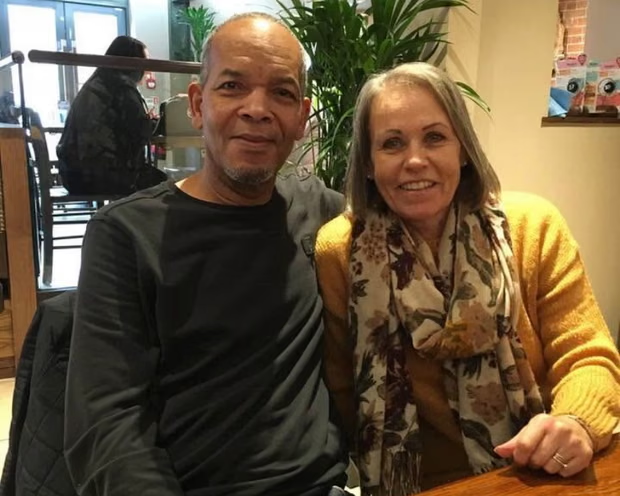
The Windrush compensation scheme has come under renewed scrutiny after the Parliamentary and Health Service Ombudsman (PHSO) concluded that it had mishandled the claim of a dying woman, Caroline Tobierre, and wrongly refused to fully compensate her husband, Thomas Tobierre, for the loss of his private pension. The ombudsman’s report has called for urgent reforms within the scheme, highlighting systemic issues that have left claimants feeling frustrated and neglected.
Caroline Tobierre, a 64-year-old woman diagnosed with cancer in 2018, submitted her claim to the Windrush Compensation Scheme (WCS) in 2021. Tragically, she passed away six months later, before the scheme had resolved her case. According to the PHSO, her final days were overshadowed by an “exhausting” and “prolonged” battle for compensation. The Ombudsman determined that the WCS failed to properly consider the evidence in her claim and mismanaged communication with the family, causing “unnecessary stress” at an already difficult time.
The findings have led to a mandate for the scheme to pay £25,000 to Caroline’s widower, Thomas, and their daughter, Charlotte Tobierre, as a gesture of redress. Beyond this individual case, the report underscores broader failings within the WCS, particularly its policy of excluding private pension losses from compensation calculations. Advocates, including Human Rights Watch, have long argued that many claimants have been deprived of full redress because of these limitations. The Ombudsman’s decision may pave the way for other affected individuals to receive additional compensation.

The Windrush scandal, which came to public attention in the late 2010s, has had far-reaching consequences for thousands of people who legally migrated to the UK from Caribbean countries between 1948 and 1971 but were subsequently misclassified as illegal immigrants. These misclassifications led to wrongful detention, loss of employment, denial of healthcare, and significant financial hardship for many families. Thomas Tobierre, originally from St Lucia, arrived in the UK in 1960 at the age of seven. He married Caroline in 1975, and the couple built a life in Essex, raising a family together.
Thomas worked as an engineer for more than four decades until redundancy in 2017. Due to a lack of official documentation confirming his status, he was unable to secure new employment and was forced to deplete his £14,000 private pension to meet living expenses. Following the public revelations of the Windrush scandal, Thomas’s legal status was finally resolved, allowing him to return to work in 2018.
Despite promises from the WCS that there would be “no cap” on compensation, many claimants, including Thomas and Caroline, have reported receiving inadequate offers. Initial awards were modest, requiring multiple appeals and legal interventions to secure fairer compensation. Thomas’s claim underwent several reviews: he was first offered £3,000 for “impact on life,” followed by £13,764 for loss of access to employment. After a scheme overhaul in 2021, these figures were increased to £26,798.88 for employment losses and £40,000 for “impact on life.” Nevertheless, the PHSO found that even these amounts did not fully compensate the family, particularly considering the unresolved private pension loss.
Caroline’s case exemplifies the human toll of the compensation system. As a family member entitled to compensation, she applied in 2021 despite her terminal diagnosis, only to die before the payment was issued. The Ombudsman noted that the WCS “did not properly consider the evidence” in her claim and mishandled subsequent communication regarding funeral and estate matters, compounding the family’s distress. Charlotte Tobierre described the ordeal as emotionally exhausting, saying: “It almost feels like my mum and dad had done something wrong. We were absolutely consumed by it, and that overshadowed my mum’s cancer journey. I felt sad afterwards thinking we wasted so much time talking about Windrush and missed spending precious time together.”
In its recommendations, the PHSO called on the WCS to apologize to the Tobierre family, review its complaint handling procedures, and reconsider its exclusion of private pension losses in compensation assessments. The Home Office has since agreed to implement these recommendations, signalling a willingness to address systemic flaws in the scheme.
The Ombudsman’s intervention has broader implications for other Windrush claimants who may similarly have been denied full redress. Since 2021, the PHSO has secured over £430,000 in compensation for people whose claims were mishandled or underpaid, highlighting the ongoing challenges in addressing the legacy of the Windrush scandal. PHSO Chief Executive Rebecca Hilsenrath KC emphasized that the scheme, established to “right wrongs,” is not yet functioning as intended. She stated: “Complaints like this show it is not working as it should, and urgent reforms are needed to restore trust and ensure fairness for all claimants.”
The Tobierre case has also drawn attention to the emotional and psychological impact of bureaucratic mismanagement. Families affected by Windrush injustices have repeatedly described the process as stressful and demoralizing, compounding the trauma of wrongful classification and financial loss. The PHSO report stresses the importance of empathy, timely communication, and rigorous evaluation of claims, particularly for vulnerable individuals facing terminal illness.
While the Windrush Compensation Scheme has made efforts to improve since its inception, the Ombudsman’s findings suggest that serious deficiencies remain. Experts argue that the exclusion of private pension losses, inconsistent handling of claims, and delays in communication undermine the scheme’s credibility and fail to provide meaningful restitution to those affected. Campaigners continue to call for a comprehensive review of compensation policies and greater accountability for administrative errors.

Charlotte Tobierre welcomed the Ombudsman’s ruling, describing it as “refreshing” and encouraging others in similar situations to seek help. She emphasized the importance of ensuring that other families do not face the same exhausting battles for justice that hers endured.
The Home Office, in response, reiterated its commitment to righting the wrongs of the Windrush scandal, affirming that the Tobierre case would inform future reforms. Officials highlighted ongoing efforts to streamline claim processing, improve communication with applicants, and reassess compensation guidelines to include financial losses such as private pensions.
As the Windrush Compensation Scheme continues to evolve, the Tobierre family’s experience serves as a sobering reminder of the human consequences of administrative oversight and systemic neglect. The Ombudsman’s ruling represents both a measure of accountability and a call to action, underscoring the need for a fair, transparent, and compassionate approach to compensating those whose lives were disrupted by the injustices of the Windrush era.
Related News:
 MPs Warn Thousands Still Face Poverty Despite Labour’s Welfare Reform Retreat
 Southport Stabbing Survivor Speaks Out: ‘I Thought I Was Going to Die’
 FBI and NSPCC Sound Alarm Over Alarming Surge in Child Sextortion Cases Online
 English Backpacker Pleads Guilty to Causing Death of Perth Father in Drunken E-Scooter Crash
 UK race equality campaigner warns abuse of suspected migrants is deliberate, not an ‘innocent mistake’
 Alarming rise in abusive teen relationships in the UK sparks urgent warnings
 Victim of Catfish Predator Max Hollingsbee Speaks Out: “I Will Always Be Angry He Took My Innocence”
 Shock and Anger as Child Sexual Exploitation Victims Excluded from Government’s Violence Against Women Strategy
 Dream Dog Scam: Woman Loses £500 to Fake Online Breeder’
 Liverpool Anti-Gang Initiative Strengthens Public Confidence in Police
 Akinwale Arobieke Found Dead at Liverpool Home
 New Evidence Reveals More Missed Opportunities to Prevent Southport Attack
 Scottish Parliament Poised to Scrap Controversial ‘Not Proven’ Verdict in Landmark Justice Reform
 UK Doctors Guilty of Sexual Misconduct Continue Practising Amid Weak Sanctions, Research Finds
 Northern Ireland Faces Fears of Prolonged Race Riot “Permacrisis”
 Zarah Sultana Seeks Legal Action After Bitter Clash with Jeremy Corbyn Over Party Membership Funds
 Anti-Immigration Protesters and Counter-Protesters Clash in Glasgow
 Forgotten Voices of Wrexham’s 1934 Pit Disaster Brought Back to Life
 Police Appeal for Witnesses After Woman Raped in Oxfordshire Churchyard
 Suspected Arson at East Sussex Mosque Sparks Hate Crime Investigation
 Majority of UK Men Would Opt for Prostate Cancer Screening, Survey Finds
 Kate McCann Describes Stress from Alleged Stalker Calling Her ‘Mum’
 Massive London Poundland Fire Engulfs High Street
 Ambulance Worker Fired After Flinging Amputee from Wheelchair and Offering Bribe
Madeleine McCann Detectives to Testify Against Woman Accused of Stalking the Family
Ambulance Worker Fired After Flinging Amputee from Wheelchair and Offering Bribe
Madeleine McCann Detectives to Testify Against Woman Accused of Stalking the Family
 Campaigners Call for CPS Review After Woman’s Suicide
 Violence erupts outside Dublin asylum hotel as police targeted
 Grooming Gang Inquiry Faces Delays Amid Dispute Over Jess Phillips’ Role
 Hugely Wasted Opportunity’ UK Grooming Gangs Inquiry
 Woman Fighting for Life After Girl Found Dead in Oxfordshire
 Mother dies after black market weight loss injection
 Young Woman Missed 13 Times by GPs Before Bowel Cancer Diagnosis
 Peterborough Mosques Tighten Security After Attack
 Nearly 48,000 Zombie Knives Removed from UK Streets in a Year
 Prince Andrew Stripped of Title: Giuffre Family Hails Historic Moment
 Mass Stabbing on Doncaster to London Train Leaves Ten Injured
 Metal Detectors at Stations ‘Would Make Life Impossible,’ Says Minister
 Experts Warn on Home Birth Risks, Call for Skilled Midwives
 British Grandmother to Return Home After Death Sentence in Bali
 Jailed UK climate protesters face extremist-style restrictions
 Boris Johnson accused of undermining BBC leadership
 Bar Council urges legal aid for all domestic abuse family cases
 Second world war veterans honoured as King leads Remembrance Sunday
 How to get help when a child goes missing – call 999 urgently
 ‘Reckless’ cuts to victims’ services will cost more than they save
 Judges to Decide Fate of Chief Constable Guilty of Contempt
 How age progression images help trace missing people
 Leading doctors issue warning amid ‘bad’ flu season
 Victims’ commissioner Baroness Newlove dies aged 63
 Mum Calls for New Licence Rules After Teen Road Death
 Mother Watches in Horror as Teen Daughter Dies on Tracks
 Podcaster Faces Abuse Charges Over Controlling Behaviour
 Inside the Helpline Protecting Missing Children in the UK
 DWP to Reassess Hundreds of Thousands in Carer Allowance Scandal
 Sudanese Family Vows to Stay After Racist Graffiti
 The Ketamine Crisis in the UK is a Silent Epidemic Leaving Users with Lifelong Pain
 Targeted Attack in Bury Sparks Murder Investigation as Community Awaits Justice
 Heartbreak in the New Forest as Shetland Ponies Vanish, Community on Edge
 Merseyside Police Helicopter Crew Cleared After Low-Altitude Pursuit of Suspect
 Urgent Action Needed on Windrush Compensation as Survivors Speak of “Waiting to Die”
 Birmingham Bin Strike Enters Sixth Month as Negotiations Stall
 Over 40% of Private Renters Forced to Ration Energy to Afford Bills, Study Reveals
 Systemic Racism in Maternity Care Continues to Endanger Black Women in England, MPs Warn
 A Third of EU Citizens in UK Report Discrimination by Public Bodies Post-Brexit
 Ian Watkins Killed in Prison; Ex-Girlfriend Speaks Out
 WW2 Pilot’s Long-Lost Crash Site Unearthed in Essex
 Hospice Cuts Raise Alarm Across England Amid Funding Crisis
 UK Woman Loses Child Benefit After Booking Flight She Never Took
 Children to Learn Local History in Major Curriculum Overhaul
 The Lowry Hotel: Manchester’s Iconic Five-Star Retreat
 Prince William Plants Trees with Brazil’s Nature Heroes
 Just Stop Oil Protesters Convicted Amid Climate Defence Row
 Son Reveals UK Couple in Iran Resort to Hunger Strike for Help
 ‘Traumatic Wait’: Northern Ireland Women Face Breast Cancer Delays
 Serial Rapist and Former Cop Found Guilty Again
 Most Tories Expect to Support a Farage-Led Government
 Fibromyalgia Patients Struggle as NHS Fails to Provide Care
 Virgin Media Fined £23.8m Over Telecare Safety Failures
 Online Child Sexual Abuse Soars 26% as Police Demand Tech Action
 Prince George Helps Father at London Homelessness Charity