Published: 23 September ‘2025. The English Chronicle Desk. The English Chronicle Online
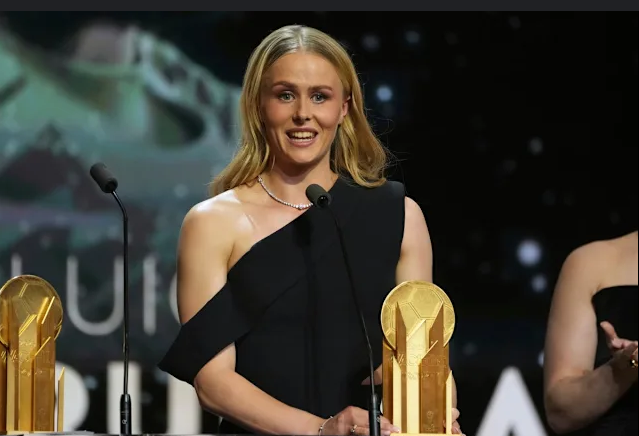
In a night that celebrated the pinnacle of world football, England goalkeeper Hannah Hampton etched her name into history by becoming the inaugural winner of the women’s Yashin Trophy at the Ballon d’Or awards on Monday evening in Paris. The ceremony, held at the Théâtre du Châtelet, showcased the brightest stars of football and their accomplishments over the past year, with Hampton emerging as a figure of inspiration and recognition for the growth of the women’s game.
Hampton’s journey to the award was marked by both domestic and international triumphs. Playing for Chelsea, she contributed significantly to the club’s remarkable treble-winning season, helping secure the Women’s Super League, the FA Cup, and the League Cup. Her stellar performances continued with England’s victorious Euro 2025 campaign, where her leadership, composure, and skill between the posts became a critical factor in the team’s success. The goalkeeper’s consistency and calm under pressure earned her admiration across the footballing world, ultimately leading to this historic accolade.

The award was presented to Hampton by Mary Earps, the former England goalkeeper who retired from international football shortly before the Euros after learning she would not be the first-choice keeper under head coach Sarina Wiegman. Hampton’s acceptance speech was deeply moving, reflecting both her personal gratitude and a broader sense of responsibility toward the women’s game. She paid special tribute to Chelsea manager Sonia Bompastor and Wiegman, who herself collected the Johan Cruyff Trophy for best coach, for their mentorship and guidance throughout her career.
A particularly poignant moment during her speech came when Hampton honoured the late Matt Beard, the former Liverpool Women manager, who passed away the previous Saturday. “The women’s game sadly on Saturday night lost a trailblazer, Matt Beard,” Hampton said. “Matt was someone who cared an awful lot for the women’s game before anyone else did. He lit up the room when everyone was in it. This is a message to show that not everyone should have to go through these dark moments alone. Sometimes the brightest smiles in the room hide the heaviest pain. He’ll be greatly missed.”
Beard’s impact on women’s football was widely acknowledged, and a fundraising page set up in his memory had already raised over £26,000 to support his family. Contributions included a £5,000 donation from Jack Sullivan, former West Ham United Women’s CEO, and a £500 pledge from former England captain Casey Stoney. Hampton’s heartfelt acknowledgment underscored the respect and admiration he commanded across the football community.
Beyond her individual triumph, Hampton was part of a larger wave of English footballing success at the ceremony. Five English players featured in the top ten of the women’s Ballon d’Or standings, demonstrating the depth and quality of the national team. Aitana Bonmatí of Barcelona and Spain claimed the women’s Ballon d’Or for the third consecutive year, a feat highlighting her enduring dominance in the midfield. Despite finishing on the losing side in both the European Championship and the Champions League finals to Alessia Russo, Bonmatí secured the top position, with Russo taking third place and Bonmatí’s Barcelona teammate Mariona Caldentey coming in second.
The men’s Ballon d’Or followed a similarly dramatic narrative, with Paris Saint-Germain forward Ousmane Dembélé taking home the award. Barcelona’s teenage sensation Lamine Yamal finished as runner-up and was also awarded the Kopa Trophy for best young player, underscoring the growing prominence of young talents in the global football landscape. PSG coach Luis Enrique was named men’s manager of the year, completing a trio of accolades for the European champions, who were also honoured as men’s club of the year. Arsenal were recognised as the women’s club of the year after their European triumph, with head coach Renee Slegers highlighting the club’s 38-year legacy of pioneering women’s football. “Invest in women. Invest in women’s sport. When we do that, all of us benefit,” Slegers said during her acceptance speech, drawing attention to the broader significance of supporting female athletes and the community around the sport.
Wiegman, upon receiving the Johan Cruyff Trophy, paid tribute to the legendary Dutch footballer, highlighting his belief in sport as a vehicle for growth and inclusion. “This award means even more because it is named after Johan Cruyff,” she said. “He believed in the power of sport and believed in every kid having the opportunity to play, to grow and to belong, and that is why I feel so connected with him. Let’s keep moving forward, keep uniting our beautiful game and enjoying our beautiful game too. Let’s celebrate our successes too. And if Burna Boy’s around, let’s do some dancing too.” Her remarks reflected the combination of respect for tradition and celebration of cultural moments that made the event more than a simple awards ceremony.
While the awards themselves celebrated individual and team excellence, the spectacle of the Ballon d’Or highlighted both the grandeur and the occasional excess of football’s global stage. The evening’s proceedings included appearances from iconic players such as Luis Figo, Andres Iniesta, and Ronaldinho, alongside entertainment figures like DJ Snake, blending the worlds of football and popular culture. Princess Charlene of Monaco presented the Socrates Award, commemorating the former Brazil midfielder rather than the philosopher, adding to the event’s eclectic mix of tribute, ceremony, and spectacle.
Despite the glitz and glamour, the event also showcased the evolution of football as a global and inclusive sport. The multilingual nature of the evening, with host Ruud Gullit conducting interviews in English that were answered in various languages, reflected football’s international reach. Winners, presenters, and attendees alike demonstrated the sport’s capacity to unite different cultures, celebrate diversity, and honour both historic and contemporary contributions.

For Hampton, her historic victory as the first women’s Yashin Trophy recipient marked the beginning of a legacy that will inspire generations of goalkeepers and young athletes worldwide. Her performance over the past year, combining resilience, technical excellence, and leadership, made her a fitting choice for the inaugural award. Beyond the personal accolade, her recognition symbolised the rising prominence of women’s football and the growing opportunities for players to achieve international acclaim while contributing to the sport’s expanding visibility and respect.
As the evening drew to a close, it was clear that the Ballon d’Or had once again proven itself to be a celebration of excellence, ambition, and perseverance. While the spectacle occasionally veered into extravagance, the night successfully highlighted the extraordinary talent, dedication, and heart of the players, coaches, and teams shaping modern football. For England’s Hannah Hampton, the award was a historic milestone and a reminder of the transformative power of sport, both on and off the field, as she stood proudly on the world stage in Paris.
Related News:
 England’s Euro Odyssey: A Tale of Grit, Glory and the Lionesses’ Miraculous March to the Final
 Raducanu’s Resurgence and Venus’s Record-Breaking Feat Highlight Washington Showdowns
 Glory for the Lionesses: England Crowned Women’s Euros Champions Again Amid National Calls for Bank Holiday
 Tottenham Takes On Newcastle
 Manchester City Announce Their Return in Style with Haaland Double and Debut Goals at Wolves
 New Season, Same Strife Between the Sticks for Manchester United
 FIFA Eyes Biennial Club World Cup from 2029, Plans Possible Expansion
 Kylian Mbappé Fires Real Madrid to Winning Start for Alonso Against Osasuna
 One More Step for Cristiano Ronaldo! Al-Nassr Beat Al-Ittihad
 Brazil Dominate Chile 3-0 to Secure Second Place in World Cup Qualifiers
 Germany and Northern Ireland Set for Crucial World Cup Qualifier Clash in Cologne
 Merino Hat-Trick Inspires Spain to 6-0 Rout of Turkey in World Cup Qualifier
 Carlos Alcaraz Celebrates Second US Open Triumph, Calls It the Best Tournament of His Career
 Serbia Humiliated 0-5 by England in World Cup Qualifier
 Haaland Hits Five as Norway Crush Moldova 11-1 in World Cup Qualifier
 Gabriel Martinelli’s Spark Ignites Arsenal’s Champions League Campaign with Victory at Athletic Bilbao
 Man City 2-0 Napoli: Haaland Reaches 50 Champions League Goals After Red Card Turns Tide
 Rashford’s Brilliance Stuns Newcastle as Barcelona Claim Champions League Victory
 Tributes Pour In as Former Liverpool Women Manager Matt Beard Dies Aged 47
 Dembélé and Bonmatí Shine as Ballon d’Or Winners in Glittering Paris Ceremony
 Liverpool Vs outhampton Set for Carabao Cup Clash at Anfield
 Dramatic Derby: Sorloth Strikes as Atletico and Real Madrid Share the Spoils
 ICC Women’s World Cup 2025: India to Host as Pakistan Fixtures Moved to Neutral Venues
 Bournemouth Stun Fulham with Dramatic Comeback in Premier League Thriller
Guardiola Enters Elite Club with Record-Breaking 250th Premier League Win
Bournemouth Stun Fulham with Dramatic Comeback in Premier League Thriller
Guardiola Enters Elite Club with Record-Breaking 250th Premier League Win
 Chaos at Ibrox as Martin’s Rangers Era Comes to an End
 Arsenal Showcase Depth and Flexibility as Arteta Eyes Title Challenge
 Ferguson Fires Scotland to Dramatic Comeback Win Over Greece
 England Thrash Wales as Rogers, Watkins and Saka Shine Bright
 Ruben Neves Strikes Late as Portugal Beat Ireland
 Tuchel Criticises ‘Silent Wembley’ After England Win
 Clarke’s Anger Overshadows Scotland’s Historic Win
 Kane’s Double Seals England’s World Cup Qualification
 Barnes Inspires Newcastle to Champions League Triumph Over Benfica
City shine with PlayStation-style football to overwhelm Villarreal
Barnes Inspires Newcastle to Champions League Triumph Over Benfica
City shine with PlayStation-style football to overwhelm Villarreal
 Fabio Wardley stuns Joseph Parker to earn Usyk title shot
 Tension and Turmoil at Aston Villa v Maccabi Match
 Lando Norris Dominates Brazil GP to Strengthen F1 Title Bid
 Ronaldo Confirms Final World Cup and Plans Retirement
 England Maintain Perfect World Cup Qualifying Record with Win Over Serbia
 Osimhen doubles as Nigeria reach CAF World Cup final
 Tears of Joy as Ireland Stun Hungary to Stay in World Cup Race
 Australia Fast Bowler Aims to Silence Joe Root in Perth
 Haaland Heroics and Portuguese Rampage Seal World Cup Qualification
 Irish Hero Parrott Says Goal Brought First Tears in Years
 Scotland Fans Reflect on France ’98 as World Cup Looms
 Nigeria Misses World Cup Again After Play-Off Loss
 Mark Wood Bowls Rapid Nets Spell, Ashes Test Hopes Rise
 Cardiff Nights Could Propel Wales to World Cup Glory
 Spain Qualify for 2026 World Cup After Dramatic Draw
 Scotland End 28-Year Wait With Stunning World Cup Qualification
 Cristiano Ronaldo Joins Trump, Bin Salman at State Dinner
 Tiny Curacao Makes History as Smallest Nation to Reach World Cup
 Haiti Qualifies for World Cup Despite Coach Never Visiting Country
 Scotland Fans Celebrate Historic World Cup Qualification
 Barcelona Returns to Camp Nou vs Athletic Bilbao
 India, Pakistan to Clash in T20 World Cup 2026 Group Match
 Mbappe Scores 4 as Real Madrid Edge Olympiakos
 Man City Lose, Champions League Risk
 UK Must Act with Courage and Clarity on Israel-Palestine Conflict, Says Foreign Affairs Committee Report
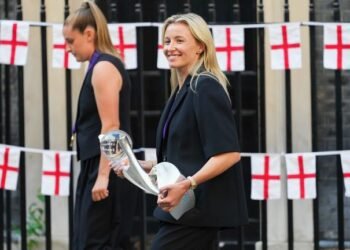 London Set to Honour Euro 2025 Champions as Lionesses Take Victory Parade Through the Capital
 Radioactive Leak at UK’s Nuclear Warhead Base Sparks Outcry Over Safety and Secrecy
 Rugby Confronts Safety Concerns with Smart Mouthguards at Women’s World Cup
 Premier League Supercomputer Predicts Tough Season for Man Utd Amid Three-Team Title Battle
 Terence Stamp, ’60s British Film Legend and Star of Superman, Dies at 87
 Hong Kong Summons UK and Australian Envoys Following Asylum Grants to Democracy Activists
 Is the UK Ready to Put Boots on the Ground in Ukraine? Assessing Military Capacity and Challenges
 Channel Crossings Surge: Over 1,000 People Arrive in the UK in Small Boats in a Single Day
 Arsenal VS Newcastle Hearts with Dramatic Late Turnaround at St James’ Park
 A Third of EU Citizens in UK Report Discrimination by Public Bodies Post-Brexit
 Public Trust in SNP Hits Historic Low Amid NHS Concerns
 Johnson Suggests Mandelson Linked to China Spy Controversy
 Rachel Reeves signals welfare reform ahead of key budget
 Ireland Votes as Two Women Compete for Presidency
 WW2 Pilot’s Long-Lost Crash Site Unearthed in Essex
 Japan Deploys Police to Curb Deadly Bear Attacks
 Former Lion Heskey Warns of Shortage of England Strikers
 Trump Deploys DHS to Charlotte in Major Arrest Operation
 Orban Says Ukraine Has ‘No Chance’ as EU Support Continues
 Two National Guard Soldiers Critically Injured Near White House