Published: 07 October 2025. The English Chronicle Desk
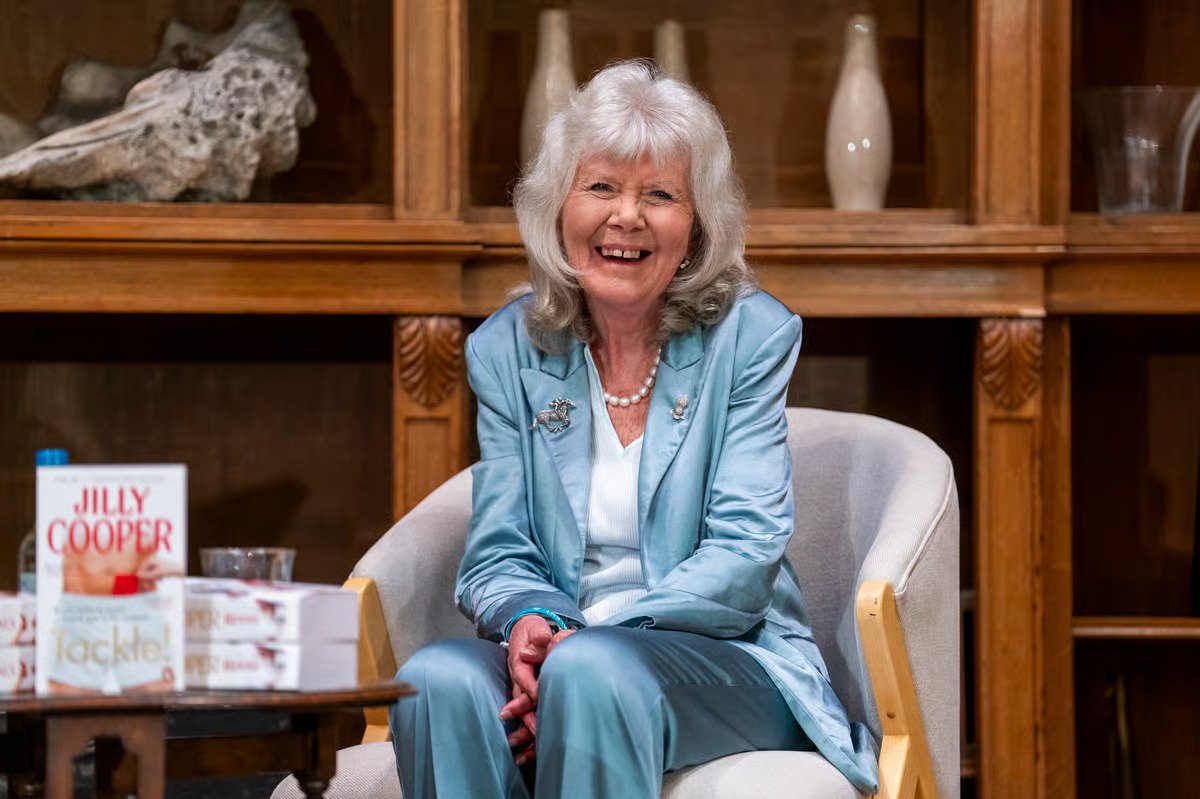
Jilly Cooper, the legendary British author whose novels captivated millions over a career spanning more than five decades, has died unexpectedly at the age of 88. Over her lifetime, Cooper sold an astonishing 11 million copies of her books, a testament to the enduring appeal of her richly imagined worlds and her keen understanding of human desire and social nuance. Her work reached a new generation last year through the Disney+ adaptation of Rivals, introducing her celebrated Rutshire chronicles to audiences far younger than the original readership.
For many long-time fans, Cooper’s universe was synonymous with glamour, scandal, and the indulgences of the British upper-middle class. Her debut in the series, Riders, published in 1985, introduced readers to Rupert Campbell-Black — a cad, heartbreaker, and talented rider whose exploits would define much of the drama and charm that came to characterise Cooper’s writing. While purists might argue for reading the Rutshire chronicles in order, it was striking to see how well the stories had aged when adapted for contemporary audiences. They capture the essence of the 1980s: shoulder pads and puffball skirts, class obsession, the clash of old aristocracy with the nouveau riche, and the complex dynamics of sexual politics that, in Cooper’s hands, became both integral to the plot and socially observant.

Despite the hedonistic and often risqué nature of her books, Cooper’s writing was never superficial. She combined humor, observation, and empathy, portraying her characters’ humanity in ways that transcended the stereotype of the glamorous, scandal-ridden narrative. Her attention to detail extended to every element, from the family dog to foreign exchange students, painting a full and vibrant picture of social interaction. Even in moments of sexual tension or misconduct, she treated such matters with gravity and moral clarity, reflecting a sensitivity often lacking in other popular novels of the time.
Cooper herself emerged from a comfortably upper-middle-class background, where her father worked for a living, but social standing and manners defined much of her worldview. She understood the intricate mores of the classes she depicted, from the anxious middle-class preoccupation with reputation to the casual indifference of the upper class. Her novels were raunchy, at times explicitly so, yet her language remained refined, a balancing act that allowed her stories to be simultaneously scandalous and sophisticated.
Her personal life mirrored the romance and sensibility of her fiction. She often described her upbringing and family life in near-fairytale terms, recounting her father’s service at Dunkirk and her mother’s devoted concern. Cooper’s own marriage to Leo Cooper, a publisher of military histories, was similarly affectionate, enduring, and candidly human. Their relationship reflected the joy, tension, and humor that characterized her novels’ romantic entanglements. While Leo never became an avid reader of her fiction, Cooper embraced her marriage with the same warmth and observational acuity that defined her storytelling.
In addition to the Rutshire chronicles, Cooper’s Romances series — beginning with Emily in 1975 and continuing with titles like Prudence, Imogen, Bella, Octavia, and Harriet — showcased her ability to craft intricate narratives around multiple protagonists. Each novel was meticulously structured, capturing every emotional nuance, from the challenges of unwanted pregnancies to the subtle social maneuverings within families. The series exemplified Cooper’s mastery at eliciting both laughter and tears, often within the span of a single chapter, demonstrating her unparalleled skill in pacing and character development.
Cooper’s approach to writing emphasized sensory immersion and authenticity. She advised aspiring writers to engage all five senses in their work and to keep detailed diaries, ensuring that the nuances of everyday experience were captured accurately. This discipline is evident throughout her novels, where even small details — the texture of bed linen, the cadence of dialogue between sisters, or the slight difference in a character’s speech — contribute to a vivid, lifelike tapestry.

The origin of Riders itself reflects Cooper’s flair for the dramatic and unconventional. Completed in 1970, well before her Romances, she reportedly left the manuscript on a bus in London’s West End — a gesture that seems almost as theatrical as her novels themselves. While details of this story remain partially anecdotal, the legend of Cooper’s bold and unconventional methods only enhances the mythos surrounding her life and career.
Jilly Cooper’s legacy is a testament to her ability to combine wit, romance, and keen social observation. Her novels, celebrated for their humor, elegance, and unflinching portrayal of human relationships, continue to resonate with readers old and new. In both her writing and her life, Cooper championed a world of passion, wit, and unapologetic pleasure, leaving an indelible mark on the literary landscape.
Related News:
 Chef Skye Gyngell, Slow Food Pioneer, Dies Aged 62
 Drag Queens Forced to Stop Reading ‘Dear Zoo’ to Children Amid Protests at Belfast Library
 Prince Charles Cinema Eyes Expansion to East London Amid Leicester Square Uncertainty
 Russell T Davies Warns of Declining UK Gay Rights Amid Rise of Reform UK and Trump Influence
 Millie Bobby Brown and Jake Bongiovi Begin Parenthood Through Adoption
 Patricia Crowther, Known as UK’s Oldest Witch, Dies Aged 97
 Labi Siffre Demands Tommy Robinson Stop Using Iconic Anti-Apartheid Anthem
 George and Amal Clooney Celebrate Global Human Rights Champions at Star-Studded Albies
 Celebrity Traitors First Look: A Star-Studded Highland Adventure That Hooks from the Start
 Academy Award-Winning Actress Diane Keaton Dies at 79
 Alan Davies Criticises England Flag Displays and Patriotism
 D’Angelo: Neo-Soul’s Radical Genius and Lasting Legacy
 Dave Ball: The Unsung Genius Behind Soft Cell’s Bold Sound
 British Airways suspends podcast sponsorship after controversial interview
 Prunella Scales: From Fawlty Towers Icon to Beloved Canal Explorer
 Charlie Kaufman: They told me Being John Malkovich would never get made
 UK launches search for first-ever ‘town of culture’ to highlight overlooked areas
 Hollywood Is an Industry of Looney Tunes Pretending to Be Normal
 Oprah enjoys Meghan’s jam on English muffins
 Amber Davies Shines on Strictly – Time to Drop the West End Debate
 David Szalay’s ‘Flesh’ Wins 2025 Booker Prize
 Princess of Wales Hosts Festive Christmas Service at Abbey
 TikTok Star Jessie Yendle Mocked by KFC
 Rusty Bond-Era Aston Martin Restored to £1m Glory
 Pavarotti statue frozen in Italian ice rink sparks backlash
 The Ketamine Crisis in the UK is a Silent Epidemic Leaving Users with Lifelong Pain
 Unseen Killers of the Deep Inside the UK Lab Uncovering the Silent Deaths of Sea Creatures
 My Husband Won’t Stop Playing with Lego and It’s Driving Me Nuts
 Heartbreak in the New Forest as Shetland Ponies Vanish, Community on Edge
 Terence Stamp, ’60s British Film Legend and Star of Superman, Dies at 87
 Why E-Bikes and E-Scooters Are Making Streets a ‘Nightmare’ for Blind People
 London to Regulate Pedicabs: Music Turned Down, Fares Set by the Minute
 Birmingham Bin Strike Enters Sixth Month as Negotiations Stall
 Over 40% of Private Renters Forced to Ration Energy to Afford Bills, Study Reveals
 One in Three GPs in England Do Not Work in NHS, Raising Concerns Over Access to Care
 Persistent Offenders Owe Over £700m in Ulez Fines as TfL Cracks Down on Evasion
 Northern Ireland Faces Fears of Prolonged Race Riot “Permacrisis”
 Zarah Sultana Seeks Legal Action After Bitter Clash with Jeremy Corbyn Over Party Membership Funds
 Watchdog, Cornflakes and Courage: Remembering John Stapleton, a Broadcaster Who Did It All
 Scottish Teenager’s Petition on Single-Use Plastics Gains Parliamentary Support
 White Low-Income Pupils in England Show Lowest Levels of School Engagement, Study Finds
 Ed Miliband Warns UK Government on X, Citing Elon Musk as a “Dangerous Influence”
 A Third of EU Citizens in UK Report Discrimination by Public Bodies Post-Brexit
 Beloved Actress Dame Patricia Routledge Dies Aged 96
 Strictly Celebs Starstruck as Cynthia Erivo Shines
 Women Challenge Meta Over Targeted Ads After Miscarriage
 £18 Prostate Cancer Test Could Save Thousands of Lives
 Man Charged Over 2020 Death of Tattoo Artist Georgina Ward
 Pregnant Women in England Face Rising Risk of Severe Birth Injury
 One in 12 Secondary Pupils Sent to Isolation Weekly
 UK Health Leaders Push for Urgent Tobacco & Vape Bill
 Hospice Cuts Raise Alarm Across England Amid Funding Crisis
 UK Woman Loses Child Benefit After Booking Flight She Never Took
 Mass Stabbing on Doncaster to London Train Leaves Ten Injured
 Children to Learn Local History in Major Curriculum Overhaul
 The Lowry Hotel: Manchester’s Iconic Five-Star Retreat
 Prince William Plants Trees with Brazil’s Nature Heroes
 Top Christmas Books Reads: Classics to Cozy Romcoms
 Greta Thunberg Backs Student Facing UK Visa Revocation
 Pauline Collins, Beloved ‘Shirley Valentine’ Star, Dies at 85
 Jailed UK climate protesters face extremist-style restrictions
 How to get help when a child goes missing – call 999 urgently
 ‘Reckless’ cuts to victims’ services will cost more than they save
 VAR Must Rein Its Neck In to Save Football’s Spirit
 Politics latest: Starmer ‘will fight any leadership coup’ as Streeting denies attempt to oust Labour PM
 Pop Stars Call on UK Government to Cap Resale Prices for Fans
 Son Reveals UK Couple in Iran Resort to Hunger Strike for Help
 New weather warning issued with risk of flooding
 Mum Calls for New Licence Rules After Teen Road Death
 £1 Breakfast Club Brings Parents Together in Sheffield
 Mother Watches in Horror as Teen Daughter Dies on Tracks
 ‘Traumatic Wait’: Northern Ireland Women Face Breast Cancer Delays
 Commuters warned as yellow snow and ice alert hits Northern Ireland
 Coffins Now Too Large to Cremate Amid Rising Obesity Crisis
 Bill Murray Terrified Wes Anderson but Became His Closest Collaborator
 Labour MP claims devolution bill is ‘blatant discrimination’ against Cornwall
 Fibromyalgia Patients Struggle as NHS Fails to Provide Care
 Search underway for British man overboard off Tenerife
 “Enough is Enough”: Local MP Vows to Fight Rainham Quarry Plans
 Virgin Media Fined £23.8m Over Telecare Safety Failures