Published: 11 October 2025. The English Chronicle Desk. The English Chronicle Online.
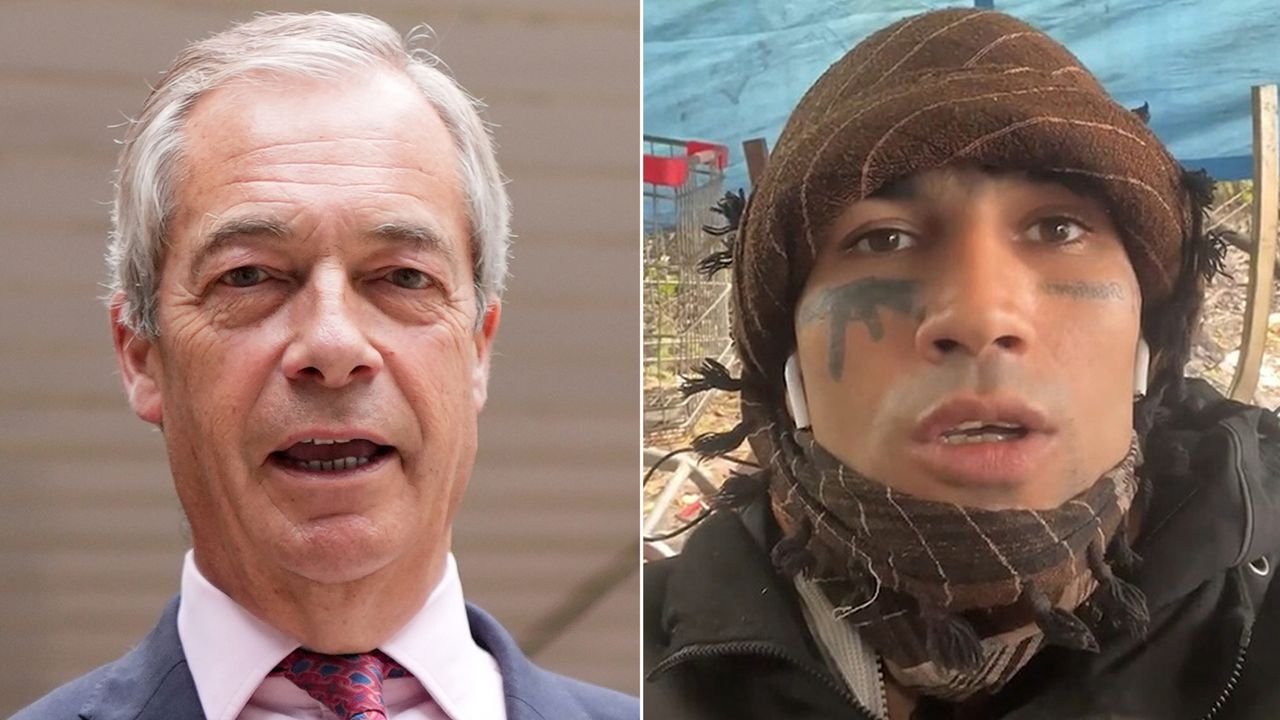
An Afghan man who arrived in the UK on a small boat has been found guilty of making a threatening video aimed at Nigel Farage, the leader of Reform UK. Fayaz Khan, 26, was convicted after a jury at Southwark Crown Court found that his TikTok video, posted in October last year, constituted a credible threat to the politician’s life. The verdict was reached by a majority of ten jurors to two, following almost twelve hours of deliberation.
The court heard that Khan had developed a “very large presence online,” with his TikTok videos attracting hundreds of thousands of views. Prosecutor Peter Ratliff explained that, in the months leading up to the threat, Khan’s content had focused largely on his attempts to reach the UK by small boat. Having lived in Stockholm, Sweden, since 2019, Khan had documented aspects of his journey, posting videos that highlighted his experiences as a migrant.
On 12 October 2024, Farage uploaded a YouTube video titled “The Journey of an Illegal Migrant,” in which he referred to Khan and commented on “young males of fighting age coming into our country about whom we know very little.” According to the prosecution, Khan responded on 14 October with a TikTok video in which he addressed Farage directly. In the video, he appeared to say: “Englishman Nigel, don’t talk shit about me. You not know me. I come to England because I want to marry with your sister. You not know me. Don’t talk about me more. Delete the video. I’m coming to England. I’m going to pop, pop, pop.”

Ratliff told the jury that Khan’s words were accompanied by threatening gestures. He headbutted the camera, made hand motions mimicking gunfire, and pointed to an AK-47 tattoo on his face, seemingly to emphasise the seriousness of his statements. Farage, who testified at the trial, described the video as “pretty chilling.” He said: “Given his proximity to guns and love of guns, I was genuinely worried. He says he’s coming to England and he’s going to shoot me.”
The court also viewed screenshots of a subsequent TikTok post by Khan, featuring the caption “I mean what I say,” overlaying an image of a GB News report about the threat. Additional videos shown to the jury revealed that Khan frequently used “pop, pop, pop” noises and hand gestures resembling those in the threatening clip directed at Farage.
Evidence presented during the trial also detailed Khan’s journey across the English Channel. He livestreamed parts of his voyage from France and was arrested on 31 October after arriving in the UK on a small boat. During a police interview, Khan maintained that he had never intended to carry out the threat. He told officers that the “pop, pop, pop” sounds were a recurring feature of his online persona, stating: “This is my character, this is how I act in my videos. In every video I make those sounds, I say ‘pop, pop, pop.’”
Khan did not give evidence during the trial. However, the prosecution argued that the threat should be taken seriously. In his closing speech, Ratliff described the video as “not some off-the-cuff comment” but “sinister and menacing.” He highlighted Khan’s tattoos of AK-47 rifles on his face and arm, saying: “If you’ve got an AK-47 tattooed on your arm and your face, it’s because you love AK-47s and you want the world to know that. He is a dangerous man with an interest in firearms.”
The defence, represented by Charles Royle, argued that Khan’s video was intended as a form of attention-seeking performance rather than a genuine threat. Royle described Khan’s actions as “remonstrating in his own idiosyncratic, moronic, comedic, eye-catching, attention-seeking way.” He urged jurors to consider Khan’s character and online persona as context, suggesting that his exaggerated gestures and dramatic statements were part of his self-styled online identity rather than a plan to harm anyone.
The case has drawn attention to the growing concern over online threats against public figures and the role of social media in amplifying potentially dangerous content. Experts have noted that platforms like TikTok, which allow users to reach global audiences with short-form videos, can provide individuals with a large and rapid reach, sometimes escalating online disputes into real-world risks. Khan’s significant following on TikTok meant that his videos were widely circulated, increasing the perceived seriousness of the threat.
Legal analysts have emphasised that the context and perceived intent behind online content are key factors in determining whether a threat constitutes a criminal offence. In this case, the prosecution successfully argued that Khan’s combination of verbal threats, gestures, and references to firearms created a credible fear for the safety of Farage, meeting the threshold for criminal liability. The jury’s conviction reflects the courts’ commitment to protecting public figures from credible threats, whether delivered in person or online.
During the trial, jurors were also encouraged to consider the cumulative nature of Khan’s online behaviour. Multiple videos depicting “pop, pop, pop” gestures, livestreaming of his journey, and posts directly referencing Farage contributed to the assessment of intent and danger. While Khan claimed that these behaviours were part of his performative style, the consistent pattern of references to firearms and violent gestures played a significant role in the jury’s verdict.
The sentencing phase of the case is expected to consider several factors, including Khan’s age, his migration status, and the fact that he arrived in the UK via a small boat. Courts typically weigh both the seriousness of the offence and the potential for rehabilitation when determining appropriate sentences for online threats. Given the national prominence of the victim and the menacing nature of the threat, the prosecution is likely to seek a custodial sentence that reflects the gravity of the offence.
The case also highlights wider issues concerning online radicalisation and the monitoring of social media platforms. Law enforcement agencies have increasingly focused on identifying potentially harmful content and intervening before threats can escalate into real-world violence. Khan’s videos demonstrate how social media activity, even if framed as performance or parody, can cross into criminal conduct when it targets specific individuals and incorporates violent imagery or gestures.

Public reactions to the case have been mixed. While some commentators emphasise the need to protect politicians and public figures from online threats, others have raised concerns about freedom of expression and the difficulty of interpreting satirical or performative content online. Nevertheless, the court’s verdict underscores that threats perceived as credible, particularly when reinforced by gestures, tattoos, and context, are treated seriously under UK law.
Fayaz Khan’s conviction serves as a reminder of the responsibility that accompanies a large social media presence. Videos that might seem like dramatic performance to some viewers can have severe legal consequences if they involve threats or intimidation. The case illustrates how courts balance the right to free expression with the need to protect individuals from genuine threats to safety.
In conclusion, Fayaz Khan, 26, has been found guilty of making a threatening TikTok video aimed at Nigel Farage. The evidence presented during the trial—including multiple videos, livestreamed content, and references to firearms—led the jury to conclude that the threat was credible and menacing. While Khan denied any intent to carry out harm and argued that his online persona explained his behaviour, the court determined that the combination of verbal, visual, and symbolic cues demonstrated a real danger to the victim. The case highlights both the legal consequences of online threats and the growing responsibility of social media users to avoid content that could be interpreted as violent or threatening.
Related News:
 Tasers Introduced in UK Prisons to Combat Rising Violence and Protect Staff
 Targeted Attack in Bury Sparks Murder Investigation as Community Awaits Justice
 Man Remanded After Children Fall Ill at Leicestershire Summer Camp in Shocking Child Cruelty Case
 Hunt Intensifies for Southport Riot Suspects as Police Release Full List of 40 Still at Large
 AI Revolutionises Grooming Gang Investigations as Police Target Cold Cases Across England and Wales
 Police Advised to Disclose Ethnicity of Suspects in High-Profile Cases
 Victim of Catfish Predator Max Hollingsbee Speaks Out: “I Will Always Be Angry He Took My Innocence”
 Two Police Officers Dismissed Following Death of Man in Custody
 Merseyside Police Helicopter Crew Cleared After Low-Altitude Pursuit of Suspect
 UK Launches Major Crackdown on Networks Profiting from Online Child Sexual Abuse
 Charlie Kirk Killing Used to Mobilise UK’s Largest Far-Right Rally in Decades
 Scotland Yard Faces Renewed Scrutiny as Undercover Investigation Reveals Persistent Racism and Misogyny
 No Evidence Found to Substantiate Alleged Rape in Oxfordshire Churchyard, Police Confirm
 UK Police to Gain New Powers to Manage Repeated Protests, Home Office Announces
 Madeleine McCann Detectives to Testify Against Woman Accused of Stalking the Family
 Asylum Seeker Accused of Walsall Murder Seen Elated Post-Attack
 UK Gamer Recruited by Wagner Group Found Guilty of Arson
 Migrant Sex Offender Deported After Erroneous Prison Release
 Five More Prisoners Freed by Mistake in Essex Week
 Nearly 48,000 Zombie Knives Removed from UK Streets in a Year
 Afghan man charged with murder after west London knife attack
 Man Charged Over Cambridgeshire Train Stabbing
 Pregnant UK Teen to Be Freed from Georgian Jail
 French Taxi Driver Cleared in David Lammy Theft Case After Fare Dispute
 Just Stop Oil Protesters Convicted Amid Climate Defence Row
 Lammy ‘misinformed’ over Wandsworth prisoner releases
 Met Police Culture Makes Racial Harm ‘Inevitable’
 British Grandmother to Return Home After Death Sentence in Bali
 Bar Council urges legal aid for all domestic abuse family cases
 Judges to Decide Fate of Chief Constable Guilty of Contempt
 Victims’ commissioner Baroness Newlove dies aged 63
 ‘Fake Admiral’ Sparks Outrage at Remembrance Event
 Paralegal Fired After Exposé on Illegal Worker Scam
 Dan Wootton Rejects Catfishing Allegation in Court
 Serial Rapist and Former Cop Found Guilty Again
 Gardener Guilty of Brutal Attack on Teacher Partner
 Man Arrested Over Manchester Synagogue Terror Attack
 Twelve Prisoners Released in Error, Two Still Missing
 Northern Ireland Family of Three Shot Dead in Maguiresbridge Home Incident
 Prison System Faced Collapse Under Sunak’s Leadership, Reveals Damning Review
 Diane lost her husband to a reckless driver — and the long wait for justice was nearly just as agonizing.
 Mass Arrests in London as Protest Defies Ban on Palestine Action
 Alarming rise in abusive teen relationships in the UK sparks urgent warnings
 Inquest Finds Agency Worker Failings Led to Unlawful Death of Vulnerable 14-Year-Old
 Mother of Olivia Pratt-Korbel Issues Powerful Gun Crime Plea
 High Court Rules Against Noel Clarke in Libel Case Against Guardian Publisher
 Akinwale Arobieke Found Dead at Liverpool Home
 UK Mobile Retailers Lock Doors Amid Surge in Organised Phone Thefts
 Tanni Grey-Thompson Faces Abuse Over Opposition to Assisted Dying Bill
 Prime Suspect in Madeleine McCann Case Declines Metropolitan Police Interview Ahead of German Prison Release
 Teenager in Critical Condition Following Shooting Outside Wembley Stadium
 Mahmood Pledges Reform of Modern Slavery Laws After Court Blocks Deportation Appeal
 Migrants in UK May Need to Contribute or Face Removal, Home Secretary Signals
 Digital ID Plans Ignite Debate Over £600m Treasury Tax Boost and Privacy Concerns
 Massive London Poundland Fire Engulfs High Street
 Cooper Unveils £4m Cyber Plan Against Russian Hackers
 Ian Watkins Killed in Prison; Ex-Girlfriend Speaks Out
 Lisbon Transport Board Resigns After Deadly Funicular Crash
 Badenoch Warns Farage’s Grooming Gangs Plan Could Backfire
 Johnson Approved China’s London ‘Super-Embassy’ in 2018
 Mass Stabbing on Doncaster to London Train Leaves Ten Injured
 FBI Director Kash Patel Defends Girlfriend Amid Government Jet Claims
 Police Probe Four Knife Incidents Linked to Cambridgeshire Train Attack
 Newcastle United Lifts Ban on Fan Over Gender-Critical Views
 Jailed UK climate protesters face extremist-style restrictions
 King Charles to Lead Nation in Remembrance Sunday Service
 How to get help when a child goes missing – call 999 urgently
 ‘Reckless’ cuts to victims’ services will cost more than they save
 Government urges schools to ban phones to curb classroom disruption
 Pop Stars Call on UK Government to Cap Resale Prices for Fans
 Peers Flood Assisted Dying Bill with 942 Amendments
 Oklahoma Governor Grants Last-Minute Clemency to Death Row Inmate
 Rio Raid’s Death Toll Raises Questions About Gang Impact
 UK Asylum Overhaul Sparks Debate Over Human Rights and Deportations
 UK Candidate Moved to Safe House After Election Threats
 Mother Watches in Horror as Teen Daughter Dies on Tracks
 Charlotte Raids: 130 Arrested in Major Immigration Sweep
 Man Charged Over Attempted Murder of Senior Officer
 Peers Get Extra Time to Debate Assisted Dying Bill
 Virgin Media Fined £23.8m Over Telecare Safety Failures