Published: 24 December 2025. The English Chronicle Desk. The English Chronicle Online.
People living with motor neurone disease in England are dying while waiting for essential home adaptations, according to campaigners who warn the system is failing those with rapidly progressing conditions. New findings reveal that many patients spend the final months of their lives trapped in unsafe homes, unable to access timely support designed to preserve dignity, safety, and independence.
Motor neurone disease, commonly known as MND, is a terminal neurological condition that attacks the nerves controlling movement. It often progresses quickly, stripping individuals of mobility, speech, and independence within months. For many, adapting the home becomes a medical necessity rather than a lifestyle improvement. Yet evidence suggests that bureaucratic delays mean these adaptations arrive far too late, if at all.

Research by the MND Association shows that people in England wait an average of 375 days from applying for a Disabled Facilities Grant to having work completed. This delay is devastating when set against the harsh reality of the disease. Around one third of people with MND die within a year of diagnosis, and roughly half die within two years. For them, a year-long wait effectively denies access altogether.
Campaigners argue that these delays force people to spend their final months fighting for basic support instead of focusing on comfort and family time. Many are left in homes that actively endanger them, increasing the risk of falls, injury, and emotional distress. The situation has sparked renewed calls for urgent reform and a fast-track system for terminal illnesses.
Tanya Curry, chief executive of the MND Association, described the situation as deeply unjust. She explained that for someone whose condition can deteriorate dramatically in a short period, waiting more than a year for adaptations is equivalent to being refused them. Her comments reflect widespread frustration among patients, families, and carers across England.
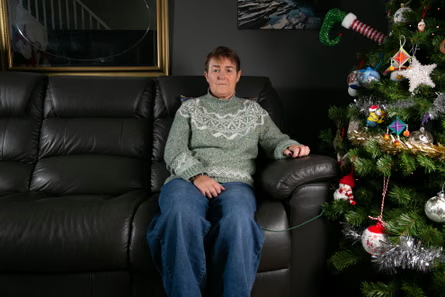
The human cost of the delays is perhaps best illustrated through individual experiences. Nicole Foster, a 56-year-old woman diagnosed with MND earlier this year, found herself facing a two to three-year wait for grant funding to adapt her bathroom. Faced with the reality of her prognosis, she chose to spend her entire life savings, alongside money raised by supporters, to make her home accessible.
Foster said she was blunt with officials, telling them she would not live long enough to wait. Despite this, the only immediate help offered was an additional handrail on her stairs. After a lifetime of working and paying taxes, she said the lack of support left her feeling forgotten at the moment she needed help most.
Instead of using her remaining time and money to travel or enjoy experiences with her family, Foster has been forced to prioritise basic safety. She also requires a through-floor lift, but the projected cost of around eighteen thousand pounds made it impossible without grant support. As a temporary measure, she paid for a stairlift, even though it does not fully meet her needs.
The consequences of inadequate adaptations have been severe. Foster has fallen several times at home, prompting her husband to give up his job to become her full-time carer. During an assessment visit, she recalls being told by a professional that they were embarrassed she had not been classed as a priority, a comment that underscored the system’s shortcomings.

She explained that she cannot be left alone because she struggles to move safely around her home. Despite being unable to walk properly and facing clear risks, she still must navigate complex processes to access help. For people with MND, she said, improvement is not possible, and support packages should be ready immediately after diagnosis.
Freedom of information requests by the MND Association reveal that delays are not limited to England. In Northern Ireland, the average wait from application to completion is 357 days, while in Wales it stands at 289 days. Although slightly shorter, these timescales remain incompatible with rapidly progressive conditions.
Disabled Facilities Grants are administered by local councils but funded by central government. They cover adaptations such as stairlifts, ramps, widened doorways, and accessible bathrooms. For people with MND, these changes are essential to maintain even a basic level of independence as mobility declines.
Alex Massey, the association’s head of campaigning, policy, and public affairs, described the current timelines as unworkable and unacceptable. He warned that leaving people waiting for more than a year traps them in unsafe and unsuitable homes, placing immense strain on patients and carers alike.
According to Massey, some people have been forced to wash in kitchen sinks for months or sleep on sofas in their living rooms because bedrooms and bathrooms remain inaccessible. These conditions, he said, strip people of dignity during an already traumatic period of life.
The charity is calling on the government to introduce a formal fast-track process for people with MND and other rapidly progressive illnesses. It also wants means testing for adaptations to be waived in such cases, recognising that many patients are forced to leave work as their condition advances.
Campaigners argue that treating these applications as routine ignores the medical reality of terminal illness. Needs only increase over time, and delays compound physical decline. Means testing, they say, fails to account for lost income, increased care costs, and the emotional toll on families.
In response, the Ministry of Housing, Communities and Local Government acknowledged the severe impact that waiting for grant funding can have on lives. A spokesperson said the government expects local authorities to progress applications as quickly as possible and recognises the urgency for seriously ill people.

The ministry highlighted an investment of £711 million into the Disabled Facilities Grant scheme, aimed at reducing waiting lists and funding thousands of additional home adaptations. Officials insist this funding will help ensure that vulnerable people receive the support they need, though campaigners remain sceptical about how quickly change will reach those currently waiting.
For families affected by MND, time is the one resource they do not have. Each delayed assessment, approval, or installation represents lost weeks of safety and comfort. While funding commitments are welcome, campaigners stress that structural reform and clear prioritisation are essential to prevent further suffering.
As England’s population ages and diagnoses of complex conditions increase, the pressure on local authority systems is likely to grow. Advocates warn that without decisive action, more people with terminal illnesses will continue to die waiting for help that arrives too late to make a difference.
For those living with MND today, the call is simple and urgent. They want a system that recognises the speed and severity of their condition, values their remaining time, and provides practical support without unnecessary barriers. Until that happens, campaigners fear that stories like Nicole Foster’s will remain heartbreakingly common.
Related News:
 Mother dies after black market weight loss injection
 Young Woman Missed 13 Times by GPs Before Bowel Cancer Diagnosis
 Hospice Cuts Raise Alarm Across England Amid Funding Crisis
 How Bringing Forests Into Preschools Boosts Children’s Health
 The diet that can significantly ease symptoms of IBS
 Celebrities and Charities Demand UK Government Act on Child Poverty
 Long A&E waits causing heartbreaking suffering, charity says
 Experts Warn on Home Birth Risks, Call for Skilled Midwives
 Lancashire council plans to close care homes and day centres
 Britain could face worst flu season on record, NHS warns
 Experts Urge Legal Right to Timely Cancer Care
 Patients to Test Health at Home to Ease NHS Winter Pressure
 London’s Childlessness Crisis: Schools Closing as Families Shrink
 NHS Takes Over Nuffield Hospital in ‘Windfall’ for London Care
 North Sea oil workers must lose weight or face job loss
 Crisis charity to become landlord amid UK housing emergency
 No link found between paracetamol in pregnancy and autism
 UK Disability Pay Gap Means Millions Work for Free From Today
 Shouting Works Best to Deter Gulls, UK Study Finds
 Reeves rejects £1bn plea for NHS redundancy payouts
 NHS trust fined after woman takes life in mental health unit
 Leading doctors issue warning amid ‘bad’ flu season
 UK Centres Used Risky Heart Pump Despite Safety Fears
 Reeves Rejects £1bn NHS Payout Plea from Streeting
 New Campaign Trains Vets to Spot Farmers’ Health Risks
 Stroke Patient Mistaken for Drunk, Care Delayed
 ‘Traumatic Wait’: Northern Ireland Women Face Breast Cancer Delays
 Boris Johnson Oversaw Toxic No 10 Culture, Covid Inquiry Finds
 Welsh Government Christmas 2020 Lockdown Criticised
 Coffins Now Too Large to Cremate Amid Rising Obesity Crisis
 Thinktank Urges Smaller Hospitals to End NHS ‘Permacrisis’
 David Cameron Reveals Prostate Cancer Diagnosis, Advocates Screening
 NHS paediatric leave parents waiting months for answers
 Catherine urges end to stigma around addiction
 11 Best Supermarket Wines Chosen by Experts and Sommeliers
 Inquiry Opens Into Disgraced Surgeon Eljamel Scandal
 Five-Year-Old Dies After Rare Tonsil Surgery Complication
 Fibromyalgia Patients Struggle as NHS Fails to Provide Care
 More Patients Now Contacting GPs Online, Data Shows
 Streeting launches review into mental health and ADHD diagnoses
 Flu cases in Scotland more than double in a week
 People in England’s Poorest Areas Face Higher Lung Health Emergencies
 Concerns Mount Over Accuracy of At-Home Health Tests as Study Calls for Stricter Regulation
 The Ketamine Crisis in the UK is a Silent Epidemic Leaving Users with Lifelong Pain
 Systemic Racism in Maternity Care Continues to Endanger Black Women in England, MPs Warn
 One in Three GPs in England Do Not Work in NHS, Raising Concerns Over Access to Care
 Questions Remain as Rugby Legend Lewis Moody Faces Motor Neurone Disease Diagnosis
 M&S and Morrisons Lead Christmas Supermarket Taste Test
 New Prostate Cancer Drug Set to Halve Death Risk in England
 Peterborough Mosques Tighten Security After Attack
 Reeves Faces Setback as Labour May Miss Homes Target
 Kate Winslet to Narrate Film Highlighting King’s Environmental Mission
 Green Party Surges Past Labour in Latest UK Poll
 Trump’s UK Ambassador Urges North Sea Drilling to Strengthen US Ties
 Children to Learn Local History in Major Curriculum Overhaul
 French Taxi Driver Cleared in David Lammy Theft Case After Fare Dispute
 UK Bans Fake Numbers: Scammers Lose Their Trick
 Prince William Plants Trees with Brazil’s Nature Heroes
 M&S Profits More Than Halve After Cyber-Attack
 Kent village told to remove flags before Christmas lights go up
 King Charles to Lead Nation in Remembrance Sunday Service
 Palace May Restore Hyphen to Andrew Mountbatten-Windsor’s Name
 Millionaires group urge Reeves to introduce wealth tax to ‘lift kids out of poverty’
 Starmer Faces Growing Dissent as Labour MPs Weigh Leadership Challenge
 Northern Lights may illuminate UK skies this week
 PM Condemns Leaks, Vows Loyalty to Ministers and Stability
 Son Reveals UK Couple in Iran Resort to Hunger Strike for Help
 Major Rent Reform Ends No-Fault Evictions in England
 Senator John Fetterman Hospitalized After Fall from Heart Flare-Up, Keeps Sense of Humor
 New AI tool could cut wasted efforts in organ transplants
 Criminal Gangs Pose as Truckers to Hijack UK Supply Chains
 Van Dwellers Face Eviction After Park Misuse Sparks Outcry
 Royal Navy Shadows Russian Warships Entering the Channel
 Inside the Helpline Protecting Missing Children in the UK
 Boots Showstopper Beauty Bundle Outshines Many Advent Calendars This Holiday Season
 Labour’s ‘blinkered’ drive to build risks pushing wildlife to point of no return, nature experts warn
 PlayStation PS5 Deals Hit Lowest Prices Ahead of Black Friday
 Starmer Says Labour’s Economic Plan Needs Years to Deliver
 UK unemployment rises to four-year high of 5.1% before budget
 Wiltshire Police Use Lasso to Catch Rampaging Village Goat