Published: 24 December 2025. The English Chronicle Desk. The English Chronicle Online.
Christmas Eve has unfolded as one of the busiest travel days the United Kingdom has ever experienced, as millions of people begin long-awaited festive journeys. Across roads, railways and airports, movement has surged to levels not seen since before the Covid pandemic, reflecting a strong desire to reunite with family and friends after another demanding year. From early morning, traffic built steadily on major routes, while stations and terminals filled with travellers carrying gifts, suitcases and the unmistakable anticipation of Christmas.
According to the RAC, an estimated 4.2 million drivers are expected to travel by car on Christmas Eve alone. This figure represents the highest level of festive road use recorded since pandemic restrictions were lifted. The organisation noted that travel volumes have steadily increased throughout December, but Christmas Eve remains the focal point for long-distance journeys. Many families prefer to arrive before Christmas Day, avoiding limited public transport and allowing more time together.
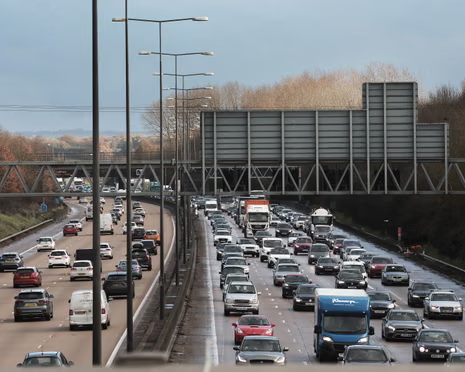
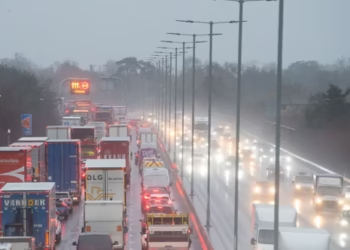
Traffic conditions are expected to remain challenging throughout the afternoon and early evening. The RAC warned that the busiest period would fall between early afternoon and the evening, when school holidays, workplace closures and reduced freight traffic converge. Motorists have been advised to expect delays, particularly on routes connecting major cities and popular holiday destinations. Despite modern navigation systems, congestion has been unavoidable in several regions.
The M25, often described as Britain’s busiest motorway, has once again become a pressure point. Both clockwise and anticlockwise sections around west and south London have seen significant slowdowns, particularly near junctions linking to the M4 and routes towards Surrey and Kent. Similar patterns have been observed around Manchester, where parts of the M60 experienced heavy volumes as drivers headed towards Yorkshire and the North East.

Beyond congestion, planned roadworks have added to the strain. In Hampshire, the closure of the M27 between junctions nine and eleven has required lengthy diversions, affecting both local and long-distance travellers. While authorities scheduled the closure overnight, the knock-on effects were felt earlier as drivers adjusted routes. Recovery and breakdown services reported a rise in callouts, often linked to vehicles struggling in slow-moving traffic.
Rail travel has also faced intense demand, even as services operate on reduced schedules. Christmas Eve traditionally marks an early finish for most train operators, with no services running on Christmas Day and only limited options on Boxing Day. As a result, passengers aiming to travel by train have been keen to secure seats well before afternoon cut-off times.
Long-distance routes from London have been particularly busy. The final trains heading north towards Edinburgh, Newcastle and other major cities departed earlier than on a normal weekday, prompting crowded platforms and a heightened sense of urgency. Rail operators urged passengers to check timetables carefully, as missing the last service could mean being stranded until after Christmas.
Despite these pressures, industry representatives reported relatively smooth operations overall. Additional staff were deployed at major stations to manage queues and assist travellers unfamiliar with altered schedules. While delays did occur, particularly on routes affected by engineering works, there were few reports of widespread disruption. Many passengers expressed relief simply at being able to travel freely during the festive period.
In the skies, the festive surge has been even more pronounced. The Civil Aviation Authority estimated that around three million people would depart from UK airports in the week leading up to Christmas, marking one of the busiest aviation periods on record. Airports across the country prepared extensively, increasing staffing levels and coordinating closely with airlines and security teams.
Heathrow Airport confirmed that this Christmas is set to be its busiest ever. Terminal concourses were filled from the early hours, with families, couples and solo travellers heading for destinations across Europe, North America and beyond. Birmingham and Manchester airports also reported exceptionally strong demand, reflecting the continued recovery of regional aviation.
Passengers were encouraged to arrive earlier than usual, particularly for international flights. While security processes have improved compared with previous years, the sheer volume of travellers required patience. Many reported long queues at check-in and security, yet the overall mood remained calm and festive. Airport staff described a positive atmosphere, shaped by seasonal decorations and live music performances.
Coach and bus travel has also played a vital role in festive mobility. The Confederation of Passenger Transport predicted that Christmas Day itself would see the highest number of bus journeys in a decade. Although services remain limited compared with weekdays, demand has steadily grown as people seek affordable and reliable options, especially in urban areas.
Local authorities highlighted the importance of bus networks for essential workers and those without access to cars. In some cities, extended operating hours were introduced to support hospital staff and hospitality workers. Industry leaders described the trend as evidence of changing travel habits and the growing significance of public transport during holidays.

Underlying these movements is a broader social context. After years marked by uncertainty, economic pressures and shifting work patterns, Christmas remains a powerful anchor for connection. Surveys suggest that more than thirty-seven million people have travelled by road at some point during the week before Christmas, the highest figure since records began in 2013. This reflects both population growth and a renewed emphasis on in-person gatherings.
Travel experts noted that many people planned journeys carefully this year, spreading trips across several days to avoid peak congestion. Flexible working arrangements allowed some to travel earlier, easing pressure on Christmas Eve itself. However, for those tied to traditional work schedules, the final day before Christmas remained the only option.
Safety organisations used the occasion to remind travellers of basic precautions. Drivers were urged to check vehicles, allow extra time and avoid fatigue. Rail and aviation authorities emphasised the importance of following staff instructions and remaining patient during busy periods. Weather conditions were relatively mild across much of the country, reducing the risk of weather-related disruption.
As evening approached, traffic volumes gradually began to ease, though some bottlenecks persisted well into the night. For many travellers, the journey’s end marked the true beginning of Christmas. Arrivals were met with embraces, shared meals and the comfort of familiar surroundings, underscoring why so many endure the stresses of festive travel.
The scale of movement seen this Christmas Eve highlights the resilience of the UK’s transport networks and the enduring importance of seasonal traditions. While congestion, queues and delays tested patience, the collective effort of travellers, staff and authorities ensured that millions reached their destinations safely. As the country settles into Christmas Day, attention will soon turn to the return journeys and the lessons learned for future festive seasons.
Related News:
 British teen mistakenly takes wrong flight from Menorca airport and lands in Italy
 Manchester Airport Faces Delays After EasyJet Planes’ Wings ‘Clip’ on Runway
 Access to Iconic Cornish Beach Cut Off by National Trust Amid Safety Concerns
 Bank Holiday Getaway: Drivers and Rail Passengers Warned of Major Delays Across Britain
 Storm Amy set to disrupt travel across UK with winds reaching 95mph
 New EU Border System Could Cause 4-Hour Delays
 UK launches search for first-ever ‘town of culture’ to highlight overlooked areas
 The Lowry Hotel: Manchester’s Iconic Five-Star Retreat
 Shouting Works Best to Deter Gulls, UK Study Finds
 Chatsworth estate opens new family-friendly hotel
 Clifftop Lodges Spark Fears Over Jurassic Coast Stability
 The 20 best Christmas markets in the UK, from Bath to Edinburgh
 These are the best Airbnb cottages in the UK for getaway inspired by The Holiday
 Search underway for British man overboard off Tenerife
 £140m revamp of Cardiff Central station approved
 UK’s Roads and Airports Brace for Record-Breaking Christmas Travel
 Dover Ferry Delays Disrupt Christmas Travel Amid French Border IT Glitch
 UK Must Act with Courage and Clarity on Israel-Palestine Conflict, Says Foreign Affairs Committee Report
 The Ketamine Crisis in the UK is a Silent Epidemic Leaving Users with Lifelong Pain
 London Set to Honour Euro 2025 Champions as Lionesses Take Victory Parade Through the Capital
 Targeted Attack in Bury Sparks Murder Investigation as Community Awaits Justice
 Princess of Wales Launches Animated Video Series to Support Early Childhood Development
 Heartbreak in the New Forest as Shetland Ponies Vanish, Community on Edge
 Radioactive Leak at UK’s Nuclear Warhead Base Sparks Outcry Over Safety and Secrecy
 Fire Contained at Edinburgh’s Arthur’s Seat After Overnight Battle by Firefighters
 Premier League Supercomputer Predicts Tough Season for Man Utd Amid Three-Team Title Battle
 Mystery Wallaby Spotted on Norfolk-Suffolk Border Sparks Police Appeal
 UK Weather: Heat Alerts Extended as Temperatures Set to Reach 30°C This Weekend
 Terence Stamp, ’60s British Film Legend and Star of Superman, Dies at 87
 Corfu Beyond the Crowds: Discovering Serenity in Southern Villages and Hidden Taverns
 Merseyside Police Helicopter Crew Cleared After Low-Altitude Pursuit of Suspect
 Is the UK Ready to Put Boots on the Ground in Ukraine? Assessing Military Capacity and Challenges
 Education Leaders Call for End to Compulsory GCSE Resits in English and Maths
 Police Scotland Spends £500,000 Compensating Officers Over Trump Visit
 Thousands of New School Nursery Places to Be Rolled Out Across England
 Urgent Action Needed on Windrush Compensation as Survivors Speak of “Waiting to Die”
 Tanni Grey-Thompson Faces Abuse Over Opposition to Assisted Dying Bill
 Rising Food Bank Dependence Highlights Deepening Hardship Across the UK
 Birmingham Bin Strike Enters Sixth Month as Negotiations Stall
 TfL Invites RMT to Resume Talks as London Tube Strikes End
 Over 40% of Private Renters Forced to Ration Energy to Afford Bills, Study Reveals
 Systemic Racism in Maternity Care Continues to Endanger Black Women in England, MPs Warn
 One in Three GPs in England Do Not Work in NHS, Raising Concerns Over Access to Care
 Northern Ireland Faces Fears of Prolonged Race Riot “Permacrisis”
 Nigel Farage Unveils Controversial Immigration and Welfare Plans at Reform UK Press Conference
 Great Britain’s Energy Operator Commits to Strengthening Grid to Prevent Blackouts
 Scottish Teenager’s Petition on Single-Use Plastics Gains Parliamentary Support
 White Low-Income Pupils in England Show Lowest Levels of School Engagement, Study Finds
 Ed Miliband Warns UK Government on X, Citing Elon Musk as a “Dangerous Influence”
 No Evidence Found to Substantiate Alleged Rape in Oxfordshire Churchyard, Police Confirm
 UK House Price Growth Slows as Buyers Exercise Caution Ahead of Autumn Budget
 Kemi Badenoch Unveils ‘Golden Rule’ to Halve Spending Cuts for Deficit Reduction at Tory Conference
 Massive London Poundland Fire Engulfs High Street
 Sussexes Warn on Children’s Phone Use Echoing Princess of Wales
 Paedophile Singer Ian Watkins Dies After Prison Attack
 Prince Andrew told Epstein “we are in this together”
 Former Premier League Referee David Coote Pleads Guilty to Child Image Offence
 UK border officers deployed to Balkans to tackle migrant smuggling
 UK MPs warn of repeat riots over online misinformation
Giuffre’s bombshell memoir names Prince Andrew 88 times in shocking revelations
UK MPs warn of repeat riots over online misinformation
Giuffre’s bombshell memoir names Prince Andrew 88 times in shocking revelations
 M&S and Morrisons Lead Christmas Supermarket Taste Test
 Reeves Faces Setback as Labour May Miss Homes Target
 Kate Winslet to Narrate Film Highlighting King’s Environmental Mission
 Trump’s UK Ambassador Urges North Sea Drilling to Strengthen US Ties
 UK Bans Fake Numbers: Scammers Lose Their Trick
 Millionaires group urge Reeves to introduce wealth tax to ‘lift kids out of poverty’
 Reeves rejects £1bn plea for NHS redundancy payouts
 PM Condemns Leaks, Vows Loyalty to Ministers and Stability
 Stroke Patient Mistaken for Drunk, Care Delayed
 Inside the Helpline Protecting Missing Children in the UK
 Boots Showstopper Beauty Bundle Outshines Many Advent Calendars This Holiday Season
 PlayStation PS5 Deals Hit Lowest Prices Ahead of Black Friday
 Five-Year-Old Dies After Rare Tonsil Surgery Complication
 Starmer Says Labour’s Economic Plan Needs Years to Deliver
 England delays four mayoral elections amid criticism
 IndiGo Cancels Hundreds of Flights Amid Pilot Shortages
 Zelenskyy in London: Peace Push Intensifies
 UK unemployment rises to four-year high of 5.1% before budget
 Wiltshire Police Use Lasso to Catch Rampaging Village Goat
 Historic £100-Weekly Pension Boost Brings Relief for UK Mineworkers