Published: 10 January 2026. The English Chronicle Desk. The English Chronicle Online.
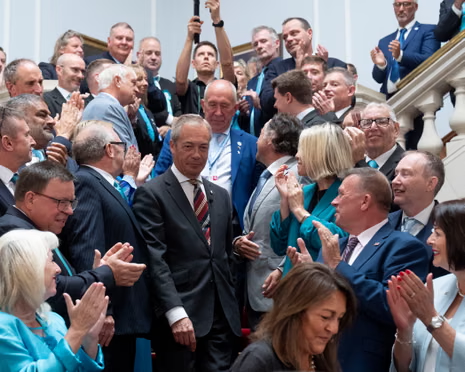
Reform UK council tax decisions are under intense scrutiny as accusations mount over broken election promises. Across several English county councils now controlled by the party, proposed rises approach or reach the legal maximum, prompting claims of betrayal from political opponents and former allies. The controversy has quickly become a defining test of Reform’s credibility in local government, particularly given its firm campaign pledges to reduce the burden on households already facing sustained cost pressures.
At the centre of the debate stands Kent County Council, widely presented by Reform as its flagship authority. Party leaders have frequently described Kent as a practical demonstration of how a Reform-led administration would govern nationally. Yet the council has proposed a 3.99 per cent rise in council tax, a figure just below the five per cent threshold that triggers a local referendum. For critics, the symbolism matters as much as the percentage, since leaflets distributed during last year’s election promised freezes or cuts to local taxation.
Similar patterns have emerged elsewhere. Derbyshire, North Northamptonshire, West Northamptonshire and Leicestershire, all under Reform control, have announced intentions to raise council tax by five per cent, the maximum allowed by law. In Lincolnshire, councillors have been told that a 4.99 per cent increase is being considered, alongside consultation options that include a 3.99 per cent rise. Even that lower figure would still leave a multi-million-pound gap in the authority’s finances, highlighting the pressures confronting councils nationwide.

Derbyshire County Council confirmed its proposed increase earlier this week, citing an anticipated £38 million budget shortfall. Officials pointed to overspends in children’s social care and adult social care, services that have experienced sustained demand growth across England. These pressures, largely driven by demographic change and rising costs, have constrained councils regardless of political control, though Reform’s campaign rhetoric has made its response particularly contentious.
In Kent, opposition councillors have seized on the proposals as evidence that Reform UK council tax promises were unrealistic from the outset. Liberal Democrats argue voters were misled by assurances that savings alone could fund services without higher taxation. They have also highlighted internal party turmoil, noting defections and expulsions that have eroded Reform’s once commanding majority on the council.
Those internal divisions were publicly exposed last autumn when leaked footage showed a fractious private meeting of Reform councillors. Members were told to accept decisions without dissent, language that opponents say reflects a culture of intolerance toward scrutiny. While party leaders have downplayed the incident, critics argue it underscores deeper problems of governance experience within the party’s local ranks.
The timing of Kent’s draft budget publication has further fuelled controversy. Details emerged late on Thursday night, after earlier expectations that figures would be released earlier in the week. Opponents suggested the delay limited public debate, though council leaders insisted the process followed required procedures. A full council vote on the budget is scheduled for next month, where the proposals are expected to pass despite dissent.
Linden Kemkaran, leader of Kent County Council, has defended the approach, framing the proposed rise as a responsible compromise. She said the administration inherited what she described as a severe financial legacy, including more than £700 million in debt and daily interest costs of approximately £84,000. According to Kemkaran, urgent action was required to stabilise the council’s finances while protecting frontline services.
Kemkaran argued that since taking office, the Reform administration has delivered £100 million in savings and additional income, reprofiled nearly £40 million of future spending, and reduced council debt by £67 million. She maintained that the 3.99 per cent increase represents a significant improvement on the five per cent rise anticipated when Reform assumed control, presenting it as evidence of progress rather than failure.
Opposition figures remain unconvinced. Liberal Democrat group leader Anthony Hook accused the administration of financial mismanagement and what he termed a total betrayal of voters’ trust. He said the proposed budget would see the average Band D household in Kent pay around £67.47 more per year, undermining claims that Reform would lower living costs for residents.
Hook argued that the difference between a 3.99 per cent and five per cent rise amounts to just 33 pence per week for the average family. In his view, the party’s celebration of a marginally lower increase highlights the gap between pre-election rhetoric and governing reality. Labour councillor Alister Brady echoed that criticism, saying Reform would need to raise council tax in each year of its three-year budget cycle due to overspending.
Criticism has also come from former Reform members who now sit as independents. Bill Barrett, previously part of the ruling group in Kent, warned that lower-than-maximum tax rises still carry consequences. He noted that reduced council tax income creates an equivalent need for further savings elsewhere, potentially threatening services once reserves are drawn down.
Beyond party politics, independent experts suggest the situation reflects structural challenges facing local government. Tony Travers, a visiting professor at the London School of Economics, said Reform councillors have faced a steep learning curve about managing budgets squeezed over the past fifteen years. Central government funding reductions and rising statutory obligations have left councils with limited room for manoeuvre, regardless of political ideology.

Travers added that he was surprised few Reform-led councils achieved increases significantly below five per cent. Such outcomes, he suggested, would have offered strong political ammunition ahead of next year’s local elections. Instead, he argued, the prevalence of near-maximum rises reinforces the perception that there is no distinct or more efficient “Reform way” of delivering local services under current funding constraints.
The broader implications for Reform UK council tax policy extend beyond immediate budget cycles. As the party seeks to expand its influence nationally, its record in local government is likely to face increasing scrutiny. Supporters argue that difficult decisions demonstrate honesty about fiscal realities, while critics see them as proof that populist promises cannot withstand the pressures of office.
Public reaction has been mixed. Some residents acknowledge the financial strains councils face and express willingness to accept moderate increases if services are protected. Others feel disillusioned, saying the proposals contradict explicit election commitments. The coming months may prove decisive in shaping perceptions, particularly as consultations conclude and final budgets are approved.
As councils across England grapple with similar dilemmas, the controversy surrounding Reform UK council tax decisions highlights a recurring tension in British politics. Promises made in opposition often collide with economic realities in power. Whether Reform can reconcile its campaign narrative with the demands of governance will influence not only local outcomes, but also its broader political ambitions.
Related News:
 Kate Winslet to Narrate Film Highlighting King’s Environmental Mission
 Trump’s UK Ambassador Urges North Sea Drilling to Strengthen US Ties
 UK Bans Fake Numbers: Scammers Lose Their Trick
 Vibe coding’ named Collins dictionary’s word of the year
BBC to Apologise Over Edited Trump Speech Amid Backlash
Vibe coding’ named Collins dictionary’s word of the year
BBC to Apologise Over Edited Trump Speech Amid Backlash
 Millionaires group urge Reeves to introduce wealth tax to ‘lift kids out of poverty’
 Reeves rejects £1bn plea for NHS redundancy payouts
 PM Condemns Leaks, Vows Loyalty to Ministers and Stability
 Phillipson Accused of Appeasing Unions by Diluting EBacc
 Saka Solidifies Role as Tuchel’s Key England Lieutenant
 Greene Pushes Epstein Files Amid Trump Fallout
 Zelenskyy Signs Fighter Jet Deal Amid Russian Drone Attacks
 Sundar Pichai Cautions on AI Hype and Market Risks
 Shadow Fleet at Sea: Europe’s Battle Against Illicit Oil Shipping
 Snow and Ice Cause Travel Chaos in North Yorkshire
 Director Michael Caton-Jones Reflects on Career and Beginnings
 Inside the Helpline Protecting Missing Children in the UK
 PlayStation PS5 Deals Hit Lowest Prices Ahead of Black Friday
 US Suspends Afghan Immigration After White House Shooting
 Five-Year-Old Dies After Rare Tonsil Surgery Complication
 Starmer Says Labour’s Economic Plan Needs Years to Deliver
 ‘Extinct’ Antelope Returns to Sahara, Bringing Hope
 IndiGo Cancels Hundreds of Flights Amid Pilot Shortages
 Young Britons Face Heaviest Burden from Ageing Population, Lords Warn
 U‑Turn on Farmers’ Inheritance Tax Sparks Political Firestorm
 Aston Villa Remain Arsenal’s Key Obstacle in Title Pursuit
 Irish Beach Tragedy: Irish Drown at Whitehaven Beach in Australia
 Starmer Faces Parliamentary Battles Over UK-EU ‘Reset’ Plan
 Met Police Vetting Failures Let Serial Rapists Remain
 Liberal Turmoil Threatens Victorian Election Hopes
 British skier killed in La Plagne avalanche tragedy
 Xabi Alonso leaves Real Madrid, Arbeloa Takes Over
 Trump Policies Boost China’s Global Rise, Survey Finds
 Markets Slide As Gold Rally Signals Risk From Trump Greenland Tariff Plan
 UK Inflation Hits 3.4% in December, Ending Five-Month Decline
 Silence and Unity Mark Bondi Terror Attack Memorial
 Huge mistake: Labour blocks Burnham from byelection bid
 India-EU Free Trade Deal Marks Historic Economic Shift
 Trump Defiant After Washington Hotel Shooting
 Cross-Border Crisis Shatters Fragile Afghan Peace
 Urban Flood Crisis: A Growing Threat to English Homes
 Ashley Cole: Finding His Voice and Vision in Italy
 New AI Tool To Target Obesity Risk And Transform NHS Care
 Greens Face Internal Row Over Antisemitism Claims
 Tough Fiscal Realities Await Next Scottish Government
 The Burning Lens: An Iranian Artist’s Visual Resistance
 Met Officers Probed Over Al Fayed Abuse Allegations
 One Nation Candidate’s Surprising Ties to Independents
 Aramco Surges as East-West Pipeline Counters Gulf Tensions
 Reform UK Faces Crisis as Newly Elected Councillors Resign
 Starmer Strikes Back as 100 MPs Sign Support Pledge
 Scepticism and tight security as Beijing braces for Trump
 Tensions Flare as Israeli Nationalists March in Jerusalem
 UK Firms Freeze Spending as Iran Conflict Bites
 UK Job Market Squeezed as Iran War Drives Jobless Rate to 5%
 Reeves to Fast-Track Clean Energy Amid Iran Crisis
 The Battle for Wembley Sparking Unprecedented Legal Warfare
 Tony Abbott Returns as New Liberal Party President
 Pope Meets Families in Italy Toxic Waste Zone
 Royal Ascot Allegation Sparks Wider Police Inquiry
 Secret Role of UK Security Services in Troubles Amnesty Law
 Tube Strike Brings Capital to a Standstill Over Shift Disputes
 Teaching Machines Right From Wrong in the Digital Age
 Is Ollie Robinson the Chaos English Cricket Needs Today?
 The Hidden Crisis Eroding Trust in British Communities
 Saving the Scalloped Hammerhead: The Pacific Battle
 Stolen Mobiles Could Soon Become Useless Bricks
 Clean Air Initiatives Spark Major Fall in London Hospital Admissions
 Fearless Pioneer of Investigative Journalism Dies Aged 83
 Trump Urged to Condemn UFC Fighter Over Obama Slurs
 The Fear Gap: Why Europe Feels Less Safe Than It Is
 US Military Pacific Boat Strike Kills Three People
 Dettol Apologises for ‘Toxic Men’ Advert Backlash in China
 UK Care Crisis: Row Explodes Over New Visa Settlement Rules
 Sainsbury’s Boss Optimistic As Grocery Inflation Eases
 US Advance Past Bosnia in World Cup Thriller
 Trump’s Mount Rushmore Speech: A Divisive Anniversary
 Trump’s Red-Card Intervention Hurts the US World Cup
 US Airman Avoids British Court in Indecent Exposure Case
 Britain’s Mini Fan Craze Sparks Major Waste Crisis