Published: 24 January 2026. The English Chronicle Desk. The English Chronicle Online
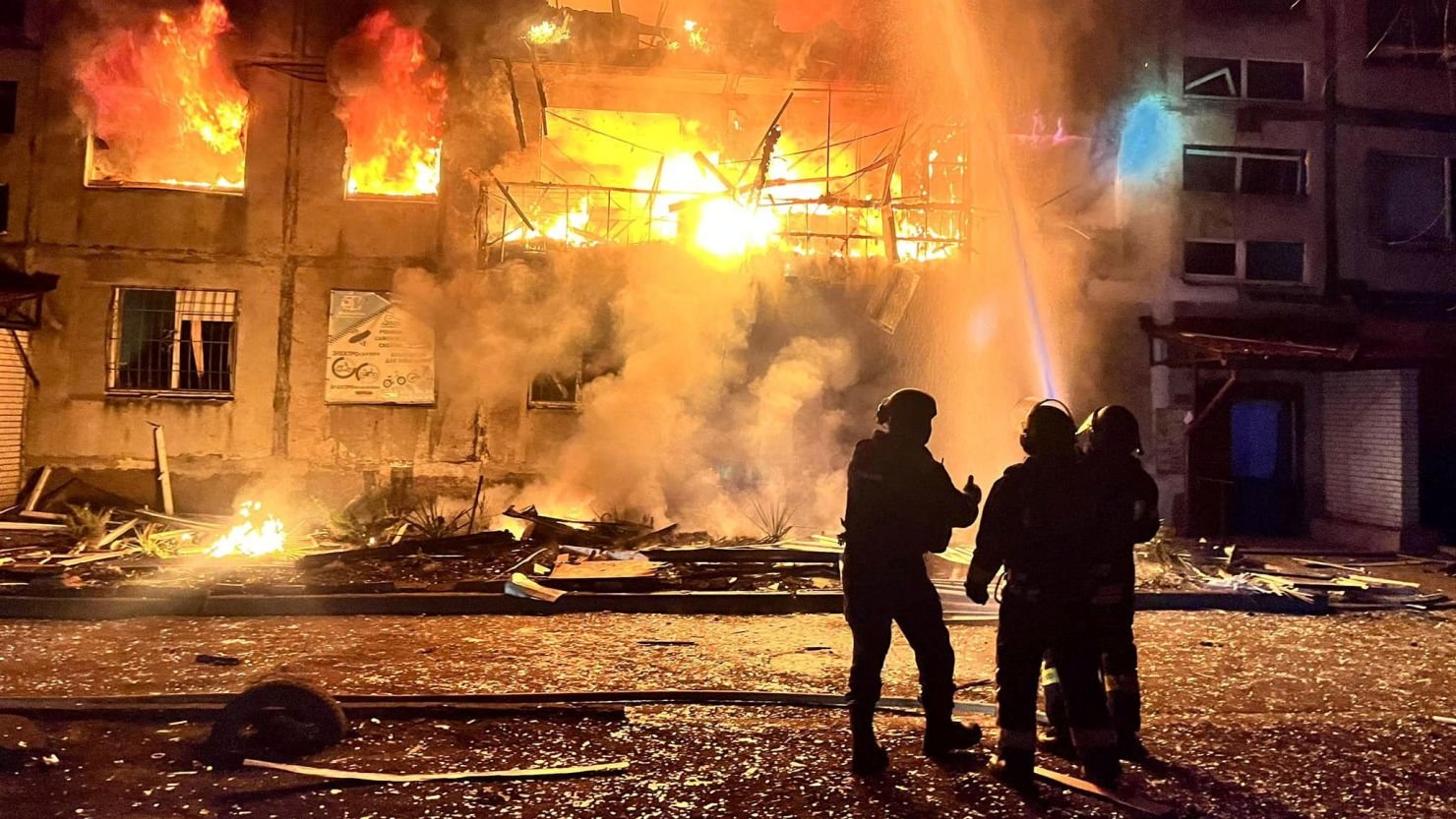
Russia launched one of its most intense aerial assaults in recent weeks against Ukraine’s two largest cities, Kyiv and Kharkiv, early on Saturday, killing at least one civilian and injuring more than a dozen others. The strikes came at a highly symbolic moment, coinciding with the second day of rare tripartite peace talks involving Ukrainian, Russian and United States representatives in the United Arab Emirates, raising fresh doubts about Moscow’s commitment to ending the nearly four-year-long war.
According to Ukrainian officials, waves of drones and missiles targeted residential areas, medical facilities and critical infrastructure across both cities, exacerbating an already severe winter energy crisis. The attacks began overnight and continued into the morning hours, leaving parts of Kyiv and Kharkiv without electricity, heating and water at a time when temperatures plunged well below freezing.
Kyiv Mayor Vitali Klitschko confirmed that at least one person had been killed in the capital, while several others were wounded when falling drone debris struck residential buildings. In a post on social media, Klitschko said four people had been injured in Kyiv alone, three of whom were taken to hospital. Fires broke out in multiple locations as emergency services struggled to reach affected areas amid ongoing air raid warnings.

“These strikes are once again hitting ordinary civilians,” Klitschko said, noting that heat and water services were interrupted in several districts. He warned that the situation in the capital remained fragile, as emergency crews were already overstretched following earlier attacks on energy infrastructure.
Kyiv has been grappling with prolonged power and heating outages since the beginning of January, after a series of Russian strikes damaged power plants, substations and heating networks. On Friday, Klitschko said nearly 1,940 residential buildings in the city were still without heating. He cautioned that “this may not be the most difficult moment yet,” as weather forecasts predict continued sub-zero temperatures.
City officials estimate that around 600,000 residents have temporarily left Kyiv during the current energy crisis, seeking refuge with relatives or in safer regions of the country. Entire neighbourhoods have been left in darkness for days at a time, creating what residents describe as a grim sense of uncertainty and fatigue after years of war.
Tymur Tkachenko, head of Kyiv’s military administration, reported that at least four districts were hit during Saturday’s attacks. Among the damaged structures was a medical facility, raising further concerns about the safety of critical civilian infrastructure. Emergency workers continued restoration efforts throughout the day, working against the clock as overnight temperatures dipped to minus 13 degrees Celsius.
Kharkiv, Ukraine’s second-largest city and located just 30 kilometres from the Russian border, was also heavily targeted. Mayor Ihor Terekhov said that at least 25 drones struck the city over a period of roughly two and a half hours, hitting several districts and injuring at least 14 people. Writing on Telegram, Terekhov said the drones damaged a dormitory housing displaced people, a hospital and a maternity hospital.
“The scale of this attack shows no regard for civilian life,” Terekhov said, adding that many of the wounded were being treated for shrapnel injuries and shock. Kharkiv has been repeatedly targeted throughout the war, but officials say recent strikes have intensified, placing enormous strain on emergency services and hospitals already operating under difficult conditions.
Saturday’s attacks marked the third major overnight assault on Kyiv this year, following two previous waves that knocked out power and heating to hundreds of residential buildings. While Ukrainian air defences intercepted many of the incoming drones and missiles, officials acknowledge that falling debris continues to pose a deadly risk in densely populated areas.
The timing of the strikes has drawn sharp criticism from Kyiv and its allies, as they coincided with the second day of peace talks in Abu Dhabi. The negotiations, involving delegations from Ukraine, Russia and the United States, represent the first such tripartite discussions since the early months of the war. While expectations for a breakthrough were already low, the renewed violence has further undermined hopes for progress.
Ukrainian President Volodymyr Zelenskyy has repeatedly stated that any peace process must begin with a cessation of attacks on civilians and critical infrastructure. Speaking earlier this week, he warned that continued strikes during negotiations would demonstrate that Russia was using diplomacy merely as a tactical tool rather than a genuine path to peace.
Russian officials, meanwhile, have maintained their long-standing demands regarding territory, insisting that Moscow must retain control over the eastern Donbas region. The Kremlin has framed these demands as non-negotiable, a position that Ukrainian officials say is incompatible with international law and Ukraine’s sovereignty.
Analysts say the latest attacks underline a pattern in which Russia escalates military pressure during diplomatic engagements, seeking to strengthen its negotiating position. “This is a familiar tactic,” said one European security analyst. “By striking Kyiv and Kharkiv during talks, Moscow sends a message that it believes it holds the upper hand and can continue the war at will.”
For ordinary Ukrainians, the human cost of this strategy is painfully clear. In Kyiv, residents described spending the night sheltering in basements and metro stations, listening to explosions echo across the city. Parents carried sleeping children through snow-covered streets, while elderly residents struggled to cope without heat or electricity.

In Kharkiv, displaced families living in temporary accommodation said the attack on a dormitory housing evacuees was particularly devastating. “We have already lost our homes once,” said one resident. “Now even the place where we found shelter is not safe.”
International reaction to the strikes was swift. Several Western diplomats condemned the attacks, calling them incompatible with Russia’s stated commitment to peace talks. Human rights organisations reiterated warnings that repeated strikes on civilian infrastructure could amount to violations of international humanitarian law.
Despite the grim developments, Ukrainian officials say they remain engaged in the talks, arguing that dialogue, however difficult, remains essential. At the same time, they stress that Ukraine will continue to defend its cities and people.
As the talks in Abu Dhabi continue, the contrast between diplomatic language and the reality on the ground could hardly be starker. While negotiators discuss frameworks and conditions in conference rooms thousands of kilometres away, Ukrainians in Kyiv and Kharkiv face another bitter winter night, marked by darkness, cold and the persistent fear of the next siren.
Whether the peace talks can produce even a modest step toward de-escalation remains uncertain. What is clear, however, is that the war’s human toll continues to grow, even as diplomats search for a path to its end.
Related News:
 Shock US Raid: Maduro Pleads Not Guilty in Manhattan Court
 Machado Trump medal gesture reshapes Venezuela power struggle
 Trump Receives Machado’s Nobel Medal in White House Meeting
 Iran unrest slows under brutal crackdown and global tensions
 US Considers Asylum for British Jews Amid Rising Antisemitism
 Thousands Protest ICE Operations in Nationwide US Day of Action
 Epstein Files Reveal Trump Officials’ Emails with Financier
 Thousands Protest ICE in New York Against Trump Deportation Campaign
 Yvette Cooper: UK Must Follow Principles, Not US Pressure
 US Calls Australia Media Law “Foreign Extortion”
 Oil Prices Surge Above $120 Amid Iran Blockade Fears
 Trump orders US troop pullout from Germany
 Activists allege abuse after Gaza flotilla seizure
 Global order shifts amid Trump-era turmoil
 Australia pushes Pacific security pact amid China tension
 Indiana Republicans Defy Trump in Key Vote Test
 Middle East Crisis Escalates as Oil Routes Shake Markets
 Tensions Emerge in Netanyahu-Trump Alliance
 Putin Declares Russia Victory at Scaled Victory Day Parade
 Zelenskyy warns over Oreshnik threat as Kyiv hit
 Discontent grows around Putin amid war strain
 Former ICC prosecutor condemns US sanctions
 Trump’s Iran Legacy Hangs on Tehran Deal
 Houthis Strike Saudi Arabia as Middle East Tensions Rise
 Taliban global ties grow as rights fears mount
 Seoul proposes historic peace talks to replace Korean War armistice
 BBC to Apologise Over Edited Trump Speech Amid Backlash
 Britain deploys RAF specialists to assist Belgium with drone threats
 Greene Pushes Epstein Files Amid Trump Fallout
 December Run-Off in Chile as Election Produces No Winner
 Canada Passes Carney’s First Budget in Tight Parliamentary Vote
 Shadow Fleet at Sea: Europe’s Battle Against Illicit Oil Shipping
 Georgians Defy Government Crackdown After Year of Protests
 Mandelson apologises over Epstein ties after public scrutiny
 Trump Policies Boost China’s Global Rise, Survey Finds
 Starmer Challenges US Over Controversial Greenland Deal
 Spoof “Make America Go Away” Caps Rally Denmark Over Greenland
 Starmer Condemns ‘Depraved’ Russian Strikes on Ukraine
 Herzog visit sparks protests across Australian cities
 Sydney Protest Escalates and Elderly Woman Suffers Severe Injury
 Tarique Rahman’s Rise Toward Bangladesh’s Top Job
 Ukraine, Russia Meet in Geneva Ahead of War Anniversary
 AFP Reviews Pauline Hanson Comments
 Duterte ICC Hearing Begins Amid Defiance
 Trump Tariffs Threat Spark UK and EU Alarm
 The Dangerous Rise of Remigration Across Modern Europe
 Trump’s Marathon Speech Fails to Mask a Growing National Disconnect
 US to offer passport services in West Bank settlements
 Iran Defiance Grows Amid US-Israel War Pressure
 Starmer Praised for Stance on Trump and Iran Conflict
 UK Ministers Signal Strategic Independence From Trump Demands
 Danish Election Deadlock Shakes Frederiksen’s Grip
 Pope Rebukes Leaders for War as Middle East Tensions Rise
 Army Probes Apache Flyover at Kid Rock’s Nashville Estate
 Farage Shuns Truss as US Right-Wing Roadshow Hits London
 Italian Town Buys Mussolini Villa to Keep Away Fascist Fans
 Report Says Pezzullo Acted ‘Recklessly’ in Dealings
 Trump and Tehran Find Common Ground in Landmark Ceasefire
 Trump Employs Nixon’s Madman Theory Amid Iran Crisis
 Suspected Plot Targets Pipeline Before Hungary Vote
 Reeves Slams Trump Over Iran War Lack Of Exit Plan
 Trump approval plunges amid Iran war fears
 Ohio’s Battle for Trust: Democrats Vying to Flip the Buckeye State
 US ‘Narco Boat’ Strikes Draw Global Outcry
 FIFA Confirms Global Ban for Benfica Star Prestianni
 One Nation Candidate’s Surprising Ties to Independents
 US Awaits Iran Reply on New Ceasefire Proposal
 US and Mexico Face Heatwave as Floods Batter South Africa
 Putin Signals War End as Russian Momentum Stalls
 Scepticism and tight security as Beijing braces for Trump
 Philippine Senator Flees After Days Under Senate Siege
 Fragile Truce Shattered as Violence Escapes Diplomatic Control
 Tony Abbott Returns as New Liberal Party President
 Starmer Leadership Under Pressure After Setbacks
 Aukus Deal Facing Fierce Backing and Historic Criticism
 Thai Princess Bajrakitiyabha Passes Away at 47
 Trump’s Mount Rushmore Speech: A Divisive Anniversary
 Le Pen to Run for President Despite Embezzlement Conviction
 Trump Swaps Planes Amid Iran Tensions
 Ukraine Creates Long-Range Strike Command