Published: 26 February 2026. The English Chronicle Desk. The English Chronicle Online.
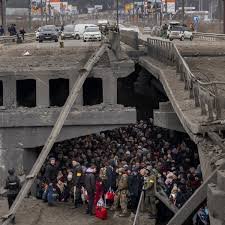
The dawn of late February always brings back a heavy sense of reflection for those watching global security. Four years have now passed since the initial Russian invasion of Ukraine reshaped the entire geopolitical landscape of the modern world. People across the globe still remember the shock of that cold morning when missiles first fell on Kyiv. It was a moment that many experts and politicians insisted would never actually happen in our lifetime. Even as intelligence reports flooded in, the general consensus remained one of deep and lingering disbelief. We now look back at those frantic hours with a profound sense of historical gravity. The decision made in the Kremlin that day irrevocably changed the history of the European continent. Our collective memory of that period is defined by a sudden shift in reality. Life as we knew it ended for millions of people within a few terrifying hours.
The initial Russian invasion of Ukraine serves as a stark reminder of human unpredictability. On the night before the attack, internal messages were flying between journalists and various diplomats. One colleague received a warning from an intelligence source that the war was imminent. They were traveling on an overnight train toward the frontline city of Mariupol at that time. Deciding to turn back was perhaps the most important choice of her entire professional life. Mariupol soon became the site of some of the most horrific carnage of the conflict. By morning, the world woke up to a reality that felt like a nightmare. The sheer scale of the military movement caught almost everyone by complete and total surprise. It was the largest conventional military attack on a sovereign European state since the world wars.

Four years later, the people of Ukraine have been forced to adapt to grim realities. They have lived through the withdrawal of forces and the discovery of terrible atrocities. They felt the euphoria of liberation in places like Kherson before the grinding attrition started. Today, the conflict has settled into a long and very painful test of pure endurance. Many citizens now worry about the future of international negotiations and long-term Western support. There is a persistent fear that the war could continue for many more years. The initial terror of 2022 has been replaced by a weary and resilient determination. Families remain split across borders, with millions still living as refugees in neighboring countries. The social fabric of the region has been permanently altered by these ongoing hostilities.
Looking back, the world before the Russian invasion of Ukraine feels like a different era. Many observers were deeply skeptical that a full-scale assault on the capital would occur. It seemed more likely that military action would be limited to the eastern regions. There was an assumption that intelligence services would see the futility of such a move. Surely, the Kremlin would realize that holding a country as large as Ukraine was impossible. Even President Volodymyr Zelenskyy appeared to share this skeptical view during those final quiet weeks. While London and Washington issued public warnings, many in Kyiv dismissed them as mere noise. They believed the talk of war was a tactic rather than a concrete plan. This disconnect between Western intelligence and local perception created a very dangerous vacuum of preparation.
Once the tanks crossed the border, the prewar skepticism vanished into the fog of war. Zelenskyy transformed almost instantly into a heroic and highly visible wartime leader for his people. Europe initially showed a level of unity that had not been seen in decades. The Ukrainian resistance proved strong enough to repel the attackers from the gates of Kyiv. While the prospects for a lasting peace remain very bleak, the survival of Ukraine is a victory. The country still exists as a sovereign entity despite the overwhelming odds against it. This survival is a testament to the bravery of those who stayed to fight. However, the cost of this defiance has been unimaginably high for the civilian population. Every city bears the scars of a conflict that shows no signs of ending.
In the years following the Russian invasion of Ukraine, many have sought to understand the intelligence. How did the United States and the United Kingdom get their predictions so right? Why did so many other powerful nations choose to ignore the very clear warning signs? The head of German intelligence actually found himself stranded in Kyiv when the bombs started. This suggests a massive failure of coordination or a deep-seated denial within certain European capitals. It appears that the legacy of faulty intelligence from past conflicts played a major role. Many leaders remembered the errors of 2003 and were hesitant to trust the same sources. They preferred to view the Kremlin through the lens of a rational and predictable actor. This miscalculation turned out to be one of the greatest strategic errors of the century.
The linguistic and cultural differences in how we perceive threats are also very significant factors. Some nations asked why a leader would ever choose such a self-destructive path of war. Others started from the position of asking why a motivated aggressor would not do so. This simple difference in perspective led to wildly different conclusions about the coming danger. Those who expected the worst were prepared, while those who hoped for peace were caught. The research into these events offers several vital lessons for our increasingly unpredictable future. We can no longer afford to rule out events just because they seem impossible. The world has become a place where the unthinkable happens with alarming and regular frequency. We must learn to listen to the quiet warnings before they become loud realities.
As we mark this fourth anniversary, the geopolitical stakes have never been higher for the West. The Russian invasion of Ukraine forced a massive increase in European defense spending and military readiness. Nations that were once neutral have now sought the protection of larger security alliances. The energy landscape of the continent has also been completely overhauled to ensure future security. While the initial shock has faded, the long-term structural changes are only just beginning. We are living in a period of intense rearmament and heightened diplomatic tension across borders. The shadow of the conflict looms over every major political decision made in Europe today. There is no going back to the world as it existed before February 2022.
The human stories from the first days of the conflict still resonate with deep emotion. Journalists recall seeing fancy supermarkets still stocked with exotic fruits as the city came under fire. These small details highlight the jarring transition from comfortable peace to the chaos of war. Taxi drivers became volunteer fixers, and families fled with only what they could carry. The silence of abandoned apartments in Kyiv tells a story of lost domestic stability and peace. These memories serve as a haunting backdrop to the ongoing political and military analysis. Behind every headline about troop movements are millions of lives that have been disrupted. The resilience of these individuals is the true heartbeat of the resistance effort today.

Has Europe truly learned the lessons of the Russian invasion of Ukraine over these years? There is more cooperation now, but the path ahead remains filled with many uncertainties. The continent is more aware of its vulnerabilities than it has been in a generation. However, maintaining unity over a long period is a difficult and complex political task. Economic pressures and changing political cycles threaten to erode the once-solid wall of support. The anniversary is a time for speeches, but the real work happens in the trenches. It also happens in the factories producing the equipment needed for a modern defense. We must remain vigilant against the return of the complacency that preceded the war. The cost of being wrong is simply too high to pay a second time.
Ultimately, the events of the last four years have redefined the concept of European security. The Russian invasion of Ukraine proved that the era of large-scale land wars is not over. It forced a rethink of everything from supply chains to the nature of modern cyberwarfare. As we look toward the future, the primary goal must be the prevention of further escalation. This requires a clear-eyed understanding of the motivations of those who would disrupt peace. We must value the intelligence we receive and act with a sense of urgency. The brave people of Ukraine continue to fight for their right to exist freely. Their struggle is a mirror for the values that the rest of Europe holds. We owe it to them to remember how this started and why.
Related News:
 British Woman in Iran ‘Losing Hope’ Amid Ongoing Detention
 BBC to Apologise Over Edited Trump Speech Amid Backlash
 Britain deploys RAF specialists to assist Belgium with drone threats
 US Justice Department Files Lawsuit Against California Over Partisan Voting Maps
 Greene Pushes Epstein Files Amid Trump Fallout
 Trump Deploys DHS to Charlotte in Major Arrest Operation
 December Run-Off in Chile as Election Produces No Winner
 Canada Passes Carney’s First Budget in Tight Parliamentary Vote
 Shadow Fleet at Sea: Europe’s Battle Against Illicit Oil Shipping
 Pentagon Officials in Ukraine to Discuss War End
 Venezuela Threatens Nobel Winner Machado with Fugitive Status
 Georgians Defy Government Crackdown After Year of Protests
 India’s Labour Law Overhaul Sparks Fierce Debate
 EU plans $105bn Ukraine aid using frozen Russian assets
 Global campaign launched to free Palestinian leader Barghouti
 Trump Policies Boost China’s Global Rise, Survey Finds
 Iran unrest slows under brutal crackdown and global tensions
 Pentagon Signals Reduced Role in Deterring North Korea
 Thousands Protest ICE Operations in Nationwide US Day of Action
 Epstein Files Reveal Trump Officials’ Emails with Financier
 Starmer Condemns ‘Depraved’ Russian Strikes on Ukraine
 Herzog visit sparks protests across Australian cities
 UK and US Drop in Global Corruption Index Rankings
 Sydney Protest Escalates and Elderly Woman Suffers Severe Injury
 Tarique Rahman’s Rise Toward Bangladesh’s Top Job
 Canberra Poster Seizure Sparks Free Speech Row
 Evo Morales Returns After Mysterious Absence
 AFP Reviews Pauline Hanson Comments
 Duterte ICC Hearing Begins Amid Defiance
 Trump Tariffs Threat Spark UK and EU Alarm
 The Dangerous Rise of Remigration Across Modern Europe
 Trump’s Marathon Speech Fails to Mask a Growing National Disconnect
 Jacinda Ardern Moves To Australia Following Her US Fellowships
 US to offer passport services in West Bank settlements
 Health Funding Row Rocks US‑Africa Relations
 New UK-EU Reset Faces Criticism from Parliament
 Cuba charges six exiles for terrorism after speedboat raid
 Mojtaba Khamenei Chosen as Iran’s New Supreme Leader
 Iran Defiance Grows Amid US-Israel War Pressure
 US Strikes on Iran Set for Most Intense Day Yet
 Iran Nuclear Stockpile Sparks US Special Forces Debate
 China’s Ethnic Unity Law Set to Reshape Minority Schools
 Moscow Internet Blackouts Raise Censorship Fears
 Republicans Rebuke FCC Threat Over Iran War Coverage
 Oil Prices Surge as IEA Weighs Emergency Release
 Trump Nato threats expose Iran strategy vacuum
 UK Minister Denies Iran Missile Threat to Britain
 Danish Election Deadlock Shakes Frederiksen’s Grip
 Trump to Visit China in May After Iran War Delay
 Pope Rebukes Leaders for War as Middle East Tensions Rise
 Trump to Deploy “God Squad” Over Gulf Wildlife Protections
 Army Probes Apache Flyover at Kid Rock’s Nashville Estate
 Italian Town Buys Mussolini Villa to Keep Away Fascist Fans
 Report Says Pezzullo Acted ‘Recklessly’ in Dealings
 Trump Employs Nixon’s Madman Theory Amid Iran Crisis
 Trump Voices Frustration Over Nato Role in Iran Conflict
 Hungary election: Orbán faces biggest test amid scandal
 Suspected Plot Targets Pipeline Before Hungary Vote
 Trump Slams UK Ties and Threatens To Rewrite Trade Deal
 Southeast Asia Turns to Russia Amid Energy Crisis
 Capitalism ‘Suicidal’, Warns Petro at Climate Summit
 Judge halts deportation of Yemeni refugees in US
 Activists allege abuse after Gaza flotilla seizure
 Trump approval plunges amid Iran war fears
 Ohio’s Battle for Trust: Democrats Vying to Flip the Buckeye State
 US ‘Narco Boat’ Strikes Draw Global Outcry
 Ohio Primaries Set Stage for Crucial Midterms
 Afghan Families Left in Limbo Face Risk of Deportation
 Tensions Emerge in Netanyahu-Trump Alliance
 US Awaits Iran Reply on New Ceasefire Proposal
 Discontent grows around Putin amid war strain
 Starmer Leadership Under Pressure After Setbacks
 House Curbs Trump’s War Powers in Rare Rebellion
 Germany Summons Chinese Envoy Over Russian Troop Training
 New South Wales Premier Chris Minns Signals Tough Road Ahead for Labor
 Le Pen to Run for President Despite Embezzlement Conviction
 Ukraine Creates Long-Range Strike Command
 Le Pen’s Popularity Holds Despite Conviction
 Houthis Strike Saudi Arabia as Middle East Tensions Rise
 Former Diplomats Urge UK and France to Act on Palestine