
Published: 2 March 2026 · The English Chronicle Desk · The English Chronicle Online
The Kremlin’s grip on Russian society has increasingly shifted from traditional political repression to a high‑tech authoritarian toolkit, one that allows authorities to control information, communication and dissent — often at the literal flick of a switch. While President Vladimir Putin’s regime abroad remains focused on geopolitical conflict and the war in Ukraine, at home the victories claimed over freedom and privacy appear far more decisive and deeply embedded.
Central to this transformation is the state’s expanding capacity to shut off or regulate digital infrastructure. Under laws developed since 2019 known informally as the Sovereign Internet Law, Russia has progressively built a framework to isolate and control its national internet, enabling authorities to block or restrict access to global networks and shape internal traffic flows at will. Designed ostensibly to protect national security and prevent “unreliable information,” these powers give the government — in principle — the ability to disconnect or segment large parts of the internet without meaningful public oversight.

Alongside legal levers, technological mechanisms have underpinned a broader system of digital authoritarianism that monitors and shapes social behaviour. Surveillance infrastructure has expanded extensively: facial recognition cameras, AI‑enhanced video monitoring systems and integrated data analysis platforms operate across major Russian cities, with Moscow alone deploying hundreds of thousands of cameras tied into central law‑enforcement networks. These tools are often justified as crime‑fighting innovations, but experts note that they also facilitate the identification and tracking of critics, activists and opponents of the regime.
The government’s information control extends to communications platforms and public discourse. Roskomnadzor, the federal agency responsible for internet regulation and media oversight, wields broad authority to censor content, block websites and enforce compliance by foreign and domestic tech companies. In recent days, the authorities opened a criminal investigation against the founder of messaging service Telegram on charges of “aiding terrorism,” part of a broader push to curb encrypted or foreign communication channels viewed as difficult to monitor. Critics argue this reflects a deliberate strategy to limit secure public conversation and drive users toward state‑approved alternatives.
Internet access itself has become subject to ad hoc interruptions. In 2025, reports documented thousands of mobile internet outages across Russian regions under vaguely defined security pretexts, leaving large swathes of the population temporarily cut off from global connectivity and foreign information sources. Government agencies defended the disruptions as responses to external threats, but rights groups warned that such shutdowns violate basic freedoms and serve to undermine independent communication.
This infrastructure of control goes hand in hand with legal measures that criminalise dissent. Laws against “discrediting” the state or spreading “false information” grant prosecutors sweeping powers to prosecute journalists, activists and ordinary citizens for online expression. Combined with surveillance systems and internet controls, these frameworks discourage public criticism and create a chilling environment for free speech.
Beyond domestic borders, Russia’s approach to repression now includes efforts to surveil and influence its expatriate population, with activists and exiles reporting harassment, intimidation and digital tracking long after leaving the country. These transnational tactics — including the use of international policing mechanisms — extend the Kremlin’s reach and signal that control efforts are not confined within national territory.
Human rights advocates argue that the resulting landscape — where authorities can throttle connectivity, suppress platforms, monitor communications and deploy pervasive surveillance tools — represents a sophisticated form of state control adapted to the digital age. The ability to alter or shut down vital systems with minimal transparency gives the Russian state a degree of influence over public life that surpasses older models of censorship and repression. As one commentator put it, the combination of legal authority and technological capability now places the daily experience of many Russians within the effective grasp of state power at the flip of a switch — a reality whose implications extend well beyond national borders.
Related News:
 UK Fighter Jet Purchase Could Breach Nuclear Treaty, Warns CND
 Russia repeatedly targets UK military satellites, warns Space Command chief
 Experts Warn Russia’s Burevestnik Missile Could Destabilise Arms Control
 Britain deploys RAF specialists to assist Belgium with drone threats
 Night after night, Belgium is on high alert.
 Ukraine to Get 100 French Rafale Jets in Historic Deal
 Iran Signals Permanent Break From Global Internet, Activists Warn
 Bill Gates Pulls Out of India’s AI Summit Over Epstein Files Controversy
 Musk Cuts Starlink Access for Russian Forces – Giving Ukraine an Edge at the Front
 Kinnock’s Rebuke Echoes Loudly as Corbyn Allies Launch Left-Wing Breakaway: “A Gift to Farage”
 Trump Administration Dismisses 17 Immigration Judges, Sparking Debate Over Judicial Independence
 UK Must Act with Courage and Clarity on Israel-Palestine Conflict, Says Foreign Affairs Committee Report
 Trump Threatens 100% Tariff on Nations Importing Russian Oil Amid India Standoff Over Ukraine War
 Radioactive Leak at UK’s Nuclear Warhead Base Sparks Outcry Over Safety and Secrecy
 Mutual Inconvenience: Why Alaska Was Chosen for the Trump-Putin Summit on Ukraine
 Hong Kong Summons UK and Australian Envoys Following Asylum Grants to Democracy Activists
 Is the UK Ready to Put Boots on the Ground in Ukraine? Assessing Military Capacity and Challenges
 Conservative Influencer Charlie Kirk Fatally Shot During University Debate
 Thousands Gather in London to Protest Donald Trump’s Second UK State Visit
 Channel Crossings Surge: Over 1,000 People Arrive in the UK in Small Boats in a Single Day
 Widow of Charlie Kirk Forgives Killer at Emotional Memorial Service
 Google at 27: The Untold Story of Ruth Kedar, the Woman Behind the Iconic Logo
 Yvette Cooper Signals Global Momentum Towards Gaza Peace Deal Amid Humanitarian Crisis
 A Third of EU Citizens in UK Report Discrimination by Public Bodies Post-Brexit
 Public Trust in SNP Hits Historic Low Amid NHS Concerns
 Yvette Cooper Backs Digital ID Plan for UK Teens
 Johnson Suggests Mandelson Linked to China Spy Controversy
 Rachel Reeves signals welfare reform ahead of key budget
 Reform UK candidate fined £19,000 after using AI-generated cases to challenge election
 Ireland Votes as Two Women Compete for Presidency
 Russia’s Latest Push to Win US Favors Shows Deep Desperation
 BBC to Apologise Over Edited Trump Speech Amid Backlash
 Trump Urges Herzog to Grant Netanyahu Full Pardon
 Indian authorities demolish Kashmir home linked to Red Fort blast
 Pokémon to open world’s first theme park in Japan next year
 Greene Pushes Epstein Files Amid Trump Fallout
 Trump Deploys DHS to Charlotte in Major Arrest Operation
 December Run-Off in Chile as Election Produces No Winner
 Canada Passes Carney’s First Budget in Tight Parliamentary Vote
 Shadow Fleet at Sea: Europe’s Battle Against Illicit Oil Shipping
 Pentagon Officials in Ukraine to Discuss War End
 India’s COP30 Delay Raises Global Climate Concerns
 Venezuela Threatens Nobel Winner Machado with Fugitive Status
 Georgians Defy Government Crackdown After Year of Protests
 EU plans $105bn Ukraine aid using frozen Russian assets
 Russia losses Ukraine war peace talks intensify amid rising deaths
 Albanese Opens Door to Bondi Royal Commission Amid Rising Pressure
 Trump Escalates Minnesota Immigration Surge Amid Rising Tensions
 Iran Protesters Defy Crackdown as Violent Clashes Intensify
 US Clears Nvidia AI Chip Sales to China in Policy Shift
 Trump Threatens Strong Action If Iran Executes Protesters
 Machado Trump medal gesture reshapes Venezuela power struggle
 EU weighs response amid Greenland tariff crisis with Trump
MPs warn AI financial risks threaten UK stability
EU weighs response amid Greenland tariff crisis with Trump
MPs warn AI financial risks threaten UK stability
 EU Says US Ties Have Suffered ‘Big Blow’ After Greenland Crisis
 UK New Car Discounts Near £6,000 as Prices Are Slashed
 Israel Moves to Bar MSF From Gaza Operations
 After the Landslide: Can India Reset Ties with BNP Bangladesh?
 Australian Families Leave Syrian Camp for Home
 Starmer Weighs Fast-Tracking Defence Boost
 Trump Attacks UK-California Energy Pact
 Nine Arrested in France Over Death of Far‑Right Student
 Indian University Kicked Out of AI Summit for Claiming Chinese Robot Dog as Its Own Invention
 Andrew Arrest Sparks Republic Debate in Australia
 How Do You Modernise Mango Farming? India’s Growers Urged to Innovate as Climate Change Hits
 Australian PM Says Former Prince Andrew Has Suffered ‘Extraordinary Fall’ but That Won’t Prompt Republic Referendum
 Global corruption crisis: Who Washington shields
 Farage Chagos Islands Row Sparks Fury
 How South Korea’s Democracy Rebounded After Martial Law Attempt
 Ukraine Negotiator Reveals What It Feels Like Facing Russia
 Chad Shuts Border With Sudan in Bid to Stop Conflict Spreading
 French Minister Moves to Block US Envoy Kushner from Government Access
 Trump Speech Sparks Intense Debate Across Divided America
 Has Europe truly learned from the failures of 2022?
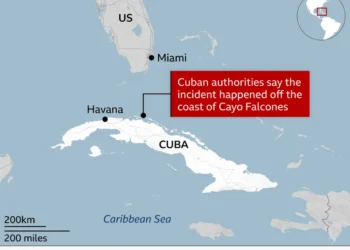 American Citizen Killed in Cuba Boat Shooting, U.S. Officials Say
 Social Media Trial: Woman Says Addiction Began at Six
Instagram Investigating AI Profiles ‘Fetishising’ Disabled People
Social Media Trial: Woman Says Addiction Began at Six
Instagram Investigating AI Profiles ‘Fetishising’ Disabled People
 Iran’s Regime Still Intact — Coming Days Will Test Its Survival
 Allies of US in the Gulf Bear Brunt of Iran Attacks
 Trump Faces Questions Over Iran Conflict Plan