Published: March 3, 2026 . The English Chronicle Desk . The English Chronicle Online
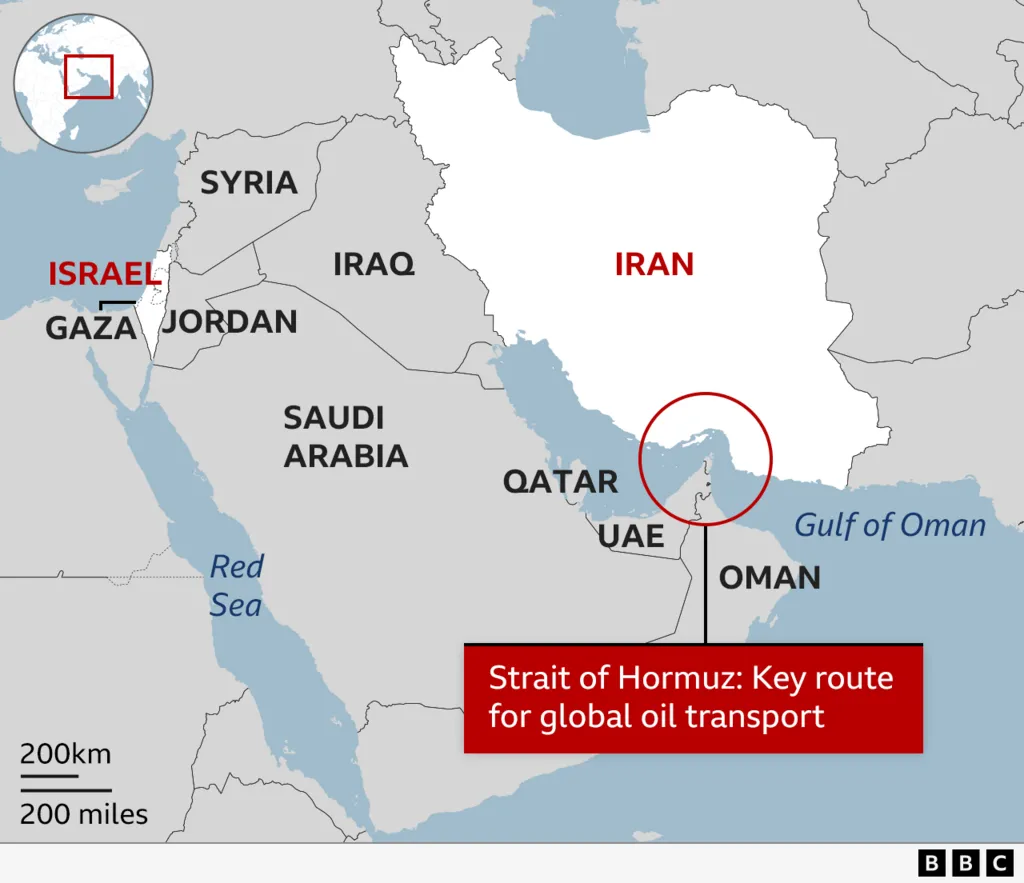
The Strait of Hormuz has become the focus of global attention as tensions in the Middle East escalate, with Iran’s leadership threatening and in some accounts enforcing a shutdown of this narrow but critically important maritime passage. Analysts, diplomats and energy market experts warn that any effective closure of the strait could send shockwaves through the global economy, destabilise oil markets and reshuffle geopolitical alignments, given the waterway’s outsized role in global energy flows.

The Strait of Hormuz sits between Iran to the north and the Arabian Peninsula to the south, narrowing to just over 30 kilometres at its tightest point. It functions as a chokepoint through which an estimated 15–20 million barrels of crude oil — roughly one‑fifth of total global consumption — along with large volumes of liquefied natural gas (LNG), pass daily from producers such as Saudi Arabia, Iraq, Kuwait, the United Arab Emirates, Qatar and Iran to international markets.
In the current geopolitical crisis, Iranian Revolutionary Guard statements threatening to “burn any ship” that attempts transit and reports of de facto suspension of major carrier operations have effectively ground normal shipping traffic near the strait to a halt. Large oil traders and shipping firms have pulled back amid skyrocketing war‑risk premiums on marine insurance, with some insurers cancelling coverage for Gulf transits entirely.
A closure would have immediate implications for energy markets. Oil prices, which have already climbed in response to the heightened risk environment, could spike sharply in the event of sustained disruption. Some forecasts suggest Brent crude could exceed $100 per barrel if the strait remains blocked or inactive for an extended period, even after temporary adjustments by producers. High energy costs would feed through to inflation in both advanced and emerging economies, raising fuel prices, lifting transportation and manufacturing costs, and squeezing household budgets worldwide.
Beyond crude oil, LNG markets would feel acute pressure, particularly in Asia and Europe, where reliance on Gulf exports is substantial. LNG infrastructure is far less flexible than oil, and major importers such as Japan, South Korea, China and India could face supply deficits if shipments through the strait are materially constrained.
Alternative export routes are limited and costly. Some Gulf producers can divert crude to ports that bypass the strait through pipelines to the Red Sea or the Gulf of Oman, but capacity is insufficient to replace lost tanker flows fully. This bottleneck means that even with alternative infrastructure, a significant proportion of global oil exports would remain offline until normal transit resumes.
The strategic leverage that Iran exercises over the Strait of Hormuz highlights the interdependence of energy security and regional politics. At the same time, economists note that a prolonged closure would also hurt Iran’s own economy, as nearly all of its crude exports depend on the same waters. Prolonged obstruction could quickly damage Tehran’s revenue streams and pressure its foreign reserves.
Macroeconomic effects could extend well beyond energy prices. High oil and gas costs typically put upward pressure on inflation, erode real incomes and constrain global growth. Financial markets may experience heightened volatility as investors reassess risk, and central banks could face renewed dilemmas on monetary policy amid conflicting priorities of inflation control and economic stability.

Historical parallels show the sensitivity of the global economy to disruptions at major shipping chokepoints. While strategic petroleum reserves and coordinated diplomatic efforts might cushion short‑term impacts, sustained closure of a route as vital as the Strait of Hormuz would test those buffers and underscore the fragility of global energy flows and supply chains built around uninterrupted maritime trade.
Related News:
 US Trade Deficit Hits Fresh High Despite Trump’s Tariffs
 Ukraine war briefing: Russia exporting more oil now than before war despite sanctions – report
 German Chancellor Lands in Beijing for Inaugural China Trip
 Canada Says U.S. Unlikely to Lift Tariffs Amid Ongoing Trade Tensions
 Why Meloni Quietly Flooded Italy With Migrants
 UK Must Act with Courage and Clarity on Israel-Palestine Conflict, Says Foreign Affairs Committee Report
 Northern Ireland Family of Three Shot Dead in Maguiresbridge Home Incident
 Tottenham Takes On Newcastle
 Radioactive Leak at UK’s Nuclear Warhead Base Sparks Outcry Over Safety and Secrecy
 Terence Stamp, ’60s British Film Legend and Star of Superman, Dies at 87
 Hong Kong Summons UK and Australian Envoys Following Asylum Grants to Democracy Activists
 Is the UK Ready to Put Boots on the Ground in Ukraine? Assessing Military Capacity and Challenges
 Channel Crossings Surge: Over 1,000 People Arrive in the UK in Small Boats in a Single Day
 Macron Phones Trump Over Traffic Jam in New York
 Comey Indictment Deepens Fears of Political Retribution Under Trump
 Yvette Cooper Signals Global Momentum Towards Gaza Peace Deal Amid Humanitarian Crisis
 “It Was Very Tough, But I Love Life”: Former Israeli Hostage Rebuilds Life After Family Killed by Hamas
 Chaos at Ibrox as Martin’s Rangers Era Comes to an End
 Nobel Prize Honours Pioneers Behind Materials That Could Heal the Planet
 Trump Claims Modi Has Agreed to Halt Russian Oil Imports Amid Heightened US Pressure
 Russia’s Latest Push to Win US Favors Shows Deep Desperation
 I’m a Celebrity 2025 line-up revealed: Osbourne joins
 BBC to Apologise Over Edited Trump Speech Amid Backlash
 Britain deploys RAF specialists to assist Belgium with drone threats
 Palace May Restore Hyphen to Andrew Mountbatten-Windsor’s Name
 Trump Urges Herzog to Grant Netanyahu Full Pardon
 Indian authorities demolish Kashmir home linked to Red Fort blast
 Greene Pushes Epstein Files Amid Trump Fallout
 December Run-Off in Chile as Election Produces No Winner
 Zelenskyy Signs Fighter Jet Deal Amid Russian Drone Attacks
 Canada Passes Carney’s First Budget in Tight Parliamentary Vote
 Shadow Fleet at Sea: Europe’s Battle Against Illicit Oil Shipping
 Tiny Curacao Makes History as Smallest Nation to Reach World Cup
 Deadly Russian Strikes Hit Western Ukraine, 20 Killed in Ternopil
 Ukraine Peace Plan: Zelensky Ready for Dialogue
 India’s COP30 Delay Raises Global Climate Concerns
 Royal Navy Shadows Russian Warships Entering the Channel
 Trump EPA Moves to Roll Back Soot Pollution Limits
 US Suspends Afghan Immigration After White House Shooting
 Georgians Defy Government Crackdown After Year of Protests
 Tokyo court rules Japan’s same-sex marriage ban constitutional
 ‘Extinct’ Antelope Returns to Sahara, Bringing Hope
 American Mother Extradited From UK to U.S. on Murder Charges
 Facebook Slow to Remove Bondi Attack Praise, Anti-Hate Group Claims
 Albanese Opens Door to Bondi Royal Commission Amid Rising Pressure
 Trump Weighs Response to Iran Crackdown as Tehran Says Communication Open With US
 US Clears Nvidia AI Chip Sales to China in Policy Shift
 Gulf states warn Trump Iran strikes risk wider Middle East war
 EU weighs response amid Greenland tariff crisis with Trump
 Sydney Shark Attack Surge Shocks Australia Beaches
 EU Says US Ties Have Suffered ‘Big Blow’ After Greenland Crisis
 Videos reveal earlier clash before Alex Pretti shooting
 UK New Car Discounts Near £6,000 as Prices Are Slashed
 Israel Moves to Bar MSF From Gaza Operations
 Portugal Election Delivers Socialist Win as Far Right Surges
 Australian Families Leave Syrian Camp for Home
 Starmer Weighs Fast-Tracking Defence Boost
 ‘I Would Scream in My Sleep’: Alawite Women from Syria Tell of Kidnap and Rape
 Snow and Rain Warnings as Cold Snap Continues in the UK
 Nine Arrested in France Over Death of Far‑Right Student
 Indian University Kicked Out of AI Summit for Claiming Chinese Robot Dog as Its Own Invention
 Epstein Eyed Record Label Investment to Access Women, Files Suggest
 How Do You Modernise Mango Farming? India’s Growers Urged to Innovate as Climate Change Hits
 Australian PM Says Former Prince Andrew Has Suffered ‘Extraordinary Fall’ but That Won’t Prompt Republic Referendum
 Farage Chagos Islands Row Sparks Fury
 Storm Hernando: Edinburgh Airport Flights Cancelled in US Travel Chaos
 Ukraine Negotiator Reveals What It Feels Like Facing Russia
 Chad Shuts Border With Sudan in Bid to Stop Conflict Spreading
 Drugs, Denial, Stigma: Fiji’s HIV Crisis Hits Children
 ‘We’ve been paying for happy endings for Andrew for years’: inside the royal disgrace, biographer says
 Hilary Knight speaks out on Trump’s recent hockey remarks
 Has Europe truly learned from the failures of 2022?
 American Citizen Killed in Cuba Boat Shooting, U.S. Officials Say
 Iran’s Regime Still Intact — Coming Days Will Test Its Survival
 Kidnapping of Foreigners Soars in Africa’s Lawless Sahel Region
 Trump Faces Questions Over Iran Conflict Plan
 In Maps: Strikes Across Iran and the Middle East
 Iran Civilian Deaths Surge Past 200 Amid Fear
 The Third Day of the US‑Israeli War With Iran
 Brit ‘in Good Spirits’ Amid Dubai Missile Attacks, Stranded but Safe