Published: 04 March 2026. The English Chronicle Desk. The English Chronicle Online.
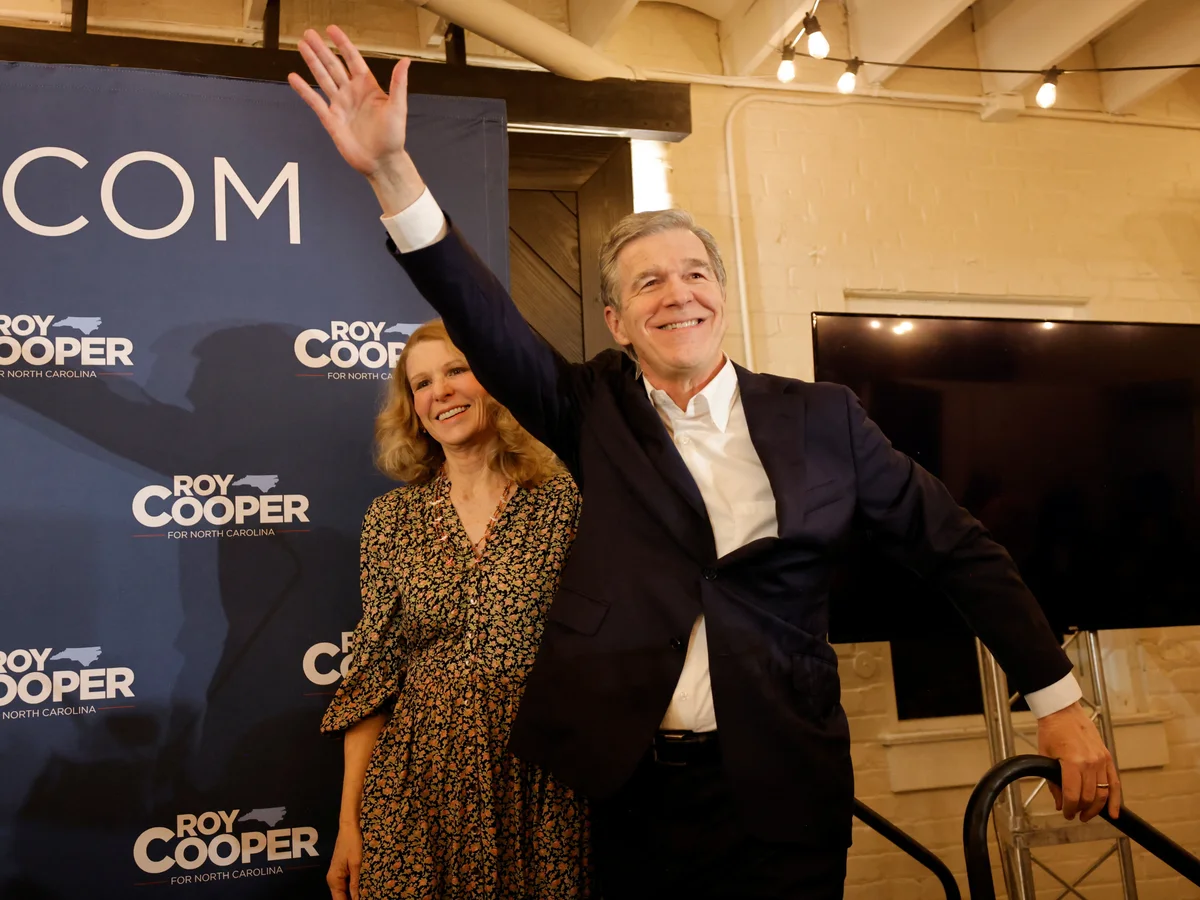
The political landscape in North Carolina shifted significantly this Tuesday as the state primary results solidified. Former Democratic governor Roy Cooper secured a decisive victory in his bid for the Senate seat. This win sets the stage for a high-stakes showdown against the prominent Republican candidate Michael Whatley. Whatley previously served as the chair of the Republican National Committee and maintains very strong ties. The primary results indicate a clear desire for established leadership within both of the major parties. Observers suggest that this specific North Carolina Senate contest will be one of the most expensive. The seat is currently held by Thom Tillis who has decided to retire from federal service. Tillis has recently broken away from the former president on several key pieces of national policy.
Roy Cooper is viewed by many as the best hope for a Democratic flip here. He served two full terms as governor and maintained high approval ratings throughout his long tenure. His ability to win in a traditionally purple state makes him a very formidable opponent indeed. Cooper has not lost an election since he first entered the state house decades ago. However, Democrats often struggle to translate state-level popularity into success for many federal level offices. The North Carolina Senate race will test whether Cooper can overcome these historical voting patterns. Polling currently suggests that Cooper holds a ten-point lead over his Republican rival in early matchups. This lead reflects his deep and long-standing relationship with the diverse voters of North Carolina. Voters seem to be reacting to a negative shift in sentiment regarding the current presidency.

Michael Whatley entered the race with a powerful endorsement from the President Donald Trump. This backing helped him lead the primary field by a very wide margin in recent polling. His closest competitor in the Republican primary was Representative Don Brown who finished in single digits. Despite his victory, some conservative voices in the state have expressed concerns about Whatley’s background. Critics point to his past connections with Senator Thom Tillis as a potential political liability now. Tillis has become an unpopular figure among the most loyal wings of the Republican base lately. Some argue that Whatley was elevated from obscurity by the very establishment they now oppose. This internal friction could play a role in the upcoming North Carolina Senate general election.
Economic concerns dominated the minds of many voters who headed to the polls this Tuesday afternoon. A recent poll showed that sixty percent of residents feel their income is falling behind costs. Three-quarters of those surveyed reported feeling stressed by the persistent impact of high national inflation. In Beaufort County, voters repeatedly cited affordability as the primary factor driving their specific candidate choices. One registered Republican voter mentioned that healthcare costs are becoming a significant burden for many families. She expressed frustration with recent cuts to Medicaid that affect people living on fixed incomes. Such sentiments suggest that the North Carolina Senate race will hinge on kitchen table issues. Voters are looking for leaders who can provide tangible relief from the rising cost of living.
Unaffiliated voters like Kelly Burke also emphasized the importance of economic stability during the primary voting. Burke noted that the current political climate feels increasingly unpredictable and untenable for the average citizen. He described the situation as a moment of severe vulnerability for those on a fixed income. Many voters expressed an inability to wait for future election cycles for meaningful economic change. The desire for stability is a theme that both Cooper and Whatley will likely address. The North Carolina Senate campaign will undoubtedly focus on which candidate can best manage the economy. Both parties recognize that the middle class will decide the final outcome in November’s vote.
The primary also highlighted the impact of recent redistricting efforts within the state of North Carolina. Legislators redrew several districts in 2025 to increase the partisan advantage for the Republican party candidates. This has changed the landscape for incumbents like Democratic Representative Don Davis in his home district. His district was once a majority-Black area that was considered safely Democratic for many decades past. Following the redistricting, the area now includes significantly more Republican voters than it did before. Analysts believe this shift makes the district much more likely to lean Republican this year. Five Republican candidates competed in the primary to challenge Davis in the upcoming general election. The North Carolina Senate race sits atop a ticket that is now much more competitive.
In the Research Triangle area, the fourth district primary became a battleground for different progressive visions. Incumbent Valerie Foushee faced a strong challenge from Durham County Commissioner Nida Allam during the race. Allam framed herself as the more progressive choice for voters seeking bold and systemic change now. This contest attracted massive spending from various outside groups totaling over four million dollars so far. One Super PAC spent half a million dollars to highlight Allam’s stance on foreign aid. Meanwhile, other groups supported Foushee by focusing on her approach to sensible technology and AI regulation. This expensive primary illustrates the national interest in North Carolina’s internal Democratic party ideological debates.
The North Carolina Senate seat remains a top priority for national GOP strategists trying to keep control. They acknowledge that a candidate like Roy Cooper makes the seat much harder to defend successfully. The state has not elected a Democratic senator since the historic election cycle of 2008. Since then, Republicans have held a firm grip on the state’s representation in the upper chamber. Cooper’s moderate image and proven track record of winning statewide are seen as major strategic threats. Whatley will need to consolidate the Republican base while reaching out to independent-minded suburban voters. His campaign will likely lean heavily into the endorsement he received from the national leadership.

As the general election begins, both candidates will face intense scrutiny regarding their past policy decisions. Cooper will likely defend his record as governor while attacking Whatley’s ties to the party establishment. Whatley is expected to focus on federal issues like immigration, national security, and fiscal policy. The demographic shifts in North Carolina make it one of the most unpredictable states in America. Rapid growth in urban centers is often offset by deep conservative leanings in rural counties. The North Carolina Senate race will serve as a bellwether for the national political mood. Victory for either party here would send a powerful message about the direction of the country.
The role of gender and race in voting patterns also remains a significant factor in statecraft. Statistics from previous cycles show that Black voters consistently turn out in high numbers for Democrats. In the 2020 election, approximately 91% of Black voters in North Carolina supported the Democratic candidate. Conversely, white voters in rural areas have trended more Republican, with roughly 66% backing the GOP. These voting blocs will be crucial for both Cooper and Whatley as they build coalitions. The North Carolina Senate candidates must find ways to appeal across these diverse demographic and social lines. Strategy sessions are already underway to target specific precincts that showed high levels of engagement.
Ultimately, the results of this Tuesday show a state that is energized and ready for battle. The contrast between Roy Cooper and Michael Whatley provides voters with two very distinct political paths. One offers a continuation of the steady leadership seen at the state level recently. The other promises a alignment with the national Republican movement and the former president’s specific agenda. The North Carolina Senate race is now officially a marquee contest for the 2026 election cycle. All eyes will remain on the Tar Heel State as the November deadline slowly approaches. The path to Senate control may very well run directly through the cities of North Carolina.
Related News:
 US National Guard Member Killed in DC Shooting
 Trump to Recheck Green Cards from 19 Nations After DC Attack
 Trump Escalates Minnesota Immigration Surge Amid Rising Tensions
 Homeland security agents deployed amid Minneapolis protests
 Democrats Push Affordability to Challenge Trump Ahead of Votes
 Greenland Faces Pivotal Summit Over Arctic Power Struggle
 Government Unveils Northern Powerhouse Rail Plans
 Trump press secretary attacks reporter over ICE question
 Kyrsten Sinema Faces High-Profile Lawsuit Over Marriage Interference
 ‘He Believed Help Was Coming’: Why Iran’s Protesters Feel Betrayed
 Trump Fed bid heads to Supreme Court
 EU Says US Ties Have Suffered ‘Big Blow’ After Greenland Crisis
 Trump officials continue false claims after Alex Pretti shooting
 Fulton election raid hits Georgia election office
 Partial US Government Shutdown Hits Homeland Security Funding
 Thousands Protest ICE Operations in Nationwide US Day of Action
 Epstein Files Reveal Trump Officials’ Emails with Financier
 Thousands Protest ICE in New York Against Trump Deportation Campaign
 Sinema payment row deepens after $9,000 transfer claim
 Nurses’ families fear breakup under UK immigration crackdown
 California Democrats Vow Trump Reckoning
 Trump’s Surgeon General Pick Evades Vaccine Questions
 Clinton Testimony Erupts in Fiery Exchange
 Texas Senate seat fight heads to runoff as votes split
 Thousands Protest Iran Strikes Outside US Embassy London
 US Bombers Arrive at RAF Base Amid Rising Iran Tensions
 UK Prepares Aircraft Carrier for Middle East Crisis
 Pete Hegseth Iran War Remarks Spark Alarm
 Can Congress Stop US Sports Teams From Moving Cities?
 Can King Charles Calm Trump on Key US Visit?
 Melania Trump Epstein remarks spark survivor backlash
 US Catholics Caught Between President and the Pope
 Iron Worker Challenges Trump Loyalist in Ohio
 Trump Faces Crisis as Iran Reopens Hormuz Tensions
 GOP Senator Criticizes Trump’s Feud With Pope Leo XIV
 Charles Faces Trump Test in High-Stakes US Visit
 Trump at Press Dinner Sparks Tension
 Trump Defiant After Washington Hotel Shooting
 Identity Revealed: Suspected Washington Gunman Named
 US Court Weighs Fate of TPS for Migrants
 Florida Redistricting Map Sparks Major US Political Battle
 USS Gerald R Ford Ends Record Naval Deployment
 US Voting Rights Ruling Sparks Celebration and Outcry
 US Court Ruling Reshapes Voting Rights Landscape
 US states redraw maps after voting rights ruling
 Judge halts deportation of Yemeni refugees in US
 White House Security Case Sparks Political Firestorm
 Trump approval plunges amid Iran war fears
 Giuliani hospitalised in critical condition
 Ohio’s Battle for Trust: Democrats Vying to Flip the Buckeye State
 Trump Threatens UN Budget Cuts as US Pushes ‘Trade Over Aid’ Agenda
 Trump warns Iran as Middle East tensions surge again
 US Supreme Court fast-tracks Voting Rights ruling
 US ‘Narco Boat’ Strikes Draw Global Outcry
 Ohio Primaries Set Stage for Crucial Midterms
 Afghan Families Left in Limbo Face Risk of Deportation
 Tensions Emerge in Netanyahu-Trump Alliance
 US Awaits Iran Reply on New Ceasefire Proposal
 Immigration Judges Fear Pressure in Trump Era
 FDA Chaos Deepens as Trump Eyes Makary Exit
 US green card applicants must apply from abroad, DHS says
 Tulsi Gabbard exits after turbulent intelligence tenure
 Hormuz Talks Near Critical Stage
 Former ICC prosecutor condemns US sanctions
 Gunman Killed After White House Security Shootout
 Trump Claims Iran Peace Deal Near Completion
 DeSantis’s ‘Alligator Alcatraz’ Faces Final Shutdown
 Prosecutor Proposes Law to Combat Election Deceit
 US Midterm Primaries: Democrats Target Key Republican Seats
 House Curbs Trump’s War Powers in Rare Rebellion
 US Courts Back Trump on Park Signage Removals
 Trump’s Mount Rushmore Speech: A Divisive Anniversary
 Court Rejects Florida Campus Speech Restrictions
 Graham Platner’s Exit Leaves Democrats in Chaos
 Mystery Grows Over Mitch McConnell’s Health
 Trump Refuses to Sign Housing Bill, But Law Takes Effect
 Senate Halts Defense Bill Over Iran Clashes
 Houthis Strike Saudi Arabia as Middle East Tensions Rise
 Trump Orders Signs Criticising Smithsonian Museum
 Is America Ready for an AOC Presidential Run?