Published: 06 March 2026. The English Chronicle Desk. The English Chronicle Online.
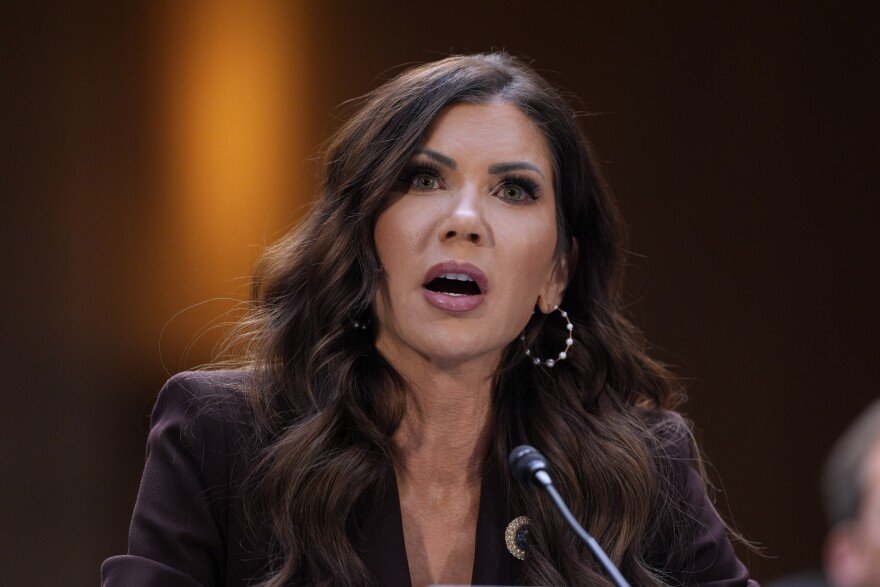
The phrase Trump fires Kristi Noem dominated headlines across Washington on Thursday after a dramatic announcement from the White House. The decision ended weeks of growing political pressure surrounding the leadership of the Department of Homeland Security and opened a new chapter in President Donald Trump’s second administration.
The president confirmed the move through a post on Truth Social, revealing that Kristi Noem would step down from her post immediately. Trump also announced that Markwayne Mullin would take over leadership of the Department of Homeland Security starting on 31 March.
The decision marked the first major personnel reshuffle of Trump’s new term in office. While the president thanked Noem for her work at the agency, political observers quickly noted the move followed weeks of criticism from lawmakers across party lines.
Trump wrote that Noem had delivered “numerous and spectacular results,” particularly on border enforcement, during her tenure. However, he added that she would transition to a new diplomatic role connected to a proposed regional security programme called the “Shield of the Americas.” The initiative, which Trump said will be formally unveiled soon, aims to strengthen cooperation among American nations against organised crime and illegal migration networks.
Speaking to reporters shortly after the announcement, Mullin expressed visible emotion about the appointment. He described the opportunity as deeply humbling and reflected on his personal journey from rural Oklahoma to the president’s cabinet.
“It happened quickly,” Mullin explained. “I called my dad straight away. A kid from western Oklahoma serving in the cabinet is something special.”

Noem also acknowledged the change publicly, posting a message on social media thanking Trump for the opportunity to lead the Department of Homeland Security. She highlighted the administration’s immigration enforcement efforts and said she looked forward to contributing in her new diplomatic position.
Despite the cordial public tone, the leadership change followed intense scrutiny of Noem’s tenure at the powerful security department. The Department of Homeland Security oversees agencies including Immigration and Customs Enforcement, the Border Patrol, and several federal disaster and intelligence divisions.
During Trump’s second term, these agencies have played a central role in the administration’s aggressive immigration enforcement strategy. Raids, deportations, and border crackdowns have intensified, often accompanied by heavy political debate.
Noem became one of the most recognisable defenders of those policies. She appeared frequently on conservative television channels and in official videos promoting enforcement operations. Supporters praised her as a strong advocate for strict immigration control, while critics argued that the department’s tactics had become overly aggressive.
Political tensions escalated sharply earlier this year following two controversial deaths in Minneapolis involving federal immigration agents. The incidents sparked protests and renewed debate about enforcement tactics used during immigration operations.
Two US citizens, Renee Good and Alex Pretti, were killed during separate confrontations involving federal agents deployed to the city. Demonstrations quickly spread across Minneapolis and other American cities, with activists demanding accountability and clearer oversight of federal immigration forces.
At the centre of the controversy was Noem’s public response to the shootings. She described both individuals as being connected to “domestic terrorism,” a claim that critics said lacked supporting evidence. Lawmakers from both parties questioned the language and urged the department to release more detailed information.
Democratic leaders reacted strongly to the dismissal announcement. Hakeem Jeffries said the move was long overdue, describing Noem’s leadership as deeply problematic. Speaking at a press conference, Jeffries argued that personnel changes alone would not resolve deeper issues surrounding immigration enforcement.
“A change in personnel is not sufficient,” he told reporters. “We need a change in policy that is bold and meaningful.”
The remarks reflected broader frustration among Democrats who have been pressing for new oversight measures governing immigration enforcement operations. That debate has already contributed to a partial shutdown of the Department of Homeland Security’s funding earlier this year.
Senate Democrats blocked a spending bill in February because it did not include additional rules governing immigration agents’ conduct. Negotiations over a revised funding package remain ongoing, leaving parts of the department operating under temporary measures.
The Senate’s top Democrat, Chuck Schumer, echoed Jeffries’ criticism after the leadership change. Schumer argued that structural reforms would be required before lawmakers could restore full confidence in the agency.
“I don’t trust any single person running this agency under the current policies,” Schumer said, adding that deeper institutional problems remained unresolved.
Some Republicans also signalled concerns about Noem’s leadership in recent weeks. Lindsey Graham acknowledged her service but suggested a leadership change had become necessary.
Graham said he believed Noem would still contribute significantly in her new diplomatic role, particularly regarding efforts to confront drug cartels across the Americas. However, he added that the time had come for fresh leadership at the department.
Noem’s political career has long drawn national attention. A former governor of South Dakota and member of Congress, she rose rapidly within Republican circles during Trump’s first presidency. At one stage she was widely considered a potential vice-presidential candidate during the 2024 election campaign.
However, that speculation faded after controversy surrounding her memoir, in which she described killing a family dog that she said had become dangerous. The admission sparked public debate and criticism, damaging her standing with some voters.
Despite that controversy, Trump later nominated her to lead the Department of Homeland Security after returning to the White House. Her appointment was seen as a signal that the administration intended to prioritise aggressive immigration enforcement.
During her tenure, the department expanded operations targeting undocumented migrants in several major US cities. Critics argued that enforcement sometimes affected individuals with legal documentation or citizenship, raising questions about accuracy and accountability.
Further controversy emerged earlier this year following reports about internal tensions within the department. Several media investigations described a turbulent working environment, including allegations of harsh management practices and internal distrust among senior officials.
Attention also focused on Noem’s close relationship with Corey Lewandowski, who served as a senior adviser within the department. Reports suggested the pair travelled frequently together and played dominant roles in decision-making processes.
A detailed report in The Wall Street Journal alleged that the relationship created discomfort among staff members. According to the report, officials were sometimes subjected to polygraph tests when senior leaders suspected information leaks.
Questions also arose about travel arrangements involving a luxury Boeing 737 Max aircraft used for departmental operations. Officials had reportedly explored purchasing the aircraft for approximately seventy million dollars to support high-profile deportation missions.
One incident described in the report involved a Coast Guard pilot who was briefly dismissed after leaving a blanket belonging to Noem on a plane. The pilot was later reinstated when officials realised there was no replacement available for the flight.
Such stories intensified scrutiny from lawmakers in both parties. When Noem appeared before congressional committees in early March, she faced hours of questioning about the shootings in Minneapolis and about management decisions inside the department.
She firmly rejected allegations of misconduct and dismissed questions about her personal relationship with Lewandowski as “tabloid garbage.” Nevertheless, some Republicans indicated they were becoming uneasy about the continuing controversies.
Among them was John Kennedy, who raised concerns about a large government contract awarded to a firm linked to one of Noem’s former aides. The contract funded advertising campaigns promoting immigration enforcement policies, with Noem prominently featured in the videos.
Another Republican senator, Thom Tillis, took an even stronger stance. Tillis threatened to delay Senate business unless the department responded to a long list of oversight questions regarding its internal operations.

He also criticised decisions described in Noem’s memoir involving the killing of farm animals, arguing that they illustrated poor judgement. The remark highlighted how personal controversies had begun intersecting with policy debates surrounding the department.
With Noem now departing the role, attention is turning to how Mullin will approach the complex challenges facing the Department of Homeland Security. Immigration policy remains one of the most politically sensitive issues in American politics, especially during Trump’s second term.
Mullin, a former mixed martial arts fighter turned businessman and politician, has built a reputation as a staunch supporter of Trump’s immigration agenda. Observers expect him to continue strict enforcement measures while attempting to stabilise the department’s internal leadership.
At the same time, negotiations over funding and oversight reforms continue in Congress. Many lawmakers believe the next homeland security secretary will need to rebuild trust between the department and federal legislators.
For now, the political shock of Trump fires Kristi Noem continues to reverberate through Washington. The decision underscores how quickly political fortunes can change inside a high-stakes administration.
As the new leadership transition begins, the Department of Homeland Security remains at the centre of America’s fiercest political debates. Immigration enforcement, civil liberties, and federal authority will continue shaping the agency’s direction in the months ahead.
Related News:
 BBC to Apologise Over Edited Trump Speech Amid Backlash
 Britain deploys RAF specialists to assist Belgium with drone threats
 US Justice Department Files Lawsuit Against California Over Partisan Voting Maps
 Greene Pushes Epstein Files Amid Trump Fallout
 Trump Deploys DHS to Charlotte in Major Arrest Operation
 December Run-Off in Chile as Election Produces No Winner
 Canada Passes Carney’s First Budget in Tight Parliamentary Vote
 Shadow Fleet at Sea: Europe’s Battle Against Illicit Oil Shipping
 Pentagon Officials in Ukraine to Discuss War End
 Venezuela Threatens Nobel Winner Machado with Fugitive Status
 Georgians Defy Government Crackdown After Year of Protests
 EU plans $105bn Ukraine aid using frozen Russian assets
 Global campaign launched to free Palestinian leader Barghouti
 Trump Policies Boost China’s Global Rise, Survey Finds
 Iran unrest slows under brutal crackdown and global tensions
 Pentagon Signals Reduced Role in Deterring North Korea
 Thousands Protest ICE Operations in Nationwide US Day of Action
 Epstein Files Reveal Trump Officials’ Emails with Financier
 Starmer Condemns ‘Depraved’ Russian Strikes on Ukraine
 Herzog visit sparks protests across Australian cities
 UK and US Drop in Global Corruption Index Rankings
 Sydney Protest Escalates and Elderly Woman Suffers Severe Injury
 Tarique Rahman’s Rise Toward Bangladesh’s Top Job
 Glass Cliff Debate After Ley’s Ouster
 Canberra Poster Seizure Sparks Free Speech Row
 Evo Morales Returns After Mysterious Absence
 AFP Reviews Pauline Hanson Comments
 Duterte ICC Hearing Begins Amid Defiance
 Trump Tariffs Threat Spark UK and EU Alarm
 The Dangerous Rise of Remigration Across Modern Europe
 Trump’s Marathon Speech Fails to Mask a Growing National Disconnect
 Jacinda Ardern Moves To Australia Following Her US Fellowships
 US to offer passport services in West Bank settlements
 Jacinda Ardern Move Sparks Kiwi Reflection
 Health Funding Row Rocks US‑Africa Relations
 Nick Greiner Warns Over Election Review Fallout
 New UK-EU Reset Faces Criticism from Parliament
 Cuba charges six exiles for terrorism after speedboat raid
 Mojtaba Khamenei Chosen as Iran’s New Supreme Leader
 Mojtaba Khamenei Supporters Rally as Iranians Fear Repression
 Iran Defiance Grows Amid US-Israel War Pressure
 US Strikes on Iran Set for Most Intense Day Yet
 Iran Nuclear Stockpile Sparks US Special Forces Debate
 Queensland Protest Ban Sparks First Arrests
 China’s Ethnic Unity Law Set to Reshape Minority Schools
 Moscow Internet Blackouts Raise Censorship Fears
 Republicans Rebuke FCC Threat Over Iran War Coverage
 Oil Prices Surge as IEA Weighs Emergency Release
 Trump Nato threats expose Iran strategy vacuum
 Danish Election Deadlock Shakes Frederiksen’s Grip
 Trump to Visit China in May After Iran War Delay
 Pope Rebukes Leaders for War as Middle East Tensions Rise
 Trump to Deploy “God Squad” Over Gulf Wildlife Protections
 Army Probes Apache Flyover at Kid Rock’s Nashville Estate
 Italian Town Buys Mussolini Villa to Keep Away Fascist Fans
 Report Says Pezzullo Acted ‘Recklessly’ in Dealings
 Trump Employs Nixon’s Madman Theory Amid Iran Crisis
 Trump Voices Frustration Over Nato Role in Iran Conflict
 Hungary election: Orbán faces biggest test amid scandal
 Suspected Plot Targets Pipeline Before Hungary Vote
 Trump Slams UK Ties and Threatens To Rewrite Trade Deal
 Capitalism ‘Suicidal’, Warns Petro at Climate Summit
 Judge halts deportation of Yemeni refugees in US
 Trump approval plunges amid Iran war fears
 Ohio’s Battle for Trust: Democrats Vying to Flip the Buckeye State
 US ‘Narco Boat’ Strikes Draw Global Outcry
 Afghan Families Left in Limbo Face Risk of Deportation
 Tensions Emerge in Netanyahu-Trump Alliance
 US Awaits Iran Reply on New Ceasefire Proposal
 Discontent grows around Putin amid war strain
 Starmer Leadership Under Pressure After Setbacks
 House Curbs Trump’s War Powers in Rare Rebellion
 Germany Summons Chinese Envoy Over Russian Troop Training
 New South Wales Premier Chris Minns Signals Tough Road Ahead for Labor
 Le Pen to Run for President Despite Embezzlement Conviction
 Ukraine Creates Long-Range Strike Command
 Le Pen’s Popularity Holds Despite Conviction
 Houthis Strike Saudi Arabia as Middle East Tensions Rise
 Russian Missiles Intensify Pressure on Kyiv
 Former Diplomats Urge UK and France to Act on Palestine