Published: March 10, 2026
The English Chronicle Desk
The English Chronicle Online
A newly analysed video appears to show a United States cruise missile striking a military installation adjacent to a primary school in southern Iran, intensifying scrutiny over one of the deadliest incidents since the current conflict between the United States, Israel and Iran began.
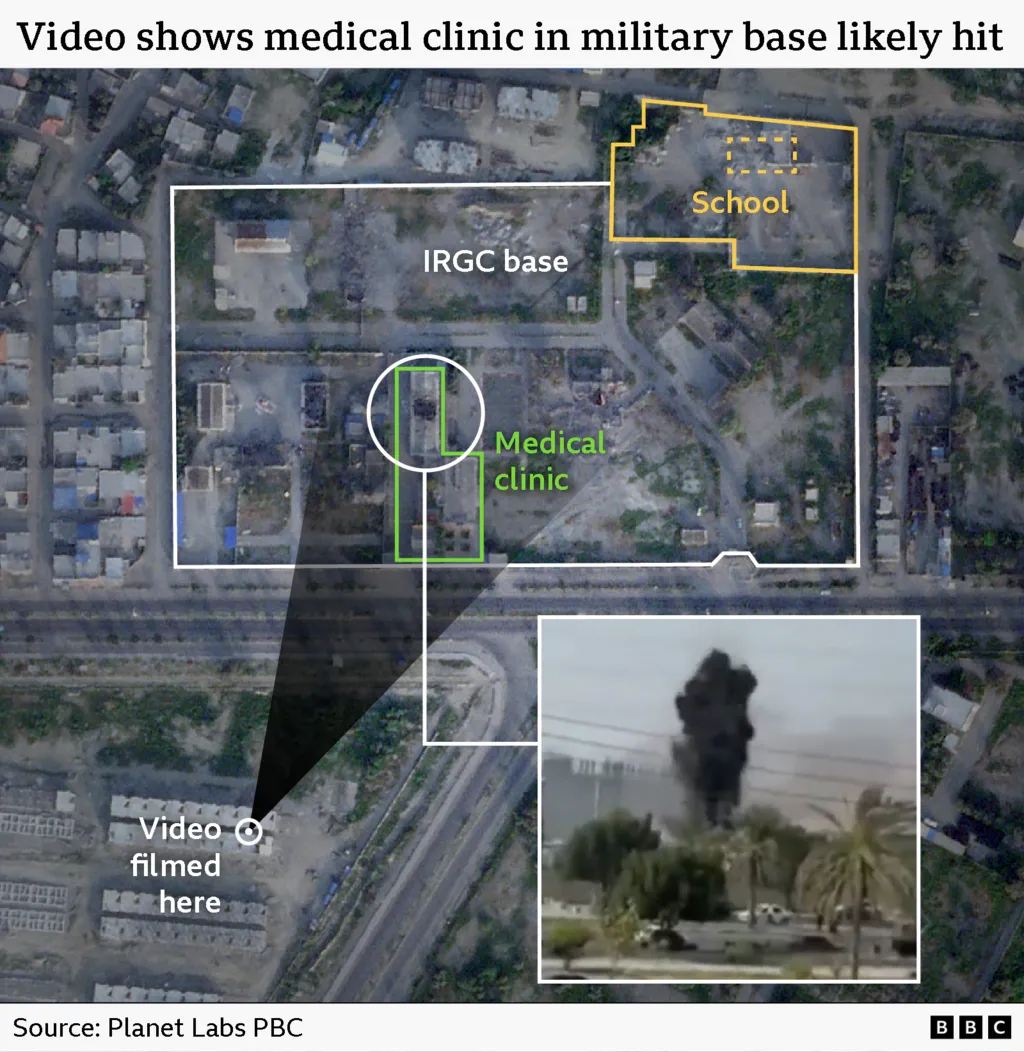
The footage, released by Iran’s semi-official Mehr News Agency and examined by independent investigators and international media organisations, shows what experts say resembles a Tomahawk cruise missile striking a facility belonging to Iran’s Islamic Revolutionary Guard Corps (IRGC). The strike took place in the coastal town of Minab on 28 February during the opening wave of US-Israeli attacks on Iranian military infrastructure.

According to Iranian authorities, the explosion occurred near the Shajareh Tayebeh primary school, where at least 168 people were killed, including roughly 110 children. The incident has since become one of the most controversial and tragic events of the conflict, prompting international calls for an independent investigation.
Investigative analysts who reviewed the footage say it shows a missile approaching the compound moments before it strikes a building believed to be a medical clinic within the IRGC naval base. The base sits roughly 200 metres from the school building, placing the educational facility within the immediate blast zone of the attack.
Video verification specialists from groups such as Bellingcat and several major news organisations examined the footage frame by frame and compared visible landmarks with satellite imagery taken after the strike. Dirt paths, terrain features and debris patterns visible in the video match images captured in the days following the attack, helping confirm the authenticity of the footage and the location where it was filmed.
Weapons analysts also examined the missile’s shape and flight characteristics. According to multiple experts cited by international media outlets, the munition closely resembles a Tomahawk Land Attack Missile — a long-range cruise missile primarily used by the US Navy and fired from warships or submarines.
Because Tomahawk missiles are not known to be operated by Israel or Iran in the current conflict, their presence in the footage has raised questions about US involvement in the strike. Analysts say the weapon’s distinctive cylindrical body and mid-mounted wings match the design features of the American missile system.
However, the video does not directly show the moment the school itself was hit. When the missile appears in the footage, smoke is already rising from the area where the school stands, suggesting that the building may have been struck earlier during the same sequence of attacks on the nearby military base.
Satellite imagery reviewed by investigators indicates that several structures within the IRGC compound were targeted during the strike. Analysts say multiple buildings inside the base were hit by precision munitions during the same operation.
The United States government has not officially confirmed responsibility for the school strike. American officials have stated that the Pentagon is examining the available evidence while maintaining that US forces target only military facilities during operations in the region.
US President Donald Trump previously suggested that the school damage may have been caused by Iranian weapons malfunctioning or misfiring. That claim has been challenged by investigators who argue that the available evidence increasingly points to strikes carried out during US military operations in the area.
Iranian authorities, meanwhile, have accused both the United States and Israel of responsibility for the incident and described it as a violation of international humanitarian law. International organisations have also expressed concern about the attack. UNESCO and several human rights groups have called for a transparent investigation into whether the strike violated laws protecting civilian infrastructure and educational facilities during armed conflict.
The school building, according to satellite imagery and historical records, had once been part of the broader military compound but had been separated from the base by walls for several years and clearly marked as an educational facility. Murals and playground areas visible in aerial images indicated its civilian use long before the strike occurred.
Despite the emerging evidence, investigators caution that determining exactly how the school was struck remains difficult. Access to the site is limited, and weapons fragments that could definitively identify the munition used have not been publicly recovered.

The incident has nevertheless become a focal point of the broader conflict, intensifying international debate about the risks of military operations conducted near populated areas. As new video and satellite evidence continues to surface, pressure is growing on all parties involved to clarify what happened during the strike and whether errors in targeting or intelligence contributed to the tragedy.
For now, the video analysis has added a significant new layer of evidence to an already complex and politically sensitive case. Whether it ultimately leads to a formal investigation or accountability measures may depend on how governments respond to the mounting questions surrounding the strike in Minab.
Related News:
 Israel and Hezbollah Exchange Fire as Conflict Worsens
 Iran’s Regime Still Intact — Coming Days Will Test Its Survival
 Allies of US in the Gulf Bear Brunt of Iran Attacks
 Hopes and Fears as US Iranians Take to Streets After Toppling of Supreme Leader
 Retaliations Continue on Day Two of US-Israel Attacks on Iran
 At Least 153 Dead After Reported Strike on School, Iran Says
 At Least 153 Dead After Reported Strike on School, Iran Says
 ‘It’s Eerie’ – Dubai on Edge as City Comes Under Attack
 BBC Reports from Beit Shemesh After Deadly Iranian Missile Strike
 Iran, the US, and a World Cup That Starts in Three Months
 Cooper: Joining US Strikes on Iran ‘Not in Britain’s Interest’
 Trump’s Iran Endgame Unclear After Mixed Messaging on War Aims
 Rubio Responds to Reported Strike on Iranian School
 Scots Caught Up in Middle East Crisis ‘Just Waiting for the Next Explosion’
 Why the US and Israel attacked Iran
 Israel Launches Fresh Strikes on Tehran & Beirut; US Warns “Hardest Hits” Ahead
 Three Days In, This War’s End Is Still Unclear
 US Has ‘Enough Weapons for Forever War,’ Trump Says
 Israel Strikes Lebanon After Hezbollah Rocket Fire as Iran Conflict Widens
 Israel’s New Airstrikes on Tehran & Beirut After US Embassy in Riyadh Is Hit
 Israel Launches Ground Invasion of Lebanon Amid Widening Middle East War
 Iranian Rockets Are Testing the Resolve of Dubai’s Instagram Stars
 US Embassy in Riyadh Hit by Iranian Drones as Israeli Troops Enter Southern Lebanon
 US Senate Backs Trump War Powers Amid Iran Missile Barrage
 US Submarine Sinks Iranian Warship in Indian Ocean, Hegseth Says
 Iran Postpones Khamenei Funeral as US‑Israeli Bombardment Continues
 The Devastating Conflict Where Both Sides Have Reasons to Keep Fighting
 How Depleted Weapons Stockpiles Could Affect the Iran Conflict
 UK Prepares Aircraft Carrier for Middle East Crisis
 Nine Days of Strikes Reshape the Middle East
 Putin Orders Evacuation at Iran Nuclear Plant Amid ‘Catastrophe’ Fears
 US Urges Iran to Make Deal as Military Presence Rises
 Trump’s Foreign Policy Dilemma Laid Bare by Iran Tensions
 Bill Gates Pulls Out of India’s AI Summit Over Epstein Files Controversy
 Billionaire Les Wexner Tells US Lawmakers He Was ‘Naive’ and ‘Conned’ by Epstein
 Ukraine Negotiator Reveals What It Feels Like Facing Russia
 Mandelson Arrested Amid Political Turmoil as Ukraine Marks Four Years of Conflict
 Russian Troops Executed by Commanders, Soldiers Tell BBC
 Inside Kyiv’s resolve as conflict nears five‑year mark
 US Partially Evacuates Beirut Embassy Amid Rising Iran Tensions
 ‘Anyone who runs is shot’: Russian soldiers describe killings of troops who refuse orders
 Ukraine remembers its dead as war enters a fifth year
 Middle East Flights Halted After Iran Strikes
 Allies of US in the Gulf Bear Brunt of Iran Attacks
 Israeli Attacks Kill 31 in Lebanon, Iran Strikes Across Region, US Warplanes Crash in Kuwait
 In Maps: Strikes Across Iran and the Middle East
 Months of Planning Behind US‑Israeli Mission to Target Iran’s Supreme Leader
 UK Will Allow US to Use Bases to Strike Iranian Missile Sites, PM Says
 What Khamenei’s Death Means for Russia and China
 Tehran Makes New Threat to Gulf Shipping as US Says ‘Hardest Hits’ on Iran ‘Yet to Come’
 Did Trump Declare War and Did Congress Approve Iran Attacks? What to Know
 Melania Trump Chairs UN Security Council Meeting on Children in Conflict Amid Iran Strikes
 The Third Day of the US‑Israeli War With Iran
 Latest on Middle East Conflict — In Maps: Strikes Across Iran and the Region
 ‘I saw missiles being intercepted’: Influencers recount shock as Iran hits Dubai landmarks
 Amazon Says Drones Damaged Three Facilities in UAE and Bahrain
 Man Recalls ‘Terrifying’ Dubai Missile Ordeal During Iran Strikes
 Airline Pilots Feared Iranian Missile Had Been Fired at Them
 US Strikes on Iran Triggered by Israel’s Plan to Launch Attack, Rubio Says
 First Wave of Europeans Stranded by Iran Conflict Return Home, With Hundreds of Thousands Still Left in Region
 Sixth American Service Member Killed in Iran Operation as Conflict Intensifies
 Trump Rebukes Starmer Over UK Refusal to Back Strikes on Iran
 Civilian Deaths in Iran Pass 700 Amid Fear of Bombs and Regime Clampdown
 Nepal Holds First General Election Since Gen Z Protests Toppled Government
 Global Order Is ‘Breaking Down’, Carney Tells Australian Parliament
 Spain’s Sánchez Hits Back at Trump Threat to Sever Trade, Says ‘No to War’
 Satellite Images Show Iranian Navy and Nuclear Sites Hit by US‑Israeli Strikes
 Protesters Rally in San Francisco Against OpenAI Deal With Pentagon
 Watershed Moment as Russia’s Sporting Exile Ends
 ‘Every Day Feels Like a Month’: Iranians Describe Life Under ‘Constant’ US‑Israeli Strikes
 Nepal Election 2026: When Will We Get the Results?
 Azerbaijan Promises Retaliation After Iranian Drone Hits Airport
 Iran Drones Hit Azerbaijan Airport as War Widens
 Macron Finds ‘Freedom Fries’ Redemption in Iran Crisis
 Thousands Protest Iran Strikes Outside US Embassy London
 US Bombers Arrive at RAF Base Amid Rising Iran Tensions
 Mojtaba Khamenei Chosen as Iran’s New Supreme Leader
 Who Is Mojtaba Khamenei, Iran’s New Supreme Leader?
 Mojtaba Khamenei Supporters Rally as Iranians Fear Repression
 Iran’s New Leader Faces Existential Test