Published: 16 March 2026. The English Chronicle Desk. The English Chronicle Online.
A heated political debate erupted in Washington after a senior regulator warned broadcasters about coverage of the FCC broadcast licenses issue linked to the Iran conflict. The warning immediately sparked criticism from lawmakers across the political spectrum who fear government interference in journalism. The dispute now highlights growing tensions between media freedom and regulatory oversight during a period of heightened international conflict.
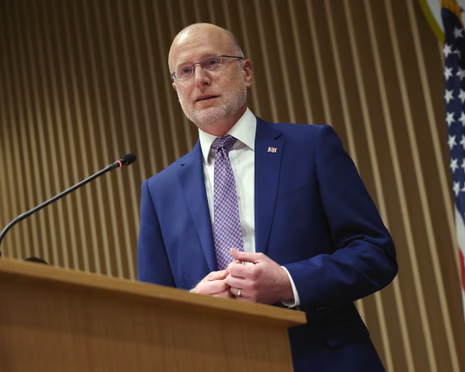
The controversy began after Federal Communications Commission chair Brendan Carr suggested that broadcasters spreading “fake news” about the Iran war could risk losing their FCC broadcast licenses. His comments appeared on social media and later during television interviews, where he emphasised that broadcasters must operate in the public interest.
Carr’s remarks quickly triggered a sharp response from Republican lawmakers concerned about potential government overreach. Among the most vocal critics was Ron Johnson, who warned against state interference with private media organisations. Speaking during a Sunday interview on Fox News Sunday Briefing, Johnson said government pressure on broadcasters could undermine constitutional protections.
Johnson explained that he strongly supports the First Amendment and believes the government must avoid interfering with private enterprise. He argued that protecting freedom of speech should remain a core responsibility of the federal government. According to Johnson, allowing regulators to threaten broadcasters over their coverage could set a dangerous precedent.
He also emphasised that regardless of which political party holds power, government authority should remain limited. Johnson’s comments reflected a broader conservative concern about excessive regulation in the private sector. In his view, free and independent media remains essential to democratic accountability.

Carr initially issued his warning through a message posted on X, formerly known as Twitter. In that post, he stated that broadcasters running hoaxes or news distortions should reconsider their approach before upcoming license renewals. The message suggested that misleading reporting about the Iran conflict could jeopardise their FCC broadcast licenses.
The FCC chair insisted that federal law requires broadcasters to serve the public interest. According to Carr, failing to meet that standard could eventually result in the loss of their licences. His comments quickly spread across media networks and social platforms, intensifying the debate about government influence.
Democratic lawmakers also responded strongly to the warning, arguing that it threatens freedom of the press. Elizabeth Warren condemned the statement as an attempt to silence criticism of the administration’s foreign policy. She argued that threatening journalists over coverage of the Iran conflict resembles tactics used by authoritarian governments.
Warren warned that the government cannot legally censor speech simply because it disagrees with it. She described the warning as deeply troubling for democratic institutions. According to her statement, press freedom must remain protected even during moments of political tension.
Another prominent Democratic voice joined the criticism soon after the comments circulated online. Chris Murphy described the situation as extraordinary and deeply concerning. Writing on social media, Murphy argued that threats against media outlets demonstrate a worrying trend in American politics.
Murphy said the country must recognise the seriousness of such statements and respond accordingly. In his view, democratic institutions face increasing pressure when officials threaten independent journalism. His remarks echoed growing concern among lawmakers that the FCC broadcast licenses warning could chill legitimate reporting.
The criticism also extended beyond Congress to influential state leaders. Gavin Newsom condemned the remarks as blatantly unconstitutional. Newsom argued that any attempt to punish broadcasters for coverage of government policy violates fundamental free speech principles.
The debate reflects a wider national conversation about the relationship between media organisations and government regulators. While federal agencies oversee broadcasting standards, the First Amendment sharply limits their ability to restrict editorial content. Legal experts often stress that licence regulations cannot be used to suppress political speech.
Carr later defended his comments during an interview with CBS News, insisting that broadcasters remain accountable to the public. He argued that some networks treat their licences as permanent property rights. According to Carr, that assumption misunderstands the legal responsibilities attached to broadcasting privileges.
During the interview, he explained that broadcast licences are conditional and subject to regulatory review. Carr said the public interest requirement still applies even as media platforms evolve. However, he insisted that broadcasters remain free to report on the Iran conflict without interference.
His warning focused specifically on what he described as deliberate “news distortion.” Carr maintained that the FCC does not restrict legitimate reporting or political commentary. Instead, he said the agency’s duty involves ensuring accuracy and fairness in broadcasting.
Yet critics remain sceptical about the practicality of such enforcement. In recent decades, the FCC’s authority has declined as audiences shifted toward digital and subscription media. Traditional over-the-air broadcasting now competes with cable channels, streaming services, and social platforms beyond the regulator’s direct control.
Despite these limitations, the agency still retains important powers affecting the media industry. One key authority involves reviewing mergers and acquisitions involving major broadcasters. This regulatory role allows the FCC to influence corporate deals shaping the American media landscape.
For example, the commission recently examined high-profile industry transactions involving major networks and studios. These deals included developments connected to Paramount Global, which owns CBS News, and Warner Bros. Discovery, the parent company of CNN. Such reviews demonstrate how the FCC still influences broadcasting even as technology reshapes media consumption.
Within the commission itself, internal disagreement also surfaced following Carr’s remarks. Anna Gomez, the agency’s only Democratic member, strongly rejected the warning. Gomez argued that the FCC lacks the authority to carry out such threats against broadcasters.
She wrote on social media that regulators may issue statements but cannot violate constitutional protections. According to Gomez, attempts to intimidate journalists undermine the credibility of federal institutions. She urged broadcasters to continue reporting independently without fear of political pressure.
Gomez emphasised that the First Amendment protects the press from government retaliation. She said journalists must feel confident pursuing stories even when they challenge powerful officials. Her statement highlighted concerns that the FCC broadcast licenses dispute could weaken trust in regulatory neutrality.

Media analysts say the controversy illustrates the complicated balance between oversight and editorial independence. Broadcasting licences require compliance with certain rules, yet those rules rarely involve evaluating news content. Courts have repeatedly ruled that the government cannot punish journalists for political reporting.
Nevertheless, disputes over misinformation and national security continue to complicate the debate. Governments sometimes argue that misleading coverage can harm public safety or international relations. Critics respond that open debate remains essential, particularly during wartime or diplomatic crises.
The disagreement surrounding Carr’s warning therefore touches on deeper questions about democracy and communication. In an era dominated by online platforms, traditional broadcast regulation appears increasingly limited. Yet public trust in accurate reporting remains central to democratic societies.
As the Iran conflict continues dominating headlines, American media outlets face growing scrutiny from both politicians and audiences. The debate over FCC broadcast licenses could shape how regulators interact with journalists during future crises. For now, lawmakers from both parties appear determined to defend constitutional protections for a free press.
Observers say the coming months may test whether political rhetoric evolves into actual regulatory action. Broadcasters continue reporting on international developments while monitoring signals from Washington. Meanwhile, the dispute serves as a reminder that freedom of speech remains a fiercely contested principle in modern politics.
Related News:
 British Woman in Iran ‘Losing Hope’ Amid Ongoing Detention
 BBC to Apologise Over Edited Trump Speech Amid Backlash
 Britain deploys RAF specialists to assist Belgium with drone threats
 US Justice Department Files Lawsuit Against California Over Partisan Voting Maps
 Greene Pushes Epstein Files Amid Trump Fallout
 Trump Deploys DHS to Charlotte in Major Arrest Operation
 December Run-Off in Chile as Election Produces No Winner
 Canada Passes Carney’s First Budget in Tight Parliamentary Vote
 Shadow Fleet at Sea: Europe’s Battle Against Illicit Oil Shipping
 Pentagon Officials in Ukraine to Discuss War End
 Venezuela Threatens Nobel Winner Machado with Fugitive Status
 Georgians Defy Government Crackdown After Year of Protests
 India’s Labour Law Overhaul Sparks Fierce Debate
 EU plans $105bn Ukraine aid using frozen Russian assets
 Global campaign launched to free Palestinian leader Barghouti
 Trump Policies Boost China’s Global Rise, Survey Finds
 Iran unrest slows under brutal crackdown and global tensions
 Pentagon Signals Reduced Role in Deterring North Korea
 Thousands Protest ICE Operations in Nationwide US Day of Action
 Epstein Files Reveal Trump Officials’ Emails with Financier
 Starmer Condemns ‘Depraved’ Russian Strikes on Ukraine
 Herzog visit sparks protests across Australian cities
 UK and US Drop in Global Corruption Index Rankings
 Sydney Protest Escalates and Elderly Woman Suffers Severe Injury
 Tarique Rahman’s Rise Toward Bangladesh’s Top Job
 Glass Cliff Debate After Ley’s Ouster
 Canberra Poster Seizure Sparks Free Speech Row
 Evo Morales Returns After Mysterious Absence
 AFP Reviews Pauline Hanson Comments
 Duterte ICC Hearing Begins Amid Defiance
 Trump Tariffs Threat Spark UK and EU Alarm
 The Dangerous Rise of Remigration Across Modern Europe
 Trump’s Marathon Speech Fails to Mask a Growing National Disconnect
 Jacinda Ardern Moves To Australia Following Her US Fellowships
 US to offer passport services in West Bank settlements
 Jacinda Ardern Move Sparks Kiwi Reflection
 Health Funding Row Rocks US‑Africa Relations
 Nick Greiner Warns Over Election Review Fallout
 New UK-EU Reset Faces Criticism from Parliament
 Cuba charges six exiles for terrorism after speedboat raid
 Iran Defiance Grows Amid US-Israel War Pressure
 US Strikes on Iran Set for Most Intense Day Yet
 Injured Mojtaba Khamenei Elevated as Iran Leader
 Gordon Brown urges court for crimes against children
 Moscow Internet Blackouts Raise Censorship Fears
 Oil Prices Jump After Trump Claims Iran Oil Hub Destroyed
 Oil Prices Surge as IEA Weighs Emergency Release
 Trump Nato threats expose Iran strategy vacuum
 UK Minister Denies Iran Missile Threat to Britain
 Danish Election Deadlock Shakes Frederiksen’s Grip
 Trump to Visit China in May After Iran War Delay
 Pope Rebukes Leaders for War as Middle East Tensions Rise
 Trump to Deploy “God Squad” Over Gulf Wildlife Protections
 Army Probes Apache Flyover at Kid Rock’s Nashville Estate
 Italian Town Buys Mussolini Villa to Keep Away Fascist Fans
 Report Says Pezzullo Acted ‘Recklessly’ in Dealings
 Trump Employs Nixon’s Madman Theory Amid Iran Crisis
 Trump Voices Frustration Over Nato Role in Iran Conflict
 Hungary election: Orbán faces biggest test amid scandal
 Suspected Plot Targets Pipeline Before Hungary Vote
 Trump Slams UK Ties and Threatens To Rewrite Trade Deal
 Southeast Asia Turns to Russia Amid Energy Crisis
 Capitalism ‘Suicidal’, Warns Petro at Climate Summit
 Judge halts deportation of Yemeni refugees in US
 Trump approval plunges amid Iran war fears
 Ohio’s Battle for Trust: Democrats Vying to Flip the Buckeye State
 US ‘Narco Boat’ Strikes Draw Global Outcry
 Afghan Families Left in Limbo Face Risk of Deportation
 Tensions Emerge in Netanyahu-Trump Alliance
 US Awaits Iran Reply on New Ceasefire Proposal
 Hormuz Talks Near Critical Stage
 Discontent grows around Putin amid war strain
 Starmer Leadership Under Pressure After Setbacks
 House Curbs Trump’s War Powers in Rare Rebellion
 Germany Summons Chinese Envoy Over Russian Troop Training
 New South Wales Premier Chris Minns Signals Tough Road Ahead for Labor
 Le Pen to Run for President Despite Embezzlement Conviction
 Ukraine Creates Long-Range Strike Command
 Le Pen’s Popularity Holds Despite Conviction
 Houthis Strike Saudi Arabia as Middle East Tensions Rise