
Published: 16 March 2026. The English Chronicle Desk. The English Chronicle Online.
The latest parliamentary findings suggest that government strategies to reduce the NHS international workforce are currently viewed as being largely overambitious. A significant report released today highlights how the United Kingdom has relied heavily on global talent to sustain its national healthcare services. According to the data, the health service saved more than £14bn by recruiting doctors and nurses from overseas locations. This financial windfall reflects the immense contribution made by professionals who trained outside the British Isles to support the public. Members of Parliament now argue that moving away from this established model will prove much harder than ministers initially suggested. The inquiry into these staffing trends suggests that the proposed transition to a mostly domestic workforce lacks a realistic foundation.
The all-party parliamentary group on global health and security led the recent investigation into these complex recruitment patterns. Their detailed findings indicate that the NHS international workforce provides a vital backbone for almost every hospital department across the country. Many of the nations supplying these essential workers are themselves struggling with acute shortages of qualified medical personnel. This situation has prompted experts to call for a more ethical approach to how the UK manages its hiring. Instead of simply extracting talent from developing nations, the report suggests a moral duty to provide reciprocal support. Strengthening the healthcare systems of partner countries is now seen as a necessary part of any future strategy.

The government previously announced a long-term goal to reduce international recruitment to around 10% of the total workforce by 2035. However, the cross-party group of lawmakers believes this specific target remains a deeply overambitious objective for the Department of Health. Historical data shows the NHS has not operated with such low levels of overseas staff for several decades. Currently, 36% of doctors and 24% of nurses working in the UK were trained in other parts of the world. These figures demonstrate a profound structural dependence that cannot be unwound through short-term policy shifts or simple administrative changes. The scale of the challenge involves reversing trends that have been building for over half a century.
Andrew Mitchell, who chaired the inquiry, noted that pretending health workforces are purely national assets is no longer a credible stance. He emphasized that the UK must continue to grow its own talent while acknowledging our place in a shrinking world. Even though the number of visas granted to healthcare professionals has fallen recently, the need remains constant. The report makes it clear that overseas staff will be required for the foreseeable future to maintain safety. Relying on a global talent pool is a reality of modern medicine that requires careful and respectful management. Failing to acknowledge this could lead to significant gaps in patient care across various regional health boards.
The World Health Organization has issued warnings about a projected global shortage of 11 million health workers by 2030. This looming crisis adds a layer of urgency to the debate surrounding the NHS international workforce and its future. At present, nearly a quarter of the world’s medical professionals are concentrated in just ten high-income nations. This imbalance creates a difficult environment for countries like Ghana, India, and the Philippines, which lose experienced staff. The UK currently enjoys a ratio of 30 doctors for every 10,000 people living within its borders. In contrast, Ghana has only one doctor for the same number of residents, illustrating a stark global inequality.
Representatives from Kenya and Uganda provided evidence to the inquiry regarding the local impact of British recruitment drives. They explained that losing experienced clinical educators often cripples the ability of their own nations to train new students. When senior nurses and doctors leave for the UK, the quality of patient safety in their home countries suffers. This brain drain effect is a primary concern for those advocating for a fairer global health system. The inquiry heard that the consequences of these movements are often measured in human lives within the global south. Such testimony has placed pressure on UK ministers to rethink how they engage with international partners.
Ben Simms, the chief executive of Global Health Partnerships, described the NHS as one of the most connected systems globally. He warned that recruiting from countries that can least afford to lose staff carries a heavy ethical burden. The savings of £14bn mentioned in the report were calculated using conservative estimates of UK training costs. Training a single doctor in Britain costs taxpayers approximately £120,000, while a nurse requires an investment of £23,000. By hiring professionals who are already fully qualified, the UK effectively avoids these substantial upfront educational expenses. This financial benefit should, according to the APPG, be reinvested into the healthcare systems of the source nations.
While the UK has signed several bilateral agreements with partner countries, these documents often focus only on the mechanics of migration. They rarely include provisions for sustained investment in the training infrastructure of the countries providing the staff members. The APPG report recommends a new model based on genuine partnership rather than the simple extraction of human resources. This would involve the UK providing financial or technical assistance to help strengthen health systems in the developing world. Aligning national interests with moral responsibility is presented as the only sustainable path forward for the government. Such a shift would mark a major departure from current bureaucratic procedures and hiring practices.

Recent news that the government is axing a flagship health project in Africa has added further tension to this discussion. This specific project was designed to support the development and training of healthcare staff in six different African nations. The cuts were reportedly made to redirect funds toward defense spending, causing concern among global health advocates. Dr. Beccy Cooper, the chair of the APPG, stated that international health workers are part of the very DNA of the NHS. She argued that supporting homegrown talent and maintaining ethical international recruitment are not competing or mutually exclusive goals. Both elements are essential for a robust and resilient healthcare system that can meet modern demands.
A spokesperson for the Department of Health and Social Care maintained that the NHS benefits immensely from its diverse staff. The government insists it will continue to support talented overseas workers who wish to dedicate their skills to the service. However, they also emphasized that this should not happen at the expense of already stretched global health systems. The department claims it is making bold choices to focus on the recruitment and retention of homegrown medical talent. These measures include prioritizing UK graduates for available roles and boosting the pay scales for graduate-level nursing positions. Whether these domestic efforts can truly replace the NHS international workforce remains a point of intense debate.
The findings of the report suggest that a “boom-and-bust” approach to workforce planning is detrimental to long-term stability. Fluctuations in recruitment policy can destabilize local hospitals and weaken the international systems that the UK relies upon. Consistency and transparency are required to ensure that the NHS remains a world-class institution without causing harm elsewhere. As the UK Global Health Summit continues in London, these issues will remain at the forefront of the agenda. Lawmakers, healthcare professionals, and international observers are all calling for a strategy that reflects the reality of global interdependence. The goal of a self-sufficient workforce may remain a dream rather than a practical reality for now.
Related News:
 Celebrities and Charities Demand UK Government Act on Child Poverty
 Lancashire council plans to close care homes and day centres
 Reeves rejects £1bn plea for NHS redundancy payouts
 Boris Johnson Oversaw Toxic No 10 Culture, Covid Inquiry Finds
 Welsh Government Christmas 2020 Lockdown Criticised
 Reform UK Health Plan ‘Would Cost £1.7bn’, Streeting Says
 NHS Negligence Ruling Raises Payout Costs
 NHS Maternity Units Cover Up Harmful Childbirth Errors
 UK Health Leaders Push for Urgent Tobacco & Vape Bill
 Hospice Cuts Raise Alarm Across England Amid Funding Crisis
 Green Party Surges Past Labour in Latest UK Poll
 Trump’s UK Ambassador Urges North Sea Drilling to Strengthen US Ties
 FBI Director Kash Patel Defends Girlfriend Amid Government Jet Claims
 French Taxi Driver Cleared in David Lammy Theft Case After Fare Dispute
 Patients to Test Health at Home to Ease NHS Winter Pressure
 Millionaires group urge Reeves to introduce wealth tax to ‘lift kids out of poverty’
 Starmer Faces Growing Dissent as Labour MPs Weigh Leadership Challenge
 Shouting Works Best to Deter Gulls, UK Study Finds
 PM Condemns Leaks, Vows Loyalty to Ministers and Stability
 Major Rent Reform Ends No-Fault Evictions in England
 Peers Flood Assisted Dying Bill with 942 Amendments
 Senator John Fetterman Hospitalized After Fall from Heart Flare-Up, Keeps Sense of Humor
 Stroke Patient Mistaken for Drunk, Care Delayed
 ‘Traumatic Wait’: Northern Ireland Women Face Breast Cancer Delays
 Coffins Now Too Large to Cremate Amid Rising Obesity Crisis
 Most Tories Expect to Support a Farage-Led Government
 Labour MP claims devolution bill is ‘blatant discrimination’ against Cornwall
 Millions Face Higher Taxes Under Reeves New Budget
 Five-Year-Old Dies After Rare Tonsil Surgery Complication
 Fibromyalgia Patients Struggle as NHS Fails to Provide Care
 Starmer Says Labour’s Economic Plan Needs Years to Deliver
 More Patients Now Contacting GPs Online, Data Shows
 Culture secretary to review Telegraph takeover by Daily Mail owner
 Children to Receive Home Vaccines as England Acts
 NHS Violence Crisis: Staff Face Daily Assaults
 Celebrity Campaign Highlights SMA Screening Failures
 Plans to Limit Jury Trials Face Retreat After Mounting Opposition
 Right Must Unite After Jenrick Defection, Urges Rees-Mogg
 UK Ministers Drop Foreign Student Targets for Global Education Push
 MPs warn AI financial risks threaten UK stability
 No Gas Boiler Ban as UK Warm Homes Plan Backs Heat Pumps
 UK Glaucoma Rise Signals Looming Eye Health Crisis by 2060
 Shinzo Abe’s killer receives life sentence in Japan
 Lords Vote Piles Pressure on Starmer Over Social Media Ban
 Police response times face strict new national limits
 Labour policing overhaul sparks fears over growing central control
 Tories criticised after Braverman defection sparks mental health row
 Starmer warns of toxic division politics in Reform challenge
 Starmer China visit raises human rights pressure on Beijing
 Pneumonia Surge Pushes England Emergency Cases Higher
 Palantir contracts face UK halt calls over transparency
 Labour Lord Doyle Apologises Over Paedophile Ties in Political Storm
 Cabinet Secretary Shake-Up Triggers Due Diligence Warning
 Starmer Faces Inquiry Calls Over Thinktank Probe
 Royal Mail Delivery Crisis Deepens Amid Weather Chaos
 Farage to Name Jenrick as Reform Chancellor Pick
 UK MPs Demand Ban on Brazilian Butt Lifts
 Civil Service Pay: Union Urges Ministers to End ‘Barking Mad’ Limits
 Antonia Romeo appointment sparks criticism
 Trump and Chagos Deal Rift Over Iran Strikes
 Farage Chagos Islands Row Sparks Fury
 Gasfield Deal Sparks Debate Over Fracking in Lincolnshire
 Reform UK targets workers’ rights repeal
 Half of Britons Avoid GP When Ill, Survey Reveals Growing Concern
 Russian Trade Routed Through British Islands Exposed
 Mandelson Arrest: Met Apologises to Hoyle
 Palestine Action ban appeal moves forward
 Reeves Must Back Defence Plan or Face Dismissal, Says Unite Chief
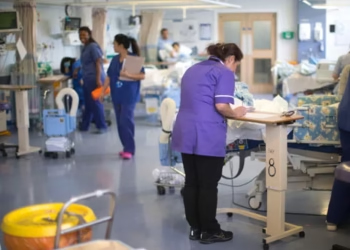 Drop in Overseas Workers Sparks ‘Car Crash’ for UK Hospitals
 Refugee Status Overhaul Sparks UK Debate
 BBC Charter Reform Sparks Independence Battle
 Asylum Seekers to Work After Year-Long Wait
 Thousands Protest Iran Strikes Outside US Embassy London
 US Bombers Arrive at RAF Base Amid Rising Iran Tensions
 UK Prepares Aircraft Carrier for Middle East Crisis
 UK Oil and Gas Supplies Reassured Amid Middle East Concerns
 ‘We can’t go back’: mother of six-year-old cancer survivor fears UK visa changes
 Palantir NHS Contract Sparks Fears Over Data Power
 UK Patients Face Long Journeys as Pharmacies Cut Hours
 Yvette Cooper: UK Must Follow Principles, Not US Pressure