Published: 17 March 2026. The English Chronicle Desk. The English Chronicle Online.
A Utah woman was convicted Monday of aggravated murder after allegedly poisoning her husband. Kouri Richins, who had previously written a children’s book on coping with grief, faced trial for adding fentanyl to her husband Eric Richins’ drink in March 2022. Prosecutors said she slipped five times the lethal dose of the synthetic opioid into a cocktail he consumed, resulting in his untimely death. The case drew intense media attention due to her public writings about grief following her husband’s passing.
Authorities revealed Richins was in serious financial distress, reportedly $4.5 million in debt, and falsely believed she would inherit over $4 million from her husband’s estate. Prosecutors argued she planned to pursue a relationship with another man while securing financial benefits from Eric’s death. “She wanted to leave Eric Richins but did not want to leave his money,” said Summit County prosecutor Brad Bloodworth. Evidence presented in court suggested Richins had carefully planned her husband’s murder to benefit financially.
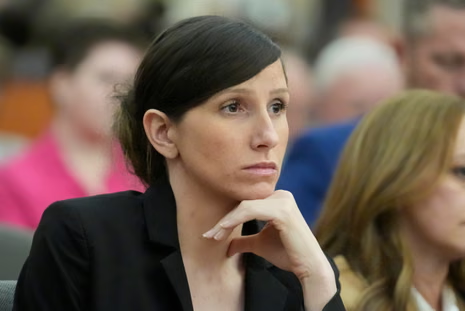
During the trial, Richins sat silently, occasionally staring at the floor and taking deep breaths as the verdict was read. The jury deliberated for just under three hours before returning the guilty verdict, leaving both families visibly emotional. Many relatives embraced and cried in the courtroom after hearing the outcome, reflecting the intense personal impact of the case.

Richins was not only convicted of aggravated murder but also faced additional charges. Prosecutors presented evidence of an attempted murder in February 2022, when she allegedly poisoned her husband with a fentanyl-laced sandwich that caused him to blackout. Jurors also found her guilty of forgery and insurance fraud, following claims she had falsely obtained benefits after Eric Richins’ death. The sentencing hearing is scheduled for 13 May, which would have been her husband’s 44th birthday. Aggravated murder in Utah carries a sentence of 25 years to life, meaning Richins faces the possibility of spending the remainder of her life in prison.
Eric Richins’ sister, Amy Richins, expressed relief at the verdict. “Honestly, I feel like we’re all in shock,” she said, noting that the family can now focus on honouring her brother and supporting his children. “We got justice for my brother,” she added, acknowledging the emotional toll the trial had taken on the family. The trial itself was originally scheduled for five weeks but was shortened when Richins waived her right to testify. Her legal team rested the case without calling any witnesses, leaving the prosecution to present its evidence unchallenged in court.
Richins’ lawyers had expressed confidence that the prosecution lacked sufficient evidence to secure a murder conviction. They argued that the case relied heavily on circumstantial evidence and digital records rather than direct proof of intent. Despite their assertions, the jury appeared persuaded by the combination of digital, forensic, and testimonial evidence presented throughout the trial.
Financial motives played a central role in the case. Richins, a real estate agent specialising in house flipping, had allegedly opened multiple life insurance policies on her husband without his knowledge, with total benefits reaching approximately $2 million. Prosecutors also shared text messages between Richins and Robert Josh Grossman, the man she was allegedly having an affair with. In these messages, Richins allegedly discussed leaving her husband, securing millions through divorce or death, and pursuing a future with Grossman. The content of these communications was critical in demonstrating premeditation to the jury.
Digital evidence from Richins’ phone further implicated her in planning her husband’s death. Internet search histories included queries such as “what is a lethal dose of fentanyl,” “luxury prisons for the rich America,” and “if someone is poisned [sic] what does it go down on the death certificate as.” These searches were interpreted by prosecutors as evidence of her intent and planning. A forensic analyst testified on the significance of these searches, underscoring the meticulous preparations Richins reportedly undertook.
One of the most compelling moments in the trial involved a recording of Richins’ 911 call on the night of Eric’s death. Bloodworth replayed the call for the jury, describing the voice as “not the sound of a wife becoming a widow, but the sound of a wife becoming a black widow.” The statement reflected the prosecution’s framing of the case as a carefully orchestrated act of betrayal, rather than an accidental or spontaneous event.
The case has drawn attention not only because of the gruesome details but also due to the unusual circumstances surrounding Richins’ public persona. Her self-published children’s book on grief had initially positioned her as a sympathetic figure, leading many to follow the story closely. The contrast between her literary persona and the criminal allegations shocked the public and generated widespread discussion about the complexities of human behaviour and motivations.
Legal experts following the trial noted that the combination of digital evidence, financial motive, and the prior attempted poisoning created a compelling case for premeditated murder. The unusually short deliberation period further suggested the jury was persuaded by the consistency and strength of the evidence. While Richins’ defence argued the lack of direct eyewitness testimony weakened the prosecution’s case, jurors ultimately found the digital footprint and communications sufficient to confirm intent.
The emotional impact of the trial has resonated widely, with observers highlighting the challenges families face when betrayal occurs within intimate relationships. Eric Richins’ family described the period leading up to and during the trial as emotionally exhausting, noting that every court session brought back painful memories of his death. They also emphasised the importance of ensuring justice for Eric’s children, who were left without a father due to the actions of someone they had trusted.
Richins’ sentencing in May will likely attract further public attention, particularly given the high-profile nature of the case and the significant financial stakes involved. Legal analysts anticipate that the court will weigh aggravating factors such as premeditation, prior attempts, and financial fraud when determining her sentence. Observers also expect the case to serve as a cautionary tale regarding the dangers of financial desperation, infidelity, and the misuse of digital tools in criminal planning.
The verdict underscores a growing awareness of the role of digital evidence in modern criminal investigations. Prosecutors effectively used search histories, messages, and forensic analyses to construct a timeline of intent, demonstrating the increasing significance of electronic footprints in court proceedings. Richins’ conviction may set a precedent for how similar cases are approached, highlighting the challenges defendants face when online activities provide indirect yet persuasive evidence of intent.

In the aftermath of the trial, communities across Utah and beyond have reflected on the broader implications of domestic betrayal and financial manipulation. The case has sparked conversations about trust, personal responsibility, and the devastating consequences of greed. Mental health professionals have also noted the importance of supporting families affected by homicide, particularly when the perpetrator is someone within the immediate circle of trust.
As the legal process moves toward sentencing, the Richins case continues to draw public interest and media coverage. Observers emphasize the intersection of human psychology, financial desperation, and digital evidence as central to understanding why the crime occurred. While the children’s book on grief may have once framed Richins as a figure of empathy, the trial revealed a starkly different narrative, demonstrating the complex and sometimes deceptive nature of personal narratives.
Ultimately, the conviction of Kouri Richins provides a measure of closure for the family while highlighting the devastating consequences of betrayal and premeditated crime. The sentencing will mark a significant moment in the case, as the court determines the legal repercussions for her actions. Communities and legal experts alike are watching closely, reflecting on both the emotional and procedural dimensions of this high-profile murder trial.
Related News:
 Two National Guard Soldiers Critically Injured Near White House
 American Mother Extradited From UK to U.S. on Murder Charges
 Portland Shooting: Federal Agents Open Fire Near Hospital
 Portland man pleads not guilty after Border Patrol shooting
 Missing North Carolina Woman Found Alive After 24 Years
 Melania Trump Epstein remarks spark survivor backlash
 Swalwell Faces Pressure to Quit Governor Race
 Harmeet Dhillon Faces Scrutiny in DOJ Role Debate
 Louisiana Tragedy: Eight Children Die in Mass Shooting
 US Labor Department in turmoil after secretary resigns
 Trump DOJ Targets James Comey Again
 FBI Links Brown University Shooting to Long-Term Grievances
 US ‘Narco Boat’ Strikes Draw Global Outcry
 US judge dismisses Kilmar Abrego Garcia indictment
 Gunman Killed After White House Security Shootout
 DeSantis’s ‘Alligator Alcatraz’ Faces Final Shutdown
 Peterborough Mosques Tighten Security After Attack
 French Taxi Driver Cleared in David Lammy Theft Case After Fare Dispute
 UK Bans Fake Numbers: Scammers Lose Their Trick
 Just Stop Oil Protesters Convicted Amid Climate Defence Row
 How to get help when a child goes missing – call 999 urgently
 Greene Pushes Epstein Files Amid Trump Fallout
 New Evidence Emerges in Haditha Family Killings
 Criminal Gangs Pose as Truckers to Hijack UK Supply Chains
 Mother Watches in Horror as Teen Daughter Dies on Tracks
 Deadly Russian Strikes Hit Western Ukraine, 20 Killed in Ternopil
 Serial Rapist and Former Cop Found Guilty Again
 Man Denies Stealing Bronze Age Gold from Museum
 Venezuela Threatens Nobel Winner Machado with Fugitive Status
 Inside the Helpline Protecting Missing Children in the UK
 Most Tories Expect to Support a Farage-Led Government
 Runaway Driver Caught by DNA Evidence
 Southern Lebanon reels as Israeli strikes shatter communities
 US National Guard Member Killed in DC Shooting
 Jordan Bardella: France’s Young Presidential Contender
 Met Police Vetting Failures Let Serial Rapists Remain
 Federal Immigration Shift: Officers Leave Louisiana for Minneapolis
 Trump press secretary attacks reporter over ICE question
 Trump Fed bid heads to Supreme Court
 School vetting failure exposed by London abuse case
 Partial US Government Shutdown Hits Homeland Security Funding
 Sinema payment row deepens after $9,000 transfer claim
 Nurses’ families fear breakup under UK immigration crackdown
 SA Police Intensify Search in Gus Lamont Case
 El Mencho Killed as Mexico Faces Violence
 California Democrats Vow Trump Reckoning
 Trump’s Surgeon General Pick Evades Vaccine Questions
 Kelly Wilkinson Inquest Reveals Bail Failure
 New Poll Reveals Reform UK Stance on British Citizenship
 Adelaide University Faces Backlash Over Event Cancellation
 Family of Alleged Bondi Gunman Seeks Name Suppression
 Arrests Made in Jewish Ambulance Arson Attack
 Men Bailed After Arson Attack on Jewish Ambulance Service
 Bondi terror attack linked to global rise in IS plots
 Trump’s Presidency: A House of Cards Collapsing?
 Learner Driver Charged After Expo Tragedy
 Trump Starts $166bn Tariff Refund Process
 Surge in Online Abuse Sites Targets Vulnerable Children
 Trump Defiant After Washington Hotel Shooting
 Identity Revealed: Suspected Washington Gunman Named
 White House Security Case Sparks Political Firestorm
 Trump approval plunges amid Iran war fears
 Ohio’s Battle for Trust: Democrats Vying to Flip the Buckeye State
 China Fireworks Factory Blast Kills 21 in Hunan
 Afghan Families Left in Limbo Face Risk of Deportation
 Florida Surgeon ‘Devastated’ Over Fatal Surgery Error
 US Awaits Iran Reply on New Ceasefire Proposal
 Man Charged Over East London Former Synagogue Arson
 US green card applicants must apply from abroad, DHS says
 Trump Urged to Condemn UFC Fighter Over Obama Slurs
 Shocking Zoo Incident Sparks Attempted Murder Probe
 US Military Pacific Boat Strike Kills Three People
 US Courts Back Trump on Park Signage Removals
 Trump’s Mount Rushmore Speech: A Divisive Anniversary
 Trump Intervenes in Fifa World Cup Balogun Ban
 US Airman Avoids British Court in Indecent Exposure Case
 Ukraine Creates Long-Range Strike Command
 Florida Executes One of Its Oldest Death Row Prisoners
 Houthis Strike Saudi Arabia as Middle East Tensions Rise
 Westminster Council Threatens Charing Cross Soup Kitchen