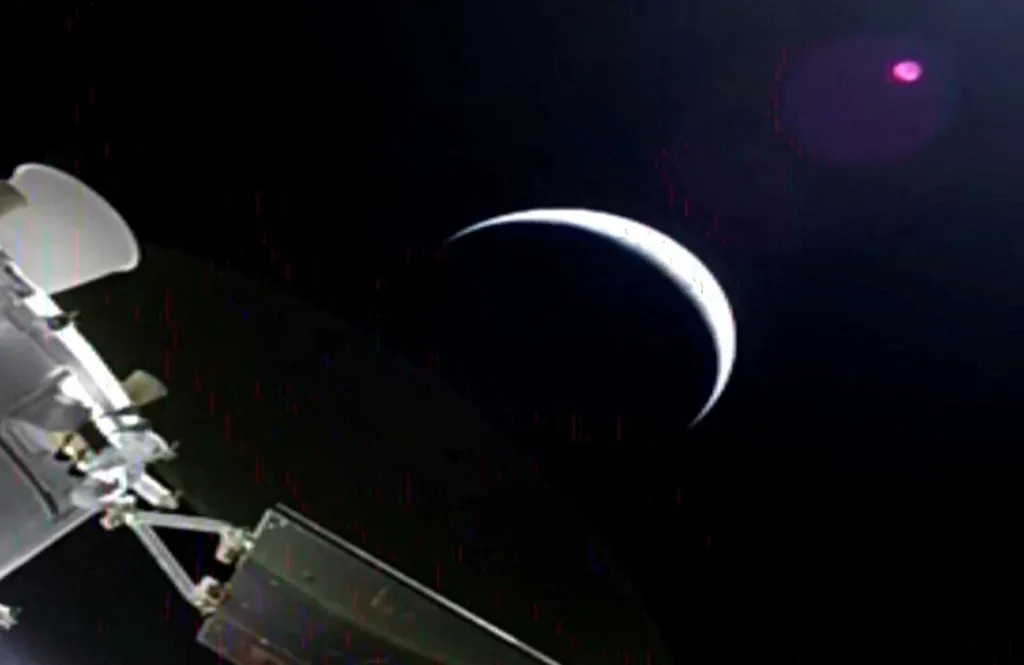
Published: 3 April 2026 . The English Chronicle Desk. The English Chronicle Online—Your eyes on the stars as humanity returns to the lunar frontier.
Fifty-four years after the final Apollo mission, the “tether to Earth” has once again been severed. NASA’s Artemis II mission successfully executed its Trans-Lunar Injection (TLI) burn late Thursday, 2 April, propelling the Orion spacecraft—named Integrity—out of high Earth orbit and onto a trajectory toward the far side of the Moon. The four-person crew is now in the midst of a four-day transit across the cosmic void, marking the first time a crewed vehicle has ventured into deep space since 1972.

After spending roughly 24 hours in a highly elliptical Earth orbit to test life-support and manual piloting systems, mission control in Houston gave the “go” for the mission’s most critical maneuver.
-
The Burn: At 7:49 PM EDT on Thursday, Orion’s service module ignited its main engine for five minutes and 50 seconds. The burn added thousands of kilometers per hour to the spacecraft’s velocity, successfully escaping Earth’s gravitational “well.”
-
Crew Reaction: “Humanity has once again shown what we are capable of,” radioed Canadian Mission Specialist Jeremy Hansen shortly after the burn. “It’s your hopes for the future that carry us now on this journey around the Moon.”
-
The Crew: Commander Reid Wiseman, Pilot Victor Glover, and Mission Specialists Christina Koch and Jeremy Hansen are reported to be in excellent spirits, with Koch jokingly referring to herself as the “space plumber” after successfully troubleshooting a minor issue with the spacecraft’s waste management system earlier in the flight.
Artemis II is not designed to enter lunar orbit or land. Instead, it utilizes a “free-return trajectory”—a figure-eight loop that uses the Moon’s gravity to “slingshot” the crew back to Earth without requiring a secondary major engine burn.
-
The Far Side Record: On Monday, 6 April, Orion is expected to reach its farthest point from Earth: approximately 252,799 miles (406,841 km). This will surpass the record for the farthest distance from Earth ever traveled by a crewed spacecraft, currently held by the Apollo 13 mission.
-
Unprecedented Views: The crew will pass approximately 4,600 miles (7,400 km) above the lunar surface. Because of the timing of the mission, they are expected to see sunlit portions of the lunar far side that were shrouded in darkness during the Apollo era.
-
The Solar Corona: In a rare celestial coincidence, the crew will also be positioned to witness a lunar eclipse from space, providing a unique vantage point to observe the Sun’s outermost atmosphere, the corona.
While Artemis II is a “flyby” mission, its success is the final gatekeeper for Artemis III, currently slated for 2027/2028, which aims to land the first woman and first person of color on the lunar South Pole. The current 10-day test flight is rigorously validating Orion’s communication with the Deep Space Network and its ability to protect the crew from deep-space radiation once beyond Earth’s magnetic field.

As the Earth continues to shrink in the Orion hatch window, the mission stands as a powerful symbol of international cooperation and a “lunar homecoming” for a new generation. If the trajectory remains true, the crew will splash down in the Pacific Ocean on Friday, 10 April, bringing with them the first human-captured data from the lunar vicinity in over half a century.
Artemis II Mission Timeline: April 2026
| Mission Phase | Date | Status |
| Launch (SLS Rocket) | 1 April | Success |
| High Earth Orbit Checkouts | 2 April | Success |
| Trans-Lunar Injection (TLI) | 2 April | Success |
| Lunar Far Side Flyby | 6 April | Next Major Milestone |
| Pacific Ocean Splashdown | 10 April | Scheduled |
Related News:
 India and US Collaborate to Launch Groundbreaking Satellite for Earth Observation
 British AI Startup Outshines Human Forecasters in Global Prediction Contest
 History Will Remember Who Showed Up: Pressure Mounts on Keir Starmer to Attend Cop30 Summit
 UK Fighter Jet Purchase Could Breach Nuclear Treaty, Warns CND
 Google at 27: The Untold Story of Ruth Kedar, the Woman Behind the Iconic Logo
 Russia repeatedly targets UK military satellites, warns Space Command chief
 Cooper Unveils £4m Cyber Plan Against Russian Hackers
 Experts Warn Russia’s Burevestnik Missile Could Destabilise Arms Control
 Britain deploys RAF specialists to assist Belgium with drone threats
 Night after night, Belgium is on high alert.
 Hitler’s DNA Confirms He Truly Had Only One Testicle
 Pokémon to open world’s first theme park in Japan next year
 Ukraine to Get 100 French Rafale Jets in Historic Deal
 Poll Reveals China Leads World in Trusting AI Technology
 US Clears Nvidia AI Chip Sales to China in Policy Shift
 Iran Signals Permanent Break From Global Internet, Activists Warn
 UK New Car Discounts Near £6,000 as Prices Are Slashed
 Musk Wants City on the Moon Within 10 Years
 Indian University Kicked Out of AI Summit for Claiming Chinese Robot Dog as Its Own Invention
 China Shows Off Nunchuck‑Wielding Humanoid Robots for Lunar New Year
 The Chinese AI App Sending Hollywood Into a Panic
 How Do You Modernise Mango Farming? India’s Growers Urged to Innovate as Climate Change Hits
 Bill Gates Pulls Out of India’s AI Summit Over Epstein Files Controversy
 Zuckerberg Defends Meta in Landmark Social Media Addiction Trial
 Etsy Sells Second‑Hand Fashion App Depop to eBay for $1.2bn
 Musk Cuts Starlink Access for Russian Forces – Giving Ukraine an Edge at the Front
 Anthropic AI Refuses Pentagon’s Safety Demand
 Social Media Trial: Woman Says Addiction Began at Six
Instagram Investigating AI Profiles ‘Fetishising’ Disabled People
Social Media Trial: Woman Says Addiction Began at Six
Instagram Investigating AI Profiles ‘Fetishising’ Disabled People
 Anthropic Boss Rejects Pentagon Demand to Drop AI Safeguards
 Brady Tkachuk Denies AI Video Claims After Olympic Gold
 Orbital Space Race Heats Up in Arctic North
 The Sad, Strange Story of the World’s Most Radioactive Paradise
 Why Russia Controls Its People With a Flick of a Switch
 Wellness Peptide Craze: Why People Are Injecting Drugs ‘Not for Human Consumption’
 The US Now Has the Medicine for Cheap Swarming Drone Attacks
 Boy George Says He’s Using ChatGPT to Help Write New Songs
 Satellite Images Show Iranian Navy and Nuclear Sites Hit by US‑Israeli Strikes
 Protesters Rally in San Francisco Against OpenAI Deal With Pentagon
 We Have More Privacy Controls Yet Less Privacy Than Ever — The Paradox of Digital Life
 Regulator Contacts Meta Over Workers Watching Intimate AI Glasses Videos
 Study Says Only Two Nations May Survive Nuclear War
 Baba Vanga’s Chilling World War 3 Prediction and Russia’s New Leader
 Tiny Possum and Glider Thought Extinct for 6,000 Years Found in Remote West Papua
 Musk’s xAI Permit Sparks Fury Over Power Plant Expansion
 GPS Jamming: The Invisible Battle in the Middle East
 The Kill Line: A Shifting Vision of the American Dream
 Iran Social Media Strategy Shifts to Information War
 ABC Staff Strike Over Pay and AI Concerns
 Cluster Strikes Test Israel’s Missile Defences
 Zelensky Visits Saudi Arabia After Offering Drone Expertise
 One Ant for $220: The New Frontier of Wildlife Trafficking
 How and When to See April’s Full Pink Moon
 How Iran Destroyed US Base’s $500m Battlefield Nerve Centre
 Trump Considers Military Operation to Seize Iran’s Uranium
 Jim Ratcliffe’s £3.5bn Chemical Plant Delayed with Parts Stranded in the Gulf
 Trump Building ‘Massive’ Military Bunker Under White House Ballroom
 The Death-Defying Nuclear Commando Mission That Could End the War
 Baltic Blackout: Satellite Images Reveal Scorched Russian Oil Hubs After Ukraine Strikes
 ‘Excitement’ at Salisbury Plain as UK Conducts Largest Military Parachute Drop in a Decade
 The ‘Simpler Recycling’ Era: England’s New Bin Rules Face a Patchy Rollout
 ‘A Million Things’: The Unprecedented Peril of Seizing Iran’s Uranium Stockpile
 ‘The Counting of a Nation’: India Launches World’s Largest Census Amid Tech Revolution
 ‘At the Doorstep of the Future’: Florida’s Space Coast Braces for Historic Artemis II Launch
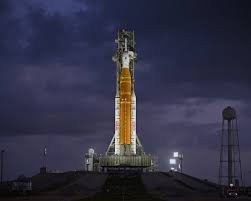 Artemis II: Humanity Returns to the Moon After Decades
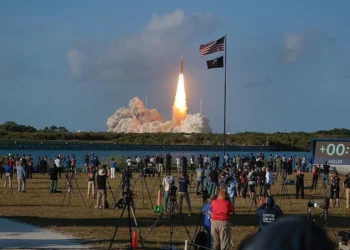 ‘We Go for All Humanity’ — Artemis II Returns Humans to the Lunar Vicinity
 The Orion Capsule: A High-Stakes Vigil in Earth’s Orbit
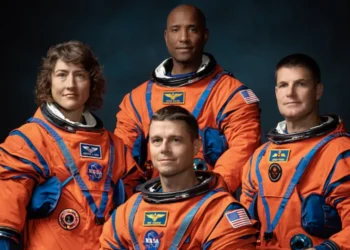 Beyond the Atmosphere: A Comprehensive Guide to Artemis II
 A Name for the Nameless: DNA Finally Links 1974 Utah Murder to Ted Bundy
 7.4-Magnitude Earthquake Jolts Eastern Indonesia; Tsunami Warning Lifted
 Breaking the Horizon: Blind Runner to Tackle Brighton Marathon with Smart Glasses
 UK Must Act with Courage and Clarity on Israel-Palestine Conflict, Says Foreign Affairs Committee Report
 ‘Extinct’ Antelope Returns to Sahara, Bringing Hope
 Sydney Shark Attack Surge Shocks Australia Beaches
 AI breast screening cuts later cancer diagnoses by 12%, study finds
 Most Statin Side-Effects Are Not Caused by Drugs, Study Confirms
 Councils Pressed to Use Universal Parking App to Cut ‘Unfair’ Fines
 ‘The Insulation Trap’: Knifeman Discovered Hiding Under Loft Padding After Six-Hour Standoff
 “It Ends With Trial”: Judge Tosses Blake Lively’s Sexual Harassment Claims Against Justin Baldoni
 The Banbridge Rescue: 300 Sheep Saved from Massive Hay Shed Inferno