Published: April 7, 2026. The English Chronicle Desk.
The English Chronicle Online — Mapping the new alliances of the global right.
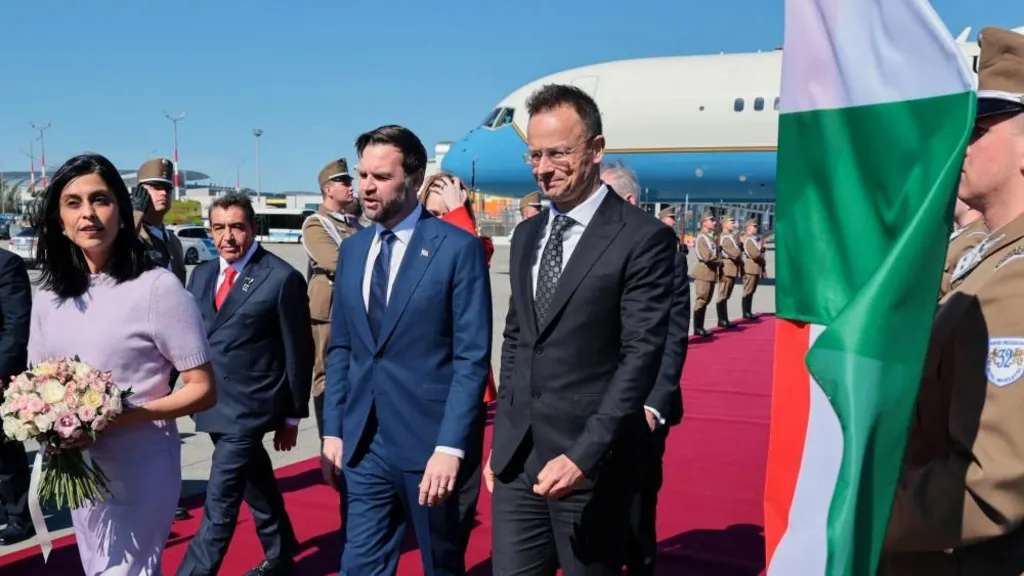
BUDAPEST — In a move that has sent ripples through the European diplomatic corps, U.S. Vice President JD Vance arrived in Hungary on Tuesday for a high-profile “solidarity visit” to support Prime Minister Viktor Orbán’s re-election campaign. Stepping off Air Force Two at Budapest Ferenc Liszt International Airport, Vance praised Hungary as a “beacon of common sense” and a “fortress of traditional values,” signaling a dramatic solidification of the Washington-Budapest axis that has increasingly defined the Trump administration’s transatlantic policy since January 2025.

The visit, occurring just weeks before Hungary’s pivotal general election, is being framed by the White House as a mission to support “sovereignty and family-centric governance.” However, critics in Brussels and Washington have labeled the trip an unprecedented intervention in the domestic politics of a NATO ally. For Orbán, who faces a energized opposition coalition, the literal and symbolic embrace by the American Vice President is a powerful validation of his “illiberal democracy” model.
The relationship between the MAGA movement and Orbán’s Fidesz party has evolved from mutual admiration into a formal political pipeline. During a joint press conference at the Carmelite Monastery, Vance highlighted Hungary’s natalist policies—including tax breaks for large families—as a template for future American legislation. “What Prime Minister Orbán has achieved here is what we want for the American heartland,” Vance stated. “A country that puts its own citizens first, protects its borders, and isn’t afraid to say that the traditional family is the bedrock of civilization.“
The “Tech & Media” dimension of the visit is equally significant. Vance was accompanied by a delegation of conservative media figures and tech entrepreneurs who have praised Hungary’s restrictive “child protection” laws and its approach to NGO regulation. This “cultural exchange” has led to concerns among EU officials that Hungary is becoming a laboratory for policies that the U.S. administration hopes to export globally.
The timing of the visit is particularly sensitive given the ongoing tensions over the conflict in Ukraine. While the Trump administration has repeatedly pushed for a “rapid settlement,” Hungary remains the primary European holdout on several aid packages and sanctions. Vance’s presence in Budapest is seen by many as a tacit endorsement of Orbán’s “pro-peace” (often interpreted as pro-Moscow) stance, further isolating the “Big Four” powers of Western Europe—Germany, France, Italy, and the UK.
“This is a seismic shift in how America treats its allies,” says Dr. Elena Rossi, a senior fellow at the Center for European Policy Analysis. “By backing Orbán so overtly, the U.S. is effectively bypassing the EU institutions in Brussels. They are picking winners based on ideology rather than traditional strategic alignment.“
For the Hungarian opposition, the Vance visit is a “distraction from the domestic cost-of-living crisis.” Peter Marki-Zay, a prominent opposition figure, argued that “no amount of American celebrity can hide the fact that Hungarian inflation remains among the highest in the EU.” Nevertheless, for the Fidesz base, the sight of the American Vice President walking the streets of Budapest is a “prestigious win” that reinforces the narrative of Hungary as a global player.

As Vance prepares for a series of town halls with Hungarian youth organizations, the message is clear: the alliance between the “New Right” in America and the “Nationalist Right” in Europe is no longer a fringe curiosity. It is the new center of gravity for a coordinated, cross-border political movement that seeks to redefine the 21st-century West.
Related News:
 EU Says US Ties Have Suffered ‘Big Blow’ After Greenland Crisis
 Putin Intensifies Territorial Demands Before US Talks
 Trump to Recheck Green Cards from 19 Nations After DC Attack
 Russia losses Ukraine war peace talks intensify amid rising deaths
 Trump Escalates Minnesota Immigration Surge Amid Rising Tensions
 Trump: US Stands Ready to Help Iran Find Freedom Amid Widespread Unrest
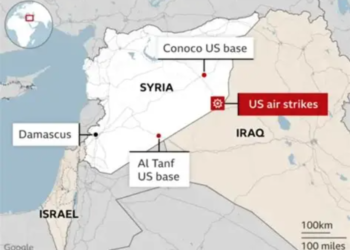 US Conducts Large-Scale Strikes Against ISIS Targets Across Syria
 Trump Says US Will Act on Greenland ‘Whether They Like It or Not’
 Trump Administration Probe of Fed’s Powell Draws Pushback
 Greenland Faces Pivotal Summit Over Arctic Power Struggle
 Trump Threatens Strong Action If Iran Executes Protesters
 Trump Receives Machado’s Nobel Medal in White House Meeting
 Greenland Crisis Forces Europe to Draw a Line With Trump
 Iran Cannot Be Bombed Into Democracy, Only Helped There
 EU weighs response amid Greenland tariff crisis with Trump
 Historic Abu Dhabi Talks Bring US, Ukraine and Russia Together
 Trump Pulls Canada from His Controversial ‘Board of Peace’ Plan
 Thousands Protest ICE Operations in Nationwide US Day of Action
 Epstein Files Reveal Trump Officials’ Emails with Financier
 Thousands Protest ICE in New York Against Trump Deportation Campaign
 Trump Praises ‘Terrific’ Petro After White House Talks
 US Must Be Prudent When Supplying Arms to Taiwan, Xi Tells Trump
 Fears of New Arms Race as US-Russia Nuclear Weapons Treaty Expires
 Macron Rebuked in Franco-German Defence Row
 New Nuclear Talks Between US and Iran Begin in Geneva
 ‘He Did It for Us’: US Soldier Recalls Jesse Jackson’s Efforts to Free Him and Two Other POWs
 Under Pressure From Trump, Venezuela’s New President Has Aces Up Her Sleeve
 Stephen Colbert Says CBS Spiked Interview With Democrat Over FCC Fears
 US to Withdraw Troops from Syria
 US Urges Iran to Make Deal as Military Presence Rises
 Trump’s Foreign Policy Dilemma Laid Bare by Iran Tensions
 Billionaire Les Wexner Tells US Lawmakers He Was ‘Naive’ and ‘Conned’ by Epstein
Zelensky Says Putin Has Started WW3, Must Be Stopped
Billionaire Les Wexner Tells US Lawmakers He Was ‘Naive’ and ‘Conned’ by Epstein
Zelensky Says Putin Has Started WW3, Must Be Stopped
 New Russia Sanctions on Hold as Hungary Blocks EU Package Ahead of Fourth Ukraine War Anniversary
 Inside Kyiv’s resolve as conflict nears five‑year mark
 What to Watch for During Trump’s State of the Union Address
 US Partially Evacuates Beirut Embassy Amid Rising Iran Tensions
 Rob Jetten becomes Netherlands’ youngest ever prime minister
 Ukraine remembers its dead as war enters a fifth year
 Clinton Testimony Erupts in Fiery Exchange
 American Citizen Killed in Cuba Boat Shooting, U.S. Officials Say
 Spain Declassifies Files on 1981 Attempted Coup in Effort to Dispel Conspiracy Theories
 Hillary Clinton Tells House Panel She ‘Had No Idea’ of Epstein’s Crimes
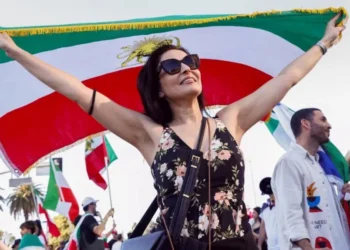 Hopes and Fears as US Iranians Take to Streets After Toppling of Supreme Leader
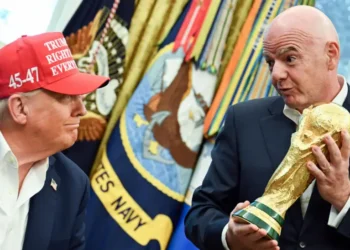 Iran, the US, and a World Cup That Starts in Three Months
 Britain’s Position and Trump Vows to Press On in Iran Conflict
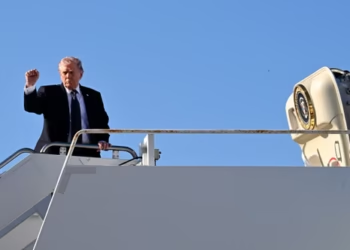 Trump Faces Questions Over Iran Conflict Plan
 Trump’s Iran Endgame Unclear After Mixed Messaging on War Aims
 Rubio Responds to Reported Strike on Iranian School
 US Senate Backs Trump War Powers Amid Iran Missile Barrage
 Six US Soldiers Killed in Iran-Linked Kuwait Strike
 US Senate Vote Fails to Rein in Trump War Powers on Iran
 Macron Finds ‘Freedom Fries’ Redemption in Iran Crisis
 Trump Removes Kristi Noem From Homeland Security Role
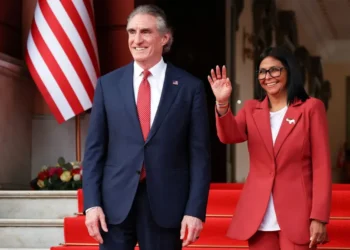 US and Venezuela Agree to Resume Diplomatic Ties After Maduro Capture
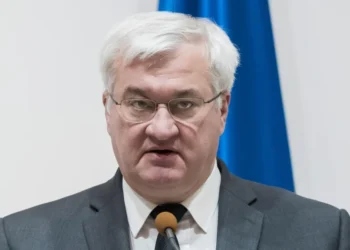 Ukraine Accuses Hungary of Taking Seven Bank Workers Hostage in Budapest
 Finland Plans to Lift Decades‑Old Ban on Hosting Nuclear Weapons
 UK Prepares Aircraft Carrier for Middle East Crisis
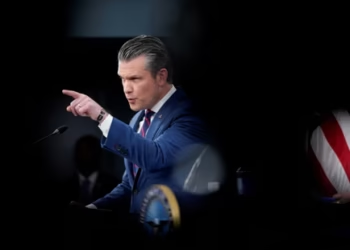 Pete Hegseth Iran War Remarks Spark Alarm
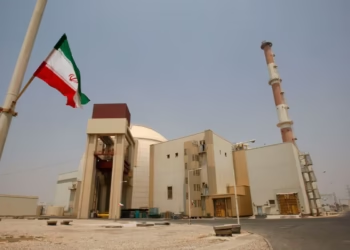 Putin Orders Evacuation at Iran Nuclear Plant Amid ‘Catastrophe’ Fears
 Istanbul Mayor Faces Corruption Trial Amid Political Storm
 Iran War Puts Trump at Political Risk Amid Rising Prices
 Iran Rejects Ceasefire, Warns Trump With Chilling Message
 Georgia Race to Replace Greene Heads to Runoff
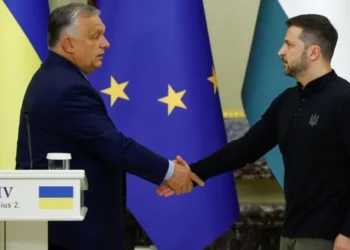 Ukraine War Becomes Flashpoint in Hungarian Election
 Trump’s Confidence Undimmed — But Every Iran Option Carries Risk
 Fox News Cut In Over Trump King Charles Claim
 Trump Seeks to Delay Meeting With Xi
 Trump Faces New Warning Signs as Iran War Hits Home
 Italian Town Buys Mussolini Villa to Keep Away Fascist Fans
 Trump’s Harsh Rhetoric on Iran Sparks Global Alarm
 Who Is Viktor Orbán, Hungary’s Long-Serving PM?
 ‘The Soul of Spain’: Politicians Clash Over Renewed Push to Move Picasso’s Guernica
 Russia’s Latest Push to Win US Favors Shows Deep Desperation
 BBC to Apologise Over Edited Trump Speech Amid Backlash
 Greene Pushes Epstein Files Amid Trump Fallout
 Iran’s Regime Still Intact — Coming Days Will Test Its Survival
 Thousands Protest Iran Strikes Outside US Embassy London
 Trump Pressures Congress Over Save America Act
 Queensland Protest Laws Spark Free Speech Backlash