Published: 20 April 2026. The English Chronicle Desk. The English Chronicle Online.
The night sky across the United Kingdom is preparing for a truly spectacular astronomical display this week. The annual Lyrid meteor shower has officially returned to grace our spring skies with its presence. Although these shooting stars have been active since 16 April, the excitement is currently building daily. Experts anticipate that the shower will reach its brilliant peak late on Wednesday 22 April. This celestial event will continue well into the early morning hours of Thursday 23 April here. Stargazers throughout the British Isles are already checking their gear and hoping for clear weather conditions. The spectacle promises to be a wonderful highlight for anyone who enjoys looking upward at night.
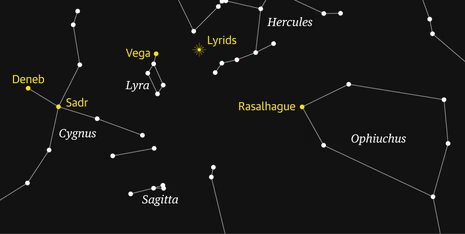
Observers looking towards the east from London at midnight on Thursday will find the best view. The specific origin point for these meteors, known as the radiant, sits in the Lyra constellation. You can easily locate this area by searching for the exceptionally bright star known as Vega nearby. The meteors appear to emanate from this specific radiant point before fanning out across the sky. While they travel across the horizon, they create a beautiful and mesmerising pattern for all viewers. Astronomy enthusiasts often find this particular event to be one of the most reliable spring displays. The combination of the constellation position and the timing creates a perfect window for dedicated observation.

These meteors are quite well known for being both impressively bright and remarkably fast to observe. Many of them occasionally leave behind distinct and glowing smokey trains across the dark night sky. These lingering trails add an extra layer of visual beauty to an already stunning natural phenomenon. Observers can expect a maximum rate of about eighteen meteors appearing every single hour this year. While this number might seem modest, the quality and brightness of these streaks are truly exceptional. Seeing a bright Lyrid streak across the heavens is a moment that stays with many people. It serves as a gentle reminder of the vast and moving wonders located above our heads.
Human fascination with the Lyrids is certainly not a new development in our collective long history. Historical records detailing these mysterious and beautiful celestial lights stretch back to at least 687 BC. Ancient observers were clearly just as captivated by this yearly display as we are in modern times. In much more recent history, scientists finally discovered the true origin of this particular light show. The shower is tied directly to the orbital path of the long-period comet known as Thatcher. This fascinating object was first officially discovered by astronomers during the middle of the nineteenth century year.
The meteors we see burning up in our atmosphere are essentially remnants of this ancient comet. They are small particles that were once part of the massive tail of dust left behind. As the Earth passes through this trail each spring, those particles collide with our protective atmosphere. The friction of the air causes them to heat up and glow with intense white light. It is a brilliant cosmic recycling process that occurs predictably at the same time every year. Understanding the science behind the shower makes the experience feel even more grounded and deeply connected. We are witnessing the physical remnants of a passing comet from deep within our solar system.

To experience the best possible views, you must be prepared to wait until well after midnight. Darkness is the most essential element required for successfully spotting these fast and bright celestial streaks. You should allow your eyes to fully adjust to the darkness for at least thirty minutes. This vital step is often overlooked by casual observers who want to see results very quickly. Stepping away from artificial city lights will drastically improve your chances of spotting the most meteors. Find a quiet and dark spot in your garden or a local park away from buildings. Even a small reduction in ambient light can make a massive difference for your tired eyes.
While the view from the United Kingdom and the northern hemisphere is expected to be excellent, elsewhere differs. The view from the southern hemisphere is unfortunately quite restricted because the radiant remains very low. The constellation of Lyra does not rise high enough above the horizon for those southern viewers. As a result, they will see significantly fewer meteors than those located in the northern half. It is a rare occasion where the northern latitudes get to enjoy the superior celestial seat. Those of us in the UK should certainly take full advantage of this clear night advantage. It is a fantastic opportunity to appreciate the natural beauty found within our own dark skies.
Spring evenings are often cool, so please ensure that you dress in plenty of warm layers. Standing still for an extended period of time will make you feel the cold much faster. Bring a comfortable chair or a warm blanket to sit on while you watch the heavens. A thermos of tea or hot chocolate can also make the long wait much more pleasant. Patience is truly the most important tool in your arsenal for a successful night of stargazing. Do not feel discouraged if you do not see a streak within the first five minutes. The nature of meteor showers means they can sometimes come in little bursts of activity periodically.
This week provides a wonderful excuse to step outside and reconnect with the vast night universe. The Lyrids offer a perfect moment of quiet reflection during our often busy and modern lives. Sharing this experience with friends or family members can make the event even more special indeed. There is something profoundly moving about watching the same lights that ancient people witnessed before us. Whether you are a dedicated astronomer or just a casual fan, this show is for you. We are all united under the same beautiful canopy of stars, planets, and shifting cosmic dust. Make sure to mark your calendar and prepare for a night of magic in the air.
Related News:
 ‘Extinct’ Antelope Returns to Sahara, Bringing Hope
 Norfolk Coastal Graves at Risk as Erosion Deepens Family Anguish
 Eden Project Founder Celebrates 25 Years of Nature’s Hope
 Winter plant bloom signals climate breakdown in UK
 UK Homes May Skip Batteries in New Green Rules
 Avocado Crisis: The Hidden Violence Behind Exports
 Smaller farms funding prioritised in England nature plans
 Dog Food Emissions: 1% of UK Greenhouse Gas Revealed
 Dutch Nationwide Fireworks Ban Expected to Transform New Year Traditions
 Storm Goretti leaves Cornwall homes without power
 Wildlife Targets at Risk in England and Northern Ireland
 Dubai Chocolate Craze Inspires South Korea’s Latest Dessert Obsession
 Traces of Glyphosate Found in UK Playground Tests
 BP’s Influence Sparks Controversy in UK STEM Education
 Polycrisis Anxiety Leaves Many Feeling Trapped in the Present
 Kent Residents Continue Facing Water Supply Disruptions
 Antarctic Penguins Shift Breeding Season Amid Climate Change
 No Gas Boiler Ban as UK Warm Homes Plan Backs Heat Pumps
 Judi Dench Champions Fight to Save London’s Green Spaces
 Half the World’s Largest Cities Face Rising Water Stress
 Record-Breaking Heat Looms Over South-East Australia as Catastrophic Fire Risk Escalates
 UK joins North Sea wind grid pact with nine European nations
 Devon hosts first high-density hydro power system
 US-Style Pickup Trucks Surge on UK Roads
 Storm Chandra floods Somerset, triggers major incident declaration
 How Sandhill Ashes Rebuilt a Bushfire-Hit Rural Community
 Storm Chandra flooding leaves England on high alert
 Reform UK Taps Boris Ally to Shape Party Nature Agenda
 James Valentine Retires from ABC After Cancer Battle
 UK Pfas Action Plan Faces Criticism From Environmentalists
 Wigan Dump Crisis Sparks Health and Safety Alarm
 Norway’s Petrol Car Sales Hit Record Low Amid EV Surge
 Fish disco plan could save 90% of fish at Hinkley C
 Santos Wins Landmark Greenwashing Case in Court
 Gentoo Penguins First Birds on Australian Territory Hit by Bird Flu
 Flood risk homes surge across England builds
 Chikungunya Spread in Europe Climbs as Climate Warms
 Deer Shooting England: New Plan to Protect Woods
 Illegal Waste Dumping: New Drone Unit Launched
 Scotland’s Emissions Plans Face Criticism for Over-Reliance on Technology
 Germany Faces Backlash Over Scrapped Renewable Heating Mandate
 Group Expands Legal Claim Over South West Water Pollution
 Scotland’s Climate Plans Face Scrutiny Over ‘Science Fiction’ Targets
 Humans – not Mimmo the dolphin – need managing in Venice lagoon
 Ocean Warming Drives Massive Marine Life Loss, Study Warns
 Ancient Stepwells Revived Amid India’s Deepening Water Crisis
 Tropical Flowers Shift Blooming Due to Climate Crisis
 Death Valley Blooms Signal Potential Superbloom Year
 Greenpeace $345m Ruling Sparks Appeal Battle
 Save the Caterpillars to Help UK Moth Populations Grow
 Wood burner legal threats spark council row
 South East Water Fined £22.5m for Repeated Supply Failures
 Yorkshire Water Funding Sparks Debate Amid Fines and Pay Row
 Net Zero Cheaper Than One Fossil Fuel Crisis, UK Told
 Musk’s xAI Permit Sparks Fury Over Power Plant Expansion
 Welsh Water Faces £44.7m Enforcement Over Sewage Breaches
 London Considers New SUV Charges to Improve Road Safety
 The Truth Behind Rising Energy Costs and Fossil Fuel Myths
 ‘Drinking from a Fetid Pond’: Superbug Genes in Lough Neagh
 New £10bn rescue plan offered for Thames Water
 MPs Slam Agency Over Failing Fight Against Waste Dumping
 Middle East Deluge: Freak Storms Bangle Desert Nations
 Trump to Deploy “God Squad” Over Gulf Wildlife Protections
 The Secret Identity Behind the Enfield Oak Felling
 Evacuations Ordered as California Wildfires Spread Fast
 UK Records Earliest Spring as Nature Awakens Fast
 Queensland Braces for Potential Second Severe Cyclone Hit
 Tragic End to Outback Search as Floods Claim a Life
 US Waste Crisis: Mexico Branded a Toxic Garbage Sink
 UK Fossil Fuel Expansion Risks Global Climate Collapse
 Cyclone Maila Intensifies to Category Five Strength
 Miles Jupp: How the Magic of the Ashes Sparked a Bold Blag
 Britain Must Break Its Long Addiction To Toxic Herbicides
 RSPB Urges Summer Bird Feeder Removal to Curb Disease
 The Toxic Scent Destroying Life in a Lancashire Town
 Britain Facing Sharp Decline in Rare Butterfly Species
 15 Million Oysters Set to Revive UK Marine Ecosystems
 Fuel Prices Drop Despite Geelong Refinery Blaze
 Big Tech Lobbies EU to Hide Massive Datacentre Emissions
 Medellín’s Green Revolution: A Global Climate Blueprint