Published: 28 April 2026. The English Chronicle Desk. The English Chronicle Online.
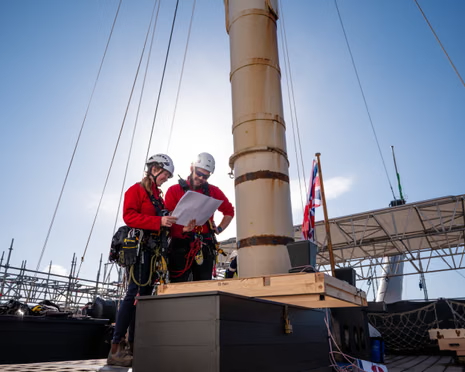
There remains only one correct way to remove a massive iron mast from a legendary warship. The process requires extreme patience and a very gentle touch to ensure total structural safety. A dedicated team of thirty experts performed this delicate task throughout Monday night and early Tuesday. They successfully extracted the fifteen-tonne foremast from the historic HMS Victory in a complex operation. This massive project forms a crucial part of the ongoing forty-two million pound conservation effort today. A powerful seven-hundred-and-fifty-tonne crane managed the difficult lift of the twenty-three-metre wrought iron structure safely. The team balanced immense industrial power with the necessary precision to protect the delicate wooden vessel.
Naval heritage specialists hope to remove the remaining mizzen mast and bowsprit in the coming days. These operations depend heavily on favourable weather conditions to ensure the safety of the ancient ship. Once removed, these historic components will lie on the Portsmouth dockside for essential conservation work to begin. Patrizia Pierazzo, the deputy project director, celebrated the successful start of this major engineering milestone yesterday. She noted that despite some initial technical challenges, the team completed the lift with great care. The foremast now rests securely away from the ship, marking a significant victory for the preservation team.
Andrew Baines, the executive director of museum operations, admitted feeling quite nervous throughout the intense overnight task. He highlighted the inherent risks involved in moving parts of a fragile two-hundred-and-fifty-year-old wooden structure. These iron masts have suffered from inconsistent maintenance throughout their long history in the Royal Navy service. Removing these heavy metal structures from a timber hull requires expert planning and very careful mechanical execution. Baines compared the stressful lifting process to someone being pulled upward suddenly by their own natural hair. The masts will now transition from a vertical orientation to a horizontal position for the first time. They have remained in an upright configuration for over one hundred and thirty years until this moment.

A large group of specialists worked through the night to manage the complex logistics of this move. The broader project involves sixty people, including skilled archaeologists, dedicated structural engineers, and professional museum artifact conservators. Baines explained that six months of rigorous planning went into refining these specific steps for the team. They aimed to reduce any potential risks to the historic fabric to the lowest possible practical level. Every precaution was taken to ensure the safety of the staff working on this very important site. This operation builds upon the earlier removal of the main mast, which occurred back in early 2021.
That initial work marked the beginning of the massive project now widely known as the Big Repair. The team will erect a vast scaffolding structure around the vessel once all the masts are removed. This protective enclosure will remain in place until the ambitious conservation project concludes in the year 2033. History buffs might be surprised to learn that the original masts were crafted from solid oak timber. A survey conducted in the 1890s revealed that those wooden components had become dangerously rotten over time. Engineers decided to replace the originals with sturdy wrought iron masts taken from the decommissioned frigate Shah.
The HMS Shah had retired from active service in Bermuda and no longer required her own equipment. Naval planners determined that these iron masts were robust enough for the iconic HMS Victory to use. Experts believe these unique components are the only surviving examples of nineteenth-century iron mast technology in existence. The ship will currently appear quite different to visitors now that all her masts have been removed. Baines acknowledged that the most common question from the public concerns the timeline for the masts returning. He carefully explained that this restoration represents a slow and methodical journey rather than a simple repair.

Building an entirely new ship would certainly be a faster process than preserving this historic naval treasure. However, the team is not simply performing basic ship repairs but rather caring for invaluable national artifacts. These magnificent masts serve as important historical objects that require protection for at least another hundred years. Achieving such a high standard of preservation simply requires a significant amount of time and dedicated professional effort. Visitors can continue to explore the HMS Victory and the Portsmouth Historic Dockyard throughout the ongoing works. The museum remains committed to sharing this fascinating story of maritime heritage with the wider British public.
The successful removal of the foremast represents a massive achievement for everyone involved in this technical project. It demonstrates the profound commitment of the National Museum of the Royal Navy to safeguarding our maritime identity. As the scaffolding begins to rise, the ship enters a new chapter of its long and illustrious life. Future generations will eventually witness the return of these restored masts to their rightful place on the vessel. This careful work ensures that Nelson’s flagship will remain a centrepiece of British history for many years ahead. Every bolt and beam receives individual attention from experts who understand the weight of this unique historical responsibility.
The sheer scale of the engineering required to stabilize this ship highlights the immense value of her legacy. By investing forty-two million pounds, the nation secures a future for a vessel that defined global naval power. The collaboration between historians and engineers provides a blueprint for how we should treat our most delicate monuments. People travel from all over the world to walk the decks where famous history was once made daily. Keeping the site open allows the public to witness this incredible conservation journey unfolding in real time today. As the sun rises over Portsmouth, the work continues to preserve a true icon of the high seas. The dedication shown by the crew ensures the spirit of the victory lives on for many decades more.
Related News:
 Reeves Faces Setback as Labour May Miss Homes Target
 Kate Winslet to Narrate Film Highlighting King’s Environmental Mission
 Trump’s UK Ambassador Urges North Sea Drilling to Strengthen US Ties
 UK Bans Fake Numbers: Scammers Lose Their Trick
 Vibe coding’ named Collins dictionary’s word of the year
BBC to Apologise Over Edited Trump Speech Amid Backlash
Vibe coding’ named Collins dictionary’s word of the year
BBC to Apologise Over Edited Trump Speech Amid Backlash
 Millionaires group urge Reeves to introduce wealth tax to ‘lift kids out of poverty’
 Reeves rejects £1bn plea for NHS redundancy payouts
 PM Condemns Leaks, Vows Loyalty to Ministers and Stability
 Phillipson Accused of Appeasing Unions by Diluting EBacc
 Saka Solidifies Role as Tuchel’s Key England Lieutenant
 Greene Pushes Epstein Files Amid Trump Fallout
 Zelenskyy Signs Fighter Jet Deal Amid Russian Drone Attacks
 Sundar Pichai Cautions on AI Hype and Market Risks
 Shadow Fleet at Sea: Europe’s Battle Against Illicit Oil Shipping
 Snow and Ice Cause Travel Chaos in North Yorkshire
 Director Michael Caton-Jones Reflects on Career and Beginnings
 Inside the Helpline Protecting Missing Children in the UK
 PlayStation PS5 Deals Hit Lowest Prices Ahead of Black Friday
 US Suspends Afghan Immigration After White House Shooting
 Five-Year-Old Dies After Rare Tonsil Surgery Complication
 Starmer Says Labour’s Economic Plan Needs Years to Deliver
 ‘Extinct’ Antelope Returns to Sahara, Bringing Hope
 IndiGo Cancels Hundreds of Flights Amid Pilot Shortages
 Young Britons Face Heaviest Burden from Ageing Population, Lords Warn
 U‑Turn on Farmers’ Inheritance Tax Sparks Political Firestorm
 Aston Villa Remain Arsenal’s Key Obstacle in Title Pursuit
 Irish Beach Tragedy: Irish Drown at Whitehaven Beach in Australia
 Starmer Faces Parliamentary Battles Over UK-EU ‘Reset’ Plan
 Met Police Vetting Failures Let Serial Rapists Remain
 Federal Immigration Shift: Officers Leave Louisiana for Minneapolis
 Fatal Bolton Taxi Crash Claims Three Teens and Driver
 Australia grants Asio powers to designate hate groups under new laws
 Friedman Uninvited From 2024 Adelaide Writers’ Week
 US and Iran Agree to Two-Week Provisional Ceasefire
 Battle of Britain Tower to House Tourists and Bats
 The Challenger: Will Péter Magyar End the Orbán Era?
 UK Government Poised to Revive Stalled Hillsborough Law
 Democrats Move to Impeach Defense Secretary Pete Hegseth
 Security Alert Near Israeli Embassy as Police Investigate
 Ben Roberts-Smith Denies War Crime Allegations in First Statement
 Home Office Faces Legal Risks Over Asylum Hotel Living
 US-Iran Standoff: Will Trump Deploy Ground Troops?
 Crisis in NHS Surgery Scheduling Hits Patients Hard
 Investigation Into Anti-Trump Motives After Gala Shooting
 Dubai Assets Linked to Sudan’s RSF Militia Exposed
 Urban Flood Crisis: A Growing Threat to English Homes
 Ashley Cole: Finding His Voice and Vision in Italy
 New AI Tool To Target Obesity Risk And Transform NHS Care
 Greens Face Internal Row Over Antisemitism Claims
 Tough Fiscal Realities Await Next Scottish Government
 The Burning Lens: An Iranian Artist’s Visual Resistance
 Met Officers Probed Over Al Fayed Abuse Allegations
 One Nation Candidate’s Surprising Ties to Independents
 Aramco Surges as East-West Pipeline Counters Gulf Tensions
 Reform UK Faces Crisis as Newly Elected Councillors Resign
 Starmer Strikes Back as 100 MPs Sign Support Pledge
 Scepticism and tight security as Beijing braces for Trump
 Tensions Flare as Israeli Nationalists March in Jerusalem
 UK Firms Freeze Spending as Iran Conflict Bites
 UK Job Market Squeezed as Iran War Drives Jobless Rate to 5%
 Reeves to Fast-Track Clean Energy Amid Iran Crisis
 The Battle for Wembley Sparking Unprecedented Legal Warfare
 Tony Abbott Returns as New Liberal Party President
 Pope Meets Families in Italy Toxic Waste Zone
 Royal Ascot Allegation Sparks Wider Police Inquiry
 Secret Role of UK Security Services in Troubles Amnesty Law
 Tube Strike Brings Capital to a Standstill Over Shift Disputes
 Teaching Machines Right From Wrong in the Digital Age
 Is Ollie Robinson the Chaos English Cricket Needs Today?
 The Hidden Crisis Eroding Trust in British Communities
 Saving the Scalloped Hammerhead: The Pacific Battle
 Stolen Mobiles Could Soon Become Useless Bricks
 Clean Air Initiatives Spark Major Fall in London Hospital Admissions
 Fearless Pioneer of Investigative Journalism Dies Aged 83
 Trump Urged to Condemn UFC Fighter Over Obama Slurs
 The Fear Gap: Why Europe Feels Less Safe Than It Is
 US Military Pacific Boat Strike Kills Three People
 Dettol Apologises for ‘Toxic Men’ Advert Backlash in China
 UK Care Crisis: Row Explodes Over New Visa Settlement Rules