Published: 04 May 2026. The English Chronicle Desk. The English Chronicle Online
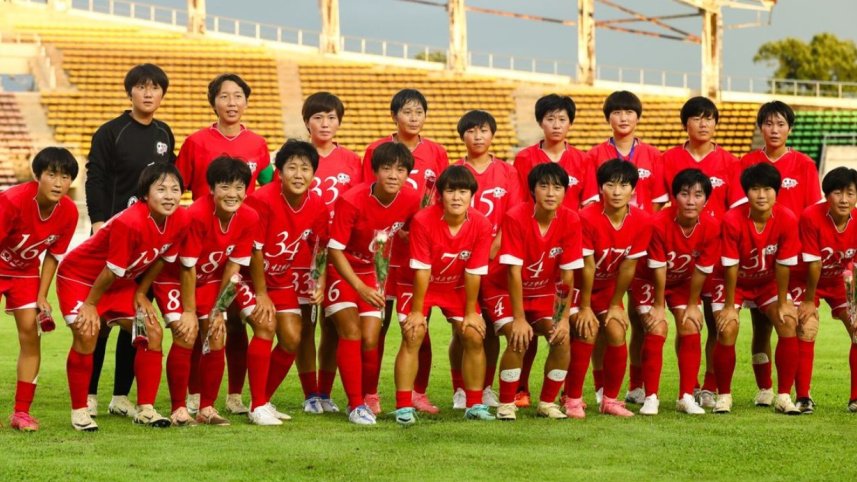
In a development that has captured the attention of diplomats and sports enthusiasts alike, a North Korean women’s football club is set to travel to South Korea this month. This visit marks the first time a northern sports delegation has crossed the border in nearly eight years, occurring during a period of significant estrangement between the two nations. Naegohyang Women’s FC, a powerhouse based in the North Korean capital of Pyongyang, will face South Korea’s Suwon FC Women at the Suwon Sports Complex on 20 May. The high-stakes match is part of the semi-finals of the AFC Women’s Champions League, a tournament that has become a rare bridge for athletic competition in the region.
The South Korea Football Association (KFA) confirmed that the Asian Football Confederation (AFC) validated Naegohyang’s participation earlier this month. According to the Unification Ministry in Seoul, a delegation of 39 individuals—comprising 27 elite players and 12 supporting staff—is expected to arrive on southern soil on 17 May via Incheon International Airport. This event is historically significant as it represents the first time a North Korean women’s football team has competed in the South since the 2014 Incheon Asian Games. Furthermore, it is the first visit by any North Korean sports delegation since December 2018, when a unified Korean table tennis team participated in a tournament in Incheon during a fleeting window of diplomatic rapprochement.

That previous era of sporting diplomacy saw the two Koreas march under a single unification flag at the Pyeongchang Winter Olympics and field a joint women’s ice hockey team. However, the current visit takes place against a much more rigid backdrop. South Korea’s President, Lee Jae Myung, who assumed office in June 2025, has placed the revival of inter-Korean dialogue at the heart of his administration’s policy. In several public addresses, President Lee has emphasized that the two nations are not enemies, renouncing any pursuit of unification by force or absorption. His administration has recently taken steps to reduce border tensions, including the suspension of propaganda broadcasts and the opening of access to North Korean media like the Rodong Sinmun in public libraries.
Despite these warm signals from Seoul, Pyongyang has remained largely hostile in its official rhetoric. In early 2024, and reiterated as recently as March 2026 at the Supreme People’s Assembly, Kim Jong-un officially recognized South Korea as the most hostile nation. He declared that North Korea’s nuclear status is irreversible and warned of merciless consequences if provoked. Kim Yo-jong, the influential sister of the North Korean leader, has also expressed that the North has no interest in dialogue regardless of the political leadership in the South. This makes the football club’s decision to travel even more intriguing to international observers, especially since North Korea recently declined invitations to the 2025 world archery championships in Gwangju.

The footballing prowess of North Korea cannot be understated. Their women’s program is currently ranked 11th in the world, standing ahead of major competitors like Australia, China, and South Korea. Their youth development has been particularly dominant, with the under-17 squad winning the FIFA Women’s World Cup a record four times, including consecutive victories in 2024 and 2025. Naegohyang Women’s FC, founded in 2012, has risen to the top of the North Korean domestic league and features many players with World Cup-winning experience. The team enters this match with significant momentum, having defeated Suwon 3-0 during the group stages held in Myanmar last November.
As the 20 May semi-final approaches, the sporting world remains hopeful that this 90-minute match can serve as more than just a competition. While geopolitical tensions remain high, the arrival of the Pyongyang-based club offers a glimmer of the soft diplomacy that has historically preceded broader talks. Should Naegohyang advance, the final is scheduled for 23 May at 2:00 p.m. at the same venue. If they lose, the delegation is scheduled to return home the following day. For now, the focus remains on the pitch in Suwon, where the beautiful game will briefly take center stage over the complex and often adversarial politics of the Korean Peninsula.
Related News:
 Arsenal blow lead as Arteta rues Wolves draw
 Nine Killed in Karachi Consulate Protest
 Sunderland Stun Newcastle as Brobbey Strikes Late Winner
 The Living Heart of Manchester United: Bruno Fernandes
 Tottenham Turn to De Zerbi After Tudor Sacking
 Eddie Howe Faces Seven Game Test to Secure Newcastle Future
 Christian Pulisic Grapples With Unfamiliar Scoring Drought
 Can Congress Stop US Sports Teams From Moving Cities?
 Maguire Commits Future to Manchester United with New Deal
 End of an Era: Andy Robertson to Leave Liverpool This Summer
 Julián Alvarez: The Silent Rise of a Global Football Icon
 Can De Zerbi Restore Belief to Save Spurs From the Drop?
 Robots Outpace Humans in Beijing Half-Marathon
 Premier League Clubs Tense Over Regulator Costs
 Liam Rosenior Faces Mounting Pressure at Chelsea
 Can Arteta Finally Lead Arsenal to Glory Again?
 Southeast Asia Turns to Russia Amid Energy Crisis
 John Terry Faces Backlash Over Political Posts
 Scott Parker Leaves Burnley After Premier League Drop
 Premier League drama defines crucial weekend
 Infantino’s Grip Tightens as FIFA Eyes a $14bn Future in Vancouver
 Arteta urges Arsenal to step up in Atlético semi-final
 Australia pushes Pacific security pact amid China tension
 BJP Sweeps West Bengal in Historic Breakthrough
 US Awaits Iran Reply on New Ceasefire Proposal
 One Nation Stuns Australia With Historic Farrer Win
 Guardiola Urges Mastery Over Random Refereeing Decisions
 Arteta Reinvents Emirates Stadium Into Football Fortress
 Guardiola to Exit Man City; Maresca Lineup Nears
 Bracing for the Cherries: Guardiola Likens Vital Bournemouth Trip to the Dentist
 De Zerbi Rallies Spurs To Fight Relegation Threat
 Champions at Last: Arsenal Conquer the Premier League
 City Succession Plan Explains Maresca’s Chelsea Exit
 Carrick Takes The Wheel Permanently At Old Trafford
 Farewell to an Icon: Pep Guardiola to Exit Manchester City
 Bernardo Silva Leaves Manchester City After Iconic Era
 Hormuz Talks Near Critical Stage
 Discontent grows around Putin amid war strain
 Premier League Icons: Stars of the 2025-26 Season
 How De Zerbi Pulled Tottenham Back From the Brink
 João Palhinha Eyes Permanent Tottenham Stay After Survival
 Man City Threaten Legal Action Over Haaland Real Madrid Shirt
 New Premier League Fixtures Set Stage for Thrilling Season
 Millions Gather for Khamenei’s Six-Day State Funeral
 Trump’s Red-Card Intervention Hurts the US World Cup
 Russia Cleared to Compete at LA 2028 Olympic Games
 French Soccer Team Linked to ICE Deportation Flights
 Venezuela Quake Death Toll Surpasses 4,000
 Houthis Strike Saudi Arabia as Middle East Tensions Rise
 Pradhan Resigns Amid Protests
 Taliban global ties grow as rights fears mount
 Seoul proposes historic peace talks to replace Korean War armistice
 Israeli Strike in Southern Lebanon Kills Seven
 Five Years of Taliban Rule Leave Afghanistan in Crisis
 Aston Villa Remain Arsenal’s Key Obstacle in Title Pursuit
 Australia grants Asio powers to designate hate groups under new laws
 Artificial intelligence will cost jobs, admits Liz Kendall
 Ben Stokes injury joke after brutal ball strike
 UK and US Drop in Global Corruption Index Rankings
 Canberra Poster Seizure Sparks Free Speech Row
 BBC World Cup Presenting Duties Shared Among Trio
 Wales Approves Assisted Dying Bill Consent
 English Cricket Faces Moral Crisis Over Indian Investment
 Jacinda Ardern Move Sparks Kiwi Reflection
 Asylum Seekers to Work After Year-Long Wait
 New Zealand Covid Response Praised Despite Lingering Scars
 Injured Mojtaba Khamenei Elevated as Iran Leader
 Inquiry into HMRC child benefit errors launched by NAO
 Air Canada CEO Faces Outcry Over Recent Language Misstep
 Relationship with Trump may be beyond repair, Starmer warned
 UK Government Poised to Revive Stalled Hillsborough Law
 Democrats Move to Impeach Defense Secretary Pete Hegseth
 Investigation Into Anti-Trump Motives After Gala Shooting
 Secret Role of UK Security Services in Troubles Amnesty Law
 Is Ollie Robinson the Chaos English Cricket Needs Today?
 The Hidden Crisis Eroding Trust in British Communities
 US Advance Past Bosnia in World Cup Thriller
 Trump’s Mount Rushmore Speech: A Divisive Anniversary
 Trump Swaps Planes Amid Iran Tensions
 Ann Widdecombe, Formidable Political Figure, Dies at 78