Published: 07 May 2026. The English Chronicle Desk. The English Chronicle Online.
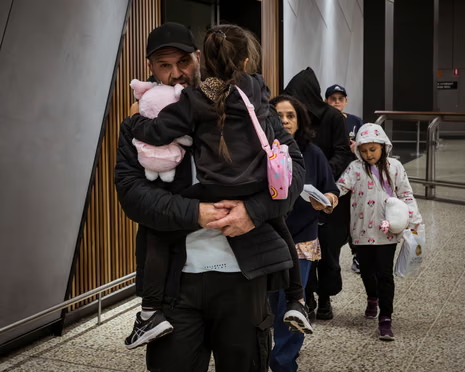
The long and complex journey for a group of Australian citizens has reached a dramatic conclusion this week as several women and children finally returned to their home soil after years of displacement. This arrival marks the end of a decade-long saga that began in the heart of the Middle East and concluded under the watchful eyes of federal authorities at major international airports. Three women now face serious legal scrutiny following their arrival back in Australia after spending more than seven years within the confines of Syrian detention camps. These individuals were part of a larger group consisting of thirteen women and children who traveled on separate flights into the cities of Sydney and Melbourne on Thursday evening. The atmosphere at the arrival halls was described as tense as law enforcement officers prepared to meet the incoming passengers.
Among those taken into custody was thirty-two-year-old Janai Safar who was met by officers from the New South Wales joint counter-terrorism team shortly after landing. Her flight had arrived from Doha and the arrest occurred while she was accompanied by her young child according to official police statements. Meanwhile in Victoria two other women aged fifty-three and thirty-one were similarly detained by specialized teams at the Melbourne airport immediately following their touchdown. These arrests represent the culmination of an investigation that has spanned several years and multiple international jurisdictions as authorities sought to understand the roles these individuals played. Witnesses traveling on the Sydney flight recounted seeing multiple officers board the aircraft to escort a man a woman and a child away before others could disembark.
The legal challenges facing these women are significant and reflect the gravity of the allegations involving their time spent under the rule of the Islamic State. Authorities have indicated that some of the returnees may face criminal charges ranging from terrorism offences to allegations involving slavery and crimes against humanity. The Australian Federal Police have been meticulously gathering evidence since 2015 including testimony and physical documentation sourced directly from former conflict zones in Syria. This evidence is expected to form the backbone of the prosecution as the legal system grapples with the complexities of these high-profile cases. The commissioner has emphasized that any individual who has committed crimes abroad will be held fully accountable under the strict framework of national law.
One of the families involved includes Kawsar Abbas and her two eldest daughters who landed in Melbourne during the early evening hours after starting their journey in Damascus. The family history is deeply entwined with the conflict as Abbas originally traveled to the region with her extended family over a decade ago. Her husband had moved to the area earlier to perform what he described as humanitarian aid work with a registered charity organization. However federal investigators suspect the charity served as a front for supporting extremist activities which the husband has consistently denied during previous media interviews. He has also faced harrowing allegations regarding the treatment of Yazidi women although he maintains that his family was simply trapped by the unfolding war.
The return of this specific cohort highlights the dwindling number of Australian citizens still residing in Syrian camps which are reportedly being phased out and closed. For the children involved the transition back to Australian society will involve a comprehensive suite of support services designed to help them recover. Many of these children have spent their entire lives in squalid detention centers and have never known the stability of a traditional home environment. State governments are coordinating medical care and educational programs alongside psychological support to assist in their long-term reintegration into the community. Experts have stressed the importance of providing these minors with the necessary space and resources to thrive despite the choices made by their parents.
Public and political discourse surrounding the repatriation has become increasingly heated as different factions debate the potential security risks posed by the returning adults. While some advocacy groups argue for a compassionate approach centered on the welfare of the children others remain deeply concerned about national safety. The current administration has maintained a firm stance stating that those who chose to join foreign conflicts must accept the consequences of their actions. This shift in political sentiment reflects a broader global trend of nations struggling to balance humanitarian obligations with the primary duty of protecting their own borders. Despite the controversy the successful return of these citizens aligns with international pressure to resolve the status of foreign fighters.

The journey home was not without its hurdles as a previous attempt to leave the region was thwarted by local authorities earlier this year. This second successful attempt was made possible through coordinated efforts and the recognition that many Western nations are now reintegrating their citizens. Advocates for the families believe that the focus should now shift toward the judicial process and the healing of the youngest members of the group. They suggest that the successful reintegration of similar cohorts in other countries provides a roadmap for how Australia can manage this delicate situation. The coming months will likely see these legal cases progress through the courts as the public watches how justice is administered.
As the legal proceedings begin the story serves as a stark reminder of the enduring impact of the Syrian conflict on families thousands of miles away. The complexity of modern warfare and the reach of extremist ideologies have created unique legal and social challenges for governments worldwide to address. Each woman’s case will be evaluated on its own merits as investigators look for specific evidence of criminal conduct during their time abroad. The Australian public remains divided on the issue but the priority for law enforcement remains the thorough investigation of all potential threats. For now the focus remains on the immediate health and safety of the children who have finally escaped the cycle of violence.
The broader international community continues to monitor these developments as they set a precedent for how democratic nations handle the return of radicalized individuals. There is a delicate balance to strike between maintaining national security and adhering to international human rights standards during these high-stakes repatriations. The evidence collected from Syria will be crucial in determining whether the charges of slave trading and terrorism can be proven in a court. It is a landmark moment for the Australian justice system as it prepares to prosecute crimes that occurred in a distant and chaotic war zone. The resolution of these cases will undoubtedly influence future policies regarding citizens who find themselves in similar circumstances in foreign lands.
The resilience of the children who survived years of hardship in detention is perhaps the most poignant aspect of this evolving news story today. Their future depends heavily on the success of the de-radicalization programs and the support systems put in place by the various state departments. While their mothers face the full force of the law these young Australians have a chance to build a new life far from conflict. The arrival of the planes in Sydney and Melbourne signifies more than just the end of a flight but the start of a new chapter. It is a chapter defined by legal accountability for some and the hope of a peaceful upbringing for the most vulnerable. This situation remains a focal point of national interest as the legal and social ramifications continue to unfold across the country.
Related News:
 Grief, Fear and Fury: Mothers Unite to End Israeli-Palestinian Violence
 Iran Leader Blames Protesters, Says They Serve Trump
 Thousands Protest ICE in New York Against Trump Deportation Campaign
 Australian Women in Syrian Camp Offer Separation Deal
 Tribunal Rules Burgertory Founder’s Chant Incited Hatred
 Hong Kong Bookstore Arrests Spark New Freedom Concerns
 Death, displacement and military duties: children plunged into crisis
 ICE Detains Soldier’s Bride Days After Louisiana Wedding
 Bondi Nanny Adriana Rivas to Face Extradition to Chile
 Aid Crisis Grows as Hormuz War Disrupts Supply
 Judge halts deportation of Yemeni refugees in US
 Activists allege abuse after Gaza flotilla seizure
 Alice Springs Murder Case: Justice Begins for Little Baby
 Afghan Families Left in Limbo Face Risk of Deportation
 Trump Announces 3-Day Russia–Ukraine Ceasefire Deal
 Israeli Strikes in Lebanon Kill 10 Amid Ceasefire Strain
 China mine blast death toll rises to 90
 Ebola outbreak in DRC overwhelms health system as cases surge
 Former ICC prosecutor condemns US sanctions
 Preserving the Fragile Memories of Tiananmen Square
 Sydney Protest Trial: Twenty-Five Activists to Face Joint Hearing
 Unflinching Witness: Doctors Document Gaza’s Medical Crisis
 New Footage Revives Peter Falconio Mystery
 Ukraine Creates Long-Range Strike Command
 Dreyfus Statue Finally Gets Permanent Paris Home
 Taliban global ties grow as rights fears mount
 Israeli Strike in Southern Lebanon Kills Seven
 Five Years of Taliban Rule Leave Afghanistan in Crisis
 BBC to Apologise Over Edited Trump Speech Amid Backlash
 Britain deploys RAF specialists to assist Belgium with drone threats
 Greene Pushes Epstein Files Amid Trump Fallout
 December Run-Off in Chile as Election Produces No Winner
 Zelenskyy Signs Fighter Jet Deal Amid Russian Drone Attacks
 Shadow Fleet at Sea: Europe’s Battle Against Illicit Oil Shipping
 Tiny Curacao Makes History as Smallest Nation to Reach World Cup
 US Suspends Afghan Immigration After White House Shooting
 Georgians Defy Government Crackdown After Year of Protests
 ‘Extinct’ Antelope Returns to Sahara, Bringing Hope
 Irish Beach Tragedy: Irish Drown at Whitehaven Beach in Australia
 Sanctioned oil tankers sail Channel amid Russia scrutiny
 Pentagon Signals Reduced Role in Deterring North Korea
 UK and US Drop in Global Corruption Index Rankings
 SA Police Intensify Search in Gus Lamont Case
 Canberra Poster Seizure Sparks Free Speech Row
 Evo Morales Returns After Mysterious Absence
 Jacinda Ardern Moves To Australia Following Her US Fellowships
 Jacinda Ardern Move Sparks Kiwi Reflection
 Middle East Airspace Crisis Strands Thousands
 Nick Greiner Warns Over Election Review Fallout
 Kelly Wilkinson Inquest Reveals Bail Failure
 Tehran Strikes Mark War’s Most Devastating Night
 Injured Mojtaba Khamenei Elevated as Iran Leader
 Gordon Brown urges court for crimes against children
 The Kill Line: A Shifting Vision of the American Dream
 Pakistan Targets Militant Hideouts in Afghanistan
 ICE detention warning sparks fear among immigrants
 Air Canada CEO Faces Outcry Over Recent Language Misstep
 Extreme Weather: Europe Shivers as Cyclone Narelle Hits
 Asia Turns Back to Coal Amid Middle East Energy Crisis
 Canadian Mother and Daughter Released From ICE Detention
 Relationship with Trump may be beyond repair, Starmer warned
 Trump’s Six-Week Iranian War: The High Cost of Ignorance
 Artemis II Returns After Historic Moon Flyby
 Orbán Ousted: Péter Magyar’s Tisza Party Wins in Hungary
 Trump Brokers Landmark Lebanon Ceasefire Amid Regional Hopes
 Ben Roberts-Smith Denies War Crime Allegations in First Statement
 UK Watchdogs Warn Over AI Facial Recognition Oversight
 RFU Backs Borthwick Despite England’s Poor Six Nations
 Infantino Defends Soaring World Cup 2026 Ticket Costs
 Putin Signals War End as Russian Momentum Stalls
 Scepticism and tight security as Beijing braces for Trump
 Philippine Senator Flees After Days Under Senate Siege
 Tensions Flare as Israeli Nationalists March in Jerusalem
 High Street Crisis: Fears Grow Over Post Office Closures
 Oil Markets Face ‘Red Zone’ Threat Amid Iran Crisis
 Pope Meets Families in Italy Toxic Waste Zone
 Discontent grows around Putin amid war strain
 Aukus Deal Facing Fierce Backing and Historic Criticism
 Florida Executes One of Its Oldest Death Row Prisoners
 Houthis Strike Saudi Arabia as Middle East Tensions Rise