Published: 12 May 2026. The English Chronicle Desk. The English Chronicle Online.
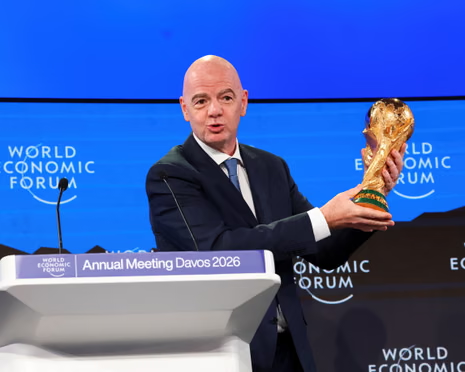
The ambitious expansion of the World Cup was supposed to be a golden masterstroke for Fifa. By increasing the tournament to forty-eight teams, Gianni Infantino hoped to invite the world’s giants inside. He specifically targeted nations like India and China, which boast a combined population of billions of people. These markets represent the ultimate frontier for football growth and lucrative broadcasting revenue for the global game. However, a major crisis is now looming just one month before the opening whistle blows in North America. Fifa has remarkably failed to secure broadcasting rights in the two most populous countries on our planet. This unexpected silence from Beijing and New Delhi has sent shockwaves through the entire sports media industry.
The governing body did not anticipate such a cold shoulder from these massive and growing Asian economies. They expected that a larger tournament would naturally create an irresistible demand for every single match. Instead, the reality of the situation is proving to be a difficult and very expensive lesson. Fifa originally sought massive sums for the rights to show the upcoming hundred and four matches. Reports suggested they asked for hundreds of millions of dollars from both Chinese and Indian media outlets. These figures were based on the historical growth and the perceived prestige of the iconic World Cup. Yet, as the tournament draws near, the asking prices are falling faster than anyone truly expected.
In India, the financial standoff has reached a point of genuine desperation for the governing body. The initial price tag has plummeted significantly as broadcasters show a surprising amount of fiscal restraint. What was once a premium asset is now being haggled over like a common market commodity. Experts note that the closest bid remains far below what Fifa had originally planned to receive. This creates a massive hole in the projected revenue for this cycle of the world tournament. For the 2014 and 2018 editions, Indian broadcasters were happy to pay very high premium rates. Even the 2022 tournament in Qatar saw a healthy investment from major domestic media players there.
The current lack of interest is being blamed on several complex and deeply intertwined economic factors. Time zones are often cited as a primary reason for the reluctance of many major broadcasters. Only a small handful of games will kick off before midnight for the viewers in India. This is a stark contrast to previous tournaments where the timings were much more fan friendly. When games air in the middle of the night, the advertising revenue usually drops quite sharply. However, some insiders believe that the timing issue is merely a convenient excuse for the broadcasters. They argue that Indian fans are already very used to staying up for European football matches.
The real problem lies in the recent consolidation of the Indian sports broadcasting market in general. There is simply much less competition now than there was during the previous two World Cups. Major mergers have left only a couple of giant players standing in the Indian media landscape. Without a bidding war, Fifa loses its primary leverage to drive up the rights prices. Furthermore, cricket remains the absolute undisputed king of the sports market across the entire Indian subcontinent. Broadcasters are increasingly wary of spending huge sums on sports where India does not actually compete. They prefer to invest their limited budgets into domestic cricket leagues that guarantee a massive audience.
Even the mighty Indian Premier League has seen a surprising dip in its recent viewership numbers. This trend has made media executives much more cautious about any high risk sports investments today. They are looking at the data and seeing a cooling interest in general international sports content. The legendary rivalry between Lionel Messi and Cristiano Ronaldo is also slowly fading into football history. Without those iconic superstars at their peak, the casual fan interest has declined quite notably. Younger viewers are also changing their habits and how they consume long form sporting events now. This shift in behavior is forcing a total rethink of how much football is worth.
Economic shifts in the value of the Indian rupee have also played a significant role here. The currency has weakened considerably against the US dollar over the last decade of global trade. This means that a dollar based contract is now far more expensive for Indian companies today. What seemed like a fair price ten years ago is now a massive financial burden now. Fifa insists on being paid in stable currencies, which places the risk on the local broadcasters. This currency fluctuation has effectively doubled the cost of the rights for the local media firms. Under these conditions, the profit margins for showing the World Cup have almost entirely disappeared.
The situation in China is perhaps even more concerning for the leadership at Fifa headquarters today. China has traditionally been a massive driver of digital reach and social media engagement for football. In 2022, the country accounted for a huge portion of the global television audience for Fifa. Yet, the state broadcaster is currently offering a fraction of what Fifa expects to receive now. There is a massive gap between the asking price and the actual budget of CCTV. The twelve hour time difference between New York and Beijing is a very serious hurdle. Advertisers are not willing to pay top dollar for games that air while people sleep.
Chinese football fans have also grown weary of their own national team’s repeated failures to qualify. Without a home team to support, the emotional connection to the tournament is much weaker now. While the die hard fans will always find a way to watch the big games. The general public is less likely to tune in for matches between smaller nations’ teams. Social media sentiment in China shows that many people support the broadcaster’s refusal to overpay. They believe that the money should be spent on developing domestic talent rather than foreign rights. This nationalist sentiment is a new and powerful factor in these high level negotiations. Fifa has recently sent a high ranking delegation to Beijing to try and break the deadlock. They are desperate to avoid a total blackout in one of their most important markets. If a deal is not reached soon, the commercial damage could be felt for years. It sets a dangerous precedent for future negotiations with other major countries and broadcasting partners. Other nations are watching closely to see if Fifa will cave under the intense pressure. If India and China receive massive discounts, every other country will demand the same treatment. This could lead to a significant permanent reduction in the overall value of the tournament.
The protection of the brand’s value is the most important task for Gianni Infantino right now. He must find a way to save face while also securing the necessary broadcast deals. Not having the World Cup on TV in China and India is simply unthinkable. It would be a catastrophic failure of the expansion plan that he championed so loudly. The next two weeks will be the most critical period for the future of football. The world is watching to see if the beautiful game can still command a premium. For now, the fans in Mumbai and Shanghai remain in a state of nervous uncertainty. They can only hope that a compromise is reached before the opening ceremony begins.
Related News:
 Abramovich Chelsea Sale Cash Faces Jersey Probe
 Can Congress Stop US Sports Teams From Moving Cities?
 World Cup 2026: Nike Faces Backlash Over Jersey Design
 Arise Capital Partners Seek Early Relief for Wednesday
 $13bn World Cup Set to Break All Revenue Records
 Disney+ Wins Champions League Rights in Key Markets
 Infantino’s Grip Tightens as FIFA Eyes a $14bn Future in Vancouver
 World Cup Fever Set to Boost UK Economy by £500m
 Reeves Faces Setback as Labour May Miss Homes Target
 Virgin Trains Moves Closer to Challenging Eurostar Monopoly
 Trump’s UK Ambassador Urges North Sea Drilling to Strengthen US Ties
 Ryanair Chief UK Economy ‘Doomed’ Under Labour
M&S Profits More Than Halve After Cyber-Attack
Ryanair Chief UK Economy ‘Doomed’ Under Labour
M&S Profits More Than Halve After Cyber-Attack
 Millionaires group urge Reeves to introduce wealth tax to ‘lift kids out of poverty’
 From Lego to Pokémon: How Adults Are Driving UK Toy Market Growth
 UK and Ireland Announce Venues for Euro 2028 Tournament
 Saka Solidifies Role as Tuchel’s Key England Lieutenant
 Canada Passes Carney’s First Budget in Tight Parliamentary Vote
 Tiny Curacao Makes History as Smallest Nation to Reach World Cup
 Starmer Says Labour’s Economic Plan Needs Years to Deliver
 Australia Face Big Changes as Cummins and Lyon Ruled Out of Ashes
 Aston Villa Remain Arsenal’s Key Obstacle in Title Pursuit
 Starmer Faces Parliamentary Battles Over UK-EU ‘Reset’ Plan
 ScottishPower Tops List of Worst UK Energy Suppliers
 City & Guilds pay surge sparks backlash amid £22m cuts
 Trump Fed bid heads to Supreme Court
 Chelsea warn fans of danger in Naples after hospital incidents
 Liverpool Chase Champions Glory With Stunning Qarabag Victory
 Ben Stokes injury joke after brutal ball strike
 BT Names New Openreach Chief Amid Major Fibre Expansion
 UK Unemployment Rate Climbs to 5.2% Peak
 BBC World Cup Presenting Duties Shared Among Trio
 Craig Tiley Leaves Australian Open Legacy
 English Cricket Faces Moral Crisis Over Indian Investment
 Rising Costs Force Families to Rethink Days Out
 UK inflation held at 3% before global energy price hit
 Ticketmaster Fees Rise Despite Recent US Junk Fee Crackdown
 Teenage Titan: Sooryavanshi Smashes IPL Records
 Sam Konstas Dropped as Australia Unveils New Contract List
 M&S Demands Urgent Action on Rising Violent Retail Crime
 New Era for Sick Pay as Millions Gain Critical Rights
 The Wildest Plastico: Leverkusen and Wolfsburg Thriller
 US and Iran Agree to Two-Week Provisional Ceasefire
 Aegon Sells Historic UK Arm to Standard Life for £2bn
 Central Bank Chiefs Hold Crisis Simulation in Washington
 UK Staycations Rise as Travel Fears Grow
 Former Brexit Chief Calls for Rejoining the EU
 Albanese Rejects Gas Export Tax Push
 Oil Prices Surge Above $120 Amid Iran Blockade Fears
 Scott Parker Leaves Burnley After Premier League Drop
 Silent Tracks: Rail Line Without Passengers
 Arteta urges Arsenal to step up in Atlético semi-final
 DeepMind Staff Vote to Unionize Over US Military Contract
 Global Conflict Hits Home As Bullock Warns Of Economic Pain
 RFU Backs Borthwick Despite England’s Poor Six Nations
 Infantino Defends Soaring World Cup 2026 Ticket Costs
 STV Election Coverage Disrupted Amid Bitter Pay Dispute
 High Stakes in Beijing as Trump and Xi Meet Amid Global Turmoil
 Lotus Boss Pledges Future to Norfolk and Seeks State Support
 High Street Crisis: Fears Grow Over Post Office Closures
 UK Firms Freeze Spending as Iran Conflict Bites
 Bracing for the Cherries: Guardiola Likens Vital Bournemouth Trip to the Dentist
 Reeves to Fast-Track Clean Energy Amid Iran Crisis
 The Battle for Wembley Sparking Unprecedented Legal Warfare
 Oil Markets Face ‘Red Zone’ Threat Amid Iran Crisis
 Belfast Approves Pilot Extension of Sunday Trading Hours
 Tube Strike Brings Capital to a Standstill Over Shift Disputes
 BP Stands Firm on Amanda Blanc Amid Boardroom Storm
 Is Ollie Robinson the Chaos English Cricket Needs Today?
 UK House Prices Drop For Third Month Due To War Fears
 GSK Secures Landmark $10.6bn Deal for Nuvalent
 Saka Playing Through Pain As England World Cup Campaign Looms
 AI Scams Push UK Investment Fraud Past £220m
 Women’s T20 World Cup Breaks Records But Gaps Remain
 Martinelli Strikes Late as Brazil Edge Past Brave Japan
 Sainsbury’s Boss Optimistic As Grocery Inflation Eases
 France Dominate Sweden as Deschamps’ New Era Takes Shape
 US Advance Past Bosnia in World Cup Thriller
 Trump’s Red-Card Intervention Hurts the US World Cup
 USA World Cup Heartbreak: Belgium Ends Their Dream