Published: 13 May 2026. The English Chronicle Desk. The English Chronicle Online.
The manicured lawns of the Royal Hospital Chelsea usually host polite conversation and Pimms. However, this spring the atmosphere feels decidedly more prickly than any prize-winning rose bush. A fierce debate regarding the soul of British gardening has officially taken center stage. Traditionalists and innovators are currently locked in a struggle over the role of automation. Artificial intelligence has moved beyond simple data tracking to enter the world of artistry. This shift has prompted a significant backlash from many established figures in the industry. The conflict centers on a new application that promises to democratize landscape design. For many professionals, this technological leap feels like an existential threat to their craft. They argue that a garden requires a human heart to truly flourish and grow. Meanwhile, proponents of the technology suggest that change is both inevitable and quite helpful. The controversy has split the horticultural community as the famous gates finally swing open.
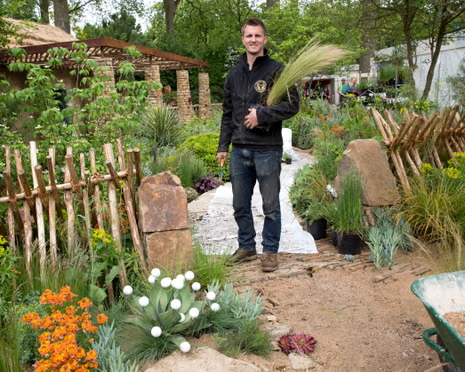
Matt Keightley is the man currently standing at the center of this digital storm. He is a celebrated designer who has worked for members of the Royal Family. His latest project involves the launch of a sophisticated new app called Spacelift. This platform uses complex algorithms to generate full garden layouts from a simple prompt. It can replicate the distinct styles of human designers with quite startling levels of accuracy. Keightley believes that technology should finally embrace the outdoor spaces of our private homes. He argues that most homeowners feel completely overwhelmed by the prospect of garden design. Many people lack the confidence to start a project without a professional vision. Spacelift provides a clear starting point for those who cannot afford bespoke services. The app aims to turn vague imagination into a practical and achievable reality. Keightley insists that his tool is meant to empower the average amateur gardener. However, his peers in the industry are not convinced by these populist sentiments.
The Society of Garden and Landscape Designers has voiced very strong formal objections. Andrew Duff currently serves as the chair for this prestigious and influential organization. He maintains that true garden design is a profound and deeply collaborative art form. Successful spaces are rooted in human experience and a shared connection with nature. Duff believes that technology can never replicate the empathy of a skilled professional. A living space must evolve naturally alongside the people who inhabit the area. Personal engagement is the key ingredient that makes a British garden feel special. He suggests that while digital tools are helpful, they lack genuine creative insight. The society is now preparing to defend the value of human-led design work. They fear that automation will strip gardens of their unique and soulful character. This stance highlights a growing rift between traditional methods and modern efficiency. Many designers feel that their years of training are being unfairly dismissed.
Yvonne Price is another prominent designer who feels betrayed by the current situation. She has previously showcased her stunning work at the RHS Hampton Court Palace. Price believes that Chelsea should remain a sanctuary for purely human-driven creativity. Allowing an AI garden at this world-leading event feels like a major mistake. She argues that the Royal Horticultural Society is failing to protect its artists. Giving a platform to an algorithm undermines the hard work of living designers. For her, the inclusion of Spacelift feels like a dark turning point. Other designers have reacted with a mix of dark humor and genuine fear. Award winner Nadine Mansfield joked about visiting the job center in the morning. This wit hides a deeper concern about the future of the entire profession. If a computer can design a gold-medal garden, what remains for humans? The community is grappling with the possibility of being replaced by cold code.
The use of technology is not entirely new to the world of horticulture. Many gardens already utilize sensors to monitor soil moisture and local weather patterns. These tools help gardeners understand when their plants need a bit more water. Last year, Tom Massey used AI to help visitors listen to urban trees. His project used data to track sap flow and general plant health. This allowed people to connect with the biological processes of the natural world. Massey acknowledges that tracking data is very different from the act of designing. He expresses significant worry about the rise of so-called robot designers in London. People generally do not like the idea of a machine making aesthetic choices. He fears that AI will eventually flood the market with derivative visual styles. A machine could easily mimic his past work without understanding the original intent. This lack of physical interaction with the land makes the designs inferior.
A garden requires a physical presence to understand the nuances of the site. One must feel the wind and see how the sunlight hits the soil. A digital program cannot truly experience the texture of a stone wall. It lacks the sensory history that a human designer brings to the table. Massey believes that the industry will suffer if it loses this vital connection. Despite these concerns, Spacelift is moving forward with three full-sized exhibition gardens. These spaces were designed entirely by the new platform to showcase its power. One scheme focuses on a rural aesthetic using various types of reclaimed materials. Another display features a compact balcony garden designed for modern urban living. The third is a woodland wellbeing space that includes a functional sauna. These designs aim to prove that AI can handle diverse and complex themes. Each garden will be judged alongside the work of the human competitors. This head-to-head battle is the main talking point of the week.
The leadership at Spacelift is quick to defend their controversial new business model. Alexandra Davison serves as the head of partnerships for the growing tech firm. She argues that the platform is not intended to replace professional designers. Instead, it serves the millions of homeowners who are currently priced out. Most people in the UK simply cannot afford to hire a consultant. Spacelift provides an entry point into the market for a brand new demographic. Davison believes that the app actually creates better clients for the industry. Users arrive with clearer briefs and a better understanding of potential costs. This helps professional designers work more efficiently with their own high-end clients. She insists that the platform expands the market rather than shrinking the pie. The goal is to make good design accessible to every single household. This democratic approach to gardening is a key part of their mission.
The debate at Chelsea reflects a much larger cultural shift across Great Britain. Many traditional industries are currently facing the rise of generative artificial intelligence tools. From architecture to journalism, the fear of automation is becoming very widespread. The horticultural world is simply the latest battleground for this modern conflict. Some see the technology as a way to solve the housing crisis. Better designed private spaces can improve mental health and general public wellbeing. Others see it as the death of a hobby that defines Britain. Gardening has always been about the slow and steady process of growth. Replacing that process with an instant digital solution feels wrong to many. The tension between speed and craftsmanship is more visible than ever before. Visitors to the show will have to decide for themselves this week. They will walk through the AI gardens and judge their emotional impact.
Andrew Duff and the SGLD plan to launch a new national campaign. They want to educate the public on the hidden value of human designers. A professional brings accountability and sustainability that a machine might easily ignore. They consider the environmental impact of every single plant and structural material used. Humans can adapt to the changing climate with more nuance and local knowledge. Duff sees this controversy as a perfect opportunity for the entire profession. It is a chance to communicate why thoughtful design matters so much now. Gardens should be deeply connected to both the local place and people. This level of depth is something a computer may never truly achieve. The society hopes that the public will continue to support living artists. They believe that the human touch is what makes a garden truly grow. The battle for the future of the English garden has only begun.
As the champagne flows, the debate will likely continue long into the evening. The flowers at Chelsea will remain beautiful regardless of who designed the beds. Yet, the question of who holds the trowel in the future remains. Will we see more algorithms competing for gold medals in the coming years? Or will the backlash from traditionalists keep the machines out of the mud? For now, the sun is shining on the colorful displays in London. Every designer is hoping that their vision will capture the public imagination. Whether designed by a person or a processor, the beauty is undeniable. The clash at Chelsea is a reminder that even nature changes fast. We must decide how much of our world we want to automate. For the gardeners of Britain, the answer is currently a very loud no. The roots of tradition run deep in the soil of the Royal Hospital. Only time will tell if the digital seeds of AI will take.
Related News:
 BP’s Influence Sparks Controversy in UK STEM Education
 AI Climate Claims Face Greenwashing Backlash
 Ocean Warming Drives Massive Marine Life Loss, Study Warns
 Musk’s xAI Permit Sparks Fury Over Power Plant Expansion
 ‘Drinking from a Fetid Pond’: Superbug Genes in Lough Neagh
 Big Tech Lobbies EU to Hide Massive Datacentre Emissions
 Record May Heat to Cold Front in Eastern Australia
 Cambridge Recreates Historic 336-Year-Old Garden
 Green Lawsuits Surge as AI Expansion Strains Planet
 Deadly H5 Bird Flu Reaches Australia’s East Coast
 Lanarkshire AI Hub Fails Energy Promises
 Concerns Rise Over New Zealand’s AI Datacentre Plans
 Virgin Trains Moves Closer to Challenging Eurostar Monopoly
 UK Bans Fake Numbers: Scammers Lose Their Trick
 Vibe coding’ named Collins dictionary’s word of the year
 Patients to Test Health at Home to Ease NHS Winter Pressure
 Britain deploys RAF specialists to assist Belgium with drone threats
 Stop using ChatGPT to write speeches, AI minister tells MPs
 Northern Lights may illuminate UK skies this week
 New laws to bolster UK’s defences against cyber attacks on NHS, transport and energy
 New AI tool could cut wasted efforts in organ transplants
 Sundar Pichai Cautions on AI Hype and Market Risks
 Google Chief Urges Caution: Don’t Trust AI Blindly
 Healthy Habits in Your 30s That Boost Life in Your 70s
 Coffins Now Too Large to Cremate Amid Rising Obesity Crisis
 ‘Extinct’ Antelope Returns to Sahara, Bringing Hope
 Dutch Nationwide Fireworks Ban Expected to Transform New Year Traditions
 Google Removes Some AI Health Summaries Over Safety Concerns
 Nasa ISS Medical Evacuation: Crew-11 To Return Early
 Polycrisis Anxiety Leaves Many Feeling Trapped in the Present
 Judi Dench Champions Fight to Save London’s Green Spaces
 Half the World’s Largest Cities Face Rising Water Stress
 EU launches Grok AI probe into X over explicit images
 AI job losses UK: Britain faces sharper employment shock
 ABC Facebook Page Briefly Hacked, Adult Photos Posted
 US Robotaxis Train for London Streets Before Launch
 Meta trial over child exploitation claims begins
 Autistic Girls Often Missed in Childhood Diagnoses, Study Finds
 Childnet Censorship Row Over Teen Safety Speeches
 BT Names New Openreach Chief Amid Major Fibre Expansion
 Tech Trends Set to Transform Life in 2026
 Chikungunya Spread in Europe Climbs as Climate Warms
 Stewart Brand on Musk, Bezos and a Life of Long Thinking
 Facial Recognition Error Leads to Wrongful Arrest in Milton Keynes
 Greenpeace $345m Ruling Sparks Appeal Battle
 Zorevunersen Breakthrough for Dravet Syndrome
 Cancer Death Rate in Britain Falls by Nearly a Third
 Taking Multivitamins Daily Could Slightly Slow Ageing, Study Finds
 Welsh Water Faces £44.7m Enforcement Over Sewage Breaches
 The Kill Line: A Shifting Vision of the American Dream
 Extreme Weather: Europe Shivers as Cyclone Narelle Hits
 Middle East Deluge: Freak Storms Bangle Desert Nations
 Artemis II: Humanity Returns to the Moon After Decades
 Artemis II Returns After Historic Moon Flyby
 UK Banks to Deploy Controversial Mythos AI Tool Next Week
 Medellín’s Green Revolution: A Global Climate Blueprint
 Robots Outpace Humans in Beijing Half-Marathon
 UK Faces Growing Threat of Scale Hacktivist Attacks
 Urban Flood Crisis: A Growing Threat to English Homes
 UK Watchdogs Warn Over AI Facial Recognition Oversight
 DeepMind Staff Vote to Unionize Over US Military Contract
 EU Deal May Force UK Ban on Cancer-Linked Weedkiller
 Gotta Catch an MP! The New Political Craze Sweeping Britain
 Court Upholds Landmark Win for Transgender Rights
 Labor Defies Warnings Over Controversial Capital Gains Reform
 Man killed in shark attack on Great Barrier Reef
 Stolen Mobiles Could Soon Become Useless Bricks
 SpaceX Prepares for Historic Valuation Launch
 UK Ministers Lobby Trump Over Under-16s Social Media Ban
 US Courts Back Trump on Park Signage Removals
 Sydney Records Hottest June Since 1859 as Expert Warns New High a ‘Signature’ of Global Warming
 UK Heatwaves Ignite Crisis of Sleep and Public Safety
 Britain’s Mini Fan Craze Sparks Major Waste Crisis
 Record £28m Fine for Virgin Media Over Cancellation Woes
 Telstra Software Fault Triggers Massive Nationwide Outage
 US Chemical Accidents Rise as Protections Are Rolled Back
 Swift Nesting Crisis Sparks Outrage in South Tyneside
 Japan Bear Hunt: Serial Fridge Raider Sparks Panic
 Thames Water Future Remains Uncertain Amid Funding Crunch
 Gen Z turns to BirdTok for a gentler digital escape