Published: 15 May 2026. The English Chronicle Desk. The English Chronicle Online.
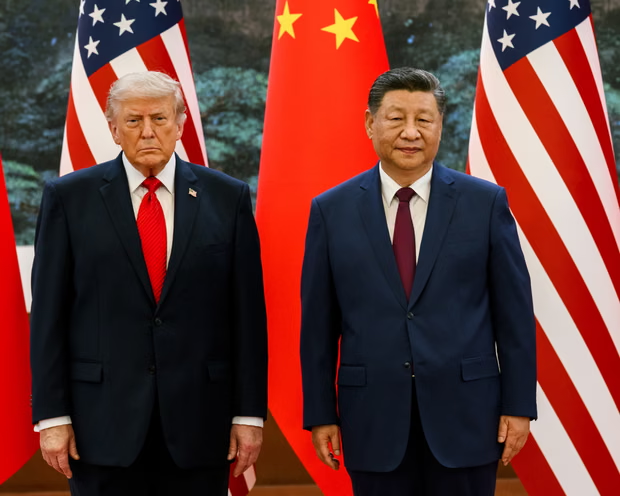
The recent high-stakes summit between the American and Chinese presidents has concluded with unexpected results. Before the meeting, Taiwan was viewed as a nervous bystander watching two global giants negotiate. Many analysts feared that Donald Trump might treat the island as a mere bargaining chip. They worried his transactional nature would lead to a sudden shift in long-standing American foreign policy. Beijing continues to claim the island democracy as a breakaway province that must be reclaimed soon. These fears loomed large over the diplomatic talks held throughout this busy and tense week. However, the predicted grand bargain involving the island did not actually happen during the discussions.
When the leaders emerged on Thursday afternoon, the American president appeared unusually reserved and quiet. He praised his great meeting with Xi Jinping but avoided any direct questions about Taiwan. A formal White House readout published later also skipped any mention of the island democracy. This omission has been interpreted by many regional experts as a very positive sign today. It suggests that the status quo remains intact despite the volatile nature of modern diplomacy. Trump may have sensed the delicate atmosphere during his extensive private talks with the leader. Shortly before they met, Xi took a very firm tone regarding the island’s future status.
The Chinese leader declared that independence for the island and regional peace were completely incompatible. He warned that improper handling of this issue could lead to a very dangerous conflict. If the relationship is not managed well, the two nations might collide quite violently indeed. This stern warning was intended to signal that Taiwan remains the reddest of red lines. Xi essentially told the American president to get this specific issue right for lasting friendship. Failure to do so could turn the two superpowers into foes before they even realized. Wen-Ti Sung noted that such a firm tone is quite surprising for high-level summit diplomacy.
Taiwan’s ministry of foreign affairs quickly issued a firm response to the Chinese leader’s comments. They stated that the two nations are not subordinate to one another in any way. Despite this customary verbal sparring, the government in Taipei feels a sense of quiet relief. William Yang suggests that the silence from Washington is actually the best possible outcome now. Taipei would much rather be ignored than mentioned in a way that signals a shift. Any departure from long-standing American policy could create instability and fear across the entire region. The absence of Taiwan from the official readout is seen as a strategic diplomatic win.
The two leaders are scheduled to meet again on Friday to discuss other pressing matters. These upcoming talks will likely focus on complex trade deals and various large investment opportunities. Analysts believe the leaders of Taiwan have already breathed a very deep sigh of relief. They prefer to stay out of the limelight while the superpowers focus on economic issues. Before arriving in Beijing, it was expected that Xi would press Trump on arms sales. Beijing remains opposed to any military support provided to what it considers a rebel province. The Chinese government has never renounced the use of force to take the island back.
Washington acknowledges the claim of China without actually endorsing it as a legal fact today. The United States maintains a policy of strategic ambiguity regarding its potential military intervention there. This means it might defend the island, but it also might choose not to do so. This policy is designed to deter a Chinese invasion while also discouraging Taiwanese independence moves. The United States also continues to provide the island with the means to defend itself. These arms sales remain a constant point of friction between the two largest global economies. China’s Taiwan affairs office recently reiterated its unequivocal opposition to these ongoing military ties.
In December, the American administration angered Beijing by announcing a massive weapons package for the island. Another package worth many billions of dollars has been awaiting a final signature for months. A bipartisan group of senators recently urged the president to move forward with this deal. The president now faces more pressure to act after a recent vote in Taipei’s parliament. The island’s lawmakers ended a long impasse by passing a significant and reduced defense budget. This funding is specifically intended to finance the purchase of advanced American military equipment soon. The timing of this legislative move adds another layer of complexity to the summit.
Before the meeting, many commentators speculated about a possible grand bargain between the two leaders. Some thought Trump might trade support for Taiwan to get help with the Iranian war. This intractable conflict has been a major drain on American resources and political capital recently. However, the recent statements from the Chinese leader suggest a different approach to this matter. Xi may not want to place the island within such a broad geopolitical framework now. Alexander Huang believes the Chinese leader wants to handle the issue strictly between the parties. Openly asking for concessions might make the island look like a common bargaining chip.
This perspective suggests that Beijing prefers to maintain a direct line of pressure on Taipei. Involving the United States too deeply in a public trade could undermine China’s long-term claims. For now, the silence from the American president is being interpreted as a tactical victory. It allows the current relationship to remain stable without making any risky or new commitments. The people of Taiwan can continue their daily lives without immediate fear of a deal. This stability is vital for the global economy and the security of the Pacific region. The world will be watching the final day of talks with very close attention.
The lack of drama regarding the island is perhaps the most surprising part of the summit. In an era of loud politics, silence can often be the most powerful diplomatic tool. Both leaders seem to have decided that some topics are too sensitive for public debate. This avoids a public escalation that could lead to unintended consequences for all parties involved. The American president seems content to focus on trade and domestic wins for his voters. Meanwhile, the Chinese leader has made his red lines very clear to the entire world. This creates a predictable environment even if the underlying tensions remain completely unresolved for now.
As the summit concludes, the focus will shift back to the implementation of trade agreements. The military situation in the strait will remain a point of concern for regional neighbors. Japan and Australia are also watching these developments with a high degree of national interest. Any shift in American policy would have profound effects on their own security strategies today. For now, the delicate balance of power in Asia appears to be holding steady. The quiet halls of Taipei will likely remain calm as the leaders fly back home. This week has shown that sometimes saying nothing is the most professional path to take.
The future of the island remains the most difficult challenge in the entire Pacific region. It requires constant management and a very high level of diplomatic skill from all sides. The recent meeting in Beijing has provided a temporary reprieve from the usual rising tensions. Both nations have much to gain from cooperation and much to lose from open conflict. The American president’s uncustomarily muted approach may be his most effective strategy yet in Asia. By not speaking, he has avoided a crisis that many people thought was truly inevitable. The world remains a complex place, but today there is a small sense of peace.
Related News:
 UK Banks Granted Reprieve as BoE Delays Basel III Capital Rules Until 2028
 Singapore Corruption Scandal: Details Emerge on Iswaran’s Luxury Flight and Ties to Tycoon Ong Beng Seng
 Corfu Beyond the Crowds: Discovering Serenity in Southern Villages and Hidden Taverns
 Peter Andre Praises Son Junior’s ‘Quiet Season’ Amid Ongoing Family Dispute
 Massive 641-Mile Storm Set to Batter UK with 15 Hours of Rain and Strong Winds
 Jeremy Clarkson’s Pub: A Sunday Lunch Like No Other
 Scottish Government Mandates Single-Sex Toilets and Changing Facilities in Schools
 ‘Extinct’ Antelope Returns to Sahara, Bringing Hope
 IndiGo Cancels Hundreds of Flights Amid Pilot Shortages
 Young Britons Face Heaviest Burden from Ageing Population, Lords Warn
 U‑Turn on Farmers’ Inheritance Tax Sparks Political Firestorm
 Aston Villa Remain Arsenal’s Key Obstacle in Title Pursuit
 Irish Beach Tragedy: Irish Drown at Whitehaven Beach in Australia
 Starmer Faces Parliamentary Battles Over UK-EU ‘Reset’ Plan
 Met Police Vetting Failures Let Serial Rapists Remain
 Federal Immigration Shift: Officers Leave Louisiana for Minneapolis
 Fatal Bolton Taxi Crash Claims Three Teens and Driver
 Australia grants Asio powers to designate hate groups under new laws
 Friedman Uninvited From 2024 Adelaide Writers’ Week
 ScottishPower Tops List of Worst UK Energy Suppliers
 Judi Dench Champions Fight to Save London’s Green Spaces
 Crowborough Camp Welcomes First Asylum Seekers
 BBC Funding Crisis: Tim Davie Warns of Jeopardy Ahead
 ABC Facebook Page Briefly Hacked, Adult Photos Posted
 Artificial intelligence will cost jobs, admits Liz Kendall
 Older Women Vanish from BBC Screens, Review Confirms Bias
 Meta trial over child exploitation claims begins
 Streeting moves on doctor pay to end strike dispute
 Ben Stokes injury joke after brutal ball strike
 UK and US Drop in Global Corruption Index Rankings
 Send spending gap leaves deprived areas behind
 Hidden Crisis: Domestic Abuse Suicide Toll in UK
 UK Unemployment Rate Climbs to 5.2% Peak
 Canberra Poster Seizure Sparks Free Speech Row
 BBC World Cup Presenting Duties Shared Among Trio
 Wales Approves Assisted Dying Bill Consent
 CPS Updates Guidance on Honour-Based and Dowry Abuse
 Stewart Brand on Musk, Bezos and a Life of Long Thinking
 English Cricket Faces Moral Crisis Over Indian Investment
 Jacinda Ardern Move Sparks Kiwi Reflection
 Middle East Airspace Crisis Strands Thousands
 Kelly Wilkinson Inquest Reveals Bail Failure
 Asylum Seekers to Work After Year-Long Wait
 Princess Eugenie steps down as patron of anti-slavery charity
 New Zealand Covid Response Praised Despite Lingering Scars
 Injured Mojtaba Khamenei Elevated as Iran Leader
 The Kill Line: A Shifting Vision of the American Dream
 Inquiry into HMRC child benefit errors launched by NAO
 Family of Alleged Bondi Gunman Seeks Name Suppression
 Rising Costs Force Families to Rethink Days Out
 Air Canada CEO Faces Outcry Over Recent Language Misstep
 Extreme Weather: Europe Shivers as Cyclone Narelle Hits
 Scott Mills Sacked by BBC Over Personal Conduct Claims
 Palantir Boss Defends NHS Deal Amid Government Break Clause
 Asia Turns Back to Coal Amid Middle East Energy Crisis
 Secret Role of UK Security Services in Troubles Amnesty Law
 Tube Strike Brings Capital to a Standstill Over Shift Disputes
 Teaching Machines Right From Wrong in the Digital Age
 Is Ollie Robinson the Chaos English Cricket Needs Today?
 The Hidden Crisis Eroding Trust in British Communities
 Saving the Scalloped Hammerhead: The Pacific Battle
 Stolen Mobiles Could Soon Become Useless Bricks
 Clean Air Initiatives Spark Major Fall in London Hospital Admissions
 Fearless Pioneer of Investigative Journalism Dies Aged 83
 Trump Urged to Condemn UFC Fighter Over Obama Slurs
 The Fear Gap: Why Europe Feels Less Safe Than It Is
 US Military Pacific Boat Strike Kills Three People
 Dettol Apologises for ‘Toxic Men’ Advert Backlash in China
 UK Care Crisis: Row Explodes Over New Visa Settlement Rules
 Sainsbury’s Boss Optimistic As Grocery Inflation Eases
 US Advance Past Bosnia in World Cup Thriller
 Trump’s Mount Rushmore Speech: A Divisive Anniversary
 Trump’s Red-Card Intervention Hurts the US World Cup
 US Airman Avoids British Court in Indecent Exposure Case
 Britain’s Mini Fan Craze Sparks Major Waste Crisis
 Trump Swaps Planes Amid Iran Tensions
 Ann Widdecombe, Formidable Political Figure, Dies at 78
 UK Schools Struggle as Classrooms Top 40C
 Yemen Accuses Iran of Violating National Sovereignty
 Houthis Strike Saudi Arabia as Middle East Tensions Rise