Published: 15 May 2026. The English Chronicle Desk. The English Chronicle Online.
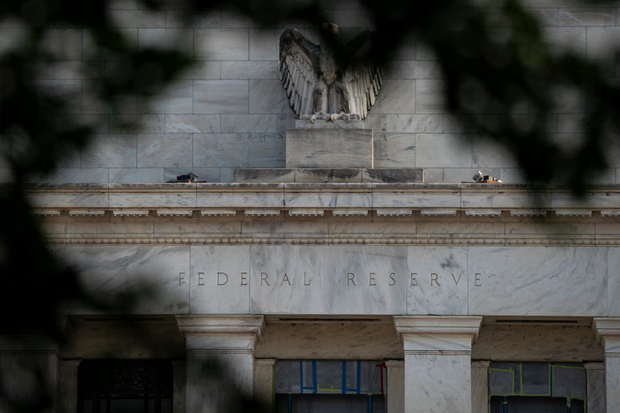
The political landscape in Washington is undergoing a profound transformation that threatens the stability of global financial markets. Jerome Powell recently concluded his tumultuous tenure as the leader of the Federal Reserve amid immense political pressure. His period in office was defined by unprecedented global economic challenges and fierce institutional battles. The central bank initially struggled to respond as global consumer prices surged following pandemic lockdowns. However, Powell managed to steer the American economy toward a remarkably successful soft landing afterward. This rare achievement curbed rampant inflation without triggering a damaging recession or widespread job losses. Despite these significant economic milestones, his ultimate legacy will likely involve a completely different struggle. Powell spent years fiercely defending the vital independence of the central bank from political interference.
That crucial defensive battle is far from over as a new era begins. Powell managed the relationship with the White House by consistently ignoring demands for lower interest rates. He stood firm even when faced with aggressive personal threats and baseless legal accusations. The former chairman refused to step down when critics tried to force his early resignation. He publicly challenged the political motivations behind the attacks, characterizing them as pure political retribution. Colleagues praised his steady leadership, noting that he simply focused on doing his job properly. His professional approach allowed the institution to maintain focus during times of extreme external pressure. Analysts agree that his resilience established a vital precedent for future central bank leaders. Yet, the institution now faces a fresh wave of uncertainty regarding its future path.
The appointment of Kevin Warsh to succeed Powell has raised significant concerns among economists. Critics worry the new chair might succumb to executive pressure to slash interest rates quickly. Such actions could reignite inflation fears just as the domestic economy shows signs of stabilizing. Fortunately, the new leader cannot alter monetary policy without the consent of his colleagues. The governing committee consists of twelve members, most of whom remain highly independent public officials. Only a small minority of the current voting members were appointed by the administration. This structure provides a strong institutional buffer against sudden shifts in national monetary policy. Nevertheless, observers warn that the broader autonomy of the central bank remains deeply vulnerable. The ultimate goal of the current administration appears to be complete control over monetary decisions.
This ongoing campaign has found an unexpected ally within the highest legal institutions. A conservative majority on the Supreme Court has embraced a expansive view of executive power. This legal philosophy essentially grants the presidency unmatched authority over various independent government agencies. The administration remains highly frustrated by Powell’s decision to retain his seat on the board. By staying on as a regular governor, Powell prevents the president from appointing another loyalist. Legal threats against the former chairman continue to circulate within the justice system today. Former financial officials warn that these persistent threats create a highly dangerous precedent globally. A central bank vulnerable to presidential whims loses its credibility to fight inflation effectively. History shows that political interference in monetary policy invariably leads to severe economic disaster.
International examples illustrate the severe dangers of compromising the autonomy of a central bank. Nations that subverted financial independence quickly suffered from skyrocketing inflation and collapsing currency values. When politicians dictate interest rates, long-term economic stability is sacrificed for short-term political gains. This risk feels particularly acute during the current period of unpredictable and aggressive governance. The executive branch has frequently used policy tools to reward allies and punish political enemies. Tariffs have been repeatedly raised and lowered with little regard for established international trade agreements. Federal agencies have been suddenly dismantled while major economic interventions proceeded without congressional approval. These actions have created an environment of deep uncertainty for international businesses and investors.
Despite the aggressive rhetoric, international financial markets have remained remarkably calm throughout this period. Long-term interest rates and the value of the dollar have shown surprising resilience recently. Investors seem to believe that the independence of the central bank will ultimately survive. This market confidence relies on the assumption that legal institutions will protect the bank. Even conservative legal scholars recognize the catastrophic economic costs of destroying the Federal Reserve. Consequently, the Supreme Court recently offered a complex justification to shield the central bank. Justices described the institution as a unique entity rooted in distinct historical traditions. This legal distinction was clearly designed to reassure anxious investors around the world. The message signaled that the judiciary would not permit a total executive takeover.
However, this legal compromise leaves the broader structure of the government in limbo. Many independent federal regulatory bodies face dismantling by a highly aggressive executive branch. Protections that shielded civil servants from political firing for decades have been systematically removed. The administration has successfully dismissed leaders from labor, consumer safety, and trade commissions. Legal experts argue that replacing experienced professionals with political loyalists harms the public interest. Stripping agencies of scientific and economic expertise weakens the nation’s ability to govern effectively. Amid this widespread institutional erosion, the Federal Reserve stands as a lonely fortress. Its independence survives for now, though it hangs by a very slender thread. Powell deserves recognition for remaining on the board to defend the institution’s remaining autonomy.
Related News:
 Reeves Faces Setback as Labour May Miss Homes Target
 Kate Winslet to Narrate Film Highlighting King’s Environmental Mission
 Trump’s UK Ambassador Urges North Sea Drilling to Strengthen US Ties
 UK Bans Fake Numbers: Scammers Lose Their Trick
 Vibe coding’ named Collins dictionary’s word of the year
BBC to Apologise Over Edited Trump Speech Amid Backlash
Vibe coding’ named Collins dictionary’s word of the year
BBC to Apologise Over Edited Trump Speech Amid Backlash
 Millionaires group urge Reeves to introduce wealth tax to ‘lift kids out of poverty’
 Reeves rejects £1bn plea for NHS redundancy payouts
 PM Condemns Leaks, Vows Loyalty to Ministers and Stability
 Phillipson Accused of Appeasing Unions by Diluting EBacc
 Saka Solidifies Role as Tuchel’s Key England Lieutenant
 Greene Pushes Epstein Files Amid Trump Fallout
 Zelenskyy Signs Fighter Jet Deal Amid Russian Drone Attacks
 Sundar Pichai Cautions on AI Hype and Market Risks
 Shadow Fleet at Sea: Europe’s Battle Against Illicit Oil Shipping
 Snow and Ice Cause Travel Chaos in North Yorkshire
 Director Michael Caton-Jones Reflects on Career and Beginnings
 Inside the Helpline Protecting Missing Children in the UK
 PlayStation PS5 Deals Hit Lowest Prices Ahead of Black Friday
 US Suspends Afghan Immigration After White House Shooting
 Five-Year-Old Dies After Rare Tonsil Surgery Complication
 Starmer Says Labour’s Economic Plan Needs Years to Deliver
 ‘Extinct’ Antelope Returns to Sahara, Bringing Hope
 IndiGo Cancels Hundreds of Flights Amid Pilot Shortages
 Young Britons Face Heaviest Burden from Ageing Population, Lords Warn
 U‑Turn on Farmers’ Inheritance Tax Sparks Political Firestorm
 Aston Villa Remain Arsenal’s Key Obstacle in Title Pursuit
 Irish Beach Tragedy: Irish Drown at Whitehaven Beach in Australia
 Starmer Faces Parliamentary Battles Over UK-EU ‘Reset’ Plan
 Met Police Vetting Failures Let Serial Rapists Remain
 Federal Immigration Shift: Officers Leave Louisiana for Minneapolis
 Fatal Bolton Taxi Crash Claims Three Teens and Driver
 Australia grants Asio powers to designate hate groups under new laws
 Friedman Uninvited From 2024 Adelaide Writers’ Week
 US and Iran Agree to Two-Week Provisional Ceasefire
 Battle of Britain Tower to House Tourists and Bats
 The Challenger: Will Péter Magyar End the Orbán Era?
 UK Government Poised to Revive Stalled Hillsborough Law
 Democrats Move to Impeach Defense Secretary Pete Hegseth
 Security Alert Near Israeli Embassy as Police Investigate
 Ben Roberts-Smith Denies War Crime Allegations in First Statement
 Home Office Faces Legal Risks Over Asylum Hotel Living
 US-Iran Standoff: Will Trump Deploy Ground Troops?
 Crisis in NHS Surgery Scheduling Hits Patients Hard
 Investigation Into Anti-Trump Motives After Gala Shooting
 Dubai Assets Linked to Sudan’s RSF Militia Exposed
 Blue Badge Abuse: The Rising Tide of Public Hostility
 Tragedy Strikes at Parafield Airport
 Scott Parker Leaves Burnley After Premier League Drop
 Silent Tracks: Rail Line Without Passengers
 Arteta urges Arsenal to step up in Atlético semi-final
 RFU Backs Borthwick Despite England’s Poor Six Nations
 Major test for Labour as polls open in Great Britain
 High-Profile Murder Trial Begins for Ian Watkins Death
 Trump Rejects Tehran Peace Plan as Regional Truce Crumbles
 Wes Streeting faces narrow road to Labour members’ favour
 Keir Starmer Struggles to Secure His Grip on Downing Street
 Trump and Xi Convene in Beijing for Historic High-Stakes Summit
 Farage Faces Standards Probe Over Cash Property Purchase
 UK Firms Freeze Spending as Iran Conflict Bites
 UK Job Market Squeezed as Iran War Drives Jobless Rate to 5%
 Reeves to Fast-Track Clean Energy Amid Iran Crisis
 The Battle for Wembley Sparking Unprecedented Legal Warfare
 Tony Abbott Returns as New Liberal Party President
 Pope Meets Families in Italy Toxic Waste Zone
 Royal Ascot Allegation Sparks Wider Police Inquiry
 Secret Role of UK Security Services in Troubles Amnesty Law
 Tube Strike Brings Capital to a Standstill Over Shift Disputes
 Teaching Machines Right From Wrong in the Digital Age
 Is Ollie Robinson the Chaos English Cricket Needs Today?
 The Hidden Crisis Eroding Trust in British Communities
 Saving the Scalloped Hammerhead: The Pacific Battle
 Stolen Mobiles Could Soon Become Useless Bricks
 Clean Air Initiatives Spark Major Fall in London Hospital Admissions
 Fearless Pioneer of Investigative Journalism Dies Aged 83
 Trump Urged to Condemn UFC Fighter Over Obama Slurs
 The Fear Gap: Why Europe Feels Less Safe Than It Is
 US Military Pacific Boat Strike Kills Three People
 Dettol Apologises for ‘Toxic Men’ Advert Backlash in China
 UK Care Crisis: Row Explodes Over New Visa Settlement Rules