
Published: 02 June 2026. The English Chronicle Desk. The English Chronicle Online.
Millions of London commuters faced significant travel chaos today as underground rail workers staged a major walkout. The highly disruptive twenty-four-hour strike action has left key transport lines entirely closed across the city. Passengers flooded alternative travel routes while major arterial roads quickly became jammed with heavy morning traffic. This industrial action marks a sharp escalation in a bitter dispute regarding driver scheduling policies. Commuters now face the grim prospect of further travel misery later in the week. Transport authorities are desperately trying to manage the severe fallout from this massive network shutdown.
The current dispute centres entirely around controversial plans to introduce a shorter four-day working week. Union representatives argue that the proposed shift patterns will severely impact driver alertness and safety. They claim longer shifts could lead to exhaustion while operating trains through tight underground tunnels. Conversely, transport executives insist the changes are designed to improve the modern work-life balance. They emphasize that transitioning to the new schedule remains completely optional for all current employees. This fundamental disagreement over working conditions has created an seemingly insurmountable divide between both parties.
Recent negotiations between the transport authority and union officials collapsed completely late last night. Independent arbitration experts spent several hours trying to broker a compromise behind closed doors. Unfortunately, those emergency talks failed to deliver the explicit guarantees that union leaders demanded. Both sides subsequently blamed each other for the breakdown of these crucial last-minute discussions. The failure to find common ground ensured that thousands of workers boycotted their shifts. This unfortunate outcome leaves the capital facing an incredibly turbulent week of fractured public transport.
The operational impact of the industrial action was felt immediately across the entire network. Several major underground routes were completely suspended or suffered from incredibly frequent and lengthy delays. Key central sections of the popular Central line were totally closed to morning travelers. The Circle line and Metropolitan line also experienced widespread closures throughout the busy morning. Millions of passengers were forced to seek alternative methods to reach their workplaces today. This massive surge in demand put an unprecedented strain on secondary public transport systems.
London buses experienced immense pressure as thousands of displaced rail passengers sought alternative transport. Long queues formed at major bus stops while vehicles quickly filled to maximum capacity. The extra vehicles on the road caused traffic speeds to slow to a crawl. Other rail options like the Elizabeth line managed to maintain their normal scheduled services. However, these operating lines were exceptionally busy and struggled with the massive passenger influx. The entire outer transport ring faced an incredibly challenging morning trying to keep moving.
The split strategy between different driver unions has slightly lessened the total potential damage. Members of the largest drivers union decided not to participate in the current walkout. Their leadership actually welcomed the flexible working proposals put forward by the transport network. This internal division within the workforce ensured that some limited train services could run. About half of the standard underground trains managed to operate despite the heavy picketing. This partial service provided a small lifeline for frustrated commuters trying to cross town.
Business groups have expressed deep concern over the immediate financial impact of these strikes. Hospitality venues in central London reported a sharp drop in reservations and footfall today. Retailers fear that prolonged disruption will deter shoppers from visiting major commercial districts this week. The ongoing economic uncertainty damages the international reputation of the capital as a business hub. Financial experts warn that millions of pounds could be lost during this week alone. Commercial leaders are urgently calling for a swift and sustainable resolution to the crisis.
Union officials maintain that their members were left with absolutely no other viable option. They claim that transport bosses refused to engage meaningfully with their deep safety concerns. The union demands legally binding assurances that individual driver flexibility will not be compromised. They argue that safety-critical roles require strict adherence to sensible and manageable shift patterns. Workers feel their legitimate grievances regarding fatigue are being entirely ignored by senior management. The union remains willing to talk but insists their members must be respected.
The transport authority expressed bitter disappointment that the union chose to continue with strikes. Management stressed that they offered repeated assurances that the new scheme remains entirely voluntary. Drivers who prefer their traditional five-day schedule are free to retain their current arrangements. Officials believe the flexible system represents a modern and attractive option for modern train drivers. They argue the strikes are unnecessary and cause completely avoidable misery for regular citizens. The network promises to maximize available services to keep the city moving regardless.
The timing of these current walkouts is designed to maximize pressure on transport bosses. The twenty-four-hour strikes are running throughout the entirety of Tuesday and upcoming Thursday. This creates a staggered disruption that affects the city over several consecutive business days. It follows previous rounds of highly damaging industrial action that occurred earlier this spring. Commuters are expressing immense frustration at being caught in the middle of this feud. Many feel that public convenience is being sacrificed in a corporate chess match.
Looking ahead to the rest of the week reveals little hope for immediate resolution. If further discussions fail today, the second planned walkout will definitely proceed on Thursday. That second strike would compounding the travel misery already experienced by frustrated London workers. Engineers and maintenance teams are currently working overtime to stabilize the limited active lines. Meanwhile, emergency contingency plans are being reviewed by city officials to ease traffic flow. The capital remains braced for further difficult commutes as the transport deadlock continues.
Ultimately, the resolution of this conflict depends on finding a mutually acceptable compromise. Both sides must return to the negotiating table with a genuine desire to agree. Until that happens, the people of London will continue to bear the heavy burden. The transport network faces a long journey to restore full public confidence and service. For now, commuters can only watch the headlines and plan their journeys very carefully. The coming days will test the resilience of the capital’s intricate transport infrastructure.
Related News:
 Reeves Faces Setback as Labour May Miss Homes Target
 Trump’s UK Ambassador Urges North Sea Drilling to Strengthen US Ties
 ABF May Split Primark from Food Division Amid Tough Market
 UPS Cargo Plane Crash in Kentucky Kills Seven
 M&S Profits More Than Halve After Cyber-Attack
 Tony Blair think tank warns Rachel Reeves must cut taxes if manifesto broken
 Oprah enjoys Meghan’s jam on English muffins
 MPs Press Rachel Reeves to Hike Gambling Taxes
 Millionaires group urge Reeves to introduce wealth tax to ‘lift kids out of poverty’
 UK toy market enjoys bumper year as ‘kidults’ fuel demand
 Global markets drop amid tech sell-off and China slowdown
 PM Highlights UK Business at G20 in South Africa
 Mossmorran Plant Closure Hits Cowdenbeath Hard
 UK Taskforce Unveils Plan to Streamline Nuclear Reactor Rules
 Steel billionaire Lakshmi Mittal reportedly leaves UK
 Starmer Says Labour’s Economic Plan Needs Years to Deliver
 Virgin Media Fined £23.8m Over Telecare Safety Failures
 Rising Water Bills Lift Troubled Thames Back to Profit
 Sainsbury’s CEO leads business honours in New Year list
 Starmer Faces Parliamentary Battles Over UK-EU ‘Reset’ Plan
 Phoenixism Costs UK Taxpayers Millions in Recruitment Sector
 ScottishPower Tops List of Worst UK Energy Suppliers
 City & Guilds pay surge sparks backlash amid £22m cuts
 UK Government Borrowing Drops to £11.6bn in December
 AI job losses UK: Britain faces sharper employment shock
 Most young adults in UK fear uncertain jobs and economic future
 Royal Mail delivery delays affect 16 million during Christmas
 UK Housing Market Shows Early Recovery Signs
 UK economy struggles as growth stalls at 0.1% in late 2025
 Bank of England Urged to Cut Rates to Spur Growth
 UK Unemployment Rate Climbs to 5.2% Peak
 UK shelves £110m border project amid trade strain
 UK Inflation Surprise Sparks Early Rate Cut Hopes
 Progress on gender equality at top UK firms ‘achingly slow’
 Reeves Must Back Defence Plan or Face Dismissal, Says Unite Chief
 Switching Energy Deal Can Save £200 as Price Cap Falls
 OBR Reform Row Deepens Before Spring Forecast
 UK Hotel Data Sharing Probe Shakes Global Chains
 Rachel Reeves Faces Middle East Conflict Test
 Grocery Inflation Rises Amid War Fears
 Peak Greggs fears as profits tumble sharply
 BrewDog sold Highland estate for knockdown price after abandoning reforestation plans
 Yorkshire Water Funding Sparks Debate Amid Fines and Pay Row
 New £10bn rescue plan offered for Thames Water
 UK Energy Reform Could Cut Bills by £200
 Rising Costs Force Families to Rethink Days Out
 Hospitality Sector Teeters on Brink as Costs Surge
 Iceland Boss Offers Role to Sacked Waitrose Employee
 Student Loan Interest May Rise Despite 6% Cap
 Aegon Sells Historic UK Arm to Standard Life for £2bn
 Major Housebuilder Cuts Land Buying Amid Global Unrest
 UK Staycations Rise as Travel Fears Grow
 City & Guilds Sale Sparks Fees and Pay Uproar
 Silent Tracks: Rail Line Without Passengers
 Heathrow Chair Seeks Peace to Save Third Runway
Carillion Executives Banned After Reckless Misconduct
Heathrow Chair Seeks Peace to Save Third Runway
Carillion Executives Banned After Reckless Misconduct
 Lotus Boss Pledges Future to Norfolk and Seeks State Support
 Millionaires Back Higher Taxes to Save UK Public Services
 UK Firms Freeze Spending as Iran Conflict Bites
 Summer Shock: British Energy Bills Set for Grim July Hike
 Reeves to Fast-Track Clean Energy Amid Iran Crisis
 M&S Boss Slates Food Price Caps as ‘Preposterous’
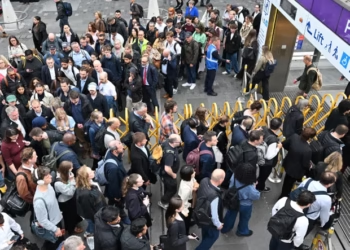 Tube Strike Brings Capital to a Standstill Over Shift Disputes
 BP Stands Firm on Amanda Blanc Amid Boardroom Storm
 Steel Tensions Rise Between United Kingdom and European Union
 UK House Prices Drop For Third Month Due To War Fears
 Top Chefs Back Andy Burnham to Save UK Hospitality Sector
 UK Steel Crisis: Jingye Demands Payout After Takeover
 Flutter to Cancel London Stock Exchange Share Listing
 AI Scams Push UK Investment Fraud Past £220m
 Whitehall Steps In: The Battle Over Thames Water Deepens
 Thames Water Nationalisation Pushes Closer After Rescue Objected
 John Lewis Invests £20m in Glasgow Store Upgrade
 Andy Burnham Enlists Economic Heavyweights for Leadership Bid
 Tories Clinch Shock Victory in Aberdeen South Byelection
 Rethinking the Blueprint for Youth Employment in Britain
 Sainsbury’s Boss Optimistic As Grocery Inflation Eases
 UK Households Suffer Squeeze As Disposable Incomes Drop
 Bank of England Eases Rules Despite Rising AI Risks
 BBC Faces Real Jeopardy as Licence Fee Income Declines