Published: 20 May 2026. The English Chronicle Desk. The English Chronicle Online.
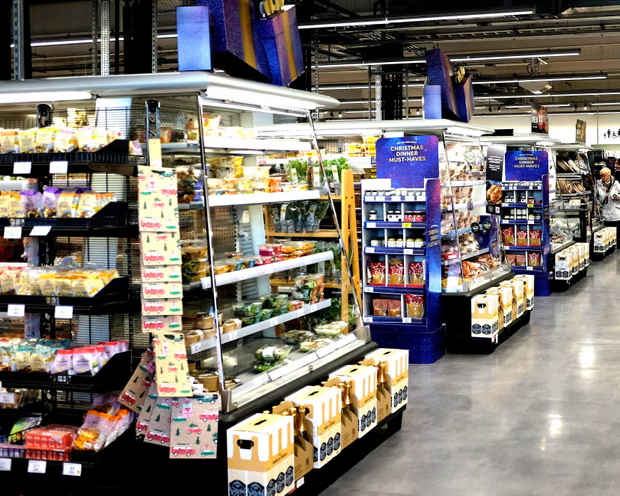
The high street giant Marks and Spencer has hit back hard against government proposals regarding voluntary price caps on essential grocery items. The retail boss Stuart Machin described the potential policy as completely preposterous during a recent industry address. Instead of intervening in commercial pricing, Machin argued that ministers should focus on reducing heavy tax and regulatory burdens. The chief executive stressed that the high street already operates on incredibly slim margins for staple products. He revealed that the retailer actually loses money on daily essentials like milk, bread, and baked beans. Furthermore, items like sugar and eggs yield minimal profits despite high demand from hard-pressed British shoppers. Machin firmly believes that politicians should avoid trying to manage private businesses from Whitehall offices. He suggested that a deeper understanding of commercial realities would serve the public far better. The government could provide meaningful support by easing the financial pressures within its direct control.
The controversy emerged after officials suggested supermarkets cap prices for basic items like butter and bread. In return, the government offered to ease certain regulations on packaging and healthy food initiatives. However, the retail sector views this compromise as an inadequate solution to much larger economic problems. Machin noted that British shops currently face a triple whammy of severe financial headwinds today. Retailers are battling increased corporate taxation, a growing regulatory burden, and ongoing global conflicts overseas. Ministers have the power to relieve these intense pressures to help businesses invest and grow. A major concern for the high street is the dramatic rise in recent government taxation. The new packaging levy alone has introduced forty million pounds in additional corporate costs recently. Analysts expect an extra ten million pounds will hit the business before the year ends.
Furthermore, recent changes to national insurance contributions have added fifty million pounds to internal costs. This financial burden could double when factoring in the increased costs passed down by suppliers. Machin warned that these rising regulatory costs and taxes directly impact employment opportunities across Britain. The extra financial pressure puts a significant dampener on the company’s ability to hire staff. Fortunately, the business anticipated many of these taxes and planned cost-cutting measures to offset them. However, unexpected geopolitical conflicts in the Middle East have caused further disruption for global supply chains. Some international suppliers have already demanded higher prices, adding several million pounds to company costs. Despite these challenges, the retailer has managed to absorb or offset most of these unexpected expenses.
The chief executive shared these insights while announcing major investments in technology and new stores. The business plans to open eighteen new food halls across the country very soon. This ambitious expansion follows annual financial results that revealed a massive hit to recent corporate profits. A devastating cyber-attack last Easter managed to knock nearly a quarter off the company’s profits. Machin described the upcoming financial year as one of the most important in company history. The retailer plans to introduce automated distribution centres and refurbish its traditional clothing departments. Additionally, the team will use advanced artificial intelligence to sharpen marketing and product sourcing. The next three years will be absolutely critical as the business invests heavily for growth.
The company chairman Archie Norman stated it is time to shake dust off their heels. He assured investors that product availability issues caused by the cyber incident are finally tapering off. New seasonal clothing and home ranges are currently resonating exceptionally well with British consumers today. The bold investment pledge arrived as underlying profits slumped by nearly twenty-four percent this year. Total underlying profits dropped to six hundred and seventy-one million pounds recently. Meanwhile, overall group sales rose by just under two percent to over fourteen billion pounds. This slow sales growth occurred despite widespread national inflation running at over three percent recently. Profits were severely dragged down by over one hundred and thirty million pounds in cyber costs.
While food sales rose by seven percent, fashion and homeware departments suffered a significant decline. International sales also dropped by over seven percent as the digital fallout continued to hit operations. Retail analysts warned that the future profit outlook appears worse than initial market expectations suggested. The company stated that the coming year will face higher fuel and freight costs. Continued government tax levies and regulatory hurdles will also weigh heavily on future financial performance. Financial experts at Jefferies noted the business is predicting lower annual profits than previously expected. The investment firm projected profits around eight hundred and seventy-six million pounds for next year. This figure sits well below the original city consensus of nine hundred and sixty-four million.
The chief financial officer Alison Dolan explained that stock flow was materially disrupted this year. The digital attack put intense pressure on the supply chain and reduced shelf availability everywhere. Consequently, the retailer was left with excess stock that required heavy discounting to clear out. Despite these supply chain woes, the food division delivered an incredibly strong performance this year. The grocery department helped the brand achieve its highest market share in company history recently. The grocery market share reached over four percent, proving the enduring popularity of the brand. This figure rises further when including grocery sales made through the online joint venture Ocado.
The retailer sold over one billion pounds worth of goods via the internet channel. This milestone helped the online delivery service return to profitability after several years of losses. Ocado posted an encouraging operating profit of over fifteen million pounds for the financial year. Machin praised the online operation for improving its overall customer efficiency and delivery logistics. However, he concluded that much more work remains before committing to further capital investment. The brand must navigate a challenging economic landscape while balancing digital recovery and physical expansion. British shoppers will watch closely to see how the retailer manages prices in store aisles. The debate over supermarket pricing and government intervention looks set to continue for months.
Related News:
 Reeves Faces Setback as Labour May Miss Homes Target
 Trump’s UK Ambassador Urges North Sea Drilling to Strengthen US Ties
 ABF May Split Primark from Food Division Amid Tough Market
 UPS Cargo Plane Crash in Kentucky Kills Seven
 M&S Profits More Than Halve After Cyber-Attack
 Tony Blair think tank warns Rachel Reeves must cut taxes if manifesto broken
 Oprah enjoys Meghan’s jam on English muffins
 Millionaires group urge Reeves to introduce wealth tax to ‘lift kids out of poverty’
 UK toy market enjoys bumper year as ‘kidults’ fuel demand
 Global markets drop amid tech sell-off and China slowdown
 PM Highlights UK Business at G20 in South Africa
 Mossmorran Plant Closure Hits Cowdenbeath Hard
 UK Taskforce Unveils Plan to Streamline Nuclear Reactor Rules
 Steel billionaire Lakshmi Mittal reportedly leaves UK
 Starmer Says Labour’s Economic Plan Needs Years to Deliver
 Virgin Media Fined £23.8m Over Telecare Safety Failures
 Rising Water Bills Lift Troubled Thames Back to Profit
 Sainsbury’s CEO leads business honours in New Year list
 Starmer Faces Parliamentary Battles Over UK-EU ‘Reset’ Plan
 Phoenixism Costs UK Taxpayers Millions in Recruitment Sector
 ScottishPower Tops List of Worst UK Energy Suppliers
 City & Guilds pay surge sparks backlash amid £22m cuts
 UK Government Borrowing Drops to £11.6bn in December
 AI job losses UK: Britain faces sharper employment shock
 Most young adults in UK fear uncertain jobs and economic future
 Royal Mail delivery delays affect 16 million during Christmas
 UK Housing Market Shows Early Recovery Signs
 UK economy struggles as growth stalls at 0.1% in late 2025
 Bank of England Urged to Cut Rates to Spur Growth
 UK Unemployment Rate Climbs to 5.2% Peak
 UK shelves £110m border project amid trade strain
 UK Inflation Surprise Sparks Early Rate Cut Hopes
 Progress on gender equality at top UK firms ‘achingly slow’
 Reeves Must Back Defence Plan or Face Dismissal, Says Unite Chief
 Switching Energy Deal Can Save £200 as Price Cap Falls
 OBR Reform Row Deepens Before Spring Forecast
 UK Hotel Data Sharing Probe Shakes Global Chains
 Rachel Reeves Faces Middle East Conflict Test
 Grocery Inflation Rises Amid War Fears
 Peak Greggs fears as profits tumble sharply
 BrewDog sold Highland estate for knockdown price after abandoning reforestation plans
 Yorkshire Water Funding Sparks Debate Amid Fines and Pay Row
 New £10bn rescue plan offered for Thames Water
 UK Energy Reform Could Cut Bills by £200
 Rising Costs Force Families to Rethink Days Out
 Hospitality Sector Teeters on Brink as Costs Surge
 Iceland Boss Offers Role to Sacked Waitrose Employee
 Student Loan Interest May Rise Despite 6% Cap
 Aegon Sells Historic UK Arm to Standard Life for £2bn
 Major Housebuilder Cuts Land Buying Amid Global Unrest
 UK Staycations Rise as Travel Fears Grow
 City & Guilds Sale Sparks Fees and Pay Uproar
 Silent Tracks: Rail Line Without Passengers
 Heathrow Chair Seeks Peace to Save Third Runway
Carillion Executives Banned After Reckless Misconduct
Heathrow Chair Seeks Peace to Save Third Runway
Carillion Executives Banned After Reckless Misconduct
 Lotus Boss Pledges Future to Norfolk and Seeks State Support
 Millionaires Back Higher Taxes to Save UK Public Services
 UK Firms Freeze Spending as Iran Conflict Bites
 Summer Shock: British Energy Bills Set for Grim July Hike
 Reeves to Fast-Track Clean Energy Amid Iran Crisis
 UK Pushes for New EU Goods Trade Deal
 UK Urged to Build EU Rejoin Consensus, Says Miliband
 Tube Strike Brings Capital to a Standstill Over Shift Disputes
 BP Stands Firm on Amanda Blanc Amid Boardroom Storm
 Steel Tensions Rise Between United Kingdom and European Union
 UK House Prices Drop For Third Month Due To War Fears
 Top Chefs Back Andy Burnham to Save UK Hospitality Sector
 UK Steel Crisis: Jingye Demands Payout After Takeover
 Flutter to Cancel London Stock Exchange Share Listing
 AI Scams Push UK Investment Fraud Past £220m
 Whitehall Steps In: The Battle Over Thames Water Deepens
 Thames Water Nationalisation Pushes Closer After Rescue Objected
 John Lewis Invests £20m in Glasgow Store Upgrade
 Andy Burnham Enlists Economic Heavyweights for Leadership Bid
 Tories Clinch Shock Victory in Aberdeen South Byelection
 Rethinking the Blueprint for Youth Employment in Britain
 Sainsbury’s Boss Optimistic As Grocery Inflation Eases
 UK Households Suffer Squeeze As Disposable Incomes Drop
 Bank of England Eases Rules Despite Rising AI Risks
 BBC Faces Real Jeopardy as Licence Fee Income Declines