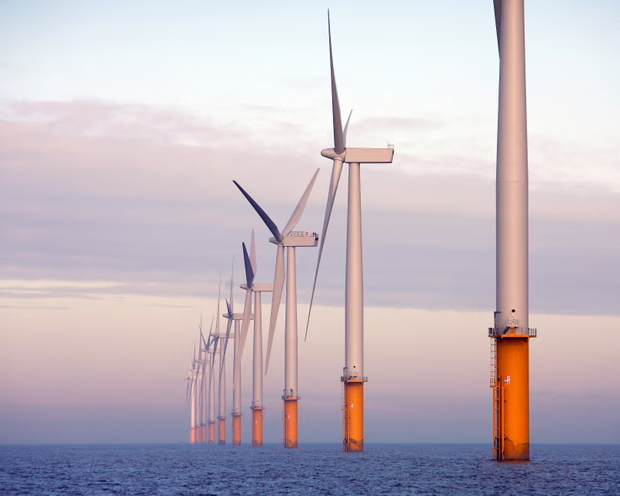
Published: 02 June 2026. The English Chronicle Desk. The English Chronicle Online.
The British economy is undergoing a massive transformation toward sustainability and modern green technology. Recent figures show that the eco-friendly business sector has achieved historic milestones across the nation. This rapidly growing industry now injects over one hundred billion pounds into the domestic market annually. The surprising data emerges from extensive research conducted by the leading business organisation in Britain. Experts discovered that sustainable practices are driving widespread financial success throughout every single region. This positive development arrives despite fierce political arguments concerning the validity of eco-friendly rules.
More than one million people have secured stable employment within this flourishing national sector. These newly created positions span across solar panel installation, home insulation, and electric vehicles. Workers within the sustainable industry enjoy salaries significantly higher than the standard national average. The typical employee earns around forty-three thousand pounds each year for their specialised work. That impressive figure sits roughly eleven percent above the standard British salary right now. Such strong financial rewards demonstrate the immense value that clean industries bring to households.
Louise Hellem serves as the chief economist for the prestigious Confederation of British Industry. She recently stated that clean power forms a significant part of the industrial base. The nation possesses deep expertise across manufacturing, energy supply chains, and modern engineering services. Britain is well positioned to capture even greater commercial opportunities within global green markets. About three hundred thousand citizens work directly in core renewable energy businesses every day. When including broad supply chains, total employment reaches over one million essential workers. This widespread activity represents nearly four percent of the entire economic output of Britain.
An astronomical four hundred and fifty-five billion pounds sits in the investment pipeline. These massive funds will eventually build critical future energy infrastructure across the country. Government targets to decarbonise British electricity by the decade’s end fuel this investment. Strict mid-term climate goals keep the country moving steadily toward its ultimate obligations. Every individual worker in this sphere generates exceptional value for the wider national economy. Each employee produces nearly one hundred and twenty thousand pounds in yearly productivity. That rate is one and a half times the average for traditional sectors.
This dramatic productivity spike comes while Britain battles with low efficiency in other areas. Roughly twenty-two thousand small firms actively participate in cutting harmful global greenhouse emissions. These small enterprises form the backbone of local clean energy generation and efficiency upgrades. Yet major rightwing political parties constantly demand the removal of strict emission targets. Conservative politicians and Reform UK representatives want to reduce state support for renewables. Former Labour Prime Minister Tony Blair also expressed deep scepticism about these carbon goals. He suggested that focusing heavily on fossil fuels might provide a better path forward.
Hellem firmly argued that moving away from clean technology would cause severe financial damage. She believes the green sector remains central to the future competitiveness of the country. Britain simply cannot afford to step back from an industry performing so well. Turning away from these massive financial opportunities would leave the nation far behind rivals. Climate campaigners from major charities have also criticized those who oppose clean energy goals. They argue that critics do not want what is truly best for British citizens. Many families are currently struggling with high energy costs and difficult living conditions.
Sceptics prefer to keep the nation locked into dying fossil fuel industries instead. Employment in traditional North Sea oil and gas operations has declined for a decade. The natural resources in that specific marine basin are running out very quickly. Over two hundred thousand traditional energy jobs have vanished completely since the year thirteen. This steady decline occurred despite generous state subsidies and highly favourable tax systems. Transitioning toward renewable energy represents the only logical path for displaced engineering workers. Clean technology can easily absorb these skilled professionals into stable long-term manufacturing roles.
Katie White currently serves as the government minister for climate change policy initiatives. She recently explained that accelerating domestic electrification protects citizens from unpredictable fossil fuel shocks. Developing homegrown power provides the best shield for households against global price volatility. What local businesses are achieving right now represents a genuinely great British success story. These projects are lowering bills, improving homes, and supporting high-skilled industrial employment opportunities. Green initiatives also help protect the natural environment for communities across the nation. The government believes in the fundamental principle of safeguarding the land for children.
Leaving future generations to pay for the climate crisis is completely unacceptable. Tuesday’s detailed research represents the fourth official report tracking sustainable market trends. Previous investigations confirmed that clean industries grow three times faster than standard business sectors. These current numbers only calculate firms directly involved in carbon reduction activities. The wider environmental sector includes waste management, water purification, and biodiversity protection projects. According to official statistics, that broader group employs hundreds of thousands of additional people.
The entire sustainability sector clearly represents a vital pillar of future British prosperity. The data proves that environmental responsibility aligns perfectly with robust national financial growth. Clean energy provides high wages and massive investment potential for every single region. Ignoring these clear economic benefits would severely damage long-term industrial strength and security. Embracing this green transition ensures that Britain remains a competitive global leader. The momentum behind this clean industrial revolution appears far too strong to stop.
Related News:
 Reeves Faces Setback as Labour May Miss Homes Target
 Trump’s UK Ambassador Urges North Sea Drilling to Strengthen US Ties
 ABF May Split Primark from Food Division Amid Tough Market
 M&S Profits More Than Halve After Cyber-Attack
 Tony Blair think tank warns Rachel Reeves must cut taxes if manifesto broken
 Oprah enjoys Meghan’s jam on English muffins
 Millionaires group urge Reeves to introduce wealth tax to ‘lift kids out of poverty’
 UK toy market enjoys bumper year as ‘kidults’ fuel demand
 Global markets drop amid tech sell-off and China slowdown
 PM Highlights UK Business at G20 in South Africa
 Mossmorran Plant Closure Hits Cowdenbeath Hard
 UK Taskforce Unveils Plan to Streamline Nuclear Reactor Rules
 Steel billionaire Lakshmi Mittal reportedly leaves UK
 Starmer Says Labour’s Economic Plan Needs Years to Deliver
 Virgin Media Fined £23.8m Over Telecare Safety Failures
 Rising Water Bills Lift Troubled Thames Back to Profit
 Sainsbury’s CEO leads business honours in New Year list
 Starmer Faces Parliamentary Battles Over UK-EU ‘Reset’ Plan
 Phoenixism Costs UK Taxpayers Millions in Recruitment Sector
 ScottishPower Tops List of Worst UK Energy Suppliers
 City & Guilds pay surge sparks backlash amid £22m cuts
 UK Government Borrowing Drops to £11.6bn in December
 AI job losses UK: Britain faces sharper employment shock
 Most young adults in UK fear uncertain jobs and economic future
 Royal Mail delivery delays affect 16 million during Christmas
 UK Housing Market Shows Early Recovery Signs
 UK economy struggles as growth stalls at 0.1% in late 2025
 Bank of England Urged to Cut Rates to Spur Growth
 UK Unemployment Rate Climbs to 5.2% Peak
 UK shelves £110m border project amid trade strain
 UK Inflation Surprise Sparks Early Rate Cut Hopes
 Progress on gender equality at top UK firms ‘achingly slow’
 Reeves Must Back Defence Plan or Face Dismissal, Says Unite Chief
 Switching Energy Deal Can Save £200 as Price Cap Falls
 OBR Reform Row Deepens Before Spring Forecast
 UK Hotel Data Sharing Probe Shakes Global Chains
 Rachel Reeves Faces Middle East Conflict Test
 Grocery Inflation Rises Amid War Fears
 Peak Greggs fears as profits tumble sharply
 BrewDog sold Highland estate for knockdown price after abandoning reforestation plans
 Yorkshire Water Funding Sparks Debate Amid Fines and Pay Row
 New £10bn rescue plan offered for Thames Water
 UK Energy Reform Could Cut Bills by £200
 Rising Costs Force Families to Rethink Days Out
 Hospitality Sector Teeters on Brink as Costs Surge
 Iceland Boss Offers Role to Sacked Waitrose Employee
 Student Loan Interest May Rise Despite 6% Cap
 Aegon Sells Historic UK Arm to Standard Life for £2bn
 Major Housebuilder Cuts Land Buying Amid Global Unrest
 UK Staycations Rise as Travel Fears Grow
 City & Guilds Sale Sparks Fees and Pay Uproar
 Silent Tracks: Rail Line Without Passengers
 Heathrow Chair Seeks Peace to Save Third Runway
Carillion Executives Banned After Reckless Misconduct
Heathrow Chair Seeks Peace to Save Third Runway
Carillion Executives Banned After Reckless Misconduct
 Lotus Boss Pledges Future to Norfolk and Seeks State Support
 Millionaires Back Higher Taxes to Save UK Public Services
 UK Firms Freeze Spending as Iran Conflict Bites
 Summer Shock: British Energy Bills Set for Grim July Hike
 Reeves to Fast-Track Clean Energy Amid Iran Crisis
 M&S Boss Slates Food Price Caps as ‘Preposterous’
 Tube Strike Brings Capital to a Standstill Over Shift Disputes
 Tube Strike Brings Capital to a Standstill Over Shift Disputes
 BP Stands Firm on Amanda Blanc Amid Boardroom Storm
 Steel Tensions Rise Between United Kingdom and European Union
 UK House Prices Drop For Third Month Due To War Fears
 Top Chefs Back Andy Burnham to Save UK Hospitality Sector
 UK Steel Crisis: Jingye Demands Payout After Takeover
 Flutter to Cancel London Stock Exchange Share Listing
 AI Scams Push UK Investment Fraud Past £220m
 Whitehall Steps In: The Battle Over Thames Water Deepens
 Thames Water Nationalisation Pushes Closer After Rescue Objected
 John Lewis Invests £20m in Glasgow Store Upgrade
 Tesco Sales Growth Halves as Middle East Conflict Bites
 Andy Burnham Enlists Economic Heavyweights for Leadership Bid
 Tories Clinch Shock Victory in Aberdeen South Byelection
 Rethinking the Blueprint for Youth Employment in Britain
 Sainsbury’s Boss Optimistic As Grocery Inflation Eases
 UK Households Suffer Squeeze As Disposable Incomes Drop
 Bank of England Eases Rules Despite Rising AI Risks
 BBC Faces Real Jeopardy as Licence Fee Income Declines