Published: 03 June 2026. The English Chronicle Desk. The English Chronicle Online.
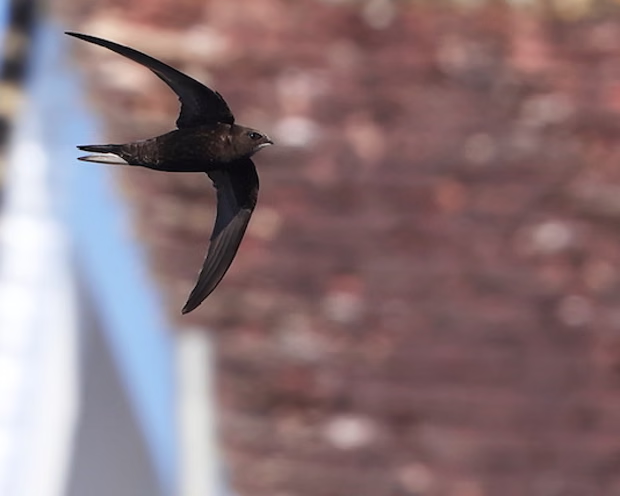
A profound environmental tragedy has unfolded in the quiet heart of the Surrey countryside. A renowned nesting site for swifts has been completely demolished by developers this month. This controversial destruction occurred at the absolute height of the avian summer nesting season. The shocking incident has triggered immense fury among local residents and dedicated conservation groups. Serious questions are now being raised regarding the efficacy of wildlife protection laws. The building in question was Regent House, located very close to Dorking railway station. Contractors working for the prominent housebuilder Hill Group executed the mechanical demolition recently. This work took place well within the restricted period spanning March to August. Tragically, this specific structure housed one of the largest swift colonies in Surrey.
Heartbreaking video footage captured at the scene shows the birds attempting to return. They fly toward the empty space where their nests existed just days ago. The disoriented birds approach the vanished eaves before turning away in obvious distress. Volunteers had carefully monitored this thriving urban colony for a number of years. Members of the Swift Protection Association Reigate documented intense low-level flying there. Up to forty birds regularly utilised twenty distinct entry points within the eaves. These migratory birds travel thousands of miles from Africa to breed in the UK. They exhibit immense fidelity to the exact same nesting sites every single year. The sudden loss of this established habitat represents a massive blow to conservation.
The demolition appears to clash directly with established British wildlife protection legislation. Under the Wildlife and Countryside Act, damaging active nests is a criminal offence. It is illegal to intentionally or recklessly destroy nests currently in active use. Furthermore, the law strictly prohibits the disturbance of dependent young during breeding. Local wildlife advocates raised urgent alarms with Surrey Police early in May. This occurred immediately after the swifts returned to settle in the building. Mole Valley District Council was also officially notified about the birds by residents. Despite these explicit warnings, the heavy machinery moved in to level the site. Conservationists are now describing this devastating event as a significant wildlife crime.
Regent House was demolished to clear land for a brand new housing development. The planned scheme will eventually deliver one of many large residential housing blocks. An official environmental impact assessment was conducted prior to the start of work. That expert report explicitly stated demolition should happen outside the nesting season. If a different timeframe was unavoidable, strict mitigating measures were legally required. An ecological expert was supposed to perform a thorough inspection before work began. Any active nests discovered were to be fully protected until young fledged. The Guardian newspaper approached both Hill Group and Clarion for an urgent comment. Both organisations flatly declined to answer specific questions about the recent ecological inspection.
The developers also refused to explain why this specific timeframe could not be altered. Instead, they issued a joint corporate statement defending their actions during the process. They claimed to have worked very closely with independent ecologists and planners. The statement asserted that all works complied fully with approved local planning requirements. They maintained this collaborative approach successfully safeguards local wildlife and nesting birds safely. However, local conservationists remain entirely unconvinced by these corporate assurances from developers. Several formal criminal complaints have now been filed directly with the Surrey Police. These allegations focus on a clear breach of the Wildlife and Countryside Act.
Local volunteers have expressed deep emotional distress over the sudden loss of life. Julia Hemsley of Dorking Swift Conservation spoke candidly about the unfolding ecological disaster. She stated that the entire situation made her feel absolutely sick to her stomach. Swift populations across the United Kingdom are currently experiencing a catastrophic, massive decline. She noted it would have been simple to delay work for a few months. In her view, these vulnerable birds have been completely let down by the system. Amy Brewer, who filmed the distressing footage, shared her own profound sorrow online. She had joyfully observed the swifts nesting in the roof just weeks earlier.
When she returned, the building was gone and birds were flying back and forth. They were desperately searching for nests that had been ground into the dust. Paul Powlesland of Lawyers for Nature spoke out firmly against current legal frameworks. He argued that existing protections given to wild birds are woefully inadequate today. Even with active nests, gathering definitive evidence of destruction remains incredibly difficult. Furthermore, he claimed that police forces rarely take environmental crimes seriously enough. He is calling for urgent changes to British law to protect these habitats. Nesting holes should be protected even when the migratory birds are away. He also advocates for a properly funded, dedicated wildlife police force nationwide.
Swifts are currently placed on the UK red list of conservation concern. Their overall population has plummeted by an alarming sixty percent since the nineties. These unique birds nest almost exclusively in small gaps under old roof tiles. They rely heavily on the architecture of older brick buildings for survival. Modern renovation techniques and rapid demolition are key contributors to their steady decline. New buildings are often sealed completely, leaving no space for birds to enter. This leaves returning pairs with fewer options for reproduction each coming year. There is a major national campaign for mandatory swift bricks in homes. These specially designed bricks provide safe, permanent nesting cavities within new walls.
The Westminster government currently only recommends these bricks rather than enforcing them. In stark contrast, the Scottish government has already made swift bricks legally mandatory. This policy difference highlights varying approaches to biodiversity crisis management across Britain. Councillor Bradley Nelson explained the stance of the Mole Valley District Council clearly. He noted that approved planning documents did not impose an absolute ban here. Instead, developers were required to perform a check forty-eight hours prior. This check was meant to ensure no active nests were being disturbed. The council is now reviewing all available information regarding this specific event. They have officially served a temporary stop notice on the Surrey site.
This notice requires all ongoing works to cease immediately until further notice. Enquiries are underway to establish whether a breach of planning control occurred. If a breach is confirmed, the council will consider formal enforcement action. However, for the displaced swifts of Dorking, this intervention comes far too late. Their ancient nesting site has been permanently erased from the local landscape. The eggs and chicks of this season have likely perished in the rubble. This tragic incident underscores the perilous existence of urban wildlife in modern Britain. It highlights the fragile balance between necessary housing development and crucial nature conservation. Without stricter enforcement, more colonies will inevitably face the same tragic fate.
Related News:
 Norfolk Coastal Graves at Risk as Erosion Deepens Family Anguish
 Winter plant bloom signals climate breakdown in UK
 Dog Food Emissions: 1% of UK Greenhouse Gas Revealed
 Storm Goretti leaves Cornwall homes without power
 Kent Residents Continue Facing Water Supply Disruptions
 Water firms may avoid fines under UK water reform plan
 No Gas Boiler Ban as UK Warm Homes Plan Backs Heat Pumps
 Judi Dench Champions Fight to Save London’s Green Spaces
 UK joins North Sea wind grid pact with nine European nations
 Devon hosts first high-density hydro power system
 Storm Chandra floods Somerset, triggers major incident declaration
 Storm Chandra flooding leaves England on high alert
 UK Pfas Action Plan Faces Criticism From Environmentalists
 Wigan Dump Crisis Sparks Health and Safety Alarm
 Fish disco plan could save 90% of fish at Hinkley C
 Flood risk homes surge across England builds
 Deer Shooting England: New Plan to Protect Woods
 Illegal Waste Dumping: New Drone Unit Launched
 Group Expands Legal Claim Over South West Water Pollution
 Scotland’s Climate Plans Face Scrutiny Over ‘Science Fiction’ Targets
 Wood burner legal threats spark council row
 South East Water Fined £22.5m for Repeated Supply Failures
 Yorkshire Water Funding Sparks Debate Amid Fines and Pay Row
 Net Zero Cheaper Than One Fossil Fuel Crisis, UK Told
 Welsh Water Faces £44.7m Enforcement Over Sewage Breaches
 London Considers New SUV Charges to Improve Road Safety
 New £10bn rescue plan offered for Thames Water
 MPs Slam Agency Over Failing Fight Against Waste Dumping
 RNLI Beach Rescues Surge as Coastal Popularity Hits New High
 UK Records Earliest Spring as Nature Awakens Fast
 RSPB Urges Summer Bird Feeder Removal to Curb Disease
 Britain Facing Sharp Decline in Rare Butterfly Species
 Toxic ‘Forever Chemicals’ Threaten Southern English Coast
 Toxic Flea Treatments Devastating UK Rivers and Wildlife
 UK Faces Mass Water Shortages by 2055, Lords Warn
 Saving Our Lost Rainforests: The Battle for Dartmoor
 The Hidden Cost of Our Oceans
 Whitehall Steps In: The Battle Over Thames Water Deepens
 UK Seas Face Extreme Heatwave as Global Temperatures Surge
 UK Pets Face Heatstroke Risks Even While Resting Indoors
 New Debt Limits Proposed for England’s Water Sector
 South East Water Faces £30.5m Penalty for Supply Failures
 Three-Quarters of England’s Riverbanks Still Off Limits
 Reeves Faces Setback as Labour May Miss Homes Target
 Kate Winslet to Narrate Film Highlighting King’s Environmental Mission
 Trump’s UK Ambassador Urges North Sea Drilling to Strengthen US Ties
 UK Bans Fake Numbers: Scammers Lose Their Trick
 Millionaires group urge Reeves to introduce wealth tax to ‘lift kids out of poverty’
 Fatal Bolton Taxi Crash Claims Three Teens and Driver
 ScottishPower Tops List of Worst UK Energy Suppliers
 Crowborough Camp Welcomes First Asylum Seekers
 BBC Funding Crisis: Tim Davie Warns of Jeopardy Ahead
 Artificial intelligence will cost jobs, admits Liz Kendall
 Older Women Vanish from BBC Screens, Review Confirms Bias
 Streeting moves on doctor pay to end strike dispute
 Send spending gap leaves deprived areas behind
 Hidden Crisis: Domestic Abuse Suicide Toll in UK
 UK Unemployment Rate Climbs to 5.2% Peak
 BBC World Cup Presenting Duties Shared Among Trio
 Wales Approves Assisted Dying Bill Consent
 CPS Updates Guidance on Honour-Based and Dowry Abuse
 Asylum Seekers to Work After Year-Long Wait
 Inquiry into HMRC child benefit errors launched by NAO
 Rising Costs Force Families to Rethink Days Out
 Extreme Weather: Europe Shivers as Cyclone Narelle Hits
 Scott Mills Sacked by BBC Over Personal Conduct Claims
 Palantir Boss Defends NHS Deal Amid Government Break Clause
 Relationship with Trump may be beyond repair, Starmer warned
 UK Government Poised to Revive Stalled Hillsborough Law
 Home Office Faces Legal Risks Over Asylum Hotel Living
 Crisis in NHS Surgery Scheduling Hits Patients Hard
 Blue Badge Abuse: The Rising Tide of Public Hostility
 Scott Parker Leaves Burnley After Premier League Drop
 Silent Tracks: Rail Line Without Passengers
 UK Care Crisis: Row Explodes Over New Visa Settlement Rules
 Sainsbury’s Boss Optimistic As Grocery Inflation Eases
 US Airman Avoids British Court in Indecent Exposure Case
 Britain’s Mini Fan Craze Sparks Major Waste Crisis
 Ann Widdecombe, Formidable Political Figure, Dies at 78
 UK Schools Struggle as Classrooms Top 40C