Published: 09 June 2026. The English Chronicle Desk. The English Chronicle Online.
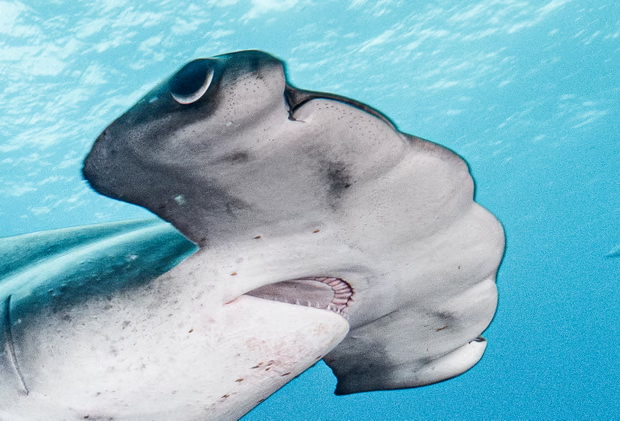
The unmistakable fluted T-shape of a scalloped hammerhead shark slides silently through the deep blue waters. A diver holds his breath while gripping a metal spear that resembles an extra-long snooker cue. The sharp spear quickly hits the creature right behind its dorsal fin during the brief encounter. The two-metre shark immediately darts away into the ocean feeling disgruntled but remaining otherwise completely unharmed. Carlos Robalino is a passionate marine biologist from the remote and beautiful Galápagos Islands. He originally trained as a professional shark researcher within the coastal waters of Mexico. Now he is back home working as a dedicated junior researcher for the foundation. When we meet in March he is participating in a critical marine research expedition. The team is exploring Darwin and Wolf which are the most northerly islands here. For three or four hours each morning and afternoon Robalino is in the sea. He is constantly honing his free-diving skills to get close to the sharks. This allows him to take vital samples of their skin for scientific analysis.
Scalloped hammerheads are super-sensitive and very nervous creatures according to ecologist Simon McKinley. The trick is to wait for the shark to pass directly under his body. He waits until they cannot possibly see him floating quietly in the water column. Then he can safely dive down to collect the necessary tissue sample today. The small plug of skin from the tip of the spear is valuable. It is added to a decade worth of biopsies collected from these sharks. The magnificent species visits these specific islands in absolutely massive numbers throughout the year. However the species is critically endangered having declined by eighty percent globally so far. This devastating decline is largely due to relentless overfishing across the open oceans. Yet you would not guess this while diving at Darwin and Wolf today. On most dives during the trip dozens of these sharks swim by beautifully. Later in the year during the cold season food becomes much more abundant. More sharks migrate to the archipelago and the local population quickly quadruples online.
At its peak about one hundred and fifty sharks roam each hectare here. This is roughly the area of the famous Trafalgar Square in London. There can be so many sharks that they literally blot out the sun. Despite their local abundance studying these animals in the Galápagos is very difficult. Researchers cannot simply catch these sensitive sharks because handling stress could easily kill them. Therefore the foundation team has successfully developed several innovative and less invasive techniques. They are deploying advanced underwater cameras to monitor overall shark numbers over time. Chemical analysis of skin biopsies shows exactly what the sharks are eating now. This removes the need to cut open their stomachs to see contents. From twice-yearly visits to these islands the team builds a long-term picture. They track how sharks are responding to changing environmental conditions across the region. This includes the major heatwaves linked to the big El Niño of twenty-twenty-six. More immediately the team is tracking where these sharks go after leaving here.
Scalloped hammerheads are not permanent residents but set off on long seasonal migrations. To learn about this part of their lives requires another advanced diving technique. Away from the free-divers at Wolf Island Pelayo Salinas de León waits. He sits patiently on the seabed using a specialised closed-circuit rebreather device today. This advanced equipment recycles his exhalations and removes harmful carbon dioxide very efficiently. It adds more oxygen as needed so he can dive safely for hours. He enjoys bubble-free tranquillity without scaring off the sensitive hammerhead sharks nearby. Like his colleagues he uses a spear with a satellite transmitter tag attached. This high-tech tag is worth close to two thousand dollars or fifteen hundred pounds. He has worked as a senior marine ecologist here for fourteen years. Salinas de León has experimented with different methods to perfect this stealthy approach. He enjoys sneaking up on sharks while they are swimming completely freely online.
This was how he deployed a critical satellite tag back in twenty-twenty-three. That tag tracked a scalloped hammerhead swimming from the Galápagos to Panama successfully. This represented an incredible eight-hundred-mile journey across the vast and perilous ocean. After that the shark embarked on a westerly migration of another eighteen hundred miles. Since then he has successfully tagged dozens more hammerheads within the protected archipelago. Eight out of ten tagged sharks have swum directly to Panama waters. Judging by their bulging bellies most are probably pregnant females nearing birth. They are reaching the end of their typical nine-month gestation period right now. They give birth in the sheltered waters of coastal mangrove forests nearby. These vital habitats are in short supply along the rocky Galápagos shores. Uncovering these birthing migrations is proving absolutely crucial for conserving the endangered species. Signals from the satellite tags deployed on the latest expedition show great results.
Some sharks had already left the islands and were travelling towards Panama quickly. This happened at the same time that protection measures were dialled up globally. In March Salinas de León took his scientific findings to an important meeting. He attended the Convention on the Conservation of Migratory Species in Brazil recently. A crucial vote was taken to recategorise these sharks into Appendix One status. This status gives them the highest level of legal protection under the convention. Our science has shown that these are highly migratory sharks across the oceans. Their migrations are entirely periodical cyclical and predictable according to the lead researcher. This evidence ticks all the boxes for securing the new protective listing today. The vote passed and signatory countries must introduce strict new domestic laws now. They must fully protect the species within their territorial waters going forward safely.
Throughout their long migrations from the islands these hammerheads face immense danger daily. They pass through numerous jurisdictions and encounter countless fishing nets and lines today. Their perilous journey always starts in the protected waters of the Galápagos islands. Even though these islands lie within a marine reserve illegal fishing still happens. During the March twenty-twenty-six expedition the team found multiple illegal longlines floating. One line was tens of metres long with dozens of hooks attached. This dangerous line got tangled around their research boat during operations unexpectedly. Another line was threaded around the iconic sea stack known as Darwin Arch. It had unfortunately hooked two green turtles before the team rescued them safely. Last year they released a hammerhead shark from an artisanal longline here. Between Galápagos and Panama there are several important no-fishing zones established today. The hammerheads should be safe within the expanded Hermandad marine reserve boundaries.
This protected area extends eastwards towards the famous Isla del Coco national park. But there are still massive gaps along the way where fisheries operate. There is a legal free-for-all in many parts of the ocean today. There are hundreds of thousands of boats that are fishing legally there. If they can reach Panama pregnant sharks are still at major risk. Panama recently banned the international shark trade but artisanal fishing remains permitted. Baby hammerheads and pregnant females are still being caught regularly by locals. They are being sold and consumed as ceviche in local markets daily. The foundation team is now working closely with authorities in Panama today. They want to introduce much greater protections for the sharks in nurseries. The Panama nurseries are key to the survival of this entire species. It is vital to implement additional management to reduce the catches there.
This breeding season surviving hammerhead mothers will turn tail after giving birth successfully. They will head due west past the Galápagos islands once again. They will continue another twelve hundred miles to the Pacific equatorial front area. Yet more troubles await them in this distant region of the high seas. Mixing ocean currents stir up a massive profusion of marine life there. This attracts female sharks that need to feed and restore energy reserves. However it also attracts massive industrial fishing fleets to exploit the rich waters. This is where the research team hopes to take their operations next. They want to work out if seasonal closures could help protect sharks. You can have a false impression of security while diving here today. You see hundreds of hammerheads because this site has been protected since ninety-eight. The Galápagos represents a beautiful bubble frozen in time for marine life. You can still see the ocean of the past filled with sharks. But they are still dying elsewhere so we must do much better.
Related News:
 Prunella Scales: From Fawlty Towers Icon to Beloved Canal Explorer
 Charlie Kaufman: They told me Being John Malkovich would never get made
 The Line of Beauty, Almeida review: A wild, witty ride through Thatcher-era high society
 Kate Winslet to Narrate Film Highlighting King’s Environmental Mission
 Hollywood Is an Industry of Looney Tunes Pretending to Be Normal
 Prince of Wales showcases volleyball skills on Brazil visit
 Top Christmas Books Reads: Classics to Cozy Romcoms
 Meghan ‘to return to acting’ after eight-year hiatus
 Oprah enjoys Meghan’s jam on English muffins
 Pauline Collins, Beloved ‘Shirley Valentine’ Star, Dies at 85
 VAR Must Rein Its Neck In to Save Football’s Spirit
 From Lego to Pokémon: How Adults Are Driving UK Toy Market Growth
 David Szalay’s ‘Flesh’ Wins 2025 Booker Prize
 Boos, backlash and body horror: The story of Alpha
 Pop Stars Call on UK Government to Cap Resale Prices for Fans
 Anthony Joshua Faces Backlash Over Proposed Jake Paul Fight
 Princess of Wales Hosts Carol Service Celebrating Love for All
 ‘I’ve Read 38 Books, but This Is My Standout Favourite’
 Pat Butcher Returns to EastEnders in Touching Dementia Storyline

 Yungblud Pauses Tour Over Health Concerns, Apologises to Fans
 SS Rajamouli Announces ‘Varanasi,’ a Mythic Time-Travel Epic
 UK Government to Ban Reselling Tickets Above Face Value
 Tom Cruise Receives Honorary Oscar, Celebrates Cinema
 Eminem Takes Legal Aim at Australian ‘Swim Shady’ Brand
 The Lasting Legacy of Seven: Crime, Morality, and Urban Decay
 Australia to Ban Social Media for Kids Under-16 Starting December
 Director Michael Caton-Jones Reflects on Career and Beginnings
 TikTok Star Jessie Yendle Mocked by KFC
 Sony, Warner, Universal Sign AI Music Deals With Klay
 Chef Skye Gyngell, Slow Food Pioneer, Dies Aged 62
 11 Best Supermarket Wines Chosen by Experts and Sommeliers
 Reggae Legend Jimmy Cliff Dies at 81
 Rosalía Inspires Young Listeners to Discover Classical Music
 Belfast’s Elle Vosque finishes runner-up on Drag Race UK
 Rusty Bond-Era Aston Martin Restored to £1m Glory
 Pavarotti statue frozen in Italian ice rink sparks backlash
 Franklin Turtle, Sabrina Carpenter Slam US Social Media Use
 Amanda Seyfried, Faith and Fear in a Radical Musical Leap
 ‘A long time coming’: US table tennis finds its moment
 Victoria Beckham Breaks Silence as Spice Girls Close Ranks
 John Lithgow criticises Rowling stance in trans debate
 Draco Malfoy Emerges as Lunar New Year Icon in China
 Top 10 Must-See Films Arriving This February
 Robert Duvall dies aged 95, Hollywood mourns
 Toxic e-waste found in dolphins raises urgent health concerns
 ‘People feel like they’re in on the joke’: the new wave of pseudo-biopics
 The Hidden Dark Side of Early Reality TV Fame
 Jack Nicholson and the Legacy of the Cuckoo’s Nest
 Mediterranean Storms: A New Era of Climate Tragedies
 Last Weekend of Summer Brings Sparkle and Stars to Sydney
 Ticketmaster Fees Rise Despite Recent US Junk Fee Crackdown
 Scott Mills Sacked by BBC Over Personal Conduct Claims
 Army Probes Apache Flyover at Kid Rock’s Nashville Estate
 US Senators Slam Ticketmaster Over Sneaky New Fee Hikes
 Keir Starmer Expresses Concern Over Kanye West Wireless Festival Dates
 X Factor Star Chico Slimani Convicted of Drink-Driving
 Beckham Joins King’s Chelsea Flower Show Team
 Harry and Meghan’s Australia Visit Sparks Debate
 Rebel Wilson Accused of Orchestrating Smear Campaign
 Michael Moonwalks to Record-Shattering $217m Opening
 Rebel Wilson Denies Role in Smear Campaign Trial
 Disneyland Adds Facial Recognition at Entrances
 Rebel Wilson Rejects Phone Dump Claim
 Stephen Fry Sues Tech Organisers For £100k Following Stage Fall
 Martin Short’s Brave Reflection on Family Tragedy
 Dua Lipa Sues Samsung for $15m Over TV Box Image Use
 Cannes 2026: The Year the Auteurs Reclaimed the Riviera
 Canada Set to Spark New Era for Eurovision Contest
 Spotify and UMG Ink Groundbreaking AI Remix Deal
 Whistler’s Mother and why its fame frustrated artist
 Cannes filmmakers split over AI’s role in cinema
 Mandalorian Movie Hits Record Disney Era Low at Box Office
 The Obamalisk: Inside the Controversial $850m Presidential Center
 BBC Faces Backlash Over Ashley Cain Vetting Failures
 BBC Faces Backlash Over Ashley Cain Vetting Failures
 Taylor Swift and Travis Kelce Marry at Madison Square Garden
 The ‘Special Relationship’ at 250: Irrelevance or Influence?
 Dua Lipa Backs Albania’s Fight Against Kushner Resort
 Can Anyone Replace Graham Norton? Chat Show Challenge