Published: 12 May 2026. The English Chronicle Desk. The English Chronicle Online.
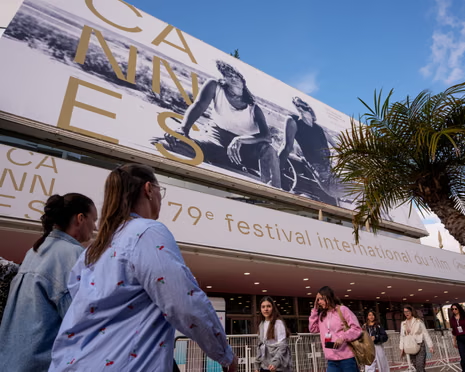
The legendary French Riviera is currently glowing under the warm Mediterranean sun once again. Tuesday marks the official opening of the prestigious seventy-ninth annual Cannes Film Festival today. This event has long served as a glittering bridge between high art and commerce. For many decades, the Croisette acted as a sunny home for major American studios. We remember Grace Kelly bringing regal elegance to the palm-fringed streets during the fifties. Quentin Tarantino famously danced with Uma Thurman to celebrate their historic Pulp Fiction victory here. Julia Roberts once made global headlines by walking the red carpet with completely bare feet. Tom Cruise even arranged for actual fighter jets to scream over the coastal luxury hotels. These moments cemented the festival as a primary marketing launchpad for big Hollywood blockbusters. However, the current 2026 edition tells a strikingly different story for the film industry.  The official lineup reveals a significant retreat by the major American motion picture studios. This year features a near-total absence of the usual high-budget popcorn spectacles we expect. Veteran observers noted the lack of a traditional tent-pole title during the announcement period. Scott Roxborough remains a respected voice as the European bureau chief for Hollywood Reporter. He observed that usually at least one massive studio movie anchors the festival schedule. Past years saw global premieres for the latest Mission Impossible and Top Gun installments. Elvis and Indiana Jones also used the French spotlight to ignite their European campaigns. This spring offers no such superhero or legacy sequel to satisfy the casual crowds. The competition for the coveted Palme d’Or includes only two films from North America. Ira Sachs presents a musical fantasy titled The Man I Love starring Rami Malek. This ambitious project explores the Aids era through a unique and surreal creative lens. James Gray also returns to the competition with a crime drama called Paper Tiger. His film features the star power of Adam Driver alongside the talented Scarlett Johansson. Interestingly, both of these American projects were largely financed by sources outside the States. This shift suggests that even American art is finding more support across the Atlantic. The Un Certain Regard section does offer some recognizable names for the waiting paparazzi. Jane Schoenbrun will premiere a project titled Teenage Sex and Death at Camp Miasma. This film features Gillian Anderson in a role that has generated much early buzz. Jordan Firstman makes his directorial debut with a vibrant film called Club Kid this week. Iconic actor Andy García brings a noir-ish film titled Diamond to the special screenings. This production features a veteran cast including the legendary Bill Murray and Dustin Hoffman. John Travolta is also showcasing his directorial debut titled Propeller One-Way Night Coach today. This story adapts his own 1997 book about a passionate young aviation enthusiast’s life. Despite these stars, the overall lack of studio muscle remains the primary talking point. Festival director Thierry Frémaux remains calm about this noticeable shift in the cinematic landscape. He argues that Cannes is simply reflecting the current reality of the global industry. Studios are simply producing fewer traditional blockbusters than they did in the previous decade. They are also moving away from the expensive auteur films they once supported heavily. Roxborough believes that modern studios have become increasingly wary of the many festival risks. A prestigious premiere can sometimes hurt a film if the reviews are not glowing. Some recent awards contenders chose to bypass the festival circuit entirely and still succeeded. Movies like One Battle After Another proved that a digital-first strategy can actually work. The issue of creative control also plays a major role in these corporate decisions. At a festival, independent critics decide exactly how a movie will be initially framed. This process backfired for the latest Indiana Jones film during its rocky 2023 debut. Harsh reviews from Cannes critics can now go viral on social media within seconds. A bad reception in France can sink a film before it reaches domestic theaters. Politics have also become a minefield for major studios at these large international gatherings. Recent European festivals were dominated by difficult questions regarding the current global geopolitical situation. Studio executives fear that viral press conference moments could cause lasting damage to brands. They prefer controlled environments where the narrative is managed by professional public relations teams. Consequently, the 2026 competition marks a return to the festival’s deep international roots. The lineup is dominated by global auteurs who built the reputation of this event. Pedro Almodóvar returns to the competition with his latest work titled Bitter Christmas today. His film follows a group of filmmakers who use their friends’ lives for art. Almodóvar has already sparked conversation by criticizing the recent Oscars for being too quiet. He told the Los Angeles Times that the telecast lacked enough voices for protest. Iranian master Asghar Farhadi brings Parallel Tales to the screen with actress Isabelle Huppert. Hungarian director László Nemes offers a French resistance drama titled Moulin for the jury. Romanian filmmaker Cristian Mungiu returns with a project set in Norway called Fjord this year. Exiled Russian director Andrey Zvyagintsev is premiering a political thriller titled Minotaur this week. This dense selection of international talent signals a move away from pure Hollywood spectacle. We also see the return of Paweł Pawlikowski with a film titled Fatherland tonight. This historical drama stars Sandra Hüller and follows the life of novelist Thomas Mann. Japanese cinema is well represented by the acclaimed Hirokazu Kore-eda and Ryusuke Hamaguchi today. The jury itself reflects this global perspective under the leadership of Park Chan-wook. The South Korean director is joined by figures like Demi Moore and Chloé Zhao. Many critics feel more excited for this lineup than those of previous flashy years. Chris Cotonou serves as the deputy editor for the stylish A Rabbit’s Foot magazine. He believes Cannes can sometimes fall into the trap of becoming a mere industry.
  This year feels much more focused on the actual art of the global filmmaker. Younger audiences are also driving this change through platforms like Letterboxd and Mubi today. These viewers are often more excited by a Hamaguchi film than a Tarantino project. They have been shaped by a more worldly and accessible digital cinema culture lately. The festival might be realizing that it no longer requires studio blockbusters to thrive. Interestingly, British cinema also has a somewhat quieter presence during this particular festival cycle. There are no directors from the United Kingdom featured in the main competition slots. Clio Barnard is showing I See Buildings Fall Like Lightning in the Directors’ Fortnight. Yemeni-Scottish filmmaker Sara Ishaq brings her film The Station to the Critics’ Week section. A documentary about David Lean is also screening within the respected Cannes Classics program. The United Kingdom maintains a presence through the Great 8 showcase for new talent. This program highlights the work of early-career filmmakers to potential international buyers and distributors. Mia Bays of the BFI Filmmaking Fund notes that representation remains strong overall. She explains that festival selections often depend on the specific timing of film production. The Berlin festival in February was particularly successful for British films earlier this year. She remains optimistic about the upcoming autumn festivals for the domestic film industry’s growth. Even with Hollywood retreating, the reputation of Cannes as a tastemaker remains completely intact. Films launched on the Croisette tend to dominate the awards calendar for months later. Last year’s non-English hits like Sentimental Value proved that subtitles are no longer a barrier. The Secret Agent and It Was Just an Accident also started their journeys here. This year proves that cinema lives in the vision of the individual artist’s mind. The yachts will eventually sail away, but the power of the image remains forever. Cannes has successfully returned to its status as the ultimate temple of global auteurism.
Related News:
 Canada Set to Spark New Era for Eurovision Contest
 Cannes filmmakers split over AI’s role in cinema
 Kate Winslet to Narrate Film Highlighting King’s Environmental Mission
 From Lego to Pokémon: How Adults Are Driving UK Toy Market Growth
 Director Michael Caton-Jones Reflects on Career and Beginnings
 Rusty Bond-Era Aston Martin Restored to £1m Glory
 British skier killed in La Plagne avalanche tragedy
 Mandelson apologises over Epstein ties after public scrutiny
 Friedman Uninvited From 2024 Adelaide Writers’ Week
 Starmer Challenges US Over Controversial Greenland Deal
 Spoof “Make America Go Away” Caps Rally Denmark Over Greenland
 Silence and Unity Mark Bondi Terror Attack Memorial
 India-EU Free Trade Deal Marks Historic Economic Shift
 John Lithgow criticises Rowling stance in trans debate
 Draco Malfoy Emerges as Lunar New Year Icon in China
 Concerns rise for Canberra boy amid Iran detention fears
 New Zealand Covid Response Praised Despite Lingering Scars
 African World Cup Fans Face $15,000 Entry Bond Fee
 Ticketmaster Fees Rise Despite Recent US Junk Fee Crackdown
 Diplomacy on the Brink: Pakistan’s Risky Peace Mission
 Scott Mills Sacked by BBC Over Personal Conduct Claims
 Teenage Titan: Sooryavanshi Smashes IPL Records
 Big Tech Faces Investigation Over Australia’s Social Media Ban
 Farage Shuns Truss as US Right-Wing Roadshow Hits London
 Sam Konstas Dropped as Australia Unveils New Contract List
 Canadian Mother and Daughter Released From ICE Detention
 The Price of Hubris: Trump, Netanyahu, and the ‘Easy’ War
 Reform UK Pledges To Halt Visas Over Reparations Demands
 US and Iran Agree to Two-Week Provisional Ceasefire
 Trump and Tehran Find Common Ground in Landmark Ceasefire
 Israel Defies Ceasefire as Lebanon Operations Persist
 Own an Entire Australian Town for the Price of a UK Flat
 Pakistan Brokers Historic Peace Deal Amid Rising Tensions
 Islamabad Hosts Historic Peace Talks Between Iran and USA
 Melania Trump Denies Ties to Epstein and Ghislaine Maxwell
 Trump Signals Hope for New Iran Talks as Ceasefire Fades
 Kyiv and Odesa Mourn After Deadly Wave of Russian Strikes
 Security Alert Near Israeli Embassy as Police Investigate
 Machado Rallies in Madrid as Venezuela Stays Frozen Out
 US Forces Seize Iranian Ship Near Hormuz Blockade
 US-Iran Standoff: Will Trump Deploy Ground Troops?
 Investigation: Offshore Loans and Sanctions
 Investigation Into Anti-Trump Motives After Gala Shooting
 Cross-Border Crisis Shatters Fragile Afghan Peace
 Oil Prices Surge Above $120 Amid Iran Blockade Fears
 Trump orders US troop pullout from Germany
 Japan Protests Erupt Over Plans to Revise Constitution
 The Burning Lens: An Iranian Artist’s Visual Resistance
 One Nation Candidate’s Surprising Ties to Independents
 Putin Signals War End as Russian Momentum Stalls
 Romania’s Judicial Crisis: A System Under Siege
 Scepticism and tight security as Beijing braces for Trump
 Philippine Senator Flees After Days Under Senate Siege
 Big Tobacco Under Fire Over Controversial New Ad Campaign
 Court Upholds Landmark Win for Transgender Rights
 Fragile Truce Shattered as Violence Escapes Diplomatic Control
 Secrecy Down Under: Albanese Faces FoI Scandal
 Tony Abbott Returns as New Liberal Party President
 Discontent grows around Putin amid war strain
 Teaching Machines Right From Wrong in the Digital Age
 Oman Defies US Pressure Over Strategic Strait of Hormuz
 Ex-CIA Agent Accused of $40m Gold Theft and Fake Spy Unit
 Saving the Scalloped Hammerhead: The Pacific Battle
 Aukus Deal Facing Fierce Backing and Historic Criticism
 Thai Princess Bajrakitiyabha Passes Away at 47
 Tragic Loss of Australian Sprinter Jemma Stapleton
 Trump Urged to Condemn UFC Fighter Over Obama Slurs
 US Democratic Crisis Deepens as Trump Limits Mail Voting
 Russian Tanker Captain Remanded in UK Court After Channel Seizure
 BBC Faces Backlash Over Ashley Cain Vetting Failures
 US Military Pacific Boat Strike Kills Three People
 US Battles Auction of Titanic Artifacts
 France Dominate Sweden as Deschamps’ New Era Takes Shape
 Trump’s Mount Rushmore Speech: A Divisive Anniversary
 Taylor Swift and Travis Kelce Marry at Madison Square Garden
 Trump Swaps Planes Amid Iran Tensions
 Rotterdam Museum Honours Artist With Peanut Butter Floor
 Bangkok Nightclub Blaze Claims 30 Lives Amid Negligence Probe
 Yemen Accuses Iran of Violating National Sovereignty
 Houthis Strike Saudi Arabia as Middle East Tensions Rise