Published: 12 June 2026. The English Chronicle Desk. The English Chronicle Online.
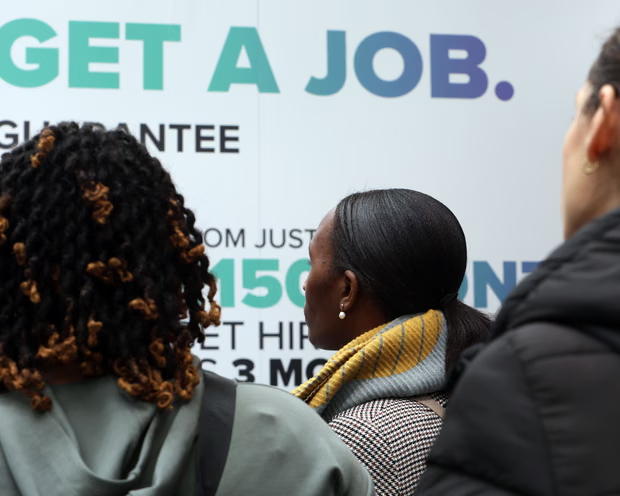
Young people across England are rapidly losing faith in their future financial prospects. This worrying trend comes as record numbers express deep fears about long-term unemployment. A comprehensive new report highlights how the youngest generation feels increasingly left behind today. This detailed analysis reveals a profound shift in how youth view their opportunities. It suggests that the traditional social contract in Britain may be completely broken.
The extensive research was compiled by the influential Institute for Public Policy Research. They analysed vast amounts of survey data to understand current youth perspectives. This included detailed information sourced from the respected Office for National Statistics. Their findings show that young people are far less confident than before. Those aged sixteen to twenty-one feel less successful than a decade ago.
Furthermore, younger individuals are deeply cynical about the rewards of hard work. They are far less convinced of this concept than older generations are. Only one in four people aged sixteen to twenty-nine agreed with fairness. They doubted that talent and hard work alone could ensure true success. In stark contrast, thirty-five percent of older citizens supported that fair statement. Meanwhile, over forty percent of those aged above seventy held that view.
This massive generational divide indicates a growing sense of disillusionment among the youth. National policymakers have become increasingly concerned about these severe challenges facing teenagers. The total number of young people out of work has risen sharply. Over one million individuals are currently classified as not in any education. They are also entirely missing from employment or any formal training schemes. This shocking figure marks a grim ten-year high for the nation.
The government has commissioned an urgent independent review to address this crisis. Former Labour minister Alan Milburn is currently leading this vital national investigation. He is looking at effective ways to reverse this troubling upward trend. His final findings are expected to be published later this calendar year. However, his interim report has already issued some incredibly stark warnings.
He warned that Britain is facing the risk of a lost generation. Without immediate intervention, the number of disengaged youth will rise by a quarter. That would push the total figure to over one million by 2030. He also hinted that significant benefits changes might be absolutely necessary. This potential policy shift could form a major part of the solution.
The thinktank argues that falling confidence is not just a social issue. This widespread pessimism can also cause severe damage to the wider economy. It actively discourages young people from pursuing higher education or working hard. They see little point in trying to build up long-term savings. When hope vanishes, the economic drive of the nation suffers a blow.
Experts state that young people are clearly sending a very loud message. They feel that the traditional promise of security no longer seems credible. This is not a isolated crisis affecting only a small vulnerable minority. Instead, confidence is falling rapidly across every single region in England. This decline is happening across all social classes and all genders.
The historical data paints a very clear picture of this downward spiral. Researchers looked at the long-running and highly respected Understanding Society survey database. They asked young participants to rate their actual chances of future success. In the mid-2010s, only two percent felt their chances were very low. By last year, that negative figure had tripled to six percent.
Even more alarming is the fear surrounding permanent future joblessness across England. The share of youth expecting long-term unemployment has also more than tripled. It rose sharply to seven percent over that exact same period. Young people are clearly anticipating a highly precarious financial existence ahead. This suggests that structural issues are deeply impacting their daily mental outlook.
The research paper identifies several interconnected causes for this massive negative shift. During the mid-2010s, multiple distinct social pressures began intensifying all at once. The painful effects of national austerity were becoming visible across communities. Simultaneously, the online information environment was being aggressively reshaped by platforms. Personalised algorithms began dominating how young people consumed all their information.
Consequently, youth mental health began to deteriorate at an unprecedented global rate. The authors argue that teenagers are simply drawing very logical conclusions. They are looking closely at the highly challenging economic conditions around them. These harsh realities include rising youth unemployment rates and eyewatering housing costs. Buying a home now feels like an impossible dream for many.
The statistical reality of the mental health crisis is truly staggering. The thinktank estimates that forty percent of young women face poor health. For young men in the same age bracket, it is thirty percent. Among those struggling, only twenty-four percent expect to succeed in life. That compares to nearly half of their healthier peers who feel optimistic.
This correlation shows how deeply mental well-being is tied to economic hope. In response to these growing digital pressures, political leaders are acting. Prime Minister Keir Starmer is expected to announce strict new social media restrictions. These rules will target children under sixteen to protect their mental health. Ministers hope this will reduce the toxic pressures found online today.
Meanwhile, the government is defending its current efforts to support young workers. A spokesperson stated that ministers recognise the barriers blocking youth from opportunity. They highlighted a substantial two-point-five billion pound employment support package recently launched. This massive funding injection aims to help one million young people nationwide. It is designed to ensure they can either earn or learn effectively.
The official plans also include expanding supportive youth hubs across Great Britain. These specialised centres will provide vital skills and targeted job hunting advice. They will also offer crucial housing support for the rising future generation. The government insists it is fully committed to rebuilding a fairer system. Whether these measures will be enough remains a subject of debate.
This extensive research forms part of the State of a Generation project. The vital work is generously sponsored by several prominent national charities. These include the Youth Futures Foundation and the innovative Big Change group. The global fast-food chain McDonald’s also provided significant corporate sponsorship funding. Together, these organisations are shedding light on a critical national issue. Britain must now decide how to restore hope to its youth.
Related News:
 Reeves Faces Setback as Labour May Miss Homes Target
 Trump’s UK Ambassador Urges North Sea Drilling to Strengthen US Ties
 ABF May Split Primark from Food Division Amid Tough Market
 M&S Profits More Than Halve After Cyber-Attack
 Tony Blair think tank warns Rachel Reeves must cut taxes if manifesto broken
 Oprah enjoys Meghan’s jam on English muffins
 Millionaires group urge Reeves to introduce wealth tax to ‘lift kids out of poverty’
 UK toy market enjoys bumper year as ‘kidults’ fuel demand
 Global markets drop amid tech sell-off and China slowdown
 PM Highlights UK Business at G20 in South Africa
 Mossmorran Plant Closure Hits Cowdenbeath Hard
 UK Taskforce Unveils Plan to Streamline Nuclear Reactor Rules
 Steel billionaire Lakshmi Mittal reportedly leaves UK
 Starmer Says Labour’s Economic Plan Needs Years to Deliver
 Virgin Media Fined £23.8m Over Telecare Safety Failures
 Rising Water Bills Lift Troubled Thames Back to Profit
 Sainsbury’s CEO leads business honours in New Year list
 Starmer Faces Parliamentary Battles Over UK-EU ‘Reset’ Plan
 Phoenixism Costs UK Taxpayers Millions in Recruitment Sector
 ScottishPower Tops List of Worst UK Energy Suppliers
 City & Guilds pay surge sparks backlash amid £22m cuts
 UK Government Borrowing Drops to £11.6bn in December
 AI job losses UK: Britain faces sharper employment shock
 Most young adults in UK fear uncertain jobs and economic future
 Royal Mail delivery delays affect 16 million during Christmas
 UK Housing Market Shows Early Recovery Signs
 UK economy struggles as growth stalls at 0.1% in late 2025
 Bank of England Urged to Cut Rates to Spur Growth
 UK Unemployment Rate Climbs to 5.2% Peak
 UK shelves £110m border project amid trade strain
 UK Inflation Surprise Sparks Early Rate Cut Hopes
 Progress on gender equality at top UK firms ‘achingly slow’
 Reeves Must Back Defence Plan or Face Dismissal, Says Unite Chief
 Switching Energy Deal Can Save £200 as Price Cap Falls
 OBR Reform Row Deepens Before Spring Forecast
 UK Hotel Data Sharing Probe Shakes Global Chains
 Rachel Reeves Faces Middle East Conflict Test
 Grocery Inflation Rises Amid War Fears
 Peak Greggs fears as profits tumble sharply
 BrewDog sold Highland estate for knockdown price after abandoning reforestation plans
 Yorkshire Water Funding Sparks Debate Amid Fines and Pay Row
 New £10bn rescue plan offered for Thames Water
 UK Energy Reform Could Cut Bills by £200
 Rising Costs Force Families to Rethink Days Out
 Hospitality Sector Teeters on Brink as Costs Surge
 Iceland Boss Offers Role to Sacked Waitrose Employee
 Student Loan Interest May Rise Despite 6% Cap
 Aegon Sells Historic UK Arm to Standard Life for £2bn
 Major Housebuilder Cuts Land Buying Amid Global Unrest
 UK Staycations Rise as Travel Fears Grow
 City & Guilds Sale Sparks Fees and Pay Uproar
 Silent Tracks: Rail Line Without Passengers
 Heathrow Chair Seeks Peace to Save Third Runway
Carillion Executives Banned After Reckless Misconduct
Heathrow Chair Seeks Peace to Save Third Runway
Carillion Executives Banned After Reckless Misconduct
 Lotus Boss Pledges Future to Norfolk and Seeks State Support
 Millionaires Back Higher Taxes to Save UK Public Services
 UK Firms Freeze Spending as Iran Conflict Bites
 Summer Shock: British Energy Bills Set for Grim July Hike
 Reeves to Fast-Track Clean Energy Amid Iran Crisis
 M&S Boss Slates Food Price Caps as ‘Preposterous’
 UK Urged to Build EU Rejoin Consensus, Says Miliband
 Tube Strike Brings Capital to a Standstill Over Shift Disputes
 Tube Strike Brings Capital to a Standstill Over Shift Disputes
 BP Stands Firm on Amanda Blanc Amid Boardroom Storm
 UK House Prices Drop For Third Month Due To War Fears
 Top Chefs Back Andy Burnham to Save UK Hospitality Sector
 UK Steel Crisis: Jingye Demands Payout After Takeover
 Flutter to Cancel London Stock Exchange Share Listing
 Barclays Buys GoHenry to Capture Next Generation
 AI Scams Push UK Investment Fraud Past £220m
 Whitehall Steps In: The Battle Over Thames Water Deepens
 Thames Water Nationalisation Pushes Closer After Rescue Objected
 John Lewis Invests £20m in Glasgow Store Upgrade
 Andy Burnham Enlists Economic Heavyweights for Leadership Bid
 Tories Clinch Shock Victory in Aberdeen South Byelection
 Rethinking the Blueprint for Youth Employment in Britain
 Sainsbury’s Boss Optimistic As Grocery Inflation Eases
 UK Households Suffer Squeeze As Disposable Incomes Drop
 Bank of England Eases Rules Despite Rising AI Risks
 BBC Faces Real Jeopardy as Licence Fee Income Declines