
Published: 16 June 2026. The English Chronicle Desk. The English Chronicle Online.
British government ministers have launched a major diplomatic offensive directed at the United States. They aim to prevent a severe political backlash from the administration of President Donald Trump. This urgent lobbying effort follows the historic announcement of a strict social media ban. Prime Minister Keir Starmer recently confirmed plans to bar children under sixteen from platforms.
Senior officials revealed they have spent weeks trying to reassure their American counterparts. They have also engaged directly with the American president to defuse potential trade tensions. British diplomats are emphasizing that these new restrictions do not target American technology giants. Instead, the policy focuses entirely on safeguarding the well-being of young British citizens. The global tech industry is watching closely as London navigates this complex geopolitical challenge.
This sweeping prohibition targets major global networks like Facebook, TikTok, Instagram, and YouTube. It also places strict limits on Snapchat and the microblogging platform known as X. The legislation marks the United Kingdom as a global pioneer in digital regulation. Only Australia has attempted similarly comprehensive restrictions on youth internet access earlier this year. However, Downing Street remains highly sensitive to potential economic retaliation from Washington DC.
The prime minister will meet the American president at the upcoming G7 summit. This high-profile international gathering is scheduled to take place in Évian-les-Bains this week. The American leader previously threatened the United Kingdom with significant and punitive trade tariffs. Those threats emerged during a separate dispute regarding the British digital services tax system. Insiders describe a sophisticated, three-pronged strategy designed to manage the delicate situation carefully.
Government representatives are simultaneously briefing American officials and engaging directly with technology executives. They are also working hard to dispel inaccurate rumors throughout the international media. One official reiterated that the policy is about child protection, not corporate warfare. The administration wants to frame this choice as a domestic public health measure. They hope this distinction will satisfy sceptics within the current American government cabinet.
When questioned about potential diplomatic friction, the prime minister remained calm and resolute. He suggested that world leaders generally understand the necessity of protecting young people. Starmer confirmed he held a productive telephone conversation with the president last Saturday. He also expects to hold further face-to-face discussions during the afternoon today. The prime minister noted that several international partners are monitoring the British policy closely.
The White House has not yet issued an official comment on the proposal. However, high-profile figures within the president’s political circle have already voiced strong opposition. Elon Musk, the billionaire owner of X, expressed deep skepticism about the law. He publicly described the proposed safety legislation as censorship in a deceptive guise. Musk claimed the true objective is expanded government surveillance over ordinary British citizens.
The proposed British legislation goes significantly further than the model recently adopted in Australia. Beyond standard age restrictions, the rules prevent young teenagers from broadcasting live video. The law also bans adults from sending unsolicited messages on digital gaming platforms. Furthermore, teenagers under eighteen will be blocked from interacting with romantic artificial intelligence. These specific measures represent a comprehensive rewriting of modern child safety laws online.
The government has excluded certain educational and creative platforms from the strict ban. Outlets like YouTube Kids, Lego Play, and Google Classroom will remain fully accessible. However, ministers are already drafting additional restrictions to complement the initial legislative package. Next month, the government intends to announce late-night digital curfews for older teenagers. Those rules will impact sixteen and seventeen-year-olds across the entire nation.
Officials are also considering new regulations for virtual private networks within the country. These tools allow savvy users to bypass geographic restrictions and access blocked content. Daniel Berntsson, chief executive of Mullvad VPN, anticipated strict compliance demands from London. He believes the government will compel providers to verify the age of users. Such a requirement would represent a fundamental shift in how networks operate globally.
The impending policy change will dramatically alter daily life for millions of teenagers. Recent data shows that ninety percent of children aged thirteen to fifteen use social media. These young people rely on popular networks as their primary source of information. YouTube, TikTok, Facebook, and Instagram dominate the daily media consumption of British youth. Removing access will completely reshape how an entire generation communicates and learns online.
Speaking from Downing Street, the prime minister strongly defended his administration’s bold intervention. He argued that unregulated social media use actively contributes to childhood unhappiness today. Starmer stated that digital platforms make it much easier for bullies to operate. He also warned that excessive screen time severely damages youth mental health across Britain. The prime minister insisted that inaction was no longer an option for his cabinet.
The prime minister previously opposed a blanket ban on social media for children. He changed his mind after reviewing evidence from a twelve-week government consultation. Starmer rejected accusations that he rushed the announcement to secure his political legacy. Critics had suggested the move was timed ahead of potential leadership challenges soon. The prime minister maintained that the policy was driven by data, not politics.
Technology Secretary Liz Kendall acknowledged that many teenagers would attempt to bypass the ban. She conceded that technologically literate children would undoubtedly find ways around the restrictions. However, Kendall argued that the law would still foster a vital cultural shift. She described the legislation as a necessary line in the sand for society. The policy provides parents with much-needed clarity regarding acceptable boundaries for children.
The technology secretary emphasized that the new rules were never viewed as a perfect solution. Instead, the initiative aims to reset societal expectations regarding childhood and technology access. The government wants to establish a norm where young children do not expect accounts. Under this vision, children under ten will grow up knowing access begins at sixteen. This psychological shift is deemed just as important as technical enforcement mechanisms.
The political landscape surrounding the announcement remains dynamic and highly competitive ahead of elections. Greater Manchester Mayor Andy Burnham is currently contesting the upcoming Makerfield parliamentary byelection. Burnham has pledged to challenge the prime minister on this policy if elected. Despite this internal dissent, the prime minister views the ban as a unifying measure. He stated the law reflects deep national values and brings communities together.
The main opposition Conservative Party has offered its broad support for the government’s plan. The Tories pointed out they had called for similar prohibitions several months ago. Numerous Labour backbenchers and child welfare campaign groups have also welcomed the decision enthusiastically. Esther Ghey, mother of the tragically murdered teenager Brianna Ghey, expressed profound relief. She publicly stated that the new law could save many young lives across Britain.
However, several independent experts have expressed skepticism regarding the efficacy of a total ban. A government-appointed expert panel previously concluded that social media impacts are highly nuanced. Their research indicated that digital platforms also provide meaningful benefits to modern teenagers. Some academics worry that a total ban might inadvertently isolate vulnerable young people. They argue that education and digital literacy might be more effective than prohibition.
The world’s largest technology conglomerates have also issued stark warnings to British lawmakers. Tech executives argue that bans will push teenagers toward darker corners of the internet. They suggest children will migrate to unregulated alternative spaces that lack safety controls. A spokesperson for Meta stated that prohibitions isolate teenagers from supportive online communities. They believe the policy removes essential parental supervision tools from the digital ecosystem.
Google’s video platform, YouTube, supported this view with an official statement of its own. The company argued that blanket bans deny children access to curated and beneficial experiences. They warned that users will seek out anonymous services that are far less secure. Despite these strong objections, major tech firms are not currently planning legal action. They appear to be focusing their efforts on shaping the upcoming implementation rules instead.
Ministers have formally instructed Ofcom to design the enforcement framework for the new law. The media regulator must decide how companies will verify the age of users. Methods under discussion include facial recognition technology and the analysis of historical profile data. Users might also be required to upload official government identification to gain access. Ofcom is expected to deliver its final implementation recommendations sometime this autumn.
Technology Secretary Liz Kendall confirmed her desire to accelerate the legislative process. She hopes to see the restrictions fully operational within the first few months of 2027. This timeline gives tech companies and regulators less than a year to prepare systems. The British public now faces an intriguing wait to see how Washington ultimately responds. The upcoming G7 summit will provide the first true test of this delicate diplomatic strategy.
Related News:
 MPs warn AI financial risks threaten UK stability
 MPs warn AI financial risks threaten UK stability
 UK Social Media Ban for Under-16s Gains Momentum
 UK Teen Social Media Ban Trials Begin
 Ministers Urged to Act Faster on Deepfakes Threat
 MPs Reject Ban on Social Media for Under-16s
 OpenAI Halts Stargate UK Project Amid Energy Crisis
 Reform UK funding: mystery billionaire revealed
 Reeves Launches City AI Skills Compact
 Yvette Cooper Backs Digital ID Plan for UK Teens
 Reform UK candidate fined £19,000 after using AI-generated cases to challenge election
 Green Party Surges Past Labour in Latest UK Poll
 Trump’s UK Ambassador Urges North Sea Drilling to Strengthen US Ties
 French Taxi Driver Cleared in David Lammy Theft Case After Fare Dispute
 UK Bans Fake Numbers: Scammers Lose Their Trick
 Patients to Test Health at Home to Ease NHS Winter Pressure
 Britain deploys RAF specialists to assist Belgium with drone threats
 Millionaires group urge Reeves to introduce wealth tax to ‘lift kids out of poverty’
 Starmer Faces Growing Dissent as Labour MPs Weigh Leadership Challenge
 Reeves rejects £1bn plea for NHS redundancy payouts
 Northern Lights may illuminate UK skies this week
 PM Condemns Leaks, Vows Loyalty to Ministers and Stability
 Major Rent Reform Ends No-Fault Evictions in England
 Peers Flood Assisted Dying Bill with 942 Amendments
 Most Tories Expect to Support a Farage-Led Government
 Starmer Says Labour’s Economic Plan Needs Years to Deliver
 Culture secretary to review Telegraph takeover by Daily Mail owner
 Labour Blocks Burnham as Party Rift Deepens Ahead of Polls
 Huge mistake: Labour blocks Burnham from byelection bid
 Artificial intelligence will cost jobs, admits Liz Kendall
 Labour targets Greens on drugs in Gorton Denton byelection
 Greens nominate Hannah Spencer for Gorton and Denton byelection
 Mandelson Faces Police Inquiry Over Epstein Leak
 Labour Thinktank Row Deepens Over Journalist Probe Claims
 Morgan McSweeney downfall shocks Labour leadership
 Cabinet Secretary Shake-Up Triggers Due Diligence Warning
 Starmer Faces Inquiry Calls Over Thinktank Probe
 UK shelves £110m border project amid trade strain
 Farage Unveils Reform UK Frontbench Team
 California Democrats Vow Trump Reckoning
 Wales Approves Assisted Dying Bill Consent
 UK EU Trade Reset Gains Public Backing
 Facial Recognition Error Leads to Wrongful Arrest in Milton Keynes
 Green Party Stuns Labour in Gorton and Denton Byelection
 Corbyn Leads Your Party in Coordinated Left-Flank Strategy
 Labour Together scandal sparks clean break vow
 Asylum Seekers to Work After Year-Long Wait
 Starmer Row as Greens Demand Apology
 Proposed Law Leaves Gap for Children of Convicted Paedophiles
 Gordon Brown urges court for crimes against children
 Inquiry into HMRC child benefit errors launched by NAO
 NHS Plans to Cut Overseas Workers Labeled Overambitious
 Farage Faces Backlash Over Crypto Cameo Endorsements
 Relationship with Trump may be beyond repair, Starmer warned
 Unions Raise Concerns Over Doctors’ Pay Dispute
 UK Government Poised to Revive Stalled Hillsborough Law
 UK Stands Firm on Falklands Amid US Rift
 Welsh Labour Faces Potential Historic Election Defeat
 Starmer Survives Mandelson Rebellion
 Silent Tracks: Rail Line Without Passengers
 Major test for Labour as polls open in Great Britain
 Labour Members Doubt Starmer Future as Burnham Leads Poll
 Reform UK Faces Crisis as Newly Elected Councillors Resign
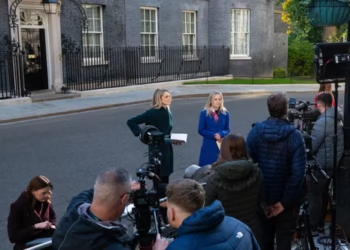 Keir Starmer Struggles to Secure His Grip on Downing Street
 Farage Faces Standards Probe Over Cash Property Purchase
 Secret Role of UK Security Services in Troubles Amnesty Law
 Farage and Reform UK Reshape British Politics
 Minister Criticises Police Guidance Amid Southampton Protests
 Makerfield Voters Demand Real Change as Election Looms
 Tech Trends and the Battle Against Exam Hall Cheating
 The Hidden Crisis Eroding Trust in British Communities
 Deepfake Abuse on X Sparks Safety Concerns for Dissidents
 Stolen Mobiles Could Soon Become Useless Bricks
 Starmer Resolves to Fight Burnham in Leadership Battle
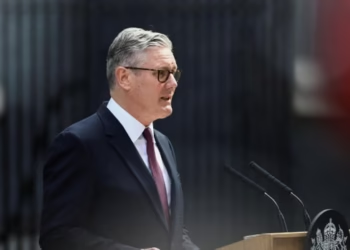 Starmer Resigns as Prime Minister Amid Internal Pressure
 Hollie Ridley to Step Down as Labour General Secretary
 Jarvis Urges Burnham to Secure 3.5% Defence Spending
 Farage Warns Sky News Following Financial Inquiry
 Reform UK Finances Face Deep NCA Probe
 Ann Widdecombe, Formidable Political Figure, Dies at 78