Published: 23 June 2026. The English Chronicle Desk. The English Chronicle Online.
The Metropolitan Police will expand its use of live facial recognition technology across London. This ambitious rollout will target the bustling West End shopping district before the Christmas holidays. Six additional high-footfall areas will also receive these advanced biometric tracking systems next year.
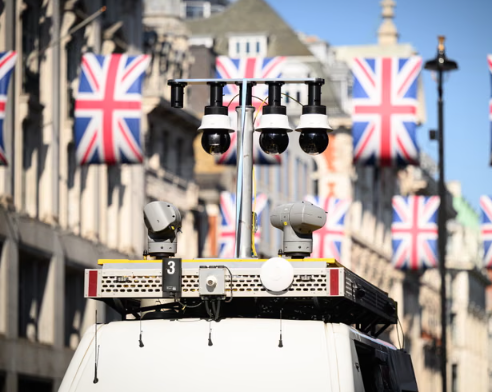
The new surveillance strategy relies on permanently fixed cameras mounted on ordinary street furniture. Engineers will likely attach these sophisticated scanning devices directly onto local council lamp-posts. This permanent deployment represents a significant shift from previous mobile operations across the capital.
Civil liberties advocates have immediately voiced sharp criticisms of this rapid technological expansion. Campaigners warn that millions of innocent citizens face an unprecedented level of daily surveillance. They argue that ordinary shoppers will be forced into a continuous digital police lineup.
The live facial recognition system works by instantly scanning every passing pedestrian’s face. The software then compares these biometric images against a database of wanted criminal suspects. This digital watchlist contains individuals wanted for serious offences or outstanding court warrants.
The Metropolitan Police previously tested this controversial technology using specially equipped mobile vans. These vehicles were deployed for short periods in specific crime hotspots across London. The mobile units allowed officers to test system accuracy in various weather conditions.
The force also conducted a lengthy trial using a single static camera installation. This experimental system was placed in the busy south London borough of Croydon. Senior police officers declared this localized pilot scheme an overwhelming and undeniable success.
Later this year, new static cameras will appear throughout the West End district. The historic entertainment hub of Soho will also receive these permanent scanning installations. Both areas currently experience some of the highest crime rates in the capital.
The Metropolitan Police stated that these cameras can be moved between different locations. Officers will reposition the hardware as they identify emerging criminal trends and hotspots. This mobility ensures resources target areas experiencing sudden spikes in antisocial behaviour.
The force plans to expand the static camera network into six additional areas. This major phase of the surveillance rollout is scheduled to begin early next year. Police leaders hope that local borough councils will contribute towards the financial costs.
The Metropolitan Police strongly insists that humans make all final operational arrest decisions. A trained officer must review every automated match before any intervention takes place. This protocol ensures that technology does not completely replace human judgment on streets.
Live facial recognition remains highly controversial among modern legal experts and civil rights groups. The system naturally captures the biometric data of thousands of entirely innocent people daily. Critics argue this process violates basic privacy rights during ordinary public excursions.
Furthermore, independent studies suggest the underlying algorithm can discriminate against black people. Civil rights groups frequently highlight historical instances of racial bias within biometric software. These concerns have sparked intense debates about fairness in modern British policing methods.
The British government and senior police leadership strongly support this expanded technological rollout. They argue that civil rights issues are minimal or perhaps entirely non-existent here. Officials believe the immense public safety benefits far outweigh potential privacy concerns.
The Metropolitan Police claims to have adjusted the sensitivity of its scanning algorithm. This technical calibration has nearly eliminated previous issues regarding racial bias, officials state. Ministers believe this technology possesses huge potential for fighting serious urban street crime.
The system also saves valuable officer time during an era of severe financial strain. Automated scanning allows fewer officers to monitor massive crowds for known dangerous offenders. This efficiency helps the force manage its shrinking budget while maintaining public safety.
Metropolitan Police Commissioner Sir Mark Rowley praised the revolutionary nature of this technology. He stated that facial recognition represents one of the biggest advances in modern policing. Rowley also claimed that public confidence in these systems remains remarkably high.
The Commissioner asserted that around eighty percent of Londoners support facial recognition use. This strong public backing reflects a simple truth that the technology actually works. The force intends to use this public mandate to justify wider future deployments.
Figures from the Croydon pilot scheme are used to demonstrate system effectiveness. The Metropolitan Police recorded one hundred and seventy-three arrests during that six-month trial. Cameras were positioned strategically at both ends of the busy Croydon high street.
The police force reported that only one person was wrongly identified during trials. This single error occurred out of four hundred and seventy thousand total scans. The misidentified individual was permitted to leave quickly without facing any formal arrest.
Commissioner Rowley expressed a strong desire to build upon these recent pilot successes. He confirmed the technology would arrive in the West End by December. Static cameras will help officers continuously cut crime in these high-footfall areas.
Silkie Carlo, the director of Big Brother Watch, condemned the new plans. She described the expansion to static cameras as an alarming escalation of surveillance. The intrusive technology has already scanned the faces of millions of innocent Londoners.
Carlo argued that forcing people into digital lineups affronts traditional British liberty principles. Citizens should not have to identify themselves to police without committing a crime. She noted that theatergoers must now pay for entertainment with their personal privacy.
The Metropolitan Police promised that all future camera locations would be clearly advertised. Warning signs will alert pedestrians before they enter an active scanning zone. This transparency aims to reassure the public and maintain trust in policing methods.
The force also clarified that non-matching biometric data is deleted almost instantaneously. The system destroys innocent faces within seconds of the initial scanning process. This data protection policy complies with strict national privacy regulations for digital information.
Related News:
 Reeves Faces Setback as Labour May Miss Homes Target
 Kate Winslet to Narrate Film Highlighting King’s Environmental Mission
 Trump’s UK Ambassador Urges North Sea Drilling to Strengthen US Ties
 UK Bans Fake Numbers: Scammers Lose Their Trick
 M&S Profits More Than Halve After Cyber-Attack
 Patients to Test Health at Home to Ease NHS Winter Pressure
 Millionaires group urge Reeves to introduce wealth tax to ‘lift kids out of poverty’
 Reeves rejects £1bn plea for NHS redundancy payouts
 Northern Lights may illuminate UK skies this week
 PM Condemns Leaks, Vows Loyalty to Ministers and Stability
 Major Rent Reform Ends No-Fault Evictions in England
 Stroke Patient Mistaken for Drunk, Care Delayed
 Inside the Helpline Protecting Missing Children in the UK
 Boots Showstopper Beauty Bundle Outshines Many Advent Calendars This Holiday Season
 PlayStation PS5 Deals Hit Lowest Prices Ahead of Black Friday
 Five-Year-Old Dies After Rare Tonsil Surgery Complication
 Starmer Says Labour’s Economic Plan Needs Years to Deliver
 UK unemployment rises to four-year high of 5.1% before budget
 Wiltshire Police Use Lasso to Catch Rampaging Village Goat
 Coasting Drinks: The Trend Redefining Alcohol Enjoyment This New Year
 Rising Hate Crimes Threaten Safety on UK Public Transport
 Starmer Faces Parliamentary Battles Over UK-EU ‘Reset’ Plan
 Met Police Vetting Failures Let Serial Rapists Remain
 Google Employee Claims Redundancy After Harassment Report
 Fatal Bolton Taxi Crash Claims Three Teens and Driver
 ScottishPower Tops List of Worst UK Energy Suppliers
 Judi Dench Champions Fight to Save London’s Green Spaces
 Crowborough Camp Welcomes First Asylum Seekers
 BBC Funding Crisis: Tim Davie Warns of Jeopardy Ahead
 Artificial intelligence will cost jobs, admits Liz Kendall
 Older Women Vanish from BBC Screens, Review Confirms Bias
 Streeting moves on doctor pay to end strike dispute
 Send spending gap leaves deprived areas behind
 Hidden Crisis: Domestic Abuse Suicide Toll in UK
 UK Unemployment Rate Climbs to 5.2% Peak
 BBC World Cup Presenting Duties Shared Among Trio
 Wales Approves Assisted Dying Bill Consent
 CPS Updates Guidance on Honour-Based and Dowry Abuse
 Asylum Seekers to Work After Year-Long Wait
 Inquiry into HMRC child benefit errors launched by NAO
 Rising Costs Force Families to Rethink Days Out
 Scott Mills Sacked by BBC Over Personal Conduct Claims
 Palantir Boss Defends NHS Deal Amid Government Break Clause
 Relationship with Trump may be beyond repair, Starmer warned
 UK Government Poised to Revive Stalled Hillsborough Law
 UK Staycations Rise as Travel Fears Grow
 Home Office Faces Legal Risks Over Asylum Hotel Living
 Official Admits Debate Over Mandelson Vetting Records
 Crisis in NHS Surgery Scheduling Hits Patients Hard
 Welsh Labour Faces Potential Historic Election Defeat
 Blue Badge Abuse: The Rising Tide of Public Hostility
 UK Faces Future Where Deaths Outnumber Births Yearly
 Scott Parker Leaves Burnley After Premier League Drop
 Silent Tracks: Rail Line Without Passengers
 RFU Backs Borthwick Despite England’s Poor Six Nations
 Major test for Labour as polls open in Great Britain
 Keir Starmer Struggles to Secure His Grip on Downing Street
 Fear and Betrayal: The Chilling Case of Kouri Richins
 Farage Faces Standards Probe Over Cash Property Purchase
 Closing the Gap: UK Pensions Commission Demands Action
 Sun and Jams: Britain Braces for a Sizzling Bank Holiday
Russian Electronic Attack Targets UK Defence Chief Jet
Sun and Jams: Britain Braces for a Sizzling Bank Holiday
Russian Electronic Attack Targets UK Defence Chief Jet
 UK Shoppers Face Prolonged Price Rises At Tills
 Tube Strike Brings Capital to a Standstill Over Shift Disputes
 Labour Denies Benefit Tax Hike Amid Mandelson Leak
 Makerfield Voters Demand Real Change as Election Looms
 US Condemns ‘Two-Tier’ UK Policing After Student Murder
 Millions in British Charity Funds Linked to Illegal Settlements
 Ryanair Faces Probe Over Mandatory Family Seating Fees
 Britain’s Crowning Butterfly Takes the Nation by Storm
 Labour MP Revives Blocked Assisted Dying Bill in Commons
 Starmer Set to Announce Exit Plan as Burnham Eyes No 10
 The Hybrid School Revolution Defying the Social Media Ban
 UK Care Crisis: Row Explodes Over New Visa Settlement Rules
 Sainsbury’s Boss Optimistic As Grocery Inflation Eases
 NHS Urges Investigation For Irregular Periods
 US Airman Avoids British Court in Indecent Exposure Case
 Farage Warns Sky News Following Financial Inquiry
 Ann Widdecombe, Formidable Political Figure, Dies at 78
 UK Schools Struggle as Classrooms Top 40C