Published: 29 June 2026
The English Chronicle Desk
The English Chronicle Online
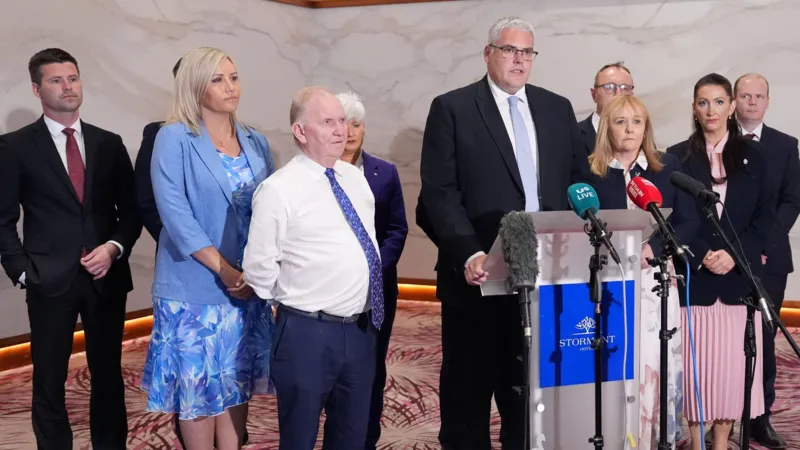
Political parties at Stormont have called for “full transparency” following safeguarding concerns involving the Democratic Unionist Party (DUP), with pressure mounting for greater clarity over how the matter was handled and what procedures were followed.
The issue has sparked debate across Northern Ireland’s political landscape, with rival parties insisting that public confidence can only be maintained through openness, accountability and a thorough examination of the circumstances surrounding the safeguarding concerns.
While details of the case remain limited, political leaders have stressed that safeguarding issues must always be treated with the utmost seriousness, regardless of the organisation or individual involved.

The calls for transparency come as questions continue to be raised about the management of safeguarding processes and whether all relevant information has been appropriately disclosed.
Safeguarding refers to measures designed to protect vulnerable individuals from harm, abuse, neglect or exploitation. Across public bodies, political organisations, charities and community groups, safeguarding policies are intended to ensure concerns are identified, reported and addressed effectively.
Because safeguarding issues often involve sensitive personal information, authorities must balance transparency with legal and ethical obligations relating to privacy and confidentiality.
However, opposition parties argue that transparency regarding procedures and decision-making remains essential.
Several Stormont representatives have stated that the public deserves reassurance that safeguarding concerns are being handled properly and consistently.
They contend that trust in institutions depends on confidence that allegations or concerns are dealt with fairly, independently and without political influence.
Calls for greater openness have come from across the political spectrum.
Politicians have emphasised that safeguarding should never become a partisan issue and that protecting vulnerable individuals must remain the primary concern.
Some representatives have urged the DUP to provide further explanations regarding the circumstances surrounding the matter, while others have called for independent scrutiny where appropriate.
The DUP has acknowledged the public interest surrounding the issue and stated that safeguarding responsibilities are taken seriously.
Party representatives have emphasised their commitment to following established procedures and complying with relevant safeguarding requirements.
They have also noted that certain details may be restricted due to confidentiality obligations or ongoing processes.
Political analysts suggest the controversy highlights broader challenges facing public institutions when responding to safeguarding concerns.
In many cases, organisations must navigate competing demands for transparency while protecting the rights and privacy of individuals involved.
Finding the correct balance can prove difficult, particularly when matters attract significant media attention.
Safeguarding experts argue that public confidence often depends not only on the outcome of investigations but also on the transparency of procedures.
Clear communication about how concerns are assessed, who is responsible for decision-making and what safeguards are in place can help reassure the public that systems are functioning effectively.
In recent years, safeguarding has become an increasingly important issue across the UK and Ireland.
Numerous public inquiries and high-profile cases have led organisations to strengthen policies, improve training and enhance reporting mechanisms.
As a result, expectations regarding accountability and openness have grown significantly.
Many observers believe that institutions are now subject to greater scrutiny than ever before when safeguarding concerns arise.
This reflects changing public attitudes and a greater awareness of the importance of protecting vulnerable people.
For Stormont parties, the current debate extends beyond the specifics of a single case.
Some politicians argue that the situation presents an opportunity to review safeguarding arrangements more broadly across political organisations and public institutions.
They suggest that consistent standards and regular oversight could help strengthen public trust.
Advocacy groups have also highlighted the importance of ensuring that individuals feel confident reporting concerns.
Experts note that safeguarding systems are most effective when people believe complaints will be treated seriously and investigated appropriately.
Transparency regarding procedures can play an important role in encouraging such confidence.
Meanwhile, constitutional and political tensions continue to shape the broader context in which the issue is being discussed.
Northern Ireland’s political institutions have frequently faced intense public scrutiny, and controversies involving major parties often attract significant attention.
Analysts note that maintaining trust in governance remains a key challenge for all parties represented at Stormont.
The latest dispute has generated considerable discussion among voters, with many calling for clarity regarding what happened and how concerns were addressed.
Public expectations for openness have increased substantially in recent years, particularly when issues involve safeguarding or public welfare.
Political commentators suggest that how the matter is handled may prove as important as the issue itself.
Clear communication, independent oversight where necessary and adherence to established procedures could influence public perceptions of accountability.
For opposition parties, demands for transparency reflect a belief that public confidence depends on visible and robust safeguards.
For the DUP, the challenge lies in demonstrating that appropriate procedures have been followed while respecting legal and ethical obligations surrounding confidentiality.

As discussions continue, all parties appear united on at least one principle: safeguarding concerns must be treated seriously and addressed responsibly.
The debate now centres on how much information can be shared publicly and what steps are needed to ensure confidence in the processes involved.
Further statements and potential reviews may emerge in the coming weeks as political pressure for answers continues.
For now, Stormont remains focused on balancing transparency, accountability and privacy while addressing concerns that have become a significant issue in Northern Ireland’s political discourse.
Related News:
 UK Must Act with Courage and Clarity on Israel-Palestine Conflict, Says Foreign Affairs Committee Report
 Chancellor Faces Mounting Pressure Amid “Impossible Trilemma” Over Tax Rises
 Radioactive Leak at UK’s Nuclear Warhead Base Sparks Outcry Over Safety and Secrecy
 Mutual Inconvenience: Why Alaska Was Chosen for the Trump-Putin Summit on Ukraine
 Chancellor Rachel Reeves Pushes for Sweeping Changes to Environmental Protections to Accelerate Development
 Is the UK Ready to Put Boots on the Ground in Ukraine? Assessing Military Capacity and Challenges
 Police Scotland Spends £500,000 Compensating Officers Over Trump Visit
 Urgent Action Needed on Windrush Compensation as Survivors Speak of “Waiting to Die”
 Tanni Grey-Thompson Faces Abuse Over Opposition to Assisted Dying Bill
 TfL Invites RMT to Resume Talks as London Tube Strikes End
 Nigel Farage Unveils Controversial Immigration and Welfare Plans at Reform UK Press Conference
 Ed Miliband Warns UK Government on X, Citing Elon Musk as a “Dangerous Influence”
 Kemi Badenoch Unveils ‘Golden Rule’ to Halve Spending Cuts for Deficit Reduction at Tory Conference
 UK border officers deployed to Balkans to tackle migrant smuggling
 UK MPs warn of repeat riots over online misinformation
 Army Barracks to House Migrants as Hotels Phase Out
 Trump’s UK Ambassador Urges North Sea Drilling to Strengthen US Ties
 French Taxi Driver Cleared in David Lammy Theft Case After Fare Dispute
 Millionaires group urge Reeves to introduce wealth tax to ‘lift kids out of poverty’
 Reeves rejects £1bn plea for NHS redundancy payouts
 PM Condemns Leaks, Vows Loyalty to Ministers and Stability
 Major Rent Reform Ends No-Fault Evictions in England
 Starmer Says Labour’s Economic Plan Needs Years to Deliver
 England delays four mayoral elections amid criticism
 UK Ministers Drop Foreign Student Targets for Global Education Push
 No Gas Boiler Ban as UK Warm Homes Plan Backs Heat Pumps
 Shinzo Abe’s killer receives life sentence in Japan
 Police response times face strict new national limits
 Labour policing overhaul sparks fears over growing central control
 Starmer warns of toxic division politics in Reform challenge
 Palantir contracts face UK halt calls over transparency
 Diane Abbott Slams Applause for Keir Starmer as PM Vows to Stay On After Mandelson-Epstein Row
 Could Manchester Lead the UK’s Economic Revival?
 Starmer Weighs Fast-Tracking Defence Boost
 Farage to Name Jenrick as Reform Chancellor Pick
 Civil Service Pay: Union Urges Ministers to End ‘Barking Mad’ Limits
 Antonia Romeo appointment sparks criticism
 Australian PM Says Former Prince Andrew Has Suffered ‘Extraordinary Fall’ but That Won’t Prompt Republic Referendum
 Farage Chagos Islands Row Sparks Fury
 Reform UK targets workers’ rights repeal
 Russian Trade Routed Through British Islands Exposed
 Mandelson Arrest: Met Apologises to Hoyle
 BBC Charter Reform Sparks Independence Battle
 Labour MP’s Partner Arrested on Suspicion of Spying for China
 Police Scotland Pays £8m Compensation to Staff
 Minister Meets Crews Who Will ‘Take Out’ Iranian Drones
 Thousands Protest Iran Strikes Outside US Embassy London
 UK Oil and Gas Supplies Reassured Amid Middle East Concerns
 Tommy and Gail Sheridan to Stand for New Political Party After Alba Demise
 Yvette Cooper: UK Must Follow Principles, Not US Pressure
 Wes Streeting Backs Starmer Amid Speculation of Leadership
 Mandelson’s Phone Messages Requested in Files Release
 UK Forces Ready to Seize Russian Shadow Fleet Vessels
 US Lawmaker Demands Testimony Over Sarah Ferguson’s ‘Close Epstein Ties’
 ‘Eye in the Sky’ Blinded: Photos Reveal Destroyed US Radar Jet at Saudi Base
 The 8 Million Dilemma: Why Britain’s Disability Safety Net is Facing a ‘2026 Reckoning’
 The ‘Peterborough Windfall’: Council Calculator Finds £84,800 in Unclaimed Support
 Labour to Back Down on Foie Gras and Fur Bans to Ease EU Trade Deal
 ‘It’s Heartbreaking’: NHS Training Freeze Leaves Resident Doctors in Limbo
 The Lasting Shadow: How Austerity Redefined UK Childhood
 Is Britain Ready? Experts Warn of ‘Bizarre’ Military Delay
 Foreign Office Chief Resigns Amid Mandelson Vetting Row
 “Jobs Will Go”: Rishi Sunak Warns AI is Already Eroding Entry-Level Opportunities
 Crackdown Backfires on UK Climate Protesters
 Reality Check on Reform: Minister Says Outright Abolition of Leasehold “Impossible”
 The “Dry” Life: Teens Trialing Social Media Bans Call Initial Disconnection “Boring” and “Dry”
 “An Endurance Test for the Mind”: British Couple Sentenced to 10 Years in Tehran
 “Stealth and Scaffolding”: The Midnight Logistics Behind Banksy’s Latest London Plinth
 “The Local Gavel”: Polls Open Across Hampshire and Isle of Wight in Delayed ‘Milestone’ Vote
 Major test for Labour as polls open in Great Britain
 Farage Faces New Questions Over Private Helicopter Use
 Secret Role of UK Security Services in Troubles Amnesty Law
 Labour Faces Growing Pressure Over Living Wage Delay
 UK Faces Most Dangerous Era, Military Chief Warns
 Son Urges Iran Prisoner Exchange for Jailed British Pair
 Figures Suggest Over 1,300 Monthly Deaths in England Linked to Long A&E Waiting Times
 Digital Scrutiny Under the Spotlight in Makerfield
 Modernising the Military: Carns Demands Urgent Procurement Reform
 Prince George Set to Begin Studies at Eton This September
 Starmer Set to Announce Exit Plan as Burnham Eyes No 10