Published: 3 July 2026
The English Chronicle Desk
The English Chronicle Online
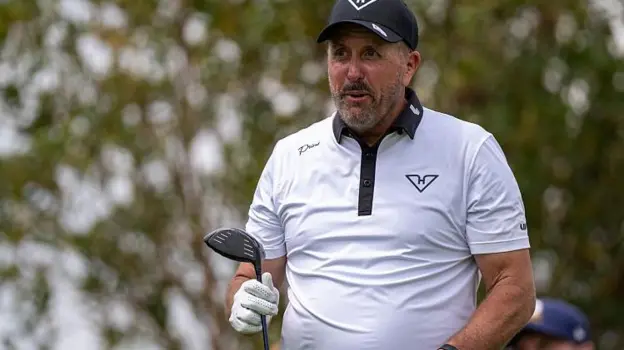
Veteran golfer Phil Mickelson has publicly rejected fresh allegations of misconduct, insisting that the claims are unfounded as renewed scrutiny surrounds one of golf’s most recognisable figures.
The latest allegations have generated significant attention across the sporting world, with fans, commentators and fellow professionals closely following developments. While the precise nature of the accusations has become the subject of widespread discussion, Mickelson has firmly denied any wrongdoing, stating that he intends to defend his reputation.
The dispute comes at a time when professional sport is under increasing pressure to uphold high standards of conduct both on and off the field. As governing bodies place greater emphasis on transparency and accountability, allegations involving high-profile athletes often attract intense public and media interest.
At present, no final determination has been made regarding the claims, and the matter remains subject to ongoing review.

In statements addressing the allegations, Mickelson has disputed the accusations and maintained that they do not accurately reflect his actions.
The golfer has argued that speculation should not be mistaken for established fact, emphasising the importance of allowing any relevant processes to run their course before conclusions are drawn.
Legal experts frequently note that allegations alone do not constitute proof of misconduct. Individuals facing accusations are entitled to respond and, where appropriate, challenge claims through established legal or disciplinary procedures.
For Mickelson, whose career has spanned more than three decades, protecting his reputation is likely to be a significant priority.
Few golfers have enjoyed a career as successful or as widely recognised as Phil Mickelson.
Known for his aggressive style of play, remarkable short game and popularity with spectators, he has won numerous professional tournaments and multiple major championships.
His longevity has also been notable, with victories achieved across different eras of professional golf.
Over the years, Mickelson has become one of the sport’s most recognisable personalities, attracting sponsors, media attention and millions of fans worldwide.
However, with such prominence comes heightened scrutiny.
Public figures in elite sport often find themselves facing close examination of both their professional performances and personal conduct.
Modern professional sport increasingly expects athletes to meet standards that extend beyond competition.
Leagues, governing bodies and sponsors often maintain codes of conduct covering behaviour, integrity and professionalism.
When allegations emerge, sporting organisations frequently conduct reviews to determine whether any rules have been breached.
Depending on the circumstances, investigations may involve independent panels, legal representatives or regulatory authorities.
Such processes are intended to ensure fairness while protecting the integrity of competition.
High-profile allegations involving internationally known athletes tend to generate extensive media coverage.
Social media platforms can amplify claims rapidly, with supporters and critics often expressing strong opinions before official findings are available.
Communications specialists caution that public discussion can sometimes move faster than formal investigations, creating challenges for everyone involved.
For athletes, sponsors and sporting organisations alike, managing public perception has become an increasingly important aspect of handling controversy.
At the same time, journalists have a responsibility to distinguish verified facts from speculation and to report developments accurately as they emerge.
Legal commentators emphasise that due process remains fundamental whenever misconduct allegations arise.
Whether cases involve civil proceedings, criminal investigations or internal disciplinary reviews, all parties should have the opportunity to present evidence and respond to claims.
This principle protects both complainants and those accused.
Sports governing bodies have also strengthened investigative procedures in recent years to ensure allegations are handled consistently and independently.
These frameworks aim to balance transparency with fairness while maintaining public confidence in sporting institutions.
Whenever a leading figure becomes involved in controversy, attention often extends beyond the individual concerned.
Sponsors, tournament organisers and governing bodies may face questions about their relationships with athletes and the standards expected across the sport.
Professional golf has experienced significant change in recent years, including commercial restructuring, new tours and evolving governance debates.
Additional controversy involving prominent players can further increase scrutiny of how the sport manages reputational issues.
Industry analysts say maintaining public trust is increasingly important as golf competes for audiences, commercial investment and global growth.
Reaction to the latest allegations has been mixed.
Some supporters have urged people to avoid reaching conclusions until all available evidence has been examined.
Others believe sporting organisations should investigate thoroughly whenever serious allegations arise, regardless of an individual’s achievements or reputation.
This divide reflects broader public discussions about accountability, fairness and the treatment of public figures facing accusations.
Many observers argue that both protecting reputations and taking complaints seriously are essential components of a credible disciplinary system.
The case also highlights the pressures associated with life as a globally recognised athlete.
Professional competitors increasingly operate under constant public observation, with interviews, social media activity and personal conduct receiving almost continuous attention.
Sports psychologists note that such scrutiny can create additional challenges, particularly when legal or disciplinary matters become public.
At the same time, modern audiences often expect sporting heroes to demonstrate leadership and integrity away from competition as well as during it.
These expectations continue to shape how athletes, teams and governing organisations respond to controversy.
The future course of the matter will depend on whether further evidence emerges and how any relevant investigative or disciplinary processes develop.
Should formal proceedings continue, additional statements from Mickelson, legal representatives or sporting authorities may provide greater clarity.
Until then, experts caution against assuming either guilt or innocence based solely on preliminary reports.
The outcome will likely be determined through established procedures rather than public debate.
Phil Mickelson remains one of golf’s most accomplished and recognisable players, and any allegations involving him inevitably attract worldwide attention.

His firm denial of the latest misconduct claims ensures that the issue is likely to remain under close observation as events unfold.
For golf, the case underscores the continuing importance of integrity, accountability and fair process within professional sport.
Regardless of the eventual outcome, it serves as another reminder that sporting success does not shield individuals from public scrutiny or institutional oversight.
As investigations and responses continue, fans and observers will be watching closely for verified information rather than speculation, recognising that fairness requires both careful examination of allegations and respect for the principles of due process.
Related News:
 London Set to Honour Euro 2025 Champions as Lionesses Take Victory Parade Through the Capital
 Tottenham Takes On Newcastle
 Golden Glory Beckons: Ballon d’Or 2025 Nominee Frenzy Ignites Global Football Stage
 Rugby Confronts Safety Concerns with Smart Mouthguards at Women’s World Cup
 Premier League Supercomputer Predicts Tough Season for Man Utd Amid Three-Team Title Battle
 India Triumph in Dubai Amid Unexpected Twists
 Everton Held by West Ham as Bowen Cancels Out Keane’s Header in Nuno’s First Game
 Mbappé Hat-Trick Powers Real Madrid to 5-0 Rout Over Kairat
 Monaco Hold Man City to Dramatic 2-2 Draw as Eric Dier Converts Late Penalty
 Arsenal Edge Past West Ham Amid Injury Concerns
 Chaos at Ibrox as Martin’s Rangers Era Comes to an End
 Arsenal Showcase Depth and Flexibility as Arteta Eyes Title Challenge
 Questions Remain as Rugby Legend Lewis Moody Faces Motor Neurone Disease Diagnosis
 Hyped by Zlatan, Hidden by Maldini: Italy’s Rising Star Francesco Camarda
 Son of ex-England footballer dies in tractor crash
 Brentford 3-2 Liverpool: Reds suffer fourth straight PL defeat
 Wolvaardt’s Masterclass Fires South Africa into First World Cup Final
 UK and Ireland Announce Venues for Euro 2028 Tournament
 Saka Solidifies Role as Tuchel’s Key England Lieutenant
 Former Lion Heskey Warns of Shortage of England Strikers
 Tiny Curacao Makes History as Smallest Nation to Reach World Cup
 Australia Face Big Changes as Cummins and Lyon Ruled Out of Ashes
 ECB powerless to halt England’s recurring Ashes failures
 Damien Martyn in Induced Coma After Meningitis Diagnosis
 Raducanu Battles Injury as Britain Exit United Cup
 Manchester United Fan Group Targets Jim Ratcliffe Over Club Chaos
 Geopolitical football: Iran, Trump and the World Cup clash
 ALL GUNNS BLAZING: Arsenal vs Wigan LIVE SCORE – FA Cup Updates
 Swearing, Illicit Filming & Rule Changes – What Next in Curling Cheating Row?
 Hilary Knight speaks out on Trump’s recent hockey remarks
 Champions League Thrills as Atalanta and Galatasaray Advance
 Manchester United Face Huge Bill After Ruben Amorim Exit
 Can Chelsea Kick‑Start Faltering Palmer?
 India T20 World Cup Triumph Seals Historic Title Defence
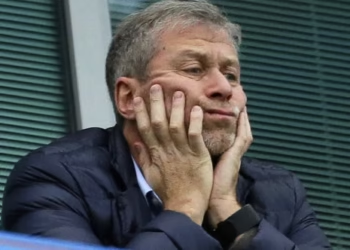 Abramovich Chelsea Sale Cash Faces Jersey Probe
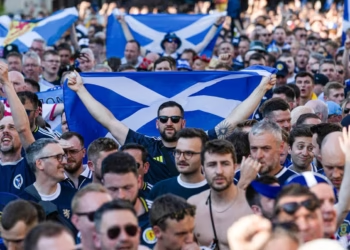 Scotland World Cup Party in Boston Gets Green Light After Security Breakthrough
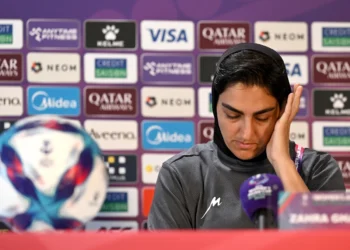 Iranian Captain Departs Australia Amid Asylum Tension
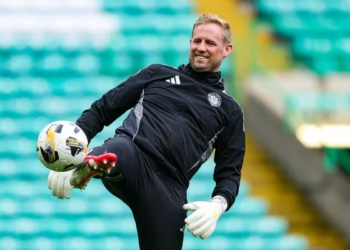 Schmeichel Injury Sparks Denmark Debate
 Iran World Cup Move Talks Raise Global Concerns
 Sunderland Stun Newcastle as Brobbey Strikes Late Winner
 The Living Heart of Manchester United: Bruno Fernandes
 English Football’s Managerial Merry-Go-Round Has Become a Circus
 Eddie Howe Faces Seven Game Test to Secure Newcastle Future
 Tiger Woods: Golf Legend Steps Away to Seek Treatment
 Can Congress Stop US Sports Teams From Moving Cities?
 The $11k Ticket: High Stakes and Dynamic Pricing in FIFA’s First Open Sale
 Miles Jupp: How the Magic of the Ashes Sparked a Bold Blag
 Van Dijk Rallies Liverpool for Massive PSG Comeback
 Premier League Clubs Tense Over Regulator Costs
 Cricket’s New Era: Seeking Substance Beyond the Glitz
 Beyond the Swoosh: Anta Sports Overtakes Rivals to Become Global Top Three
 “Three-Wheeled Triumph”: Mayor of Erewash Completes 2,000-Mile European Charity Run
 George North Announces Retirement From Rugby
 Premier League drama defines crucial weekend
 Arteta urges Arsenal to step up in Atlético semi-final
 Miami Upgrades Shake Up F1 Title Fight
 Arsenal Fans Face High Costs for Champions League Final
 Fernandes Equals Assist Record as United Secure Third
 Champions at Last: Arsenal Conquer the Premier League
 Southampton Face Player Legal Action Over Playoff Scandal
 The Battle for Wembley Sparking Unprecedented Legal Warfare
 Chasing Glory: The Quest for a New World Cup Champion
 Tuchel Defends Tough England Squad Decisions
 Fans Bring Flags and Fire to World Cup Scenes
 Andreeva Sweeps Past Kostyuk to Reach Paris Final
 Fans Invited to Share Scotland World Cup Stories
 Iran Team Arrives in Mexico Amid US Visa Dispute
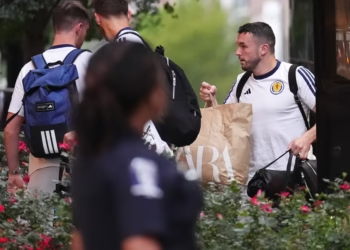 Scotland Branded “Unprofessional” in World Cup Fallout as England Build Momentum
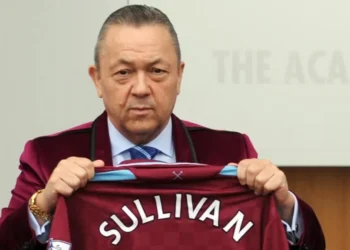 Football Regulator Contacts West Ham Over “Serious Allegations” Linked to Sullivan
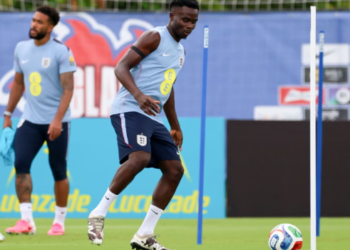 Saka Playing Through Pain As England World Cup Campaign Looms
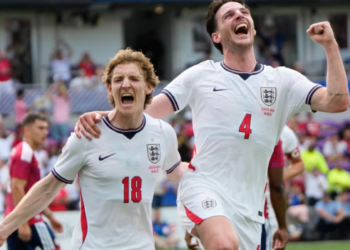 England Cruise Past Costa Rica as World Cup Warm-Up Sharpens Tuchel’s Vision
 Tuchel’s England Mission Goes Beyond Football Success
 Blackpool Cricket Stands Firm Amid County Struggles
 Historic Victory for Canada as They Defeat Nine-Man Qatar
 Stokes Retirement Announcement Dominates Dramatic Fourth Day of Deciding Test
 Canada Secure Historic Last 16 Spot with Late Goal
 Got the Tennis Bug? How to Play the Sport Without Breaking the Bank
 Paraguay Shock Germany in Historic Penalty Shootout
 Haaland Heroics Send Norway Into Historic Last 16 Knockout
 Former Olympian Indicted Over Alleged Vandalism at Washington’s Reflecting Pool