Published: 3 July 2026
The English Chronicle Desk
The English Chronicle Online
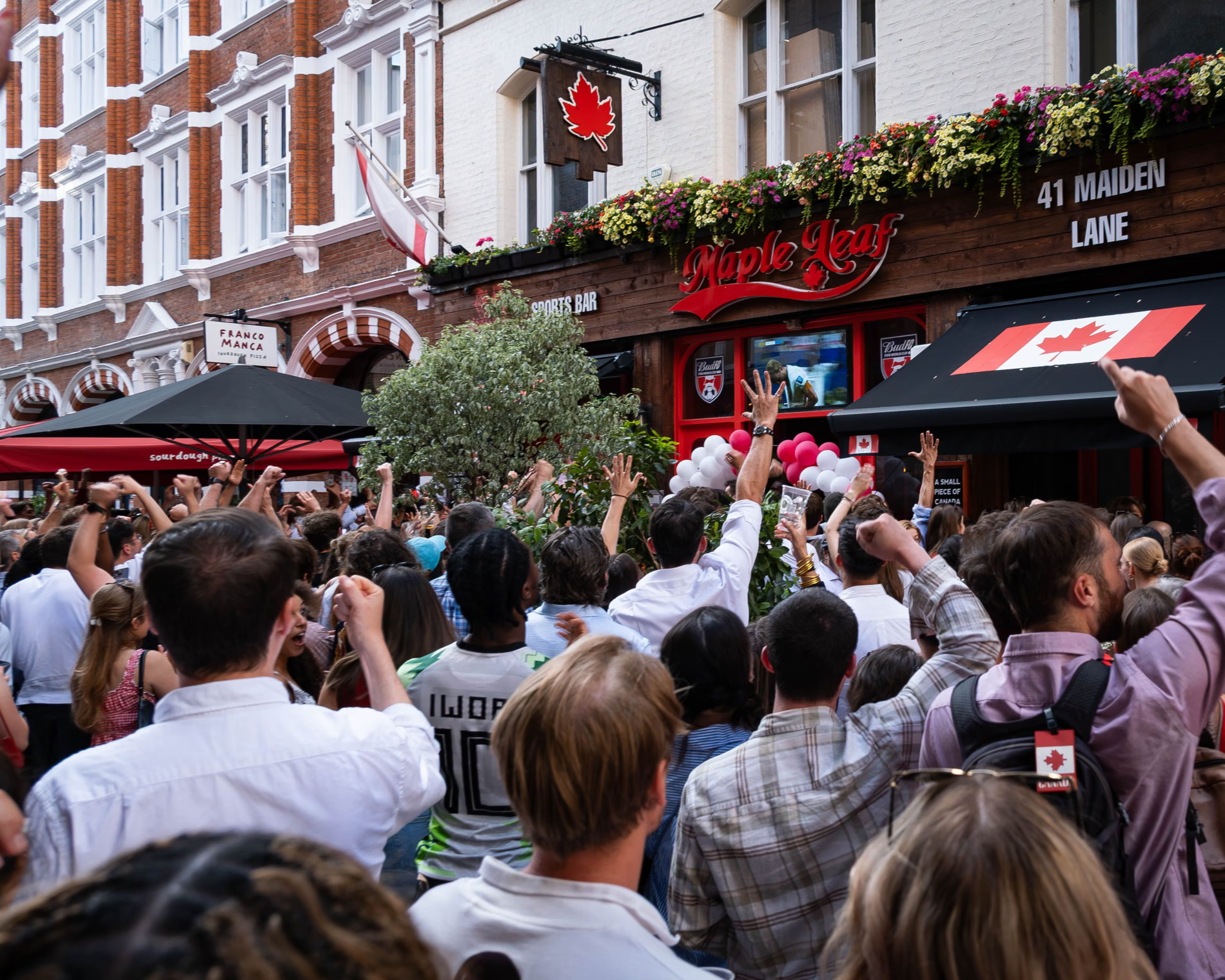
Police leaders have criticised the UK government’s decision to allow pubs in England to remain open until 5am for a major England football match, arguing that the announcement came too late for forces to prepare adequately for the increased demand on policing.
The extension of licensing hours was intended to enable supporters to watch the highly anticipated fixture and continue celebrating should England progress in the tournament. However, police representatives say the timing of the decision has left officers and local authorities with limited opportunity to plan staffing, security and public safety measures.
The debate has highlighted the challenge of balancing public celebrations with effective policing, particularly during high-profile sporting events that attract large crowds and can lead to increased alcohol consumption.
While ministers have defended the move as a way to support businesses and football fans, police organisations have called for earlier consultation before similar decisions are made in the future.

Temporary extensions to pub opening hours are not unprecedented in the UK. Governments have previously relaxed licensing rules to mark royal celebrations, major sporting events and other nationally significant occasions.
Supporters of the latest measure argue that allowing licensed venues to stay open later will create a more enjoyable atmosphere for fans while providing a welcome boost to the hospitality sector.
Pubs, bars and restaurants have faced challenging trading conditions in recent years, with many businesses welcoming opportunities to increase revenue during major events.
Hospitality industry representatives say extended trading hours can benefit local economies by encouraging spending and attracting customers who might otherwise choose to celebrate at home.
Despite recognising the excitement surrounding the England match, police leaders say the timing of the government’s announcement has created operational difficulties.
Large-scale football matches often require additional officers to manage crowds, respond to incidents and maintain public order in busy town and city centres.
Planning such operations typically involves coordinating with local councils, transport providers, emergency medical services and venue operators.
Police representatives argue that earlier notice would have allowed forces to organise staffing more effectively and reduce pressure on frontline officers.
Many forces already face significant demands during weekends and public events, making last-minute operational changes particularly challenging.
Football tournaments frequently generate a substantial increase in activity for emergency services.
While the overwhelming majority of supporters celebrate responsibly, alcohol-related incidents, public disorder and anti-social behaviour can place additional strain on police resources.
Emergency services also prepare for increased demand linked to road traffic incidents, medical emergencies and public transport congestion.
Experienced commanders often develop detailed operational plans based on anticipated crowd sizes, venue capacities and local risk assessments.
Police leaders argue that such planning becomes more difficult when policy decisions are made close to the event itself.
Ministers have maintained that extending pub opening hours reflects the national significance of England’s participation in a major international tournament.
They argue that allowing supporters to celebrate together in licensed premises helps foster a positive atmosphere while supporting local businesses.
Government officials have also noted that temporary licensing changes remain subject to existing public safety regulations.
Venue operators are still expected to comply with licensing conditions, manage customer behaviour responsibly and cooperate with local authorities where necessary.
Supporters of the policy say football tournaments represent unique occasions that justify temporary flexibility.
Many pub owners and hospitality businesses have welcomed the extended opening hours.
For an industry that has experienced rising costs, changing consumer habits and economic uncertainty, major sporting events can provide an important financial boost.
Late-night trading may increase sales of food and drinks while creating additional employment opportunities for hospitality workers.
Business organisations say major football tournaments often deliver one of the busiest trading periods of the year.
Some operators, however, also acknowledge that additional staffing, security and transport arrangements are necessary to accommodate larger crowds safely.
Experts in event management say successful public celebrations depend on careful coordination between government, businesses and emergency services.
Extending licensing hours can encourage supporters to remain in supervised venues rather than gathering in uncontrolled public spaces.
At the same time, authorities must ensure sufficient policing, medical support and transport services are available throughout the night.
Public safety specialists stress that planning is most effective when agencies receive clear information well in advance.
This allows organisers to allocate resources efficiently and prepare for different scenarios.
Under UK law, the government has the authority to relax licensing hours for occasions considered to have exceptional national significance.
These temporary changes apply only for specified periods and do not permanently alter licensing conditions.
Individual venues must still operate responsibly and comply with local licensing requirements.
Police retain powers to respond to disorder and, where necessary, licensing authorities can take action against premises that fail to meet their legal obligations.
The system aims to balance flexibility for special events with safeguards protecting local communities.
Reaction to the government’s decision has been mixed.
Many football supporters have welcomed the opportunity to continue celebrations into the early hours should England achieve a positive result.
Others have expressed sympathy with police concerns, arguing that emergency services should be given adequate notice before major operational changes are introduced.
On social media, debate has centred on whether the economic benefits outweigh the potential challenges for policing and local residents.
Community groups have also highlighted concerns about late-night noise and disruption in residential areas located near popular pubs and bars.
The issue has become part of a broader discussion about how governments should manage national events while maintaining effective public services.
Opposition politicians have questioned whether earlier consultation with police and local authorities could have avoided the current disagreement.
Meanwhile, ministers insist the decision reflects support for football fans and the hospitality industry during a significant sporting occasion.
Political analysts note that such debates often emerge whenever governments seek to balance economic opportunities with public safety considerations.

Regardless of the immediate controversy, police leaders hope future decisions involving extended licensing hours will involve earlier communication and closer cooperation between government departments, local authorities and emergency services.
Hospitality businesses, meanwhile, are optimistic that the extended hours will provide a welcome financial boost while allowing supporters to enjoy the occasion responsibly.
As England prepares for another important international fixture, authorities continue encouraging fans to celebrate safely, respect local communities and follow guidance from venue staff and emergency services.
The debate over the late announcement illustrates the competing priorities that accompany major national events. While extending pub opening hours may benefit businesses and football supporters, police argue that successful public celebrations depend not only on enthusiasm but also on careful planning.
For future tournaments and national occasions, many observers believe earlier collaboration between government and frontline services could help ensure that both economic opportunities and public safety are effectively protected.
Related News:
 UK Must Act with Courage and Clarity on Israel-Palestine Conflict, Says Foreign Affairs Committee Report
 Radioactive Leak at UK’s Nuclear Warhead Base Sparks Outcry Over Safety and Secrecy
 Chancellor Rachel Reeves Pushes for Sweeping Changes to Environmental Protections to Accelerate Development
 Is the UK Ready to Put Boots on the Ground in Ukraine? Assessing Military Capacity and Challenges
 Police Scotland Spends £500,000 Compensating Officers Over Trump Visit
 Britain’s Migration Challenge: Rising Asylum Numbers and Hotel Pressures
 Elon Musk Sparks New Controversy by Backing Tommy Robinson Amid Farage Feud
 Urgent Action Needed on Windrush Compensation as Survivors Speak of “Waiting to Die”
 Tanni Grey-Thompson Faces Abuse Over Opposition to Assisted Dying Bill
 TfL Invites RMT to Resume Talks as London Tube Strikes End
 Nigel Farage Unveils Controversial Immigration and Welfare Plans at Reform UK Press Conference
 Ed Miliband Warns UK Government on X, Citing Elon Musk as a “Dangerous Influence”
 Kemi Badenoch Unveils ‘Golden Rule’ to Halve Spending Cuts for Deficit Reduction at Tory Conference
 UK border officers deployed to Balkans to tackle migrant smuggling
 UK MPs warn of repeat riots over online misinformation
 Army Barracks to House Migrants as Hotels Phase Out
 Trump’s UK Ambassador Urges North Sea Drilling to Strengthen US Ties
 French Taxi Driver Cleared in David Lammy Theft Case After Fare Dispute
 Millionaires group urge Reeves to introduce wealth tax to ‘lift kids out of poverty’
 Reeves rejects £1bn plea for NHS redundancy payouts
 PM Condemns Leaks, Vows Loyalty to Ministers and Stability
 Major Rent Reform Ends No-Fault Evictions in England
 Starmer Says Labour’s Economic Plan Needs Years to Deliver
 England delays four mayoral elections amid criticism
 UK Ministers Drop Foreign Student Targets for Global Education Push
 No Gas Boiler Ban as UK Warm Homes Plan Backs Heat Pumps
 Shinzo Abe’s killer receives life sentence in Japan
 Police response times face strict new national limits
 Could Manchester Lead the UK’s Economic Revival?
 Starmer Weighs Fast-Tracking Defence Boost
 Farage to Name Jenrick as Reform Chancellor Pick
 Civil Service Pay: Union Urges Ministers to End ‘Barking Mad’ Limits
 Antonia Romeo appointment sparks criticism
 Australian PM Says Former Prince Andrew Has Suffered ‘Extraordinary Fall’ but That Won’t Prompt Republic Referendum
 Farage Chagos Islands Row Sparks Fury
 Lord Mandelson Released on Bail After Arrest on Suspicion of Misconduct in Public Office
 Reform UK targets workers’ rights repeal
 Russian Trade Routed Through British Islands Exposed
 Mandelson Arrest: Met Apologises to Hoyle
 No 10 Will Have No Say on Which Mandelson Papers Are Released
 BBC Charter Reform Sparks Independence Battle
 Labour MP’s Partner Arrested on Suspicion of Spying for China
 Police Scotland Pays £8m Compensation to Staff
 Minister Meets Crews Who Will ‘Take Out’ Iranian Drones
 Thousands Protest Iran Strikes Outside US Embassy London
 UK Oil and Gas Supplies Reassured Amid Middle East Concerns
 Tommy and Gail Sheridan to Stand for New Political Party After Alba Demise
 Yvette Cooper: UK Must Follow Principles, Not US Pressure
 Wes Streeting Backs Starmer Amid Speculation of Leadership
 UK Forces Ready to Seize Russian Shadow Fleet Vessels
 US Lawmaker Demands Testimony Over Sarah Ferguson’s ‘Close Epstein Ties’
 The 8 Million Dilemma: Why Britain’s Disability Safety Net is Facing a ‘2026 Reckoning’
 Is Britain Ready? Experts Warn of ‘Bizarre’ Military Delay
 Foreign Office Chief Resigns Amid Mandelson Vetting Row
 “Jobs Will Go”: Rishi Sunak Warns AI is Already Eroding Entry-Level Opportunities
 Reform UK Vetting Scrutiny Amid Candidate Scandal
 Crackdown Backfires on UK Climate Protesters
 Reality Check on Reform: Minister Says Outright Abolition of Leasehold “Impossible”
 The “Dry” Life: Teens Trialing Social Media Bans Call Initial Disconnection “Boring” and “Dry”
 “Invisible Agony”: 98-Year-Old Woman Left in “Severe Pain” for Days Amidst Care Backlog
 “An Endurance Test for the Mind”: British Couple Sentenced to 10 Years in Tehran
 “Stealth and Scaffolding”: The Midnight Logistics Behind Banksy’s Latest London Plinth
 “The Cost of Conviction”: Palestine Action Activists Found Guilty Over ‘Clinical’ Factory Damage
 “The Local Gavel”: Polls Open Across Hampshire and Isle of Wight in Delayed ‘Milestone’ Vote
 Major test for Labour as polls open in Great Britain
 Farage Faces New Questions Over Private Helicopter Use
 NHS Drug Deal Faces Legal Threat Over US Trade Agreement
 Green Party Makerfield Candidate Resigns Over Posts
 Secret Role of UK Security Services in Troubles Amnesty Law
 Labour Faces Growing Pressure Over Living Wage Delay
 UK Faces Most Dangerous Era, Military Chief Warns
 Iran Team Arrives in Mexico Amid US Visa Dispute
 Son Urges Iran Prisoner Exchange for Jailed British Pair
 Figures Suggest Over 1,300 Monthly Deaths in England Linked to Long A&E Waiting Times
 Digital Scrutiny Under the Spotlight in Makerfield
 England Cruise Past Costa Rica as World Cup Warm-Up Sharpens Tuchel’s Vision
 Modernising the Military: Carns Demands Urgent Procurement Reform
 Prince George Set to Begin Studies at Eton This September
 Starmer Set to Announce Exit Plan as Burnham Eyes No 10
 Burnham Promises Relief on Cost of Living Crisis